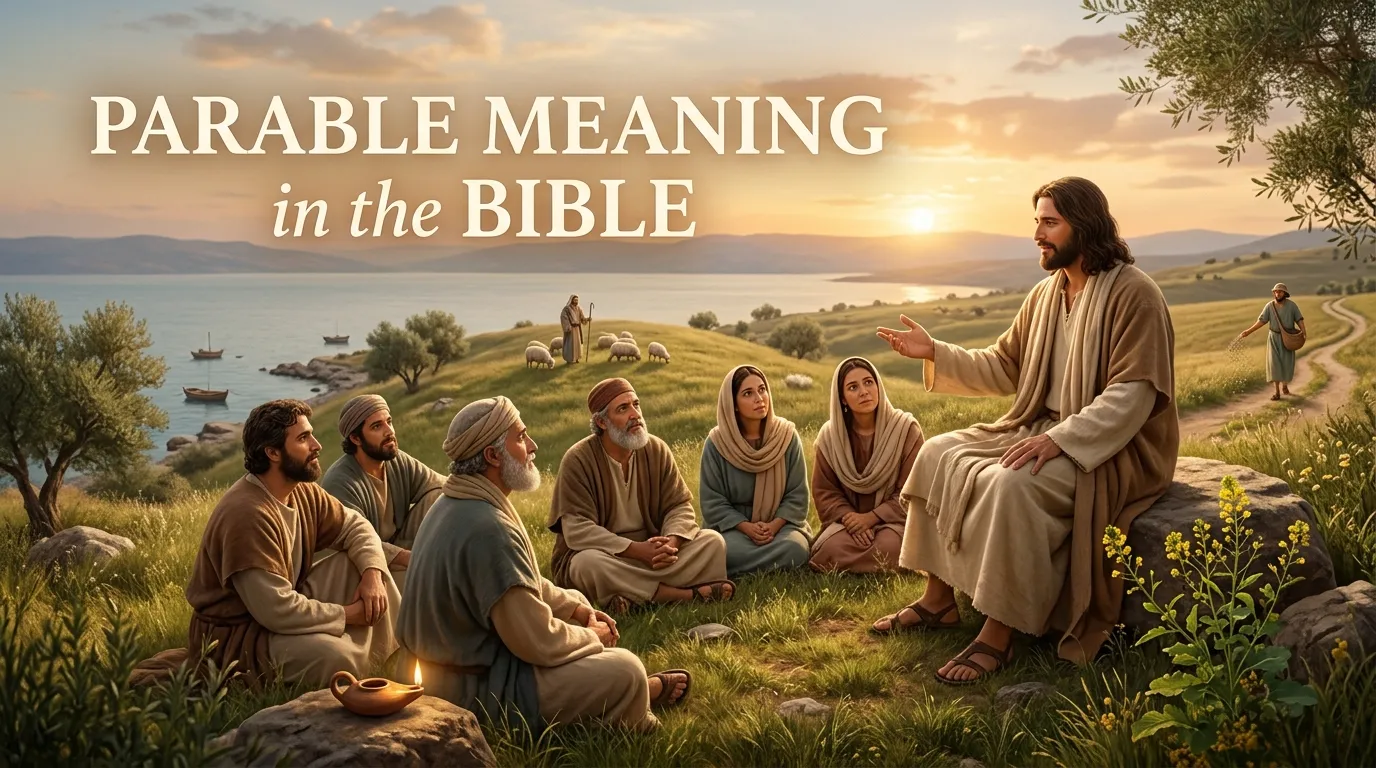
A parable in the Bible is a simple, everyday story that Jesus told to reveal profound spiritual truths about God’s kingdom.
These earthly stories with heavenly meanings make deep realities accessible, helping listeners grasp concepts like grace, judgment, forgiveness, and faith.
If you’ve ever wondered why Jesus spoke in parables or what they truly mean for your life today, this article will guide you.
You’ll discover their biblical definition, purpose, key examples, and practical ways to apply themno matter where you are in your faith journey.
Quick Reference Table
| Parable | Key Bible Verses | Main Truth Illustrated |
| The Sower | Matthew 13:1-23 | Different responses to God’s Word |
| The Good Samaritan | Luke 10:25-37 | Loving your neighbor without limits |
| The Prodigal Son | Luke 15:11-32 | God’s forgiving, celebrating love |
| The Mustard Seed | Matthew 13:31-32 | Kingdom growth from small beginnings |
| The Lost Sheep | Luke 15:3-7 | God’s pursuit of the one who strays |
Biblical Meaning
In Scripture, a parable is a short, relatable narrative drawn from ordinary life that illustrates a spiritual lesson. Jesus used them extensively in His teaching, especially in the Gospels of Matthew, Mark, and Luke. Unlike fables with talking animals or myths, parables feature realistic people and situations to point to the realities of God’s kingdom.
They are not just moral tales but powerful tools that invite reflection and response. Jesus explained that parables both reveal truth to those with open hearts and conceal it from those hardened against Him (Matthew 13:10-17).
Hebrew/Greek Meaning
The English word parable comes from the Greek parabolē (παραβολή), meaning to throw alongside or to place beside. It involves comparing something familiar (like farming or family life) with something spiritual to make the abstract understandable.
In the Old Testament, the related Hebrew word mashal could refer to proverbs, riddles, or comparisons. Jesus built on this tradition, using parables as a master teacher to fulfill what was spoken through the prophet: I will open my mouth in parables; I will utter things hidden since the foundation of the world (Matthew 13:35, referencing Psalm 78:2).
Biblical Context
Jesus taught in parables during His earthly ministry, particularly when large crowds gathered. This method fulfilled prophecy and aligned with His mission to proclaim the kingdom of God. In Matthew 13, after telling the Parable of the Sower, Jesus privately explained to His disciples why He used this approach: the parables sort the responsive from the unresponsive, much like the soils in the story.
Parables appear most in the Synoptic Gospels. They often address the surprising, upside-down nature of God’s kingdomwhere the last are first, the humble are exalted, and grace surprises us.
Bible Verses with Explanations
Matthew 13:10-13
Then the disciples came and said to him, ‘Why do you speak to them in parables?’ And he answered them, ‘To you it has been given to know the secrets of the kingdom of heaven, but to them it has not been given. For to the one who has, more will be given…’
Jesus spoke plainly to His close followers but used stories for the crowds. This wasn’t to exclude people but to challenge hearts. Those genuinely seeking would ask for explanation and receive more insight.
Luke 15:11-32 (Prodigal Son)
This famous parable shows a wayward son who squanders his inheritance, hits rock bottom, and returns home. The father runs to embrace him with full restoration. The older brother resents this grace.
The story reveals God’s heart: He eagerly welcomes repentant sinners with joy, not condemnation. It also warns against self-righteous attitudes that resent God’s mercy toward others.
Luke 10:30-37 (Good Samaritan)
A man is beaten and left for dead. Religious leaders pass by, but a despised Samaritan stops, cares for him, and pays for his recovery. Jesus asks, Which of these three was a neighbor?
Context: A lawyer wanted to justify himself by limiting neighbor. Jesus shows that true love crosses ethnic and social boundaries and acts with compassion.
Every parable rewards careful reading in context. Jesus often explained the main point directly or let the story’s punch land through a question.
Spiritual Meaning
At their core, parables unveil the kingdom of GodGod’s rule breaking into the world through Jesus. They show how the kingdom grows quietly yet powerfully, values people over status, and calls for radical love, forgiveness, and readiness.
They also reveal human hearts: some receive the word and bear fruit; others reject it. The spiritual meaning always points back to Jesus as the King and our need to respond in faith and obedience.
Symbolism
Common symbols in parables include:
- Seeds/Soil: The Word of God and human hearts.
- Shepherd/Father/King: God’s character.
- Banquets/Feasts: The joy of the kingdom and invitation to salvation.
- Weeds/Wheat: Good and evil coexisting until judgment.
Interpretation tip: Focus on the main point of the story rather than forcing every detail into allegory. Jesus usually highlights one central truth.
Practical Application
For new believers and seekers: Start by reading one parable slowly. Ask, What does this show me about God? About myself? How should I respond? Pray for understanding.
Mature Christians and pastors can use parables in teaching and counseling to illustrate grace in real-life situationslike forgiving as the prodigal’s father did.
In daily life:
- When facing rejection of the gospel, remember the different soils.
- When tempted by pride, recall the older brother.
- When seeing need, be like the Good Samaritan.
Parables call us to active faith, not passive listening (James 1:22).
Common Misunderstandings
- Parables are not allegories with hidden meanings for every element. Most have one primary lesson.
- They are not merely nice moral stories. They confront us with the reality of God’s kingdom and our need for Jesus.
- Jesus didn’t use them to confuse everyone. He used them to provoke thought and reveal truth to the humble.
Scholars sometimes debate specific interpretations, but the core messages remain clear across faithful readings.
FAQs
What is the meaning of a parable?
A parable is a simple story that teaches a spiritual or moral truth through everyday examples.
What is the meaning of a parable, and what are some examples?
Parables are short stories with deeper spiritual lessons, such as the Good Samaritan and the Prodigal Son.
What are some examples of parables?
Examples include the Good Samaritan, the Prodigal Son, the Sower, and the Lost Sheep.
What are the parables in the Bible and their meanings?
The parables of the Bible reveal God’s kingdom, faith, forgiveness, love, and the importance of obedience.
How many parables are in the Bible?
Jesus taught around 30 to 40 parables in the Gospels, depending on how they are counted.
What is the purpose of parables in the Bible?
The purpose of parables is to teach spiritual truths in a memorable way and encourage people to seek God’s wisdom.
Is there a PDF list of parables in the Bible?
Yes, many Christian websites offer free PDF lists of Bible parables for study and reference.
What are the four types of parables in the Bible?
The four common types include kingdom, redemption, judgment, and discipleship parables.
Conclusion
Understanding the parable meaning in the Bible opens a beautiful window into Jesus’ heart for teaching. These stories aren’t ancient relicsthey are living invitations to know God better, love others more deeply, and live as citizens of His kingdom.
As you reflect on them, may the Holy Spirit illuminate your heart, just as He did for the disciples. Remember Jesus’ words: Blessed are your eyes, for they see, and your ears, for they hear (Matthew 13:16). Keep seeking Him through Scripture. The same Jesus who told these stories is still calling people to abundant life in Him today.
Discover More Post
- Myrrh Meaning in the Bible: Biblical Meaning Explained
- Adultery Meaning in the Bible: A Complete Biblical Guide
- Reproof Meaning in the Bible: A Complete Guide
- Naomi Meaning in the Bible: Symbolism, Faith and Purpose

Hi, I’m James Patterson, a storyteller who loves creating thrilling mysteries, unforgettable characters, and page-turning adventures. Through TheBiblimeaning, I share insights about authors, books, literary meanings, biographies, and the stories behind famous writers. My goal is to help readers discover the deeper world of literature while enjoying engaging and informative content.