The jubilee meaning in the Bible points to a powerful season of freedom, restoration, and trust in God’s provision.
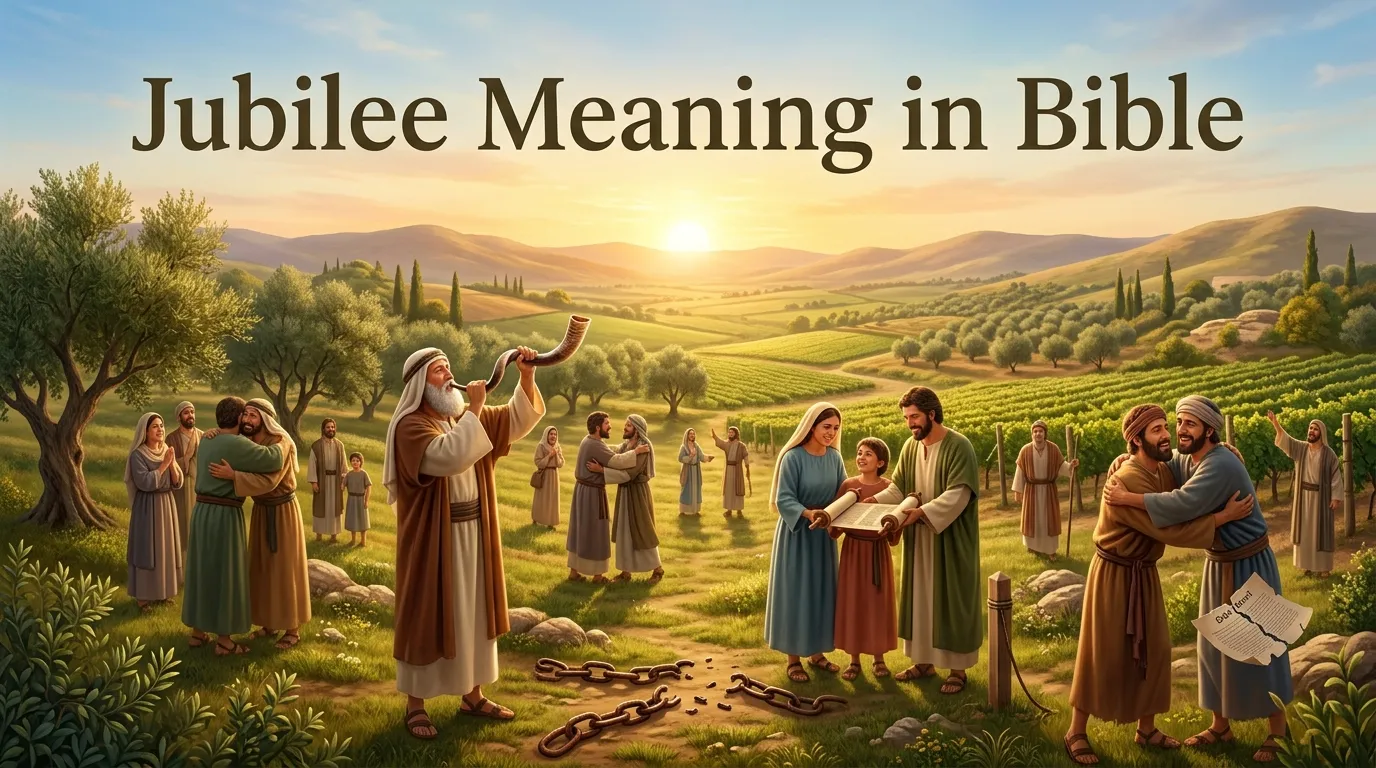
Every 50 years, God commanded His people to proclaim liberty throughout the land, return property to original owners, release servants from debt bondage, and let the earth rest.
In this article, you will discover the historical and spiritual depth of the Year of Jubilee, its roots in the Old Testament, how Jesus fulfills it, and what it means for your life today.
You are exploring Scripture for the first time or seeking deeper encouragement, the Jubilee reveals God’s heart for justice, mercy, and new beginnings.
Quick Reference Table
| Aspect | Details |
| Frequency | Every 50 years (after 7 cycles of 7 years) |
| Key Commands | Rest for land, return property, free servants, cancel debts |
| Main Chapter | Leviticus 25 |
| Hebrew Term | Yovel (ram’s horn / trumpet) |
| New Testament Link | Fulfilled in Jesus (Luke 4:18-21) |
Biblical Meaning
The Jubilee was more than a calendar event. It was a divine reset built into Israel’s life as a theocracy. God designed it to prevent permanent poverty, protect family inheritances, and remind everyone that the land ultimately belonged to Him, not to them.
It followed seven Sabbath years (49 years total). On the Day of Atonement in the 50th year, a trumpet (shofar) sounded, announcing liberty. This rhythm of rest and release taught dependence on God’s goodness rather than endless human striving.
Hebrew/Greek Meaning
The Hebrew word is Yovel (יוֹבֵל), often translated as “Jubilee.” It comes from the root for “ram” and refers to the blast of the ram’s horn trumpet that proclaimed the year. Some scholars connect it to the idea of “carrying” or “flowing,” like the joyful release that followed the trumpet sound.
In the Septuagint (Greek Old Testament), it appears as apheseos or related terms meaning “release” or “liberty,” which echoes strongly in New Testament language about forgiveness and freedom.
Biblical Context
God gave the Jubilee instructions right after the laws about the Sabbath year (Leviticus 25). The people had just left Egypt, where they experienced slavery and oppression. Now, in the Promised Land, God wanted a society marked by generosity and trust instead of greed and exploitation.
The commands covered agricultural rest, economic justice, and family restoration. While historical records suggest full observance was rare, the ideal stood as a constant witness to God’s character.
Bible Verses with Explanations
Leviticus 25:8-10 (NIV)
“Count off seven sabbath years—seven times seven years—so that the seven sabbath years amount to a period of forty-nine years. Then have the trumpet sounded everywhere on the tenth day of the seventh month; on the Day of Atonement sound the trumpet throughout your land. Consecrate the fiftieth year and proclaim liberty throughout the land to all its inhabitants. It shall be a jubilee for you; each of you is to return to your family property and to your own clan.”
Context and Meaning: This core passage sets the timing and purpose. The trumpet on the Day of Atonement links forgiveness of sin with social and economic freedom. Relevance today: True liberty flows from atonement and right relationship with God.
Leviticus 25:13
“In this Year of Jubilee everyone is to return to their own property.”
This prevented the permanent loss of family land given by God, protecting generational stability.
Isaiah 61:1-2
“The Spirit of the Sovereign Lord is on me, because the Lord has anointed me to proclaim good news to the people with low-income. He has sent me to bind up the brokenhearted, to proclaim freedom for the captives and release from darkness for the prisoners, to proclaim the year of the Lord’s favor…”
Luke 4:18-21
Jesus read this passage in Nazareth and declared, “Today this scripture is fulfilled in your hearing.” He presented Himself as the ultimate Jubilee—bringing spiritual, physical, and relational freedom.
Spiritual Meaning
The Jubilee symbolizes ultimate restoration in Christ. Debt represents sin; bondage pictures slavery to sin and circumstances; lost inheritance reflects separation from God. Jesus cancels the debt, breaks chains, and restores us to our rightful place as children of God.
It also foreshadows the final redemption when all things are made new and every tear is wiped away.
Symbolism
- Trumpet Blast: Sudden, joyful announcement of God’s intervention.
- Land Rest: Trusting God as Provider.
- Return to Family: Reconciliation and belonging.
- Release of Slaves: Deliverance and dignity.
These images run throughout Scripture and find fulfillment in the gospel.
Practical Application
For new believers: Embrace the freedom Jesus offers from guilt and shame today can be your personal Jubilee.
For mature Christians and pastors: Practice generosity, forgive debts (literal and relational), and advocate for justice while pointing people to Christ.
The seekers and skeptics: Notice how the Bible’s economic principles promote both compassion and responsibility without modern political extremes.
Ask yourself: Where do I need release? Who can I help restore? How can I live with open hands, knowing everything belongs to God?
Common Misunderstandings
- Myth: Jubilee was primarily about forgiving all debts or radical wealth redistribution. Reality: It returned ancestral land and freed Hebrew servants after their term; it upheld God’s original distribution rather than creating equality through force.
- Myth: It was observed regularly throughout Israel’s history. Reality: Full observance appears limited, yet the principle remains instructive.
- Myth: It applies directly to modern economic policy in the same way. The specific laws were for ancient Israel in the land; the heart principles of justice and mercy apply universally through the gospel.
FAQs
What is the spiritual meaning of Jubilee?
The spiritual meaning of Jubilee is God’s grace, freedom, restoration, forgiveness, and renewed hope.
What is the true meaning of Jubilee?
The true meaning of Jubilee is a time of liberty, restoration, debt forgiveness, and returning to God’s intended order.
What is the Jubilee meaning in Hebrew?
In Hebrew, Jubilee comes from “Yovel,” meaning the ram’s horn used to announce the Year of Jubilee.
What is the 7-year Jubilee in the Bible?
The Bible describes a seven-year Sabbath cycle, but the Jubilee occurs after seven Sabbath cycles, in the fiftieth year.
What is the 50-year Jubilee in the Bible?
The 50-year Jubilee is a sacred year when debts were forgiven, slaves were freed, and ancestral land was restored.
When is the next Year of Jubilee?
The exact next Year of Jubilee is uncertain, as the biblical cycle is not universally observed or officially calculated today.
Why did Jesus declare the year of Jubilee?
Jesus declared the year of Jubilee to proclaim spiritual freedom, God’s favor, and salvation for all who believe.
What does Jubilee mean in the Bible KJV?
In the KJV Bible, Jubilee refers to the fiftieth year of liberty, restoration, and God’s provision for His people.
Conclusion
The jubilee meaning in the Bible ultimately reveals a God who delights in setting captives free and restoring what was lost. Jesus is our living Jubilee proclaiming good news to the , freedom for prisoners, and recovery of sight for the blind.
If you feel weary, burdened, or far from home, hear the trumpet today: “Come to me, all you who are weary and burdened, and I will give you rest” (Matthew 11:28). In Christ, every day holds the possibility of new beginnings, forgiveness, and joyful return to the Father.
Discover More Post
- Myrrh Meaning in the Bible: Biblical Meaning Explained
- Adultery Meaning in the Bible: A Complete Biblical Guide
- Reproof Meaning in the Bible: A Complete Guide
- Naomi Meaning in the Bible: Symbolism, Faith and Purpose

Hi, I’m James Patterson, a storyteller who loves creating thrilling mysteries, unforgettable characters, and page-turning adventures. Through TheBiblimeaning, I share insights about authors, books, literary meanings, biographies, and the stories behind famous writers. My goal is to help readers discover the deeper world of literature while enjoying engaging and informative content.