If your upper teeth cover too much of your lower teeth, you may be wondering how to fix an overbite without wasting time or money on the wrong treatment.
The good news is that many overbites can be corrected. Braces and clear aligners can move teeth into better positions, while some cases need special appliances or jaw surgery.
The right treatment depends on whether your overbite comes mainly from tooth position, jaw development, or both.
An orthodontist can examine your bite and recommend the safest approach for your specific situation.
What Is an Overbite?
An overbite is the vertical overlap of your upper front teeth over your lower front teeth when you close your mouth.
A small amount of overlap is normal. The concern is an excessive overbite, sometimes called a deep bite, where the upper teeth cover an unusually large portion of the lower teeth.
A deep bite can sometimes affect more than appearance. Depending on its severity, it may contribute to tooth wear, gum problems, difficulty chewing, or irritation inside the mouth.
It’s also easy to confuse an overbite with an overjet.
An overbite describes how much the upper teeth overlap the lower teeth vertically. An overjet describes how far the upper front teeth sit forward compared with the lower front teeth.
You can have one, the other, or both.
What Causes an Overbite?
There isn’t always one single cause.
An overbite can be related to genetics, the way the teeth developed, jaw growth, oral habits, or tooth loss. In some people, the teeth themselves are the main issue. In others, the relationship between the upper and lower jaws plays a bigger role.
Common factors include:
- Genetics and family traits
- Differences in jaw growth
- Crowded or incorrectly positioned teeth
- Certain childhood oral habits
- Tooth loss that changes the way nearby teeth move
- A combination of tooth and jaw problems
This is why two people with similar-looking overbites may receive completely different treatment plans.
How to Fix an Overbite
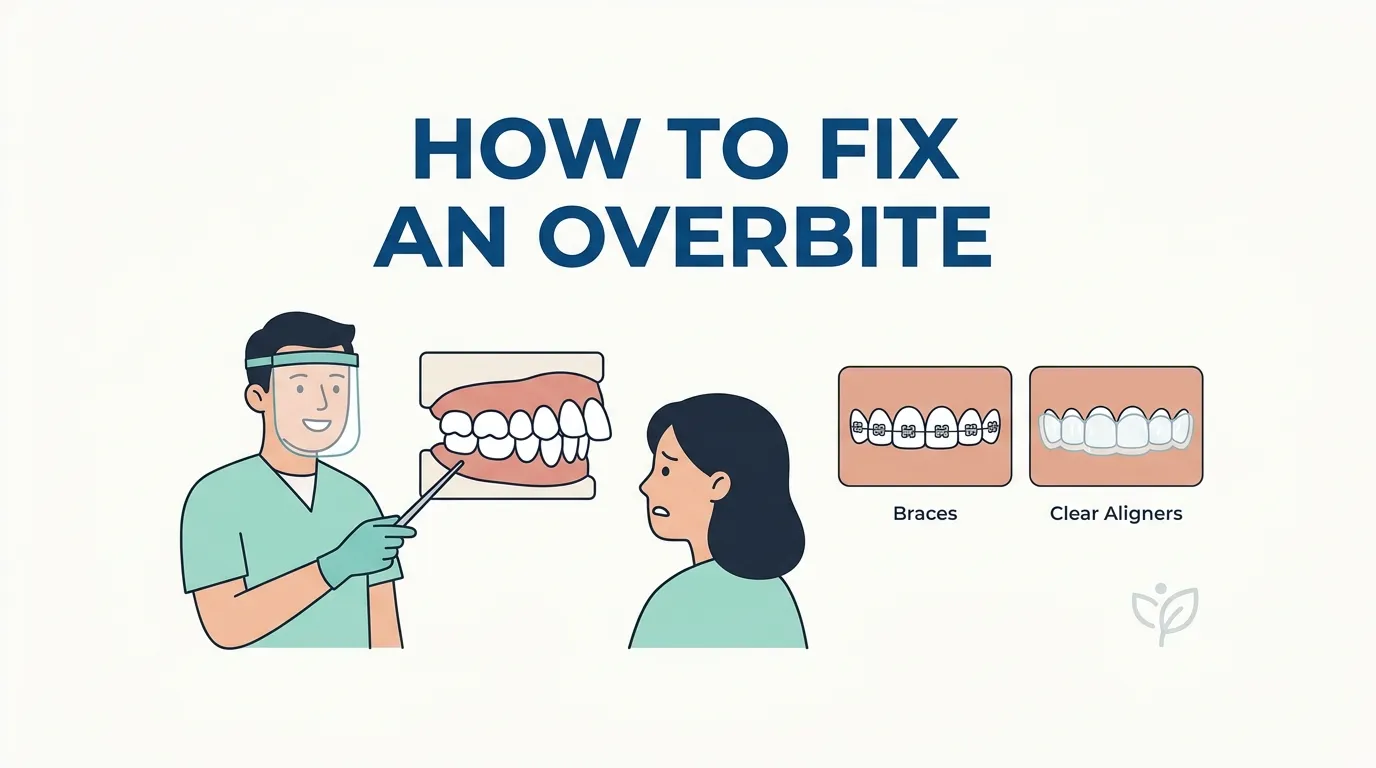
The most suitable treatment depends on the cause and severity of the overbite. Common options include braces, clear aligners, elastics, functional appliances, and, in more severe jaw-related cases, corrective jaw surgery.
Braces
Braces are one of the most common ways to correct an overbite.
Fixed braces use brackets and wires to apply controlled forces to the teeth. Over time, these forces move the teeth into better positions and can improve the way the upper and lower teeth meet. Braces may also be combined with elastics or other appliances when additional bite correction is needed.
Braces can be useful when the bite problem is more complex because the orthodontist can carefully control tooth movement throughout treatment.
Treatment length varies. Many orthodontic treatments take around 18 months to two years, although the exact time depends on the person’s teeth and bite.
Clear Aligners
Clear aligners are removable trays designed to gradually move teeth.
They can be a useful option for selected overbite cases. However, they aren’t automatically suitable for every deep bite. The orthodontist must determine whether the required tooth movements can be achieved predictably with aligners. Current orthodontic guidance also notes that deep-bite correction with aligners can present specific treatment challenges.
One advantage is that aligners can be removed when you eat and brush your teeth.
If you’re considering aligners, don’t choose them simply because they’re less noticeable. The important question is whether they’re appropriate for your particular bite.
Elastics
Orthodontic elastics can sometimes be used alongside braces or other appliances.
They provide additional force between the upper and lower teeth and can help guide the bite into a better relationship.
Your orthodontist will tell you where to attach the elastics and how often to wear them. Don’t change the placement or wear time yourself. Orthodontic forces need to be controlled to move teeth safely.
Functional Appliances
Some growing patients have an overbite or related bite problem because the lower jaw is positioned farther back compared with the upper jaw.
In certain cases, an orthodontist may recommend a functional appliance. These appliances are designed to influence the position and relationship of the jaws while a child or teenager is still growing.
For example, NHS patient guidance describes functional braces as removable appliances that can help improve the bite when the lower jaw is smaller or positioned behind the upper jaw.
The exact appliance depends on the patient’s age, growth, and bite.
Corrective Jaw Surgery
A small number of people have an overbite that is strongly related to the position or size of the jaws.
In severe cases, orthodontics alone may not fully correct the problem. Orthognathic surgery, also called corrective jaw surgery, may then be considered.
This treatment changes the position of the jaw bones. It is usually planned together by an orthodontist and an oral and maxillofacial surgeon, with orthodontic treatment often taking place before and after surgery.
Surgery isn’t the normal first choice for a simple overbite. It is generally considered when the underlying jaw relationship requires more than tooth movement alone.
Can You Fix an Overbite at Home?
No reliable home method can safely straighten an established overbite.
You may see online advice suggesting that pushing on your teeth, changing your tongue position, using homemade devices, or doing special exercises can correct an overbite. These methods shouldn’t replace an orthodontic assessment.
Your teeth are supported by bone and soft tissues. Moving them requires controlled forces and careful planning.
Trying to force teeth into a new position could cause unwanted movement or damage.
If you want a treatment that doesn’t use traditional braces, ask an orthodontist whether clear aligners or another professionally supervised option could work for you.
Can an Overbite Be Fixed Without Braces?
Yes, some overbites can be treated without traditional metal braces.
Clear aligners are one possible alternative for suitable cases. Depending on the patient’s age and the cause of the bite problem, an orthodontist may also recommend other appliances.
However, “without braces” doesn’t mean “without orthodontic treatment.”
The best option depends on what needs to move and whether the problem comes from the teeth, jaws, or both. Clear aligners can treat some deep bites, but their effectiveness depends heavily on case selection and treatment design.
Can Adults Fix an Overbite?
Yes. Adults can have overbites corrected.
Orthodontic treatment isn’t limited to children and teenagers. Adults may be treated with braces or clear aligners, while some severe jaw-related cases may require surgical treatment.
Age does matter in one important way: adult jaw bones are no longer growing in the same way as a child’s developing jaws.
That can affect which treatments are possible, especially when the problem is mainly skeletal rather than dental.
Before treatment, your orthodontist may also check your teeth and gums. Good oral health is important before and during orthodontic treatment.
How Long Does It Take to Fix an Overbite?
There is no single treatment time for every overbite.
A mild case caused mainly by tooth position may take less time than a complex bite involving significant tooth movement or jaw problems.
For fixed braces, treatment commonly takes around 18 months to two years, although some cases take less time and others take longer.
Your treatment can also take longer if you miss appointments, don’t follow instructions, damage your appliance, or don’t wear removable appliances as directed.
The best estimate comes after an orthodontist examines your bite.
Does an Overbite Need to Be Fixed?
Not every overbite automatically requires treatment.
A dentist or orthodontist considers factors such as the amount of overlap, tooth wear, gum or palate irritation, chewing problems, and the overall relationship between your teeth and jaws.
A significant deep bite can sometimes cause tooth wear or damage to the gums or palate. The American Association of Orthodontists also notes that untreated deep bites may be associated with problems such as premature tooth wear and chewing difficulties.
That doesn’t mean every person with an overbite will develop these problems.
An examination is the best way to find out whether your particular bite needs treatment.
What Happens at an Overbite Appointment?
Your first orthodontic appointment is mainly about understanding the problem.
The orthodontist may:
- Examine your upper and lower teeth
- Check how your teeth meet when you bite
- Look at your jaw relationship
- Take photographs
- Take X-rays when needed
- Use digital scans or dental impressions
- Ask about your dental history
- Discuss your treatment goals
NHS guidance explains that orthodontic assessments may include an examination of the teeth and jaws along with X-rays, photographs, or scans.
This information helps the orthodontist decide whether your overbite is mainly dental, skeletal, or a combination of both.
Braces vs. Clear Aligners for an Overbite
Both options can move teeth, but they’re not equally suitable for every case.
| Treatment | Main approach | Best determined by |
| Braces | Fixed brackets and wires gradually move teeth | Complexity of the bite and required tooth movement |
| Clear aligners | Removable trays gradually move teeth | Whether the planned movements are suitable for aligners |
| Elastics | Add controlled force between upper and lower teeth | The specific bite relationship |
| Functional appliances | Help address certain developing jaw relationships | Age, growth, and jaw position |
| Jaw surgery | Changes the position of the jaw bones | Severe skeletal problems |
Clear aligners can be useful for selected deep-bite cases, while braces remain a widely used option for orthodontic treatment. More complex cases may need additional appliances or treatment approaches.
How to Choose the Right Treatment
Don’t choose treatment based only on appearance or advertisements.
Start with the diagnosis.
A good treatment plan should consider:
The cause: Is the problem mainly the teeth, the jaws, or both?
The severity: How much do the upper teeth overlap the lower teeth?
Your age and growth: Treatment can differ between a growing child, teenager, and adult.
Your oral health: Teeth and gums should be healthy enough for orthodontic movement.
Your goals: You may care most about appearance, comfort, chewing, or a combination of these.
Your ability to follow the plan: Removable appliances require you to use them as instructed.
This approach helps you understand why a particular treatment is being recommended instead of simply choosing the most popular option.
What Happens After Overbite Treatment?
Finishing active treatment doesn’t mean your teeth can never move again.
Teeth can shift after orthodontic treatment, which is why retainers are commonly used afterward. NHS guidance states that a retainer helps prevent teeth from moving back toward their original positions and that your orthodontist will advise you how long to wear it.
Your orthodontist may recommend a removable retainer, a fixed retainer, or both, depending on your situation.
Following the retention plan is an important part of protecting the result.
Common Mistakes to Avoid
If you’re trying to correct an overbite, avoid these common mistakes:
Trying DIY tooth movement: Don’t push or pull your teeth with your fingers or homemade tools.
Buying unsupervised orthodontic devices: A device that doesn’t match your bite can create unwanted tooth movement.
Choosing aligners without a proper assessment: Clear trays aren’t automatically suitable for every overbite.
Ignoring tooth or gum problems: Existing dental problems should be addressed before or during orthodontic treatment.
Stopping treatment early: Teeth may not reach the planned positions if treatment is interrupted.
Forgetting retainers: Teeth can move after treatment, so retention matters.
FAQs About Overbite
How to fix overbite naturally
Natural methods such as changing tongue posture or doing jaw exercises generally cannot move teeth or correct a significant overbite. An orthodontist can recommend safe treatment based on the cause and severity.
How to fix overbite without braces
Some overbites can be treated without traditional braces using clear aligners or other orthodontic options. The right choice depends on your teeth, jaw position, age, and the severity of the overbite.
How to fix overbite adults
Adults can treat an overbite with options such as clear aligners, braces, or, in severe jaw-related cases, corrective jaw surgery. An orthodontic evaluation helps determine the appropriate treatment.
How to fix overbite at home
There is no reliable home method for permanently correcting an overbite. Avoid trying to force your teeth or jaw into a new position, as this can cause pain or dental damage.
Overbite before and after
Overbite before-and-after results can show how orthodontic treatment changes tooth alignment and bite position. Results vary depending on the severity and treatment method.
Overbite vs normal
A normal bite has the upper front teeth slightly overlapping the lower front teeth. An overbite occurs when the upper teeth overlap the lower teeth more than expected.
Severe overbite
A severe overbite involves substantial vertical or horizontal overlap of the upper and lower front teeth and may affect chewing, speech, or jaw comfort. An orthodontist can assess its severity and treatment options.
What causes overbite
Overbite can result from genetics, jaw development, tooth position, childhood habits such as prolonged thumb sucking, or a combination of these factors.
Conclusion
If you’re searching for how to fix an overbite, the key is to treat the cause rather than trying a quick home remedy. Braces, clear aligners, elastics, and other orthodontic appliances can correct many cases. More serious jaw-related problems may require a combination of orthodontics and corrective jaw surgery.
The most useful next step is a professional orthodontic evaluation. Once your teeth and jaw relationship are examined, you’ll have a much clearer idea of whether you need treatment, which options may suit you, and how long the process could take.