Have you ever seen a Bible verse shared on a sign, social media post, or church wall and wondered why it is so important? One verse appears more often than almost any other: John 3:16.
Many Christians call it the heart of the Gospel because it shares God’s love in a simple and powerful way. It is a verse that has brought hope to people during hard times, comfort during loss, and peace during seasons of doubt.
Imagine feeling alone and unsure about the future. Then someone reminds you that God loves you so much that He gave His Son for you.
Suddenly, fear begins to fade, and hope starts to grow. That is the power behind John 3:16.
This verse is not just a famous Bible passage. It is a spiritual message about God’s love, salvation, and promise of eternal life. It speaks to every person, no matter their past, mistakes, or struggles.
Many people search for the John 3:16 meaning because they want to understand what God is saying through these words and how they apply to daily life.
Let’s explore the deeper biblical meaning, symbolism, and faith lessons found in this beloved verse.
John 3:16 Meaning — John 3:16
John 3:16 shows the depth of God’s love for the world. God gave His only Son, Jesus, so that those who believe in Him can have eternal life. This verse points to God’s love, Jesus’ sacrifice, faith, and salvation. It does not say that people earn salvation by their own good works. Instead, it shows God’s gift and calls people to trust in Christ. The verse also gives hope to anyone who turns to Jesus in faith. Its message is simple: God loves, Christ saves, and faith brings eternal life.
Bible Verse:
“For God so loved the world, that he gave his only Son.”
— John 3:16 (ESV)
John 3:16 Explanation — John 3:16
John 3:16 explains why Jesus came into the world. God’s love was not only spoken; He showed it by giving His Son. Jesus came so that people who believe in Him would not perish but have eternal life. The verse does not promise a life without pain or trouble. It points to a deeper hope that lasts beyond this life. Jesus spoke these words while teaching Nicodemus about spiritual truth. This helps us see that salvation begins with God’s love and is received through faith in Christ.
Bible Verse:
“Whoever believes in him should not perish but have eternal life.”
— John 3:16 (ESV)
John 316 Meaning — John 3:16
John 3:16, often written as John 316, is a key Bible verse about God’s love and salvation. It tells us that God loved the world so much that He gave His only Son. The verse then points to faith in Jesus as the way to eternal life. Its message reaches every person because the word “world” shows the wide reach of God’s love. Yet the promise is tied to belief in Christ. John 3:16 gives a clear picture of God’s heart and the hope offered through Jesus.
Bible Verse:
“For God so loved the world, that he gave his only Son.”
— John 3:16 (ESV)
John 3:16 Explained — John 3:16
John 3:16 is about more than love alone. It connects God’s love with His gift of Jesus and the promise of eternal life. God did not remain distant from human need. He sent His Son so that people could be saved through faith. The verse also gives a clear contrast: those who believe in Jesus receive eternal life, while the danger of perishing remains real. This makes the verse both comforting and serious. It calls us to see salvation as God’s gift and to place our trust in Christ.
Bible Verse:
“That whoever believes in him should not perish but have eternal life.”
— John 3:16 (ESV)
Explain John 3:16 — John 3:16
To explain John 3:16 simply, start with God’s love. He loved the world and gave His only Son, Jesus. The goal was not to condemn people but to offer salvation to those who believe in Christ. Eternal life is the promise given to believers. This verse also shows that Christian faith is rooted in God’s action, not human effort. Jesus shared this truth with Nicodemus, who needed to understand the new life God gives. John 3:16 therefore offers both a message of grace and a call to faith.
Bible Verse:
“For God did not send his Son into the world to condemn the world.”
— John 3:17 (ESV)
What Is John 3:16? — John 3:16
John 3:16 is one of the best-known verses in the Bible. It teaches that God loves the world and gave His only Son, Jesus Christ. The verse says that anyone who believes in Him will not perish but will have eternal life. Its central message is salvation through faith in Jesus. It also shows that God’s love is costly and active. He gave His Son for the sake of others. For Christians, John 3:16 is a short but powerful summary of the gospel and the hope found in Christ.
Bible Verse:
“God so loved the world, that he gave his only Son.”
— John 3:16 (ESV)
John 3:16 Meaning
John 3:16 is one of the most well-known verses in the Bible because it summarizes God’s love and His plan for salvation. In this verse, Jesus explains that God loved the world so deeply that He gave His only Son so that everyone who believes in Him can receive eternal life. The message highlights God’s grace, mercy, and invitation to faith. It reminds believers that salvation is a gift from God, offered through Jesus Christ rather than earned by human efforts.
1 John 3:16 Meaning
1 John 3:16 focuses on the meaning of true love by pointing to Jesus Christ’s sacrifice. The verse teaches that genuine love is shown through selfless actions, just as Jesus willingly gave His life for humanity. It encourages Christians to follow His example by caring for others with compassion, generosity, and humility. Rather than speaking only about love, this passage calls believers to demonstrate it through practical service and sacrificial living every day.
John 3:16 Meaning and Context
Understanding John 3:16 becomes easier when it is read within its context. Jesus spoke these words during His conversation with Nicodemus, a respected Jewish leader who wanted to understand God’s kingdom. Jesus explained the need to be born again through faith and the work of the Holy Spirit. John 3:16 serves as the heart of that conversation, revealing that God’s love extends to everyone and that eternal life comes through believing in Christ.
John 3:16 Meaning Explanation
The meaning of John 3:16 centers on God’s unconditional love and His desire to save humanity. Every phrase carries deep significance, from God’s love for the world to the promise of eternal life through faith in Jesus. The verse explains that Jesus came not to condemn people but to offer forgiveness and reconciliation with God. It remains a powerful reminder that salvation is available to everyone who places their trust in Christ.
John 3:16 Meaning Sports
In sports, athletes often display “John 3:16” on signs, clothing, or eye black to publicly express their Christian faith. While the verse itself is not about sports, its message reminds players and fans that success is temporary, but God’s love and the hope of eternal life are everlasting. Many athletes use this reference to encourage conversations about faith, demonstrating that their identity and purpose are found in Christ rather than achievements or championships.
John 3:16 Meaning Interpretation
The interpretation of John 3:16 emphasizes God’s initiative in rescuing humanity through Jesus Christ. Most Christian traditions agree that the verse reveals God’s love, Christ’s sacrifice, and the promise of eternal life for believers. Although denominations may explain certain theological details differently, they generally affirm that faith in Jesus is central to receiving God’s gift of salvation. This interpretation continues to inspire believers with hope, assurance, and confidence in God’s promises.
John 3:16 Meaning and Significance
The significance of John 3:16 reaches far beyond its familiar wording. It captures the heart of the gospel by revealing God’s love, humanity’s need for salvation, and Christ’s redemptive mission. For millions of Christians, this verse offers hope, forgiveness, and assurance of eternal life. Its timeless message encourages people to trust Jesus, experience God’s grace, and share the good news with others across every culture and generation.
John 3:16 Meaning and Explanation
John 3:16 explains why Jesus came into the world and why His mission matters. God’s love motivated Him to send His Son so that people could be saved instead of remaining separated from Him by sin. The verse teaches that eternal life is received through faith in Christ, not through personal achievements. Its simple yet profound message continues to guide believers toward a deeper understanding of God’s grace and redeeming love.
1st John 3:16 Meaning
The meaning of 1st John 3:16 highlights the highest example of love through Jesus Christ’s willing sacrifice on the cross. Because Christ gave His life for believers, Christians are encouraged to love others with the same selfless attitude. This verse challenges followers of Jesus to move beyond words by showing kindness, generosity, forgiveness, and practical care. It teaches that authentic Christian love is visible through actions that reflect Christ’s character.
John 3:16 Meaning and Interpretation
John 3:16 and its interpretation reveal the foundation of the Christian faith. The verse teaches that God’s love led Him to provide salvation through His Son, offering eternal life to everyone who believes. It also reveals God’s desire to restore a relationship with humanity instead of bringing condemnation. When understood in its biblical context, John 3:16 encourages readers to respond with faith, gratitude, and a lifelong commitment to following Jesus Christ.
Biblical Meaning of John 3:16
John 3:16 says:
For God so loved the world that he gave his one and only Son, that whoever believes in him shall not perish but have eternal life.”
This verse was spoken by Jesus as He explained God’s plan of salvation. Every part of this verse carries deep meaning.
The first truth is God’s love.
The words God so loved the world” reveal that God’s love is not limited to a certain group of people. His love reaches everyone. No matter who you are, God cares about you deeply.
The second truth is God’s sacrifice.
God gave His only Son, Jesus Christ, as a gift to humanity. Through Jesus’ death and resurrection, people can be forgiven of sin and restored to a relationship with God.
The third truth is faith.
The verse says that whoever believes in Jesus will not perish. Biblical faith means trusting Jesus with your life and believing that He is the Savior God sent for the world.
The fourth truth is eternal life.
Eternal life is more than living forever. It is a relationship with God that begins now and continues forever in His presence.
This verse is one of the clearest summaries of the Gospel message found in Scripture.
Several Bible verses support this message:
- Romans 5:8 shows God’s love through Christ’s sacrifice.
- Ephesians 2:8-9 teaches that salvation comes through faith.
- 1 John 4:9 explains that God sent His Son because of His love.
- Romans 6:23 contrasts the consequences of sin with God’s gift of eternal life.
There is also a gentle warning within John 3:16. The verse speaks about not perishing. This reminds believers that rejecting God’s gift has spiritual consequences. Yet the main focus remains on hope, mercy, and redemption.
The overall Christian meaning of John 3:16 is that God loves humanity, provided salvation through Jesus, and offers eternal life to all who believe.
For many Christians, this verse serves as a daily reminder that God’s grace is greater than fear, guilt, or failure.
Spiritual Significance and Symbolism
The spiritual symbolism found in John 3:16 centers on love, sacrifice, faith, and new life.
God’s love symbolizes His desire to bring people close to Him. It reminds believers that they are valued and cared for by their Creator.
Jesus’ sacrifice symbolizes redemption. Through Christ, broken relationships with God can be restored. This message continues to inspire Christians around the world.
Faith symbolizes trust. Just as a child trusts a loving parent, believers are called to trust God’s promises even when life feels uncertain.
Eternal life symbolizes hope. It points beyond temporary struggles and reminds Christians that God’s plan is bigger than present difficulties.
In daily life, many people experience moments when they need this reminder.
A person facing illness may find strength in God’s love.
Someone struggling with guilt may discover forgiveness through Christ.
A believer facing uncertainty may find peace through prayer and faith.
The verse encourages a spiritual awakening that shifts attention away from fear and toward God’s promises.
As believers reflect on John 3:16, they often grow in gratitude, trust, and confidence in God’s care.
Biblical Interpretations in Dreams or Real Life
Sometimes people encounter John 3:16 in unexpected ways. They may see it repeatedly, hear it during a difficult season, or even dream about the verse.
In dreams, seeing John 3:16 may symbolize a reminder of God’s love and presence. It can encourage someone to trust God more deeply or return to faith after a period of spiritual distance.
If the dream feels peaceful, it may reflect comfort, hope, and reassurance from God. It can serve as a reminder that God’s grace remains available.
If the dream feels urgent or emotional, it may encourage reflection about one’s relationship with God and the need for spiritual renewal.
In real life, repeatedly noticing John 3:16 may inspire a person to read Scripture, spend time in prayer, or seek a deeper understanding of God’s message.
While Christians should always test spiritual experiences through Scripture, John 3:16 consistently points back to God’s love, salvation, and invitation to trust Him.
Practical Lessons & Faith Insights
John 3:16 teaches simple but life-changing truths:
- Trust God’s love even during hard seasons.
- Accept Christ’s gift of salvation by faith.
- Spend time in prayer and Scripture.
- Share God’s love with others.
- Live with hope because God’s promises are eternal.
When life feels uncertain, this verse reminds believers that God remains faithful.
FAQs
How to explain John 3:16 to a child
John 3:16 can be explained to a child as God’s promise that He loves everyone so much that He sent Jesus to save all who believe in Him.
John 3:16-18 explained
John 3:16–18 explains that God offers eternal life through Jesus Christ, while those who reject Him remain under condemnation.
John 3:16 meaning tagalog
The meaning of John 3:16 in Tagalog emphasizes God’s great love, the gift of Jesus, and the promise of eternal life for believers.
John 3:16 meaning sports
John 3:16 meaning in sports reminds athletes and fans that faith in Jesus is more important than victories, trophies, or personal success.
John 3:16 sermon
A John 3:16 sermon focuses on God’s unconditional love, the sacrifice of Jesus Christ, and the hope of eternal life through faith.
John 3 16 meaning spanish
The meaning of John 3:16 in Spanish highlights God’s love for the world and the salvation available through faith in Jesus Christ.
John 3:16 explanation brainly
A simple explanation of John 3:16 is that God loved the world so deeply that He gave His Son, Jesus, so believers can have eternal life.
John 3:16 meaning Catholic
The Catholic meaning of John 3:16 teaches that salvation is God’s loving gift through Jesus Christ, received by faith and lived out in faithful obedience.
More Searched Questions About John 3:16
Why is John 3:16 called the most famous verse in the Bible?
Start with the verse itself, in full: “For God so loved the world, that he gave his only begotten Son, that whosoever believeth in him should not perish, but have everlasting life” (John 3:16). It is often called the most famous verse in the Bible, and preachers have long called it the gospel in miniature. That label is something people commonly say, not something anyone has measured, since no count of every reader’s favourite verse exists. But the reason for the saying is easy to see. In one sentence the verse holds the whole pattern of the Christian message: where salvation starts (God’s love), what it cost (He gave His Son), how it is received (whosoever believeth in him), and the two outcomes it sets side by side (perish, or everlasting life). Most Bible verses carry one part of that story; this one carries all of it. That is why it is often the first verse a child memorizes, why it is written on signs at sporting events and in public places, and why people who know almost nothing else of the Bible have often heard this verse. Its fame, though, is not its meaning. The verse was not spoken as a slogan. It was spoken to one man, in one conversation, and the answers below keep it in that setting.
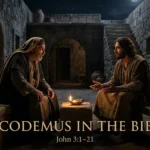
Who was Nicodemus, and why did he come to Jesus at night?
Nicodemus is the man Jesus was talking to when these words were spoken. John introduces him plainly: “There was a man of the Pharisees, named Nicodemus, a ruler of the Jews: The same came to Jesus by night” (John 3:1-2). He was not an outsider or a beginner. He was a Pharisee, a member of the group most careful about God’s law, and a ruler, one of the Jewish leaders in Jerusalem. He came respectfully, calling Jesus “Rabbi” and “a teacher come from God”, and admitting that Jesus’ miracles showed God was with Him (John 3:2). Why did he come at night? John never says, and any answer beyond the text is a guess. The suggestion most readers make is caution: a leading Pharisee visiting this controversial teacher openly, in daylight, could have cost him his standing among his colleagues. A quieter possibility is simply that he wanted a long, private conversation away from the crowds. The text settles neither. What the rest of John’s Gospel does show is that the night visit was not the end of his story. Later, Nicodemus spoke up in the council for a fair hearing for Jesus: “Doth our law judge any man, before it hear him, and know what he doeth?” (John 7:51). And after the crucifixion he came again, no longer hidden in the same way, bringing “a mixture of myrrh and aloes, about an hundred pound weight” to prepare Jesus’ body for burial (John 19:39). The most famous verse in the Bible grew out of this one man’s night time questions.
What does the bronze serpent in John 3:14-15 have to do with John 3:16?
John 3:16 does not stand alone. Two verses earlier, in the same conversation, Jesus pointed back to an Old Testament scene: “And as Moses lifted up the serpent in the wilderness, even so must the Son of man be lifted up: That whosoever believeth in him should not perish, but have eternal life” (John 3:14-15). The scene is Numbers 21. Israel, dying in the wilderness from the bites of fiery serpents, was given one remedy. God told Moses: “Make thee a fiery serpent, and set it upon a pole: and it shall come to pass, that every one that is bitten, when he looketh upon it, shall live” (Numbers 21:8). Moses “made a serpent of brass, and put it upon a pole, and it came to pass, that if a serpent had bitten any man, when he beheld the serpent of brass, he lived” (Numbers 21:9). The bitten people did nothing to heal themselves; they looked, and lived. Jesus takes that picture onto Himself. “Lifted up” in John’s Gospel is His own way of speaking about the cross; John says so outright when he explains the same phrase later (John 12:33). As the serpent was raised on a pole for dying people to look at, so the Son of man would be raised on the cross, and the promise attached is the very promise of verse 16: whosoever believeth in Him should not perish, but have eternal life. Verse 15 and verse 16 say it in nearly the same words, because verse 16 is the same good news stated from God’s side: the look of faith answered by the love that gave.
What does “whosoever” mean in John 3:16?
“Whosoever” is an old English word, and it means anyone at all who, every single person who. In the Greek, the phrase is pas ho pisteuon, literally “everyone who believes” or “all who are believing”. The little word pas, “all, every”, is what makes the promise as wide as it is. The verse names no nation, no family, no past and no level of goodness as a condition of being included. A Pharisee like Nicodemus hearing it, and the newest reader hearing it today, stand under the same wide word. The other half of the phrase matters just as much: “believeth in him”. The Greek word, pisteuon, means more than agreeing that something is true. In John’s Gospel, believing in Jesus means trusting Him, relying on Him, putting your weight on who He is and what He has done. It is also a settled, continuing trust, not a single nod given once and forgotten. So the searched question has two honest halves held together: the door of this verse is as wide as “whosoever”, and it opens in one way, through believing in the Son whom God gave.
What does “only begotten Son” mean, and why do some Bibles say “one and only Son”?
The difference readers notice between Bible versions comes from one Greek word: monogenes. The King James Version renders it “only begotten”, here and in the same words at John 1:14, where believers beheld Christ’s glory, “the glory as of the only begotten of the Father”, and at John 1:18, “the only begotten Son, which is in the bosom of the Father”. Many modern versions render it differently: the ESV reads “his only Son”, and the wording quoted in one section of this article, “one and only Son”, follows the NIV. Neither side is inventing words. The question is what monogenes itself carries. The word is built from monos, “only, alone”, joined to a second part that scholars have long discussed: many connect it with genos, “kind or class”, giving the sense “one of a kind, unique”; the older English rendering connected it with begetting, giving “only begotten”. The way the word is used elsewhere supports the note of uniqueness. In Hebrews 11:17, Abraham is said to have offered up Isaac, “his only begotten son”, although Abraham had another son, Ishmael; Isaac’s place was unique, as the child of the promise, and the word marks that place rather than counting children. That is the point every translation is reaching for in John 3:16: Jesus is God’s Son in a way no one else is, not one son among many equals. And “begotten” must not be read as though the Son had a beginning. John opens this same Gospel by saying the Word already was “in the beginning” (John 1:1-2). The word speaks of who He is, not of a moment when He started to be.
What does “perish” mean in John 3:16?
The Greek word is apoletai, from the verb apollymi, which means to destroy utterly, to ruin, and to be lost. It is a strong word, and John sets it in a deliberate contrast: “should not perish, but have everlasting life”. The same verb stands behind everyday loss elsewhere in the Gospels: it is the word used in Luke 15 for the sheep that was lost and the son who “was lost, and is found”. To perish, in this verse, is to be finally lost and ruined under God’s judgment, the opposite of the life God offers. John returns to the same contrast at the end of this chapter: “he that believeth not the Son shall not see life; but the wrath of God abideth on him” (John 3:36). Two honest notes belong with the word. First, the warning is real, but it is not God’s delight: Peter writes that God is “not willing that any should perish, but that all should come to repentance” (2 Peter 3:9), using the same word; the verse in John puts the gift first and the warning inside the offer. Second, Christians have debated among themselves what perishing finally involves, and this article does not settle that debate. What the word itself says, in its own sentence, is plain enough: there is a ruin from which this verse’s promise of everlasting life is the rescue, and the rescue is offered to whosoever believeth.
Who is “the world” that God so loved in John 3:16?
Two small words in this clause carry the question. The first is “so”. In Greek it is houtos, and its basic sense is “in this way, in this manner”. Before it measures how much God loved, it points to how He loved: this is how God loved the world, He gave His Son. English readers also hear the note of degree in it, and the gift itself shows the degree was beyond measuring, but the word’s first work is to point at the manner of the love, the giving. The second word is “the world”, in Greek kosmos. In John’s Gospel that word usually means the human world in its distance from God: the world that did not know its Maker when He came (John 1:10), the world that would hate Jesus’ followers (John 15:18-19). That is exactly what makes the sentence startling. God did not love a world that had first made itself lovable; He loved this one. The verb is from agapao, the love that seeks the good of the one loved at cost to itself, and here the cost is stated: He gave. On the scope of the word, faithful Christians read it in two main ways, and this article settles neither. Many read “the world” as every person without exception, pointing to verses like 1 John 2:2, where Christ is the propitiation “also for the sins of the whole world”, and 1 Timothy 2:4, where God “will have all men to be saved”. Others read it as God’s people gathered out of the whole world, from every nation rather than from Israel only, which would itself have been a shock to Nicodemus, who came expecting God’s kingdom to belong to his own people. What the text itself makes plain, and both readings hold, is this: God’s love in this verse is not fenced in by one nation, and its promise stands open to whosoever believeth in Him.
What does John 3:17 mean: “God sent not his Son into the world to condemn the world”?
The next verse is the searched companion of John 3:16, and the two belong together: “For God sent not his Son into the world to condemn the world; but that the world through him might be saved” (John 3:17). It states the purpose of Jesus’ coming. At His first coming, the mission was rescue, not sentencing. Jesus says the same of Himself later in this Gospel: “I came not to judge the world, but to save the world” (John 12:47). To condemn means to judge against someone and pass sentence on them. Verse 17 says that is not what the Son was sent to do; He was sent so that the world, through Him, might be saved. But the verse must be read with the one after it, or it gets bent out of shape: “He that believeth on him is not condemned: but he that believeth not is condemned already, because he hath not believed in the name of the only begotten Son of God” (John 3:18). The picture is not of a judge arriving to make people guilty. It is of a rescue arriving for people already in danger: the one who believes is not condemned; the one who refuses the rescue remains where he already was. So verse 17 guards verse 16 in both directions. God’s love is not a disguise for a mission of condemnation, and His love does not make a person’s response unnecessary. The Son came to save; the question the passage leaves with every reader is whether he will believe in the One who was sent.
Who actually said John 3:16, Jesus or John, and why is it not in red letters in some Bibles?
This question comes from something readers can see on the page. In red letter Bibles, the words of Jesus are printed in red, and in some editions John 3:16 appears in red, while in others the red stops earlier in the chapter and verse 16 is printed in black. The first thing to know is that red letters are a modern printing feature, not part of the original text. The first red letter New Testament was published in 1899, its editor printing the words of Jesus in red ink; the ancient copies of John’s Gospel have no such marking at all. Every red letter Bible is therefore an editor’s judgment about where Jesus’ spoken words end. In John 3, Jesus is speaking to Nicodemus, and in verses 14 and 15 He speaks of “the Son of man”, as He often did of Himself. From verse 16 onward, though, the wording changes: it speaks of “his only begotten Son” in the third person, the way a narrator speaks about Jesus rather than the way Jesus usually speaks of Himself. For that reason many scholars, and the editors who follow them, take verses 16 to 21 as the apostle John’s own explanation of what Jesus had been saying, and end the red letters at verse 15. Other editors print the red through verse 21, receiving the whole passage as Jesus continuing to speak. Editions genuinely differ, and faithful readers stand on both sides. This article does not settle the question. Either way, the verse stands in the middle of the Nicodemus conversation as part of this Gospel’s teaching, and its words mean what they say: the explanation, if it is John’s, is his Spirit guided summary of the very things Jesus had just told Nicodemus about being born again and lifted up.
Conclusion
The John 3:16 meaning centers on God’s incredible love, Jesus’ saving sacrifice, and the promise of eternal life through faith. This powerful verse continues to bring hope, comfort, and guidance to believers around the world.
When you reflect on its message, remember that God’s love is personal, His grace is available, and His promises remain faithful. Let this truth strengthen your faith and draw you closer to Him each day.
Discover More Articles
- Number 4 Meaning in the Bible: A Complete Biblical Guide
- Number 3 Meaning in the Bible: The Powerful Truth Revealed
- Number 3 Meaning in the Bible: The Powerful Truth Revealed