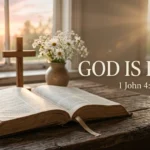
Have you ever opened your Bible and found a verse that seemed written just for you?
Maybe you were feeling worried, and you read words about peace. Perhaps you were facing a hard choice, and a verse gave you wisdom.
Many Christians experience these special moments through a daily Bible verse.
A daily Bible verse is more than a few words on a page. It can be a reminder of God’s love, a source of strength, and a light during difficult times.
In a busy world filled with noise and distractions, God’s Word helps us focus on what truly matters.
The Bible teaches that God’s Word is alive and powerful. It speaks to our hearts, comforts us when we are hurting, and guides us when we feel lost. That is why many believers begin their day by reading a verse from Scripture.
When a particular verse stands out to you, you may wonder if God is trying to tell you something.
Is there a deeper meaning behind it? Could it be a message of encouragement, correction, or hope?
Understanding the spiritual meaning of a daily Bible verse can help you grow closer to God and strengthen your faith.
Let’s explore what the Bible says about receiving guidance through God’s Word and how these verses can impact your daily life.
Biblical Meaning of Daily Bible Verse
The biblical meaning of a daily Bible verse is closely connected to God’s desire to communicate with His people. Throughout Scripture, God uses His Word to teach, guide, encourage, and transform hearts.
One of the most well-known verses about God’s Word is Psalm 119:105:
“Your word is a lamp to my feet and a light to my path.”
This verse shows that Scripture provides direction. Just as a lamp helps a traveler see the next step, God’s Word helps believers navigate life’s challenges.
A daily Bible verse can also serve as a reminder of God’s promises. When fear or uncertainty appears, verses about faith and trust can bring peace. For example, Isaiah 41:10 reminds believers not to fear because God is with them.
Another important purpose of a daily Bible verse is spiritual growth. In 2 Timothy 3:16-17, Scripture is described as useful for teaching, correcting, and training in righteousness. Every verse has the potential to shape our character and draw us closer to God.
Sometimes a verse brings encouragement. Other times it offers a gentle warning. God may use Scripture to help a believer recognize harmful habits or return to a faithful path. Hebrews 4:12 explains that God’s Word reaches deep into the heart and reveals what is inside us.
Many Christians also see a daily Bible verse as a divine message of comfort. During seasons of grief, stress, or confusion, certain passages seem especially meaningful. While the Bible should always be understood in context, God often uses His Word to remind believers of His presence and care.
A daily Bible verse is not a lucky sign or magical prediction. Instead, it is a powerful tool through which God speaks truth. The focus should remain on understanding His message rather than searching for secret meanings.
The positive symbolism connected to a daily Bible verse includes:
- Guidance during uncertain times
- Hope when life feels difficult
- Strength during challenges
- Wisdom for important decisions
- Peace in moments of fear
- Encouragement for spiritual growth
In some situations, a verse may also serve as a warning. God may use Scripture to call believers toward repentance, obedience, or deeper faith. Even these messages come from His love and desire to help His children grow.
Ultimately, every daily Bible verse points back to God’s character. It reminds believers that He is loving, faithful, and always present.
Spiritual Significance and Symbolism
The spiritual symbolism of a daily Bible verse goes beyond reading words on a page. It represents an ongoing relationship with God.
Each verse can become a reminder that God is actively involved in our lives. When believers spend time in Scripture, they open their hearts to His wisdom and guidance.
A daily Bible verse often symbolizes:
- Spiritual awakening
- God’s presence
- Faith and trust
- Personal transformation
- Renewed hope
Imagine starting your morning with a verse about God’s faithfulness. Throughout the day, that message stays with you. When challenges arise, you remember His promise and feel encouraged.
This simple practice can strengthen prayer, deepen faith, and build spiritual confidence.
Many Christians find that reading a daily Bible verse helps them focus on God rather than their worries. It becomes a daily reminder that they are not alone.
As faith grows, believers often notice positive changes in their attitudes, decisions, and relationships. God’s Word shapes the heart little by little, leading to lasting transformation.
Biblical Interpretations in Dreams or Real Life
Some people encounter Bible verses in dreams, while others repeatedly see certain Scriptures in daily life. These experiences often lead them to wonder about their spiritual meaning.
When a Bible verse appears in a peaceful dream, it may symbolize God’s comfort, encouragement, or reassurance. It can remind believers to trust Him during a difficult season.
If the dream feels urgent or challenging, the verse may point toward self-reflection, repentance, or a need for spiritual growth. Prayer and careful study can help clarify the message.
In real life, repeatedly encountering the same verse may encourage a believer to pay closer attention to a particular area of faith. Perhaps God is highlighting a promise, offering guidance, or reminding them of His presence.
However, Christians should avoid treating verses as fortune-telling tools. The best approach is to pray, study Scripture in context, and seek God’s wisdom with a humble heart.
Practical Lessons & Faith Insights
A daily Bible verse can become a powerful source of strength and guidance.
Take time to read, reflect, and pray about God’s Word each day. Ask Him what He wants to teach you. Trust His timing, follow His wisdom, and remember that every verse reveals something beautiful about His love and faithfulness.
FAQs
What is a daily Bible verse?
A daily Bible verse is a Scripture passage chosen for daily reading, reflection, prayer, and spiritual encouragement.
Why is reading a daily Bible verse important?
It helps believers grow in faith, understand God’s truth, receive guidance, and stay connected to His Word.
Can God speak through a daily Bible verse?
Yes. God often uses Scripture to teach, encourage, comfort, and guide believers according to His will.
What should I do when a Bible verse stands out to me?
Pray about it, study its context, and consider how its message applies to your life and faith journey.
Do Bible verses in dreams have spiritual meaning?
Sometimes they can provide encouragement, guidance, or reminders from God. Always compare dream experiences with biblical truth and prayer.
More Searched Questions About Daily Bible Verses
Where does the verse of the day come from, and who chooses it?
The verse of the day is chosen by people. It is not a list printed in the Bible, and the Bible itself assigns no verse to any date. Verse of the day features are produced by Bible apps, websites, churches and devotional books, and each publisher keeps its own list, usually prepared well in advance. The editors tend to pick verses that are much loved, that make sense on their own, and that encourage: promises, prayers and short sayings of Jesus return again and again, which is why the same famous verses keep appearing in every list. Some churches follow a lectionary, a shared cycle of set readings for each day, which is another kind of chosen list, older than any app. In every case the choice is an editorial one, made by people serving their readers, not a system laid down in Scripture.
That fact should neither disappoint you nor be forgotten. A chosen verse is still God’s word, and an editor’s choice can put the right verse in front of you on a hard morning. But its authority is the authority of the verse itself, not of the date it landed on. The verse was not measured out for your day by the calendar; it was given to God’s people when it was written, and it does its work as you read it honestly, in its own setting, and take it to heart.
Why do different apps and websites show a different verse for the same day?
Because there is no single official list for them all to copy. Each publisher keeps its own list and prints it in its own favourite translation, so on the same morning one app may show a psalm while a website shows a saying of Jesus, and both may word the verse differently as well. Some lists are built from a reading plan, some follow the church lectionary, some are simply an editor’s favourites arranged in a cycle, and the cycles are not even the same length. That is why a search for the verse of a particular date gives different answers on different sites: each site is honestly reporting its own list, and none of them is reporting a Bible calendar, because no such calendar exists.
So a difference between two lists is not an error to worry about. Neither verse becomes more or less God’s word by being chosen. What matters is what you do with the verse in front of you: read it where it stands in Scripture, understand what it says, and carry it into the day. The answers below show how.
How can I be sure what my daily verse really means?
Read it in its paragraph. A verse is one sentence in a longer piece of writing, spoken by someone, to someone, for a reason. Before asking what a verse means for you, ask what it meant where it stands: read the sentences before and after it, notice who is speaking and who is being spoken to, and if it is a promise, notice who the promise was first made to. A verse lifted out alone can be made to sound like almost anything; the paragraph around it keeps it honest, and it usually makes the verse stronger, not weaker. Take the most quoted daily verse of all as the example.
“For I know the thoughts that I think toward you, saith the LORD, thoughts of peace, and not of evil, to give you an expected end” (Jeremiah 29:11). Read alone, it is often used as a promise that God will quickly prosper whatever I am planning. Read in its letter, it says something steadier. Jeremiah 29 is a letter sent to the Jews who had been carried away captive to Babylon. In it God tells them to settle there: “seek the peace of the city whither I have caused you to be carried away captives, and pray unto the LORD for it” (Jeremiah 29:7), and He sets the promise at the end of a long wait: “after seventy years be accomplished at Babylon I will visit you, and perform my good word toward you” (Jeremiah 29:10). The expected end was real, but it was promised to a whole people in exile, on God’s timetable of seventy years, not as a guarantee that one person’s plans succeed this week. The context does not take the verse away from you. It teaches you what kind of comfort it is: the word of a God who thinks thoughts of peace toward His people even in a hard place, and who keeps His promise across a lifetime. That is a verse you can lean on, read whole.
What does Philippians 4:13 really mean in its context?
“I can do all things through Christ which strengtheneth me” (Philippians 4:13) may be the most printed daily verse in the world, on posters, clothing and sports gear. Paul wrote it from prison, in a letter thanking the Philippians for their gift, and the two verses before it define the “all things” he means: “Not that I speak in respect of want: for I have learned, in whatsoever state I am, therewith to be content” (Philippians 4:11). “I know both how to be abased, and I know how to abound: every where and in all things I am instructed both to be full and to be hungry, both to abound and to suffer need” (Philippians 4:12).
So the strength Christ gives in this verse is first of all strength to endure: to be hungry without despairing, to have plenty without forgetting God, to stay content in every state He allows. It is not a promise that you will succeed at anything you attempt, and Paul, who wrote it in chains after beatings and shipwreck, would not have read it that way. Read in context it is not smaller than the poster version. It is deeper: Christ strengthens His people for the abased days as surely as for the abounding ones, and a believer facing a diagnosis, a debt or a prison of any kind can claim exactly what Paul claimed.
Why does the verse of the day sound different in the King James Version, and does the translation change the meaning?
Because every translation puts the same Hebrew and Greek text into English of a different age and style, so one verse can wear different words. This article quotes Psalm 119:105 in modern wording: “Your word is a lamp to my feet and a light to my path.” The King James Version reads: “Thy word is a lamp unto my feet, and a light unto my path.” The difference is the English, not the verse: thy is the older word for your, and unto is the older word for to. Most verse of the day services let you switch translations, which is one more reason the same day’s verse can look different from one app to another.
Does the choice of translation change the meaning? In most daily verses, no: the same thought stands in each faithful rendering, in older or newer dress. Now and then a word will puzzle you in one version and clear up in another, and then comparing two or three translations side by side is a simple, honest way to understand the verse better. Read your daily verse in a translation you understand well, keep the KJV wording where you love it, and when the two differ in a way that matters, the paragraph around the verse, read in any of them, will usually show you what is meant.
Is reading one verse a day enough?
The Bible never sets a daily quota, not one verse and not one chapter. What it commends is a life in which God’s word is kept close all day long. His words were to be in Israel’s heart and on their lips “when thou sittest in thine house, and when thou walkest by the way, and when thou liest down, and when thou risest up” (Deuteronomy 6:7). Joshua was told to meditate in the book of the law “day and night” (Joshua 1:8), and the blessed man of the first psalm delights in God’s law and meditates in it “day and night” (Psalm 1:2). The picture is not a minimum dose to swallow, but a word to live inside.
So one verse a day is a good beginning, and far better than none: a single verse learned by heart has carried many believers through a hard day. But a verse is a doorway, not the whole house. Understanding grows as you read the paragraph the verse came from, then the chapter, and in time whole books, which is what the next answer describes. If one verse is all you can manage today, read it slowly, think about what it actually says, and pray it back to God. Let the habit deepen as it can, and do not measure your standing with God by a number that Scripture itself never set.
What is a daily Bible reading plan, and how is it different from a verse of the day?
A reading plan works through the Bible in order instead of picking single verses out of it. Some plans read the whole Bible in a year; since the Bible has 1,189 chapters, that works out at roughly three to four chapters a day. Others move more slowly, or follow the story in the order it happened, or read an Old Testament and a New Testament passage side by side. Like the verse of the day lists, plans are arrangements made by editors and teachers to help readers; no plan is commanded in Scripture, and readers are free to choose the pace they can keep.
The difference between the two habits is the difference between a taste and a journey. The verse of the day hands you one chosen sentence, often a famous one. A plan walks you through everything, including the parts nobody prints on a poster, so that each verse meets you with its context already around it and the whole story of Scripture slowly becomes familiar. The two fit well together: let the plan be the steady meal, and let one verse from it be the portion you memorise and carry through the day. If you are beginning, start with one Gospel (Mark is the shortest of the four), read a chapter a day, and build from there. A small portion read daily and understood beats an ambitious plan abandoned by February.
Is there a Bible verse for my birthday?
Not in the Bible itself. Scripture assigns no verse to any date, birthday or birth month, and birthdays appear in its pages only as passing details in other people’s stories, such as the Pharaoh’s birthday in Genesis 40 and Herod’s in Matthew 14. The birthday verses shared online are verses that friends, family or websites have chosen for the day, chosen the same way a verse of the day is chosen: by people, because the words fit the occasion.
Two things can be said honestly. Choosing a favourite verse to mark your birthday, to thank God for another year and to share it with the people who love you, is a cheerful and harmless use of Scripture; the verse gives thanks, it does not predict. What the Bible does not support is treating a verse matched to your date as a fortune, a lucky sign or a coded forecast of the year ahead. That is fortune telling with Bible words, and God’s word points His people away from reading signs and times (Deuteronomy 18:10 forbids the “observer of times”) and toward trusting Him directly. Bring a verse to your birthday as thanksgiving, and it will serve you well. Ask it to tell your future, and you are asking it to do something it was never given to do.
Conclusion
The meaning of a daily Bible verse is deeply connected to God’s guidance, love, and truth. Through Scripture, He encourages believers, strengthens faith, and provides hope for every season of life.
You encounter a verse during prayer, Bible study, or a meaningful moment in life, remember that God’s Word is a light for your path. Trust His message, seek His wisdom, and walk forward with faith, knowing He is always with you.