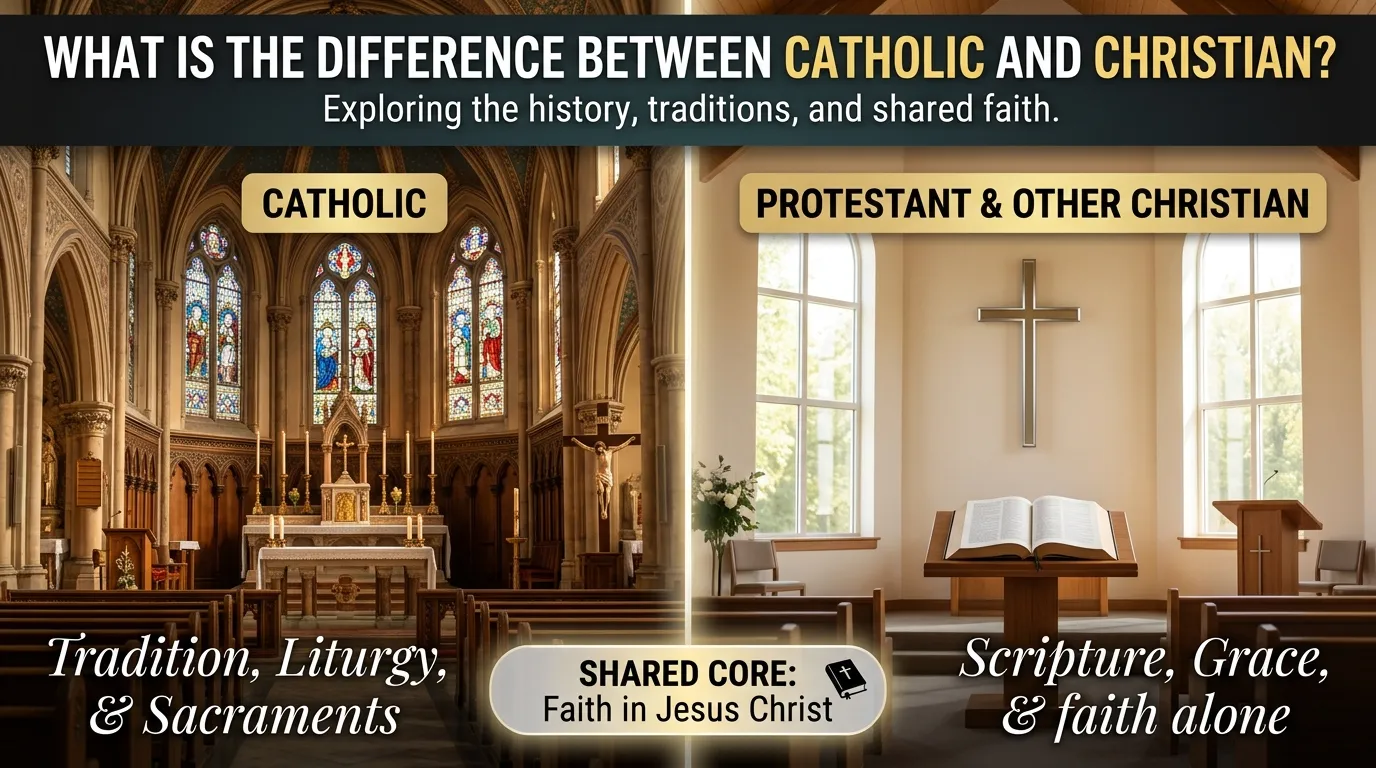
Are Catholics Christians is a question with a short answer: yes, Catholics are Christians. Catholic is one large branch inside the wider Christian faith, with its own rule and rites.
Christian is the wide name for all who trust Jesus Christ as Lord and Savior.
This guide explains what is shared, what differs, and how to talk with respect.
Confusion comes from labels, since Catholic and Christian sound like two faiths at times.
In daily speech, some use Christian to mean Protestant, while others use it for all believers.
Are Catholics Christians
Catholics believe in one God, Father, Son, and Holy Spirit, as all Christians do. They trust Jesus, who died and rose again, for pardon and endless life with God. They read the Word, pray, baptize, and share the Lord’s Supper each week. By every core mark of faith, Catholics stand inside the Christian family, not outside it.
The gap most people mean is between Catholic teaching and Protestant teaching and practice. That gap is real, and it covers rule, pardon, rites, Mary, and leaders. It grew over centuries, and it sharpened in the Reformation of the 1500s. Yet both sides still share Christ, Scripture, and the core creeds of the early church.
What Christians Share in Common
All Christians share belief in the Trinity: one God in three persons, Father, Son, and Spirit. They share belief that Jesus is true God and true man, born of Mary by grace. They share belief that he died for sins, rose again, and will come again in glory. They share baptism, prayer, and a call to love God and neighbor in life.
John 3:16 – For God so loved the world that he gave his one and only Son, that whoever believes in him shall not perish but have eternal life.
Shared faith also means shared Word, though Scripture size shifts by church, as shown later. It means a shared call: care for the people with low-income, the sick, and the stranger in need. It means shared hope beyond death, through Christ, not through human deeds alone. These shared roots matter, before any list of gaps, in fair and honest talk.
Biggest Difference Between Catholic and Christian
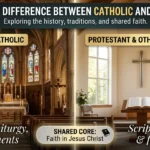
The biggest difference is that Catholicism is a branch of Christianity, not a separate religion. All Catholics are Christians because they believe in Jesus Christ as the Son of God and follow His teachings. However, Christianity also includes Protestant, Orthodox, and other churches. Catholics follow the Pope and recognize seven sacraments. Other Christian groups may follow different church leaders, beliefs, and ways of worship. All these groups share faith in Jesus, but they do not agree on every teaching.
Difference Between Catholic and Protestant
Catholics and Protestants both believe in Jesus Christ, the Bible, and salvation through God’s grace. Their main differences are in church authority and religious practices. Catholics follow the Pope and accept both the Bible and Church Tradition as sources of teaching. Most Protestants see the Bible as their highest authority and do not follow the Pope. Catholics recognize seven sacraments, while many Protestant churches recognize two: baptism and the Lord’s Supper. Their views on Mary and communion also differ.
How Old Is Catholicism vs Christianity
Christianity began in the first century AD, after the life, death, and resurrection of Jesus Christ. The Catholic Church traces its roots to Jesus and His apostles, especially Peter. This means Catholicism is not a religion that began centuries after Christianity. It developed within the early Christian Church. Over time, different Christian traditions formed. The Protestant Reformation began in the 1500s, while the Catholic Church continued its older traditions and leadership.
Christian vs Catholic vs Protestant
Christianity is the main faith that follows Jesus Christ. Catholicism and Protestantism are two major branches within it. Catholics follow the Pope, honor Church Tradition, and practice seven sacraments. Protestants belong to many different churches, such as Baptist, Methodist, and Lutheran. Most Protestants do not accept the Pope as their leader. Both groups believe in Jesus, His death, and His resurrection. Their main differences are in church leadership, Bible teachings, and religious practices.
Is Christian and Catholic Can Be Together
Yes, Catholics and other Christians can build strong friendships, share their faith, and even marry. Both groups believe in Jesus Christ, so they have many shared values. They may also pray together and take part in some shared Christian events. However, some church rules and worship practices are different. If a Catholic wants to marry another Christian, the Catholic Church requires permission from the local bishop. Love, respect, and honest talks can help couples understand these differences.
What Is the Difference Between Catholic and Christian Bible
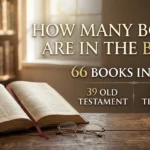
The main difference between Catholic and most Protestant Christian Bibles is the number of books. A Catholic Bible has 73 books, while most Protestant Bibles have 66. Both have the same 27 books in the New Testament. The Catholic Old Testament includes seven additional books: Tobit, Judith, Wisdom, Sirach, Baruch, and 1 and 2 Maccabees. It also has extra parts of Esther and Daniel. Both traditions share most of the same Bible.
Difference Between Catholic and Baptist
Catholics and Baptists both believe in Jesus Christ as the Son of God. However, they have different views on baptism, church leadership, and religious practices. Catholics baptize infants and adults, while Baptists usually baptize people who can make their own choice to follow Jesus. Catholics follow the Pope and recognize seven sacraments. Baptists do not follow the Pope and place strong focus on personal faith and the Bible. Both groups value prayer and the teachings of Jesus.
What’s the Difference Between Catholic and Orthodox
Catholic and Eastern Orthodox Christians share many ancient beliefs, including faith in Jesus, the Trinity, and the sacraments. However, they have different church leaders and views on some teachings. Catholics recognize the Pope as their highest church leader. Orthodox Christians follow their own bishops and do not accept the Pope’s authority over all churches. They also differ on some church practices and the wording of the Nicene Creed. Both traditions have deep roots in early Christianity.
Authority: Bible, Tradition, and the Church
Rule is the root gap, since it drives most other gaps in this guide. Catholic teaching holds final rule in Scripture plus church ways, read by leaders. Leaders here means the pope and bishops, who teach with rule in the church. Scripture and old church ways work as one, with the church as guide and guard.
Protestant teaching holds Scripture alone as the final rule for faith and life. Old church ways and leaders aid reading, but they do not stand above Scripture. This rule grew in the Reformation, when reformers urged a return to the Word first. From this one gap flow gaps on pardon, rites, Mary, and leaders.
Apostles sit at the heart of both views, though churches read their role in own ways. Catholic teaching traces bishops back to the apostles, in a line through time. Protestant churches honor the apostles as witnesses, whose teaching lives on in the Word. Both honor the apostles, yet they differ on how apostles’ rule works in church today.
Salvation: Faith, Grace, and Works
Both sides agree that rescue comes through Jesus Christ, by grace, not by deeds alone. Catholic teaching joins faith with grace, works of love, and rites like baptism. Works here mean acts of love and good deeds, done in grace, not wages paid to God. Pardon grows through faith, turning from sin, and a life shaped by grace in church.
Other teaching stresses faith alone, with works as fruit, not as a price for pardon. Good deeds prove faith is real, but they do not earn God’s grace or life. That stress guards grace from becoming a deal, where deeds buy a place with God. Catholic teachers deny that charge, since they too root pardon in grace from Christ.
Fair talk avoids two false claims: Catholics do not earn heaven by deeds alone. Protestants do not shun obedience, since faith that lives bears fruit in love. Both urge turning from sin, trust, and a changed life, in own terms and ways. The shared core is Christ, grace, and faith, with works as love in response.
Sacraments, Worship, and the Eucharist
Catholic churches count seven rites: baptism, confirmation, Eucharist, penance, anointing, orders, and marriage. Most other churches count two rites: baptism and the Lord’s Supper, with own names. Rites in the first view give grace as signs, while rites in the second show faith as signs. That rank gap shapes worship, church life, and the role of priests in each church.
Worship also differs in form, since Mass centers on Eucharist, Scripture, and prayer in set rites. Other worship centers more on preaching, prayer, song, and the Lord’s Supper at times. Both aim at praise, Word, and sharing, yet their order, dress, and tone differ much. Guests should learn local norms, and join with respect for the host church.
The Eucharist holds the sharpest worship gap, in how Christ is present in bread and wine. Catholic teaching holds transubstantiation: bread and wine become body and blood of Christ. The signs stay bread and wine, while the inner being changes by God’s power. Most other churches hold a sign or spirit presence, which shifts by church and creed.
Mary, the Saints, and Prayer
Catholics honor Mary as mother of Jesus, and ask saints to pray for them in heaven. Honor here means deep respect, not worship, since worship belongs to God alone in faith. Catholics pray to God, while they ask Mary and saints to join their prayers, as friends do. That point is key, since many Protestants hear saint prayer as worship of saints.
Most other churches honor Mary and saints for their faith and witness in past ages. Prayer, however, goes to God alone, through Christ, with no saint as a link. That view guards a direct way to God, which Christ won for all by grace. Both sides honor Mary, yet they differ on her role in prayer and church life.
Catholic teaching also holds the Immaculate Conception: Mary was conceived without original sin by grace. That dogma, set in 1854, honors Mary’s pure start as mother of Christ the Lord. It does not mean Mary saves us, since Christ alone is Savior in their faith too. Other churches do not hold this dogma, and they read Mary’s state in own ways.
The Bible: 73 Books or 66 Books
Catholic Bibles hold 73 books, while most Protestant Bibles hold 66 books. The gap sits in old books called deuterocanonical books by Catholic churches. These include Tobit, Judith, Wisdom, Sirach, Baruch, and Maccabees books, plus added parts. Protestant Bibles place most of them as Apocrypha, apart from canon, or omit them.
Deuterocanonical means second canon, since these books gained canon rank through Greek church use. They came through the Septuagint, the Greek old text read by early Christians wide. Reformers set them apart, since Hebrew lists did not count them as canon. The shared core stays firm, while these edge books shift in rank by church and rule.
Purgatory, Confession, and Church Leadership
Purgatory is a Catholic belief in cleansing after death, before heaven, for saved souls. It is not a second chance for the lost, nor a place of hell for the doomed. Souls in purgatory are saved, yet they need cleansing from sin’s stain before glory. Prayers, Mass, and alms aid them, in Catholic teaching, as acts of love in church.
| Topic | Catholic teaching and practice | Most other teaching and practice |
| Final rule | Scripture plus church ways, read by leaders | Scripture alone as final rule |
| Head of the church | Pope, Peter’s heir, with bishops | Christ as head, local leaders, no pope |
| Rites | Seven rites | Two rites, baptism and Lord’s Supper |
| Eucharist | Real presence through transubstantiation | Sign or spirit presence, shifts by church |
| Mary and saints | Loved and asked to pray for them | Loved in past ages, prayer to God alone |
| Confession | To a priest for pardon | Direct to God in prayer |
| Bible | 73 books, with added books | 66 books, Apocrypha apart or left out |
| Purgatory | Held as cleansing before heaven | Mostly not held |
| Shared Christian belief | What it means in life |
| One God, Father, Son, and Holy Spirit | Worship, prayer, and baptism in the name of the Trinity |
| Jesus died and rose again | Pardon, new life, and hope beyond death |
| Rescue through Jesus Christ | Trust in Christ, not in human deeds alone |
| Scripture as God’s Word | Reading, preaching, and living by the Word |
| Love of neighbour | Care for the people with low-income, the sick, and the stranger |
How to Talk About the Differences With Respect
Start with shared faith, not with blame, when you talk across church lines. Name the other side in its own best terms, and check that your account is fair. Ask what a teaching means to those who hold it, before you judge its worth. That habit builds trust, and it keeps debate from turning into scorn or spite.
Avoid two traps: saying Catholics earn heaven, or saying Protestants shun good deeds. Both traps twist the other side, and they close ears to truth and grace. Use plain terms, cite the Word and creeds with care, and own where you may err. Respect does not mean all views match, but it means truth told with love and grace.
FAQ
Are Catholics Christians or are they a separate religion
Catholics are Christians, not a separate faith apart from the Christian family. They share Trinity, Christ, Scripture, baptism, and hope beyond death with all Christians. The gaps lie inside one faith, on rule, rites, Mary, and leaders. Catholic is a branch name, while Christian is the wide name for the whole family.
What is the main difference between Catholic and Protestant
The main gap is rule: Scripture plus ways and leaders, versus Scripture alone. That root gap shapes views on pardon, rites, Mary, Scripture size, and leaders. Catholic churches count seven rites, while most Protestant churches count two rites. The Reformation sharpened this gap, though shared faith in Christ remains firm.
Do Catholics worship Mary
No, Catholics do not worship Mary, since worship belongs to God alone in faith. They honor Mary with deep respect, and ask her to pray for them, as friends do. Prayer to God stays first, while saint prayer asks for joined prayer in heaven. Protestants pray to God alone, but Catholics deny that honor equals worship here.
Why does the Catholic Bible have more books
Their Bibles hold 73 books, since they count deuterocanonical books as canon in full. These books came through the Greek Septuagint, read by early Christians in worship. Protestant churches set them apart as Apocrypha, since Hebrew lists did not count them. The core books match, while edge books shift in rank by church and rule.
Do Catholics believe in salvation by faith alone
Catholics do not use faith alone in that sense, since they join faith with grace and works. Works mean acts of love in grace, not wages that buy pardon from God. Pardon rests on Christ, grace, and faith, with turning from sin and church rites. Protestants stress faith alone, with works as fruit, not as price, for life.
Can a Catholic attend a Protestant church, or a Protestant attend Mass
A Catholic may attend a Protestant service, but should not take Supper there as a rule. A Protestant may attend Mass, but should not receive this Supper without Catholic norms met. Each church sets Supper rules from its own view of church, rites, and unity. Guests should ask, respect local norms, and join in prayer and song with care.
Is purgatory in the Bible
Purgatory as a named place does not appear in Scripture by that name. Catholic teaching draws it from texts on prayer for the dead and cleansing fire. Protestants read those texts in own ways, and do not hold purgatory as doctrine. The gap rests on rule and reading, not on one plain verse alone.
Conclusion
Catholics are Christians, inside one faith with shared Trinity, Christ, and hope. Gaps on rule, pardon, rites, Mary, Scripture size, and leaders are real and deep. Rule drives most gaps, from Scripture alone to Scripture plus ways and leaders. Fair talk names each side well, and keeps Christ and grace at the heart.
Discover More Post
- Seek First the Kingdom of God: Meaning, Context, and Daily Life
- With God All Things Are Possible: Meaning of Matthew 19:26
- How Many Books Are in the Bible? 66, 73, 81, and Why the Number Changes
- Ethiopian Bible in English: Books, History and How to Read It

Hi, I’m James Patterson, a storyteller who loves creating thrilling mysteries, unforgettable characters, and page-turning adventures. Through TheBiblimeaning, I share insights about authors, books, literary meanings, biographies, and the stories behind famous writers. My goal is to help readers discover the deeper world of literature while enjoying engaging and informative content.