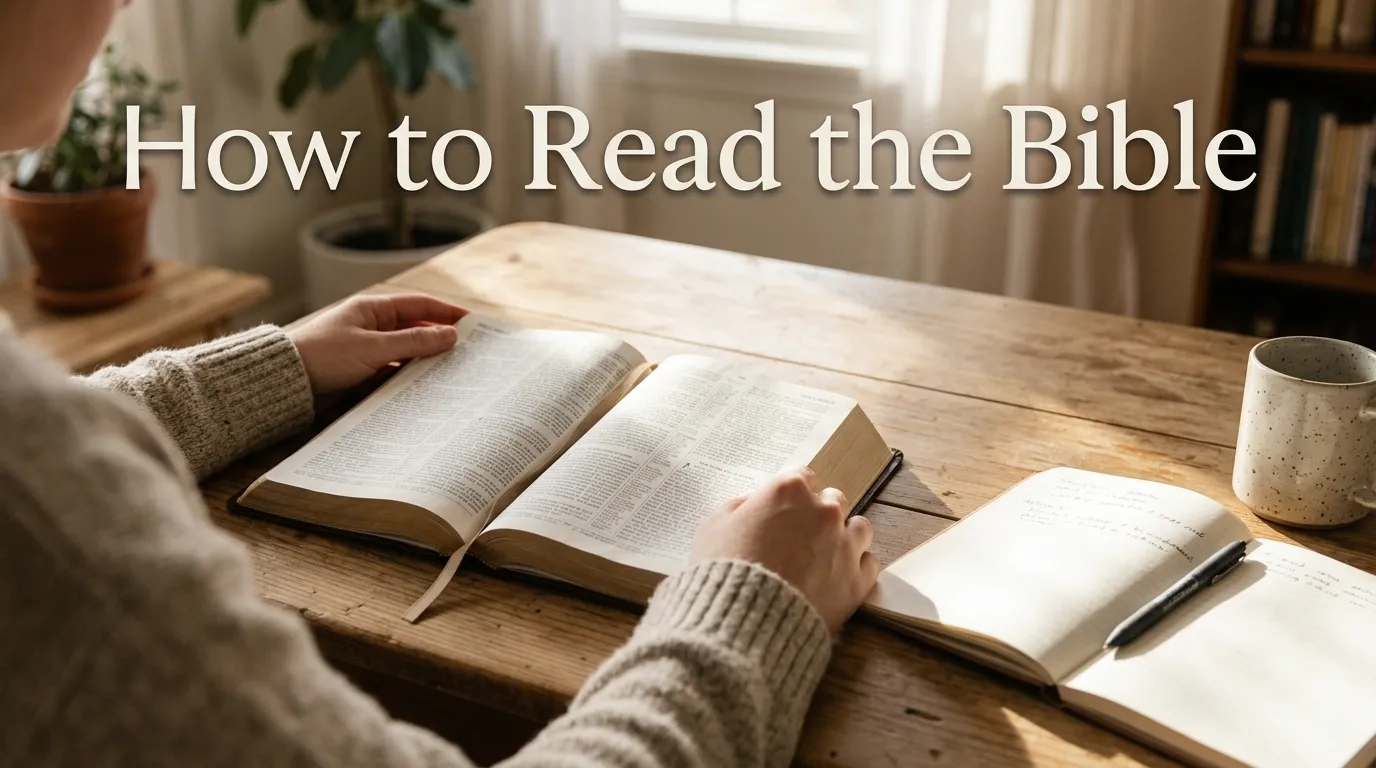
To read the Bible well, start with Jesus, read a little each day, and ask simple questions. You need not start on page one, finish in one year, or understand it all at once.
A steady habit of prayer, slow reading, and honest thought will carry you far. It beats a rushed plan that you drop after a few weeks of strain.
Reading feels hard at first, since the Bible holds many books, genres, and ancient cultures.
A Law, poetry, letters, and visions each need a separate way of reading and care.A good plan, a clear translation, and a simple method can ease the path a lot.
Why Reading the Bible Feels Hard at First
The Bible is not one book, but a library of books from many times and lands. It holds law for Israel, songs for worship, letters for churches, and visions of hope. Each genre speaks in its own way, so one flat reading rule fails for all parts. Poetry is not law, and visions are not news reports, in sense or form.
Old names, places, and customs can also slow a beginning reader down a lot. A map, a short guide, and notes in a study Bible can fill those gaps well. Do not feel shame for slow reading, since even wise readers need help with difficult parts. Steady steps, with prayer and patience, beat fast skips that leave gaps in sense.
Where to Start Reading the Bible
Start with Jesus, since he is the center of the whole Bible story and faith. John tells who Jesus is, Mark tells his deeds fast, and Acts tells church birth. Romans then gives doctrine in depth, though it needs slow reading in small parts. That path, John, Mark, Acts, and Romans, suits new readers best of all.
A second path follows the main story, from creation to Christ and church in order. Read Genesis, Exodus, Samuel, Kings, Luke, and Acts, for the broad arc of faith. Law parts will slow you down, so use notes, keep going, and do not stall. Psalms and Proverbs alongside a Gospel add prayer and wisdom to each day.
How to Read the Bible in Order
If you want to understand the Bible from beginning to end, start with Genesis and follow the books in their printed order. This helps you learn about creation, God’s promises, Israel’s history, Jesus, and the early church. You can also try a chronological reading plan to follow events in the order they happened. For a clearer picture, read the Gospels after the Old Testament history. Take notes as you go, and focus on the main message of each book.
How to Read the Bible Chapters
Reading one Bible chapter at a time can make your study easier. Begin with a short prayer, then read the full chapter without rushing. Look for the main people, events, and lessons. Ask yourself what the passage teaches about God and how it relates to daily life. If a verse feels hard to understand, read the verses around it for more context. Write down one key thought after each reading. This simple habit can help you grow in knowledge.
How to Read the Bible Online
Reading the Bible online gives you an easy way to study Scripture at home or on the go. Open a digital Bible, choose a book, and select the chapter you want to read. You can search for words, compare translations, and save verses for later. Some digital editions also offer audio reading, which can help when you are busy. Choose a clear translation and check the full passage before drawing a lesson from one verse. This keeps your study focused and clear.
How to Read the Bible SOAP Method
The SOAP method gives you four simple steps for Bible study: Scripture, Observation, Application, and Prayer. First, read a short passage and write down one verse that stands out. Next, note what the verse says and what is happening in the passage. Then think about how its message can guide your choices or actions. End with a short prayer about what you have learned. You do not need long notes. A few honest thoughts can make your daily study more meaningful.
How to Read the Bible App
A Bible app can help you read Scripture during a busy day. Choose an app with a clear layout, trusted Bible translations, and reading tools that match your needs. Start by picking one book, such as John or Mark, and set a small daily goal. You may also use audio features to listen while walking or resting. Save useful verses and return to them later. Remember, an app is only a tool. The real value comes from reading, thinking, and learning.
How to Read the Bible for Beginners
Starting the Bible can feel hard when you do not know where to begin. A good first step is to read the Gospel of Mark or John. These books introduce Jesus, His teachings, and His work. After that, read Acts to learn how the early church began. Keep your daily reading short, and write down any questions you have. You do not need to know every name or event at once. Give yourself time to learn and enjoy the process.
How to Read the Bible James Kugel
James Kugel’s book How to Read the Bible: A Guide to Scripture, Then and Now offers a different way to explore biblical texts. It looks at well-known stories and explains how ancient readers understood them. It also discusses how modern scholars study the Bible’s history, language, and meaning. This book may help readers who want to explore Scripture beyond basic daily reading. It is more academic than a beginner’s guide, so take your time with its ideas and examples.
How to Read the Bible Daily
A daily Bible reading habit does not need to take much time. Choose a regular time, such as early morning or before bed, and find a quiet place. Start with one chapter or a few verses each day. Read slowly and think about one lesson you can use in your life. You can keep a small notebook for meaningful verses and questions. If you miss a day, simply begin again. A steady routine can help you understand Scripture one step at a time.
Choose a Translation You Can Understand
Choose a translation you grasp at first read, in words that feel clear and plain. Test it on known passages, like Psalm 23, John 1, and Romans 8, read aloud. If the words feel stiff, try another version, since clarity aids faith and joy. A version you read beats a grand version that sits shut on a shelf.
Study Bibles add notes, maps, and guides, but notes must not replace the text itself. Use notes to check sense, genre, and past context, then return to the passage. Compare two versions on hard verses, to see where words shift in sense and tone. That habit guards against one flat reading, and builds trust in the text itself.
A Simple Daily Reading Habit
A simple habit beats a grand plan: pray, read slow, note one truth, and act. Start with a short prayer, asking God to open eyes, mind, and heart for truth. Read a small passage twice, slow, and mark one verse that stands out in light. Note one truth, one question, and one step to live before the day ends.
Psalm 119:105 – Your word is a lamp for my feet, a light on my path.
Keep the habit small, at ten to fifteen minutes, at a set time and place. Morning suits many readers, since the day is fresh and the mind is clear. Night suits others, since the day can be reviewed in prayer and calm. Pick one time, guard it, and restart with grace when a day is missed.
How to Understand What You Read
Understand in three steps: observe facts, grasp sense, and apply one truth in life. Observe who, what, where, and when, in the passage, with care and patience. Grasp sense by asking what it meant first, to its first readers in their day. Apply by asking what one step it calls for, in speech, work, or love today.
Context guards sense, since a verse cut from its chapter can mislead the reader. Read the lines before and after, note that writing’s aim, and check genre in view. Ask how the passage fits the whole story, from creation to Christ and church. That wide view keeps small verses from bearing weight they were not meant to bear.
Simple Study Methods That Work
SOAP is a plain method: Scripture, Observation, Application, and Prayer, in that order. Pick one verse, note what you see, name one step, and pray it in own words. It takes ten to fifteen minutes, and it suits daily use for most readers well. Its strength is focus, since one verse gets full care, not a rushed skim.
| Reading path | Best for | What to watch for |
| John, Mark, Acts, Romans | New believers who want to meet Jesus first | Do not rush Romans; read it slowly and in small sections |
| Main story path: Genesis, Exodus, Samuel, Kings, Luke, Acts | Readers who want the big story from start to finish | Law sections will slow you down; use notes and keep going |
| Chronological plan | Readers who want events in time order | Some books will be split across days, which can feel choppy |
| One year plan with Old and New Testament daily | Steady readers who want full coverage | Missed days can pile up; restart daily rather than catching up all at once |
| Psalms and Proverbs alongside a Gospel | Readers who need prayer and daily wisdom | Treat Psalms as prayers and songs, not as rules for every situation |
Verse mapping digs deeper, with key words, linked verses, context, and a personal note. It takes twenty to thirty minutes, and it suits a weekly study slot with care. Group study adds voices, since shared notes catch blind spots and spark fresh sense. Listening while reading aids many, since ears and eyes together hold the text well.
| Study method | Steps | Time needed |
| SOAP | Scripture, Observation, Application, Prayer | 10 to 15 minutes |
| Observation, interpretation, application | Facts, meaning in own words, one action | 15 to 20 minutes |
| Verse mapping | Key words, related verses, context, personal note | 20 to 30 minutes |
| Group study | Read aloud, share observations, discuss application, pray | 45 to 60 minutes |
| Listening and reading together | Listen to audio while following the text | Length of the passage, often 5 to 10 minutes |
What to Do With Hard Parts, Doubt, and Dry Days
Hard parts need patience, since some passages deal with war, law, or visions of doom. Read them in context, check genre, and seek a wise guide or friend for sense. Do not force a verse to answer a question it does not address in its day. Note the puzzle, move on, and return with fresh eyes and more learning later.
Doubt is not a sin to hide, since even strong believers ask hard questions of faith. Name the doubt in prayer, read honest books, and talk with trusted friends in church. Dry days come too, when prayer feels flat and reading feels like a chore. Keep the small habit, rest in grace, and let feelings catch up with faith in time.
FAQ
How do I start reading the Bible for the first time
Start with Jesus, in John, then Mark, Acts, and Romans, in that clear order. Read a little each day, pray first, and note one truth and one step. Use a clear translation, a study Bible for notes, and a set time and place. That small start will grow into a steady habit, with joy and sense in time.
Should I read the Bible from Genesis to Revelation
You can read straight through, but it is not the best path for most new readers. Law and lists in the middle can stall a reader, and cause a plan to fail. A Jesus first path, or a main story path, gives sense and momentum at the start. Straight through suits later, once the main story and genres are known well.
How much should I read each day
Ten to fifteen minutes a day, with one small passage, suits most readers well. Quality beats bulk, since one verse grasped beats a chapter skimmed in haste. On busy days, read one verse, pray it, and carry it through the day. On free days, read more, but keep the habit small enough to last all year.
What is the best Bible translation for beginners
The best version is one you grasp at first read, in clear and plain English. Test versions on Psalm 23, John 1, and Romans 8, read aloud, for sense. Popular clear versions suit most new readers, with notes to aid hard parts. Pick one, use it daily, and compare with another on hard verses for sense.
What is the SOAP Bible study method
SOAP means Scripture, Observation, Application, and Prayer, in four plain steps. Pick a verse, note what you see in it, name one step, and pray. It takes ten to fifteen minutes, and it suits daily use for most readers. Its focus on one verse builds care, prayer, and action, day by day.
What do I do when I do not understand a passage
Read the lines around it, check genre, and note that writing’s aim and past context. Compare two versions, use study notes, and ask a wise friend or guide. Note the puzzle, move on, and return later with fresh eyes and more learning. Do not force a sense, since patience often clears what haste leaves dark.
How can I stay consistent with Bible reading
Set a fixed time and place, keep the passage small, and track days with grace. Link reading to a daily habit, like breakfast, coffee, or a walk at dawn. If you miss a day, restart the next day, without catching up all at once. A friend, a group, or a plan can add cheer and care to the habit.
Conclusion
Reading the Bible well starts with Jesus, a clear version, and a small daily habit. Use paths that fit your stage, methods that fit your time, and notes with care. Face hard parts, doubt, and dry days with patience, prayer, and trusted friends. Over time, the whole story will grow clear, and faith will grow deep and strong.
Start today, with John, a short prayer, and ten minutes of slow reading. Note one truth, take one step, and thank God for light on the path. Let the Word shape speech, work, rest, and love, day by day, in grace. May your reading bring wisdom, peace, and a closer walk with God each day.
Discover More Post
- Seek First the Kingdom of God: Meaning, Context, and Daily Life
- With God All Things Are Possible: Meaning of Matthew 19:26
- How Many Books Are in the Bible? 66, 73, 81, and Why the Number Changes
- Ethiopian Bible in English: Books, History and How to Read It

Hi, I’m James Patterson, a storyteller who loves creating thrilling mysteries, unforgettable characters, and page-turning adventures. Through TheBiblimeaning, I share insights about authors, books, literary meanings, biographies, and the stories behind famous writers. My goal is to help readers discover the deeper world of literature while enjoying engaging and informative content.