Think about the last time someone showed you real kindness. Maybe a stranger helped you when your car broke down.
Maybe a friend sat with you during a hard season. That warm feeling you felt? The Bible says it has a name, and a source. It comes from God.
Love is the heartbeat of the Christian faith. It is not just a feeling. It shows up even when life gets messy.
Many people search for the biblical meaning of love because they want more than the love they see on TV or in movies. They want something deeper. Something that lasts. Something that heals.
The Bible talks about love more than almost any other topic. It tells us where love comes from, what it looks like, and why it matters so much.
It also shows us that love is not always easy. Sometimes it costs something. Sometimes it means forgiving someone who hurt you.
So what does the Bible really say about love? Let’s look closer at this beautiful, powerful word and what it means for your life today.
Biblical Meaning of Love
In the Bible, love is not just an emotion. It is an action rooted in God’s character. The Apostle John wrote one of the most famous lines about this: “God is love” (1 John 4:8). This means love did not start with people. It started with God himself.
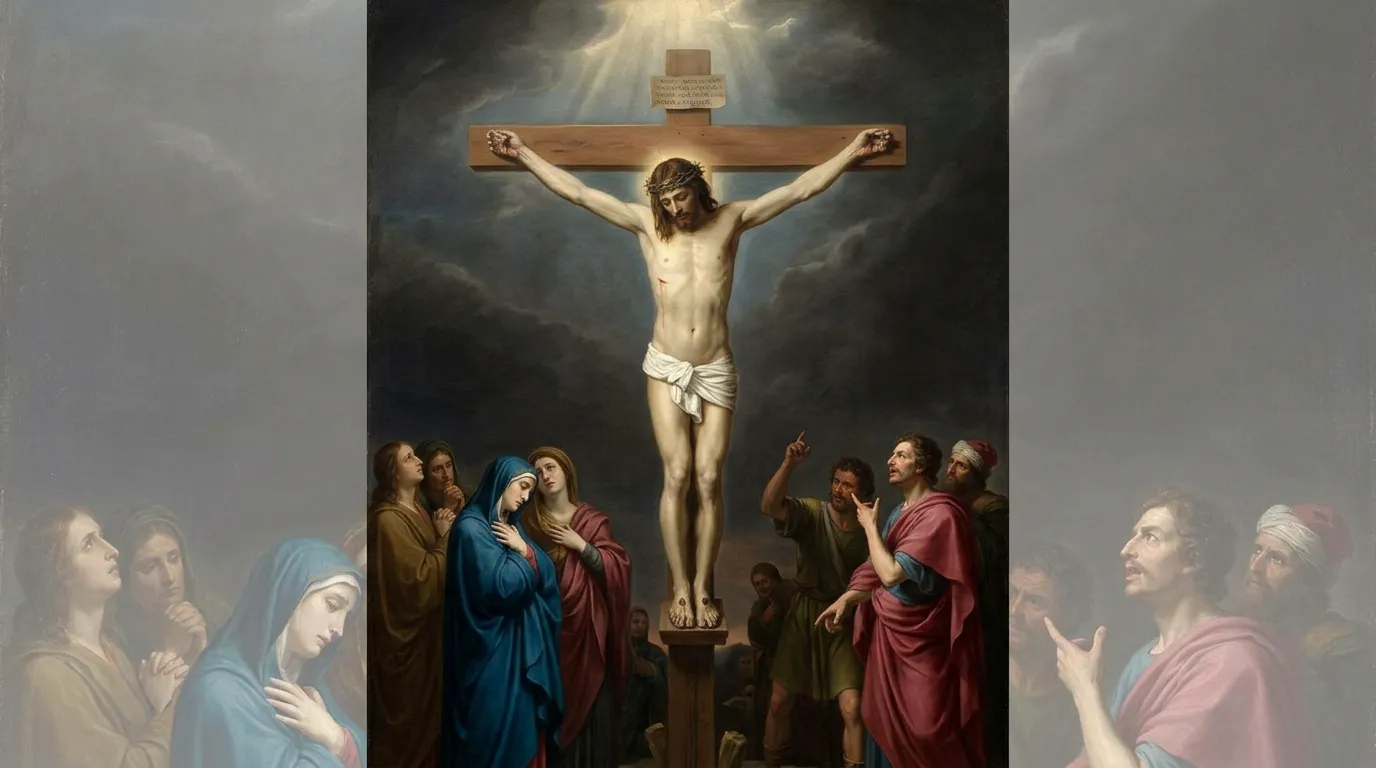
The most famous Bible verse about love is John 3:16: “For God so loved the world, that he gave his only Son.” This shows that real love gives. It does not hold back. It sacrifices for the good of others.
The Bible also describes what love looks like in daily life. In 1 Corinthians 13:4-7, Paul writes: “Love is patient and kind; love does not envy or boast; it is not arrogant or rude.” This passage is often called the “Love Chapter.” It strips away the fake parts of love and shows the real thing.
Greek has several words for love — though the New Testament itself mainly uses Agape and Phileo: Storge appears only inside compound words, and Eros does not appear in the Greek New Testament at all. The words are:
- Agape unconditional, selfless love (God’s love for us)
- Phileo brotherly love and friendship
- Storge family love
- Eros romantic love
Agape love is the highest form. It is the love God shows us, even when we don’t deserve it. Romans 5:8 says, “God shows his love for us in that while we were still sinners, Christ died for us.” That is love with no conditions attached.
The Bible also warns us about false love. 1 John 3:18 says, “Let us not love in word or talk but in deed and in truth.” This means love is proven by action, not just words. Saying “I love you” means little if your actions don’t match.
There is also a warning about loving the wrong things. 1 John 2:15 cautions believers not to “love the world or the things in the world.” This is not about hating people or creation. It means our hearts should not be ruled by money, fame, or selfish desires.
Love, in its truest biblical sense, points us back to God. Every act of real love is a small reflection of his nature.
Spiritual Significance and Symbolism
Love is more than a topic in the Bible. It is a spiritual path. When we learn to love like God loves, something inside us begins to change.
This is called transformation. Galatians 5:22 lists love as the first fruit of the Spirit. This means love grows in us as we walk closer with God. It is not something we force. It is something that blooms naturally as our faith deepens.
Think about a mother forgiving her child after a hard day. Or a friend who stays loyal even when it’s inconvenient. These small moments are spiritual lessons. They teach us patience, humility, and grace.
Love also connects to prayer. When we pray for people who hurt us, something softens in our hearts. This is divine love working through us, even when our human heart wants to hold a grudge.
Many Christians find that loving others becomes easier the more they understand how loved they already are by God. It starts with him. Then it flows outward to everyone around us.
Biblical Interpretations in Dreams or Real Life
Sometimes people dream about love. A wedding. A reunion. A warm embrace. These dreams can carry spiritual meaning.
A peaceful dream about love may be a gentle reminder from God that you are cherished. It might point to healing in a relationship or a season of emotional restoration coming your way.
A dream where love feels missing or broken might reflect real fears or wounds. This is not a bad sign. It may simply be your heart asking God for comfort and reassurance.
In real life, moments of unexpected kindness often feel like small whispers from heaven. A stranger’s smile. A timely phone call. These moments can feel like God reminding you that you are not alone, and that love is always near, even in hard seasons.
Whatever the form, these signs invite reflection. They ask us to slow down and notice where love is showing up in our lives.
Practical Lessons & Faith Insights
Let love guide your choices, even when it’s hard. Forgive quickly. Speak kindly. Show up for people. Real love is patient and selfless. Trust that God’s timing brings the right love, friendship, or healing into your life when you need it most. Pray for a heart that loves like his.
FAQs
1. What is the biblical meaning of love?
Love in the Bible means selfless, sacrificial care for others, rooted in God’s nature. It is shown through actions, not just words.
2. What is the greatest commandment about love?
Jesus said the greatest commandments are to love God fully and to love your neighbor as yourself (Matthew 22:37-39).
3. What does 1 Corinthians 13 teach about love?
It teaches that love is patient, kind, humble, and never gives up. It describes love’s true character.
4. Can love be a sign from God?
Yes. Many believers see unexpected kindness or peace as gentle signs of God’s presence and care.
5. How can I grow in biblical love?
Spend time in prayer, read scripture, and practice forgiveness and kindness daily. Love grows through faith and practice.
More Searched Questions About the Biblical Meaning of Love
What does the Bible say about true love?
True love, in the Bible, is not measured by how strong a feeling is but by whether it matches God’s own pattern. It bears with people “with all humility and gentleness, with patience” (Ephesians 4:2), it is “speaking the truth in love” rather than flattering to keep the peace (Ephesians 4:15), and it counts others above itself, looking to their interests and not only its own (Philippians 2:3–4). That is how true love can be recognised: it serves — “through love serve one another” (Galatians 5:13) — it stays honest, and it costs the giver something for the sake of the person loved, which is exactly what God showed us in Christ.
Does God love me?
Yes — and the Bible makes it personal, not only general. God says to His people, “you are precious in my eyes, and honored, and I love you” (Isaiah 43:4). Zephaniah pictures God Himself rejoicing over the people He has rescued: He “will rejoice over you with gladness; he will quiet you by his love” (Zephaniah 3:17). And Jesus told His followers, “As the Father has loved me, so have I loved you” (John 15:9). God’s love is not His reward for your perfection; His kindness is meant to lead you to repentance and bring you home to Him (Romans 2:4). The question the Bible presses is not whether God loves you, but whether you will receive the love He has already shown in Christ.
What is the difference between love and respect in the Bible?
Love and respect are partners, not rivals, but they are not the same thing. Love gives itself for the other person’s good; respect honours the other person’s God-given worth. Paul joins the two in a single verse about marriage: “let each one of you love his wife as himself, and let the wife see that she respects her husband” (Ephesians 5:33). Peter tells husbands to live with their wives “in an understanding way,” showing them honour (1 Peter 3:7) — and respect reaches beyond marriage, for Scripture says, “Honour all men” (1 Peter 2:17, KJV). Love without respect can turn controlling, and respect without love can turn cold; the Bible holds both together.
What does it mean when you dream about love or someone you love?
Honestly, the Bible gives no fixed meaning for dreaming about love, about a wedding, or about a person you love — Scripture contains no dream dictionary that decodes them. It does show God sometimes speaking through dreams, as He did to Joseph and to Daniel, but it also warns that not every dream comes from God (Deuteronomy 13:1–3) and observes that “a dream comes with much business” (Ecclesiastes 5:3): dreams often simply process whatever fills our waking thoughts, hopes and longings. So a dream about love is safest read as a window into your own heart, not as a prediction or a promise. Let it move you to prayer, and test everything by Scripture instead of treating the dream itself as a message.
Why is love called the greatest? (“The greatest of these is love”)
Paul ends the love chapter with this line: “So now faith, hope, and love abide, these three; but the greatest of these is love” (1 Corinthians 13:13). Why the greatest? Faith and hope, in one sense, belong to this life — hope that is seen and fulfilled is no longer hope (Romans 8:24) — but love belongs to God’s own eternal nature and will never end (1 Corinthians 13:8). Love is also the one virtue that sums up every command, for “love is the fulfilling of the law” (Romans 13:10). Faith trusts God and hope waits for God, but love is God-like itself — which is why Paul sets it above even the other two lasting virtues.
What does “love one another” mean?
“Love one another” is not an old suggestion — Jesus called it His new commandment: “A new commandment I give to you, that you love one another: just as I have loved you, you also are to love one another” (John 13:34). The new part is the standard. The old measure was “as you love yourself”; the new measure is “as I have loved you,” and Jesus had just washed His disciples’ feet and was about to go to the cross. He said this love would be the mark by which everyone would know His disciples (John 13:35), and Paul taught that love between people is what fulfils God’s law in everyday life (Romans 13:8–10). It is a command to obey, not only a warmth to feel.
Conclusion
Love is the heart of the Christian faith. It comes from God and flows through us to others.
If in scripture, prayer, or daily moments, love reminds us we are never alone. May you feel God’s love wrap around you today, and may it overflow into every life you touch.