Imagine standing at the edge of a deep river, with no bridge in sight and no way across. You feel stuck, weighed down, and tired of trying to fix things on your own.
Then someone reaches out a hand and says, Let me carry you to the other side. That is what salvation feels like in the Bible. It is not something we build with our own strength.
Many people ask, What does salvation really mean? They hear the word in church, in songs, and in prayers, but they want to understand it on a deeper level.
They want to know how it applies to their own life, their own struggles, and their own search for peace.
Salvation is one of the most important words in the entire Bible. It speaks of rescue, freedom, and a new beginning. It is God’s answer to humanity’s brokenness.
In this article, we will explore the true biblical meaning of salvation, what scripture says about it, and how it can bring hope, healing, and peace into your everyday life. Let’s walk through this together and discover what God’s Word reveals about this beautiful gift.
Biblical Meaning of Salvation in the Bible
In the Bible, salvation means being rescued from sin and brought into a right relationship with God. The word comes from the Hebrew word yeshuah, which means deliverance, rescue, or safety. In the New Testament, the Greek word soteria carries the same idea of being saved from danger and given new life.
At its core, salvation is about being set free.Free from death. Free from separation from God. The Bible teaches that all people have sinned and fallen short of God’s perfect standard (Romans 3:23). Because of this, we need a Savior. That Savior is Jesus Christ.
John 3:16 says it best: For God so loved the world, that he gave his only Son, that whoever believes in him should not perish but have eternal life. This verse shows the heart of salvation. It is rooted in God’s love, not in our own effort or good works.
Ephesians 2:8-9 makes this even clearer: For by grace you have been saved through faith. And this is not your own doing; it is the gift of God, not a result of works, so that no one may boast. Salvation cannot be earned. It is received through faith in Jesus.
But salvation is not only about avoiding punishment. It is also about restoration. It is God bringing us back into relationship with Him, the way a father welcomes home a child who was lost (Luke 15:11-32). This is the heart of the gospel. Divine grace reaching down to lift us up.
Salvation also brings peace. Romans 5:1 says, Therefore, since we have been justified by faith, we have peace with God through our Lord Jesus Christ. This peace is not based on circumstances. It is based on a settled relationship with God, secured forever through Christ’s sacrifice on the cross.
Spiritual Significance and Symbolism
Salvation is more than a doctrine. It is a living, breathing reality that touches every part of a believer’s life. It represents transformation, the moving from darkness into light, from death into life (Colossians 1:13).
When someone receives salvation, they are not just forgiven. They become a new creation. Second Corinthians 5:17 says, If anyone is in Christ, he is a new creation. The old has passed away; behold, the new has come. This is a spiritual awakening. Old habits, old fears, and old burdens begin to fall away as the Holy Spirit works within.
In daily life, this might look like a person finding the strength to forgive someone who hurt them deeply. It might look like someone choosing patience instead of anger, or someone returning to prayer after years of feeling distant from God. These small moments are signs of salvation working itself out in real, practical ways.
Salvation also symbolizes belonging. Once a person is saved, they become part of God’s family (Galatians 3:26). No longer alone, no longer wandering, but adopted, accepted, and loved.
Biblical Interpretations in Dreams or Real Life
Sometimes people sense the call of salvation through quiet moments of conviction. A heavy feeling in the heart, a longing for peace, or a sudden awareness of needing God can all be ways the Holy Spirit gently draws someone closer.
In dreams, some believers report images of light breaking through darkness, open doors, or being pulled from deep water. These can reflect the soul’s hunger for rescue and renewal. A peaceful dream often points to comfort and assurance, while a troubling or stormy dream may reflect inner struggle or a call to seek God more earnestly.
Whether through quiet reflection, prayer, or a dream, these experiences often point to one truth. God is reaching out. He desires for every heart to know His salvation and rest in His peace.
Practical Lessons & Faith Insights
Salvation reminds us that we are loved beyond what we can earn. Take time today to pray, reflect, and open your heart to God’s grace. Trust His timing, even in uncertain seasons. Salvation is not just a moment. It is a daily walk of faith.
FAQs
What is the simplest definition of salvation in the Bible?
Salvation means being rescued from sin and given eternal life through faith in Jesus Christ.
Can salvation be lost?
Many believers find comfort in verses like John 10:28-29, which speak of eternal security in Christ’s hand. Different Christian traditions interpret this differently, so it helps to study scripture and seek guidance from your church community.
Is salvation only about going to heaven?
No. Salvation also brings peace, purpose, and transformation in this life, not just after death.
Do good works save us?
No. The Bible teaches salvation comes through faith and grace, not good works (Ephesians 2:8-9). Good works are a response to salvation, not the cause of it.
How do I know if I am truly saved?
Scripture points to faith in Jesus, confession, and the presence of the Holy Spirit changing your heart (Romans 10:9-10).
More Searched Questions About Salvation in the Bible
What does the Greek word soteria mean, and how much does it cover?
The article above names the word in a single line: the Greek word for salvation is soteria, and the Hebrew word behind it is yeshuah. What that line does not show is how wide the word reaches when Scripture actually uses it. At the Red Sea, with an army behind Israel and water in front, Moses told the people: “Fear ye not, stand still, and see the salvation of the LORD, which he will shew to you to day” (Exodus 14:13). The rescue there was from soldiers and slavery, seen with the eyes on a single day. Centuries later Jesus walked into the house of a cheating tax collector who had just promised, “the half of my goods I give to the poor; and if I have taken any thing from any man by false accusation, I restore him fourfold”, and He pronounced the word over that changed life: “This day is salvation come to this house, forsomuch as he also is a son of Abraham” (Luke 19:9).
The verb of the same family, sozo, is even more revealing, because the King James translators print it two ways. In most places it is “saved”, but in the healing stories it comes out as “made whole”. To the woman healed of twelve years of bleeding, Jesus said: “Daughter, thy faith hath made thee whole; go in peace, and be whole of thy plague” (Mark 5:34). The same sentence stands at Matthew 9:22 and at Luke 17:19, spoken to a leper. One word family therefore covers rescue from an army, rescue from sickness, and rescue from sin, and the Saviour’s own name carries it: “thou shalt call his name JESUS: for he shall save his people from their sins” (Matthew 1:21). Jesus is the Greek form of the Hebrew name Yeshua, the LORD saves. Salvation in the Bible is wider than escaping punishment after death. It is God rescuing people and making them whole, in body and in soul, now and at the end.
What must I do to be saved?
This exact question is asked inside the Bible itself, by a jailer in Philippi who thought his prisoners had escaped and his life was over: “Sirs, what must I do to be saved? And they said, Believe on the Lord Jesus Christ, and thou shalt be saved, and thy house” (Acts 16:30-31). Paul gives the same answer with the inside and the outside of it shown: “That if thou shalt confess with thy mouth the Lord Jesus, and shalt believe in thine heart that God hath raised him from the dead, thou shalt be saved. For with the heart man believeth unto righteousness; and with the mouth confession is made unto salvation” (Romans 10:9-10). The heart believes; the mouth owns it openly. The jailer heard the word that same night and was baptized before the night was out (Acts 16:33).
Notice what neither answer contains. There is no list of achievements to complete first, no waiting period, no price, and no class of people quietly excluded. The answer to “what must I do” is a Person to believe on, and the believing is itself the receiving, because the work that saves was done by Him: “Neither is there salvation in any other: for there is none other name under heaven given among men, whereby we must be saved” (Acts 4:12). Confession is not a fee paid on top of faith. It is faith finding its voice, the mouth agreeing out loud with what the heart has already laid hold of.
Is baptism necessary for salvation?
Few sentences are quoted more often in this discussion than Peter’s words on the day of Pentecost: “Repent, and be baptized every one of you in the name of Jesus Christ for the remission of sins, and ye shall receive the gift of the Holy Ghost” (Acts 2:38). Paul tells his own conversion the same way, repeating what Ananias said to him: “And now why tarriest thou? arise, and be baptized, and wash away thy sins, calling on the name of the Lord” (Acts 22:16). Peter’s letter joins in, with its own careful qualifier kept in place: “baptism doth also now save us (not the putting away of the filth of the flesh, but the answer of a good conscience toward God,) by the resurrection of Jesus Christ” (1 Peter 3:21). Mark’s Gospel also joins believing and baptism in one sentence: “He that believeth and is baptized shall be saved; but he that believeth not shall be damned” (Mark 16:16). One honest note belongs with that last text: it stands in the longer ending of Mark, and the earliest surviving copies of the Gospel end at Mark 16:8, which is why the discussion is usually argued from Acts and the letters.
Christians read these texts in two main ways, and this article sets them side by side without settling between them. Roman Catholic, Orthodox, Churches of Christ and a number of other teachers take the Acts pattern at face value: in the book of Acts, believing, repenting and being baptized arrive together as one response, forgiveness is spoken of at the water, and so baptism is God’s appointed means, normally necessary, with God Himself not bound where baptism is impossible. Most Baptist and many evangelical teachers answer that salvation is given at faith, and they point to texts like the house of Cornelius, whose household had “received the Holy Ghost” before any water was brought (Acts 10:47), and to the thief on the cross, who was never baptized and still heard, “To day shalt thou be with me in paradise” (Luke 23:43). On this reading, baptism is the commanded first act of obedience that follows faith and pictures the washing the texts speak of. What the two readings share is not small: both take baptism to be Christ’s own command, never an optional extra for believers, and both refuse to pull Acts 2:38 and Acts 10 apart from each other.
Can a saved person lose their salvation?
The strongest words on one side of this question are words of Jesus Himself: “And I give unto them eternal life; and they shall never perish, neither shall any man pluck them out of my hand. My Father, which gave them me, is greater than all; and no man is able to pluck them out of my Father’s hand” (John 10:28-29). No outside force, on this text, can tear a believer out of two hands at once. It is the passage the article’s own FAQ above points to, and it deserves its full weight.
The strongest words on the other side are warnings, and they are just as plain. Hebrews describes people “once enlightened, and have tasted of the heavenly gift, and were made partakers of the Holy Ghost, And have tasted the good word of God, and the powers of the world to come”, and then says: “If they shall fall away, to renew them again unto repentance; seeing they crucify to themselves the Son of God afresh, and put him to an open shame” (Hebrews 6:4-6). The same letter warns: “For if we sin wilfully after that we have received the knowledge of the truth, there remaineth no more sacrifice for sins” (Hebrews 10:26). And Paul tells real believers to “work out your own salvation with fear and trembling” (Philippians 2:12, given its full place in the tenses answer below). Teachers hold these together in different ways. Those who teach eternal security read John 10 as the Lord’s own guarantee, and read Hebrews 6 as describing people who stood close to the things of God and tasted much, yet were never truly His, pointing to John’s words about those who left: “if they had been of us, they would no doubt have continued with us” (1 John 2:19); on this reading the warnings are real warnings, and they are among the very means by which God keeps His people from falling. Teachers in the Wesleyan and Arminian traditions, and many others, read the warnings at face value: they are written to believers, they mean what they say, and a person who truly received Christ can by settled refusal fall away, while John 10 remains a true promise to the sheep who hear His voice and follow. Roman Catholic teaching adds that the state of grace can be lost through mortal sin and restored through repentance. This article does not declare a winner between these readings. It only insists on the ground none of them gives up: no side reads John 10 as permission to live carelessly, and no side treats Hebrews 6 as light reading.
How can I know that I am truly saved?
The article’s FAQ gives this question one line, and it deserves far more, because the apostle John wrote a whole letter to answer it: “These things have I written unto you that believe on the name of the Son of God; that ye may know that ye have eternal life, and that ye may believe on the name of the Son of God” (1 John 5:13). Notice the difference between his two books. The Gospel was written “that ye might believe that Jesus is the Christ, the Son of God; and that believing ye might have life through his name” (John 20:31). The letter was written so that people who already believe might know. Assurance, in John’s design, is not a rare feeling granted to a few. It is the intended state of ordinary believers, and it rests first on what is written: God’s promise in ink, steady when feelings are not.
The same letter then gives its evidences, and they travel together. There is the inward witness: “The Spirit itself beareth witness with our spirit, that we are the children of God” (Romans 8:16). There is the direction of a life: “hereby we do know that we know him, if we keep his commandments” (1 John 2:3). And there is love for other believers, set down as a proof a person can actually check: “We know that we have passed from death unto life, because we love the brethren” (1 John 3:14). John does not offer any one of these as a performance to be graded. He piles up promise, witness, obedience and love so that assurance stands the way a table stands, on several legs. One warning completes the picture: claiming the promise while refusing the Christ of the promise is not the assurance John describes. His evidences belong together, and a faith that holds the written word, feels the Spirit’s witness, and is visibly turning toward obedience and love has exactly the knowledge his letter was written to give.
What does it mean to be born again, and how is that different from salvation?
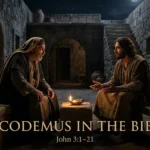
The words come from a night conversation with a ruler named Nicodemus: “Verily, verily, I say unto thee, Except a man be born again, he cannot see the kingdom of God” (John 3:3). Nicodemus took the words at their most literal and asked how a grown man could enter his mother’s womb a second time. Jesus pressed the point rather than softening it: “Verily, verily, I say unto thee, Except a man be born of water and of the Spirit, he cannot enter into the kingdom of God” (John 3:5), and added: “Marvel not that I said unto thee, Ye must be born again” (John 3:7). The Greek word rendered “again” can also carry the sense “from above”, and many teachers think John intends both sounds at once: a second birth, and a birth whose origin is heaven, worked by the Spirit and not manufactured by the person born.
What the “water” of John 3:5 means is read in more than one way, and this article labels the main readings rather than settling them. Many teachers across the traditions read the water as baptism, often joined with Paul’s phrase for the same new birth: God “saved us, by the washing of regeneration, and renewing of the Holy Ghost” (Titus 3:5). Others read the water as natural birth, pointing to the contrast Jesus draws in the very next verse: “That which is born of the flesh is flesh; and that which is born of the Spirit is spirit” (John 3:6), flesh birth first, Spirit birth second. Others again read it through the word of God, since Peter says believers are “born again, not of corruptible seed, but of incorruptible, by the word of God, which liveth and abideth for ever” (1 Peter 1:23). As for the difference readers search for between being born again and being saved: the new birth names the beginning, the moment the Spirit gives life to a person who had none toward God. Salvation is the larger word for the whole rescue, which includes the new birth but reaches wider: sins forgiven, a life kept by God now, and a final rescue still to come, as the next answer shows. The new birth is the doorway. Salvation is the whole house.
Is salvation past, present, or future in the Bible?
All three, and the New Testament uses all three tenses without embarrassment. Past: “For by grace are ye saved through faith; and that not of yourselves: it is the gift of God” (Ephesians 2:8). The Greek verb there stands in a tense used for a finished act whose result continues: something done, and still standing. Present: Paul calls the preaching of the cross “unto us which are saved it is the power of God” (1 Corinthians 1:18), and the Greek there carries the present, those who are being saved. That is the tense of his command to the Philippians: “work out your own salvation with fear and trembling” (Philippians 2:12). Work out, not work for: the very next verse gives the reason working out is possible at all, “For it is God which worketh in you both to will and to do of his good pleasure” (Philippians 2:13). Salvation is being carried forward in a life by the God who began it.
Future: “now is our salvation nearer than when we believed” (Romans 13:11), and Paul can write of believers as people who, “being now justified by his blood, we shall be saved from wrath through him” (Romans 5:9). Teachers often gather the three tenses into one short line: saved from the penalty of sin, being saved from its power, and one day saved from its very presence. That line is a teacher’s summary, not a verse, but it fairly labels what the texts do. It is also the honest answer to the lists of types of salvation, three types or five types or seven, that teachers sometimes draw up. The Bible does not print several salvations to be collected. It prints one salvation, received whole in Christ, and then unfolds it across a believer’s life in past, present and future tenses.
Will God save everyone in the end?
The texts behind this hope are real, and they are quoted here at full strength. Paul says God “will have all men to be saved, and to come unto the knowledge of the truth” (1 Timothy 2:4). Peter explains why judgment waits: the Lord “is longsuffering to us-ward, not willing that any should perish, but that all should come to repentance” (2 Peter 3:9). God’s stated will is salvation, and His stated unwillingness is that anyone perish. Any answer that makes God eager for people to be lost has already left these verses behind.
The same Bible, however, sets another sentence beside them, and it is one sentence with two outcomes: “And these shall go away into everlasting punishment: but the righteous into life eternal” (Matthew 25:46). Behind the English words “everlasting” and “eternal” stands one Greek word, aionios, applied to both destinies in the same breath. Teachers read the tension in two main ways, and this article does not settle between them. Most teachers across the church’s history hold that God’s desire is sincere and His offer genuine, but that He does not save by force; the verses about His will declare what He delights in and provides for, and the judgment texts stand for those who refuse Him to the end. A minority line of teachers, found in every age and guessed at by Origen in the early church, holds that a saving will like God’s cannot be defeated forever: punishment is corrective, and in the end every refusal will be overcome and every person saved. Whichever reading a person takes, the texts close off two easy errors at once: God takes no pleasure in anyone perishing, and the warnings of judgment are not empty words.
Is the sinner’s prayer found in the Bible?
Honestly stated: no prayer of set words, called the sinner’s prayer, is printed anywhere in the Bible. The name and the practice grew common in the revival preaching of the last two centuries, where hearers ready to turn to God were led to repeat a prayer aloud, confessing sin and asking Christ to save them. That does not make the practice foolish. It means the words themselves are a human doorway, not a Bible text, and they should never be quoted as though Scripture contained them.
The closest thing in Scripture to such a prayer is shorter and rougher. A tax collector in the temple “would not lift up so much as his eyes unto heaven, but smote upon his breast, saying, God be merciful to me a sinner” (Luke 18:13), and Jesus said that man went home justified. Readers also ask whether God hears the prayers of sinners at all, and point to the healed blind man’s words: “Now we know that God heareth not sinners: but if any man be a worshipper of God, and doeth his will, him he heareth” (John 9:31). Those are the man’s own words about God honouring the reverent, spoken in the heat of a debate; they are not a law shutting out the repentant, for the same Testament shows an angel telling Cornelius, a man still outside the faith, “Thy prayers and thine alms are come up for a memorial before God” (Acts 10:4). And the promise Paul attaches to being saved is not tied to any formula but to a cry: “For whosoever shall call upon the name of the Lord shall be saved” (Romans 10:13). Even the familiar picture of asking Jesus into one’s heart rests on a verse whose own setting is different: “Behold, I stand at the door, and knock: if any man hear my voice, and open the door, I will come in to him, and will sup with him, and he with me” (Revelation 3:20) was spoken first to a church, the lukewarm church at Laodicea, calling it back to fellowship. So the gentle conclusion is this. A person who has prayed such a prayer with a sincere heart has done the very thing the Bible does ask: turned from sin and called on the Lord. What saves, on Scripture’s own showing, is never the exact wording. It is the repentance and faith the words carry, and God, who heard a publican’s seven words, hears them still.
Conclusion
Salvation is God’s gift of rescue, love, and new life. It is not earned, but received through faith in Jesus Christ.
Wherever you are today, know that God’s grace is reaching out to you. Open your heart, and let His peace lead you home.
Discover More Post
- Adrian Name Meaning in Bible: Is This Name in the Bible?
- Jacob Name Meaning in Bible: Biblical Meaning & Lessons
- Sanctify Meaning in the Bible: God’s True Purpose

I’m Nicholas Sparks, and storytelling has always been my passion. Through TheBiblimeaning, I share insights about my books, unforgettable characters, romance, emotions, and the deeper meanings behind my stories. This platform brings readers closer to my writing journey, latest releases, and the inspiration that shapes every novel I create.