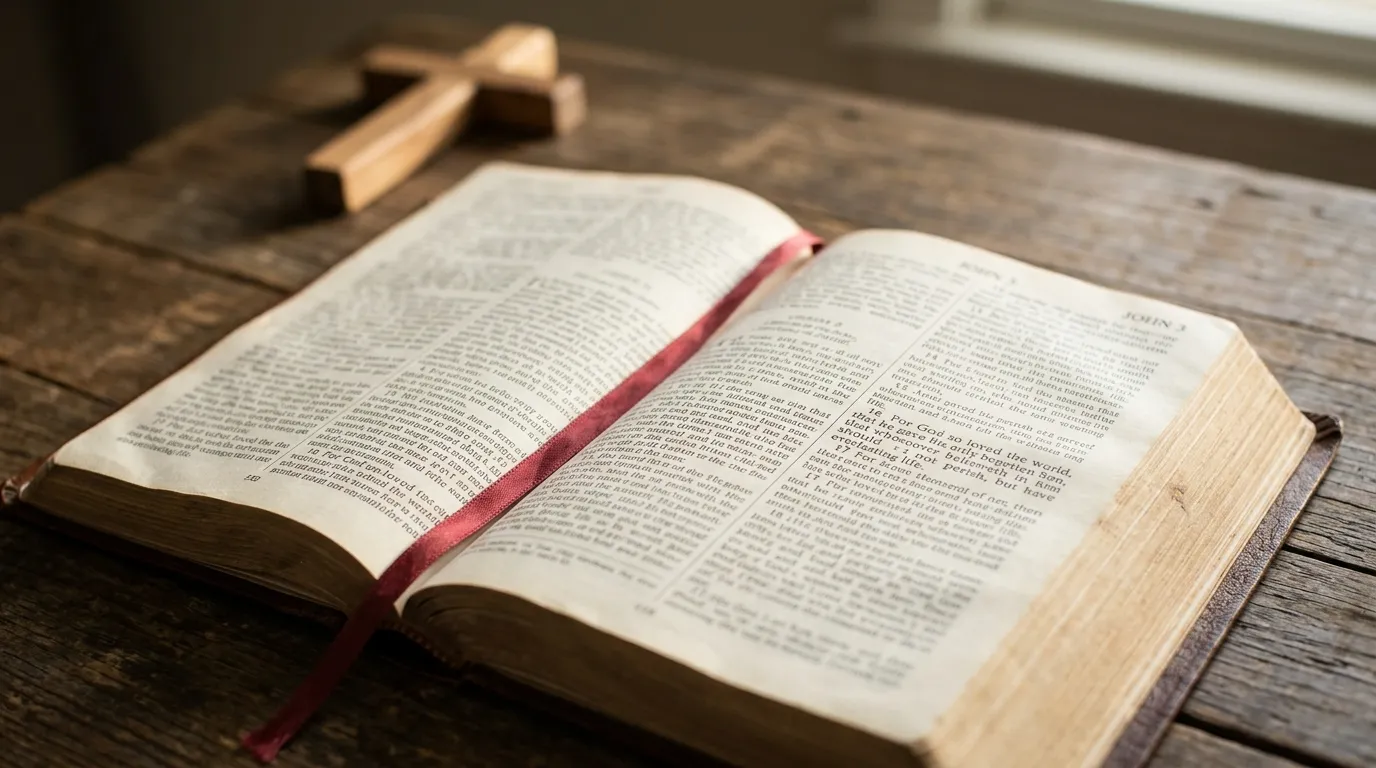
A random Bible verse is a single verse chosen without a planned reading order, often by a generator, a verse card, a daily verse app, or simply opening the Bible at random.
It can be a fresh way to start prayer, break a reading rut, discover a passage you would not have chosen, and memorize Scripture.
It works best when you read the verse in its chapter, pray about it honestly, and apply one small truth for today.
It works poorly when you treat a random verse as a secret personal prophecy, a guarantee about a decision, or a replacement for reading the whole Bible.
This guide explains how generators work, gives you a safe five minute method, shows you how to use random verses alone and in groups, and answers common questions with clear Bible wisdom.
What Is a Random Bible Verse
A random Bible verse is any verse selected by chance rather than by a book by book plan. Generators do this with a database. Some generators draw from a few hundred carefully chosen verses. Others draw from all 31,000 plus verses in the Bible. Some let you filter by topic, such as hope, love, strength, peace, anxiety, or forgiveness. Some let you choose a translation, such as King James Version, which is in the public domain and therefore free to share in full, or a modern version.
Physical tools also create random verses. Verse cards, promise boxes, and books of daily verses have been used for generations. You draw a card, read the verse, and reflect. The idea is the same as a digital generator, only slower and more tactile. Both methods can help, and both need the same wisdom about context.
A verse of the day is slightly different. It is the same verse for all visitors on a given date, chosen by an editor or an algorithm. A random verse is different each time you click or draw, even on the same day. Both can be useful, but a verse of the day is easier to share with a friend or group because everyone sees the same text.
Why People Love Random Verses
People love random verses for several simple reasons. First, they break routine. If you always read the same favorite passages, a random verse can take you to a book you rarely open, such as Lamentations, Habakkuk, or Philemon. Second, they are quick. One verse fits into a busy morning, a commute, or a break at work. Third, they are memorable. A short, surprising verse is easier to carry in your mind all day than a long chapter you skimmed.
Fourth, random verses can spark conversation. In a small group, everyone can share what they notice in the same random verse, and different life experiences bring out different insights. Fifth, they can help memorization. A verse a day, reviewed the next day, adds up to 365 verses in a year, though in practice most people remember a smaller number well, and that is still a good result.
Finally, random verses can feel timely. When a verse about God seeing you appears on a day you feel unseen, as in Genesis 16:13 where Hagar names God as the God who sees me, it can bring comfort. That comfort is real, even if the verse was not written only for that moment. God word can speak through many passages to many situations, because its truths about God character and human need are timeless.
How Random Verse Generators Work
Most online generators use a curated list, not the entire Bible. For example, one popular generator uses 439 King James Version verses across 44 books, tagged by topic. Another uses 461 hand picked passages. A third draws from more than 1,400 verses when you include all topics. Curated lists are safer for daily devotion because they avoid verses that are hard to understand alone, such as genealogies, laws about ancient rituals, or violent judgment passages that need careful teaching.
Generators usually work in three steps. First, they pick a verse at random from their database, sometimes filtered by your topic or translation choice. Second, they show the reference, such as Philippians 4:13 or Psalm 23:1, so you can verify it in your own Bible. Third, they offer share, copy, or image options for social media. Some also offer a short reflection, a prayer prompt, or a link to the full chapter.
That simplicity is a strength and a weakness. It makes Scripture accessible, but it can hide context. A verse taken alone can sound like a promise it was never meant to be. For example, Jeremiah 29:11 speaks of plans for hope and a future, but in context it was spoken to exiles in Babylon who would wait seventy years. The hope is real, but the timing and situation matter. A good generator will encourage you to read the chapter. A good user will actually do it.
The Right Way to Read a Random Verse in Context
Context is the key to using random verses well. Context means three things. First, the verses around it. Read at least five verses before and five verses after. Second, the chapter and book. Ask who is speaking, who is listening, and what problem they face. Third, the whole Bible story. Ask how this verse fits with Jesus teaching, the gospel, and God character revealed across Scripture.
Take Philippians 4:13 as an example. Alone, it can sound like a promise to achieve any goal. In context, Paul is in prison and has learned contentment in need and in plenty. The strength is for faithful endurance, not for guaranteed success. That fuller meaning is more helpful, not less. It teaches you to trust God in hardship and in comfort.
Take Psalm 23:1, which says the Lord is my shepherd, I shall not want. In context, David is a shepherd king who knows danger, enemies, and dark valleys. The psalm does not promise a life without valleys. It promises a shepherd with you in valleys. That is a deeper comfort than a simple slogan.
Take Proverbs 3:5-6, which says trust in the Lord with all your heart and lean not on your own understanding. In Proverbs, trust is linked with fearing God, seeking wisdom, and walking in humility, not with ignoring wise counsel or medical advice. Context protects you from using a verse to justify a rash decision.
A simple context check takes only two minutes. Open your Bible app to the reference, read the chapter heading, read the surrounding paragraph, and ask what the author meant for the first readers. Then ask what timeless truth it teaches about God and how you can live it today. That second question is application, and it should follow understanding, not replace it.
A Safe Five Minute Method for Daily Use
Here is a method you can use every morning, alone or with family, that keeps random verses helpful and honest.
Minute one, generate or draw one verse. Write down its reference in plain text. Minute two, read the verse slowly twice, then read the surrounding paragraph in your Bible. Notice one word that stands out. Minute three, ask what the verse says about God. Is he faithful, kind, just, present, holy, or merciful. Minute four, ask what it says about you today. What is one small, concrete step. It could be forgiving one person, making one honest phone call, resting for ten minutes, or thanking God for one gift. Minute five, pray in your own words. Thank God, tell him your need, and ask for help with that one step.
After the five minutes, write one sentence in a journal or phone note. For example, today I will trust God with one worry and tell a friend I am grateful. At night, look back at that sentence. Did God help you. What did you learn. That review turns a random verse from a fleeting inspiration into a habit of noticing God work.
If the verse is confusing, violent, or hard to apply, do not force a personal message from it. Some verses need teaching, history, and church guidance. It is wise to set that verse aside, choose another for devotion, and ask a pastor or trusted Bible teacher about the difficult passage later. Honesty about confusion is better than inventing a meaning.
Using Random Verses for Prayer, Journaling, and Memorization
Random verses can enrich prayer. Start your prayer by reading the verse aloud as praise or confession. If the verse speaks of God mercy, as in Lamentations 3:22-23, which says his mercies never come to an end and are new every morning, you can pray thank you for new mercy today. If the verse speaks of God presence, as in Isaiah 41:10, you can pray help me remember you are with me in this meeting.
For journaling, use three prompts. What does this verse say. What does it mean in context. What will I do today because of it. Those prompts keep journaling focused and prevent vague spiritual feelings from replacing real obedience. Over a month, your journal becomes a record of how God has spoken through many parts of the Bible.
For memorization, use spaced repetition. Day one, read the verse aloud five times and write it once. Day two, try to recall it without looking, then check. Day four, recall again. Day seven, recall again. Short verses like Psalm 46:1, Philippians 4:13, and Proverbs 3:5 are good starters. Longer verses can be memorized in phrases. Memorization is not about showing off. It is about carrying God word in your mind for moments when you cannot open a Bible, such as in a hospital, at work, or in grief.
You can also use random verses for encouragement to others. Send a verse to a friend with one sentence about why you thought of them, without claiming God told you to send that exact verse as a prophecy. A simple message like this verse encouraged me today, and I hope it encourages you too, is kind, honest, and helpful.
Using Random Verses in Groups, Church, and Family
In a small group, a random verse can level the playing field. Everyone starts with the same text, regardless of Bible knowledge. Ask four questions. What do you notice. What questions does it raise. What does it teach about God. What is one way to live it this week. Let different people answer. Avoid letting one confident person dominate. The goal is shared discovery, not winning a debate.
In a family, a random verse at breakfast or dinner can start a short conversation. Read the verse, ask children what word they like, and ask what it means to trust God today. Keep it short, five minutes or less, so children enjoy it and want to repeat it. For teenagers, invite honest questions. If a verse seems strange, say so, and explore the chapter together. That honesty builds trust.
In church, random verses should not replace planned preaching through books of the Bible. Preaching through a book teaches context over time. Random verses are best as devotion starters, prayer prompts, or discussion openers, not as the sole basis for doctrine. If a leader uses a random verse to announce a major decision, such as a move, a marriage, or a financial gift, ask for more confirmation through prayer, wise counsel, Scripture as a whole, and practical wisdom. God guidance usually comes through multiple means, not one isolated line.
A Table for Choosing a Random Verse by Need
Use this table when you want a verse for a specific need, instead of clicking blindly and hoping. You can also use topic filters in generators in the same way.
| Need today | Good starting references in plain text | What to notice in context | A simple application |
| Anxiety and worry | Philippians 4:6-7, Isaiah 41:10, Psalm 46:1 | God peace, presence, and help, not absence of trouble | Pray one worry by name and breathe slowly |
| Need for hope | Romans 15:13, Jeremiah 29:11, Lamentations 3:22-23 | Hope rooted in God faithfulness over time | Name one reason for hope from yesterday |
| Feeling unseen | Genesis 16:13, Psalm 139:1-6 | God sees and knows you fully | Tell God honestly how you feel |
| Need for strength | Isaiah 40:29-31, Philippians 4:13, 2 Corinthians 12:9 | Strength for endurance, not instant success | Take one faithful step today |
| Need for love | John 3:16, Romans 8:38-39, 1 John 4:9-10 | God love shown in Jesus, not earned by performance | Show kindness to one person today |
| Need for guidance | Proverbs 3:5-6, Psalm 32:8, James 1:5 | Trust plus wisdom, counsel, and humility | Seek one wise person advice before deciding |
| Gratitude | Psalm 100:4-5, 1 Thessalonians 5:16-18 | Thanks in all circumstances, not for all circumstances | List three small gifts today |
| Forgiveness | Ephesians 4:32, 1 John 1:9, Colossians 3:13 | Forgiveness received and given through Christ | Forgive one small offense or seek reconciliation |
This table is a guide, not a prescription. Always read the full passage, not only the line in the table.
Mistakes to Avoid With Random Verses
The most common mistake is treating a random verse as a direct personal oracle. For example, drawing a verse about moving to a new land and concluding God commands you to move tomorrow, without prayer, counsel, and practical planning, is risky. The Bible does guide decisions, but it does so through its whole teaching, wisdom, community, and circumstances, not through one random line alone.
Another mistake is cherry picking verses that confirm what you already want. If you only accept verses that promise blessing and ignore verses about repentance, patience, or suffering, your picture of God becomes one sided. A balanced random practice will sometimes give you a challenging verse. Sit with it, study it, and let it correct you gently.
A third mistake is using random verses to judge others. Sending a verse about judgment to someone you disagree with, without love or context, can harm relationships. Verses about correction are best applied first to ourselves, with humility and grace.
A fourth mistake is sharing verse images without checking the reference or translation. Some social media images misquote verses, mix translations, or remove important words. Always check the reference in your own Bible before sharing. Accuracy honors God word and protects others from confusion.
A fifth mistake is replacing regular Bible reading with random verses only. Random verses are a supplement, not a substitute. Reading a whole book, such as Mark, Romans, or Psalms, over weeks teaches you the story, the argument, and the character of God in a way single verses cannot. Use random verses to spark curiosity, then let that curiosity lead you back to longer reading.
FAQs
Bible verse for me today
Jeremiah 29:11 – “For I know the plans I have for you,” declares the Lord, “plans to prosper you and not to harm you, plans to give you hope and a future.”
This verse reminds you that God holds a good plan for your life today.
Random Bible verse generator Malayalam
യോഹന്നാൻ 3:16 – “ദൈവം ലോകത്തെ അത്രമാത്രം സ്നേഹിച്ചു, തന്റെ ഏകജാതനായ പുത്രനെ അരുളിച്ചെയ്തു, അവനിൽ വിശ്വസിക്കുന്ന ഏവനും നശിച്ചുപോകാതെ നിത്യജീവൻ പ്രാപിക്കേണ്ടതിന്.”
ഇത് ദൈവത്തിന്റെ അപാരമായ സ്നേഹത്തെ ഓർമ്മിപ്പിക്കുന്ന മലയാളം വാക്യമാണ്.
Random Bible verse wheel
Psalm 46:10 – “Be still, and know that I am God; I will be exalted among the nations, I will be exalted in the earth.”
Spin the wheel in your heart and rest in this powerful reminder of God’s sovereignty.
Give me a random Bible verse for tonight
Psalm 4:8 – “In peace I will lie down and sleep, for you alone, Lord, make me dwell in safety.”
Let this verse bring calm and restful sleep as you end the day.
Random Bible verse today
Isaiah 41:10 – “So do not fear, for I am with you; do not be dismayed, for I am your God. I will strengthen you and help you; I will uphold you with my righteous right hand.”
A strong word of courage for whatever this day brings.
Give me a random Bible verse short
John 11:35 – “Jesus wept.”
The shortest verse in the Bible, yet it shows Christ’s deep compassion for us.
Random Bible chapter generator
Try reading Psalm 23 today – The Lord is my shepherd; I shall not want.
This short, powerful chapter is full of comfort, guidance, and hope.
Random Bible verse for encouragement
Philippians 4:13 – “I can do all this through him who gives me strength.”
You are not alone; Christ Himself supplies the strength you need right now.
Conclusion
A random Bible verse can be a gift. It can surprise you, comfort you, challenge you, and lead you to parts of the Bible you might never have opened. It can start your day with God word, spark a good conversation, and help you memorize truth for hard moments. It works best when you pair surprise with wisdom. Read the chapter, ask what the verse meant first, pray about what it means today, and take one small step of obedience.
Do not ask a random verse to do what only the whole Bible, prayer, community, and wise counsel can do together. Let it be a doorway, not a destination. Open the door, step into the chapter, and walk with God through the whole story. That is how a single verse, chosen at random, can lead you deeper into a faithful life, one day at a time.
Discover More Post
- Adversity Meaning in the Bible: A Biblical Guide
- Caleb Meaning in the Bible: Symbolism, Faith & Lessons
- Passover Meaning in the Bible: God’s Powerful Message

Hi, I’m James Patterson, a storyteller who loves creating thrilling mysteries, unforgettable characters, and page-turning adventures. Through TheBiblimeaning, I share insights about authors, books, literary meanings, biographies, and the stories behind famous writers. My goal is to help readers discover the deeper world of literature while enjoying engaging and informative content.