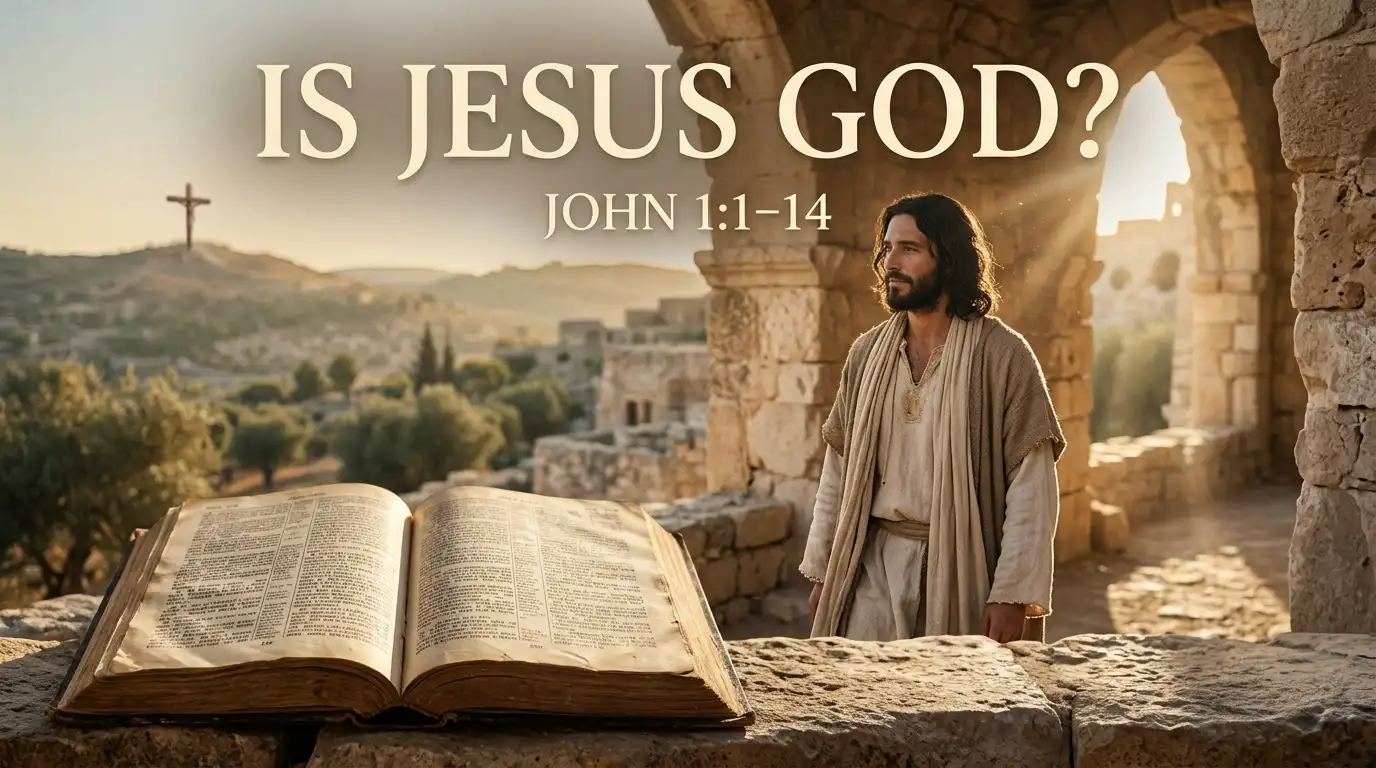
Yes, in Christian faith, Jesus is God. He is not only a great teacher, a prophet, or a good man.
Christians hold that He is the eternal Son of God who took on human flesh, lived with men, died for their sins, and rose again.
That claim sits at the heart of Christian faith. It shapes how saints see God, pardon, prayer, and life that lasts.
It is a bold claim, and it calls for clear words, honest proof, and a plain look at what the books say.
What Christians Mean When They Say Jesus Is God
When saints say Jesus is God, they do not mean He is God the Father in a new dress or a new mask. They mean He shares the same God nature as the Father, while still being a distinct person. The Father is God, the Son is God, and the Holy Spirit is God, yet there is only one God in all. That teaching is called the Trinity, and it is one of the hardest ideas in Christian faith to put plainly.
A plain way to grasp it is this: God is one in being and three in person, with no split in His nature at all. The Father, the Son, and the Holy Spirit are not three gods, and they are not three parts of one God. Each one is fully God, with the same nature, the same will, and the same purpose. Jesus is the Son, not the Father, but He is no less God than the Father is in power or in worth.
What Jesus Said About Himself
Jesus did not leave men to guess at who He was, since He made claims that pointed straight to His God nature. In the Gospel of John, He said that before Abraham was born, He already was, in words that echo the name God gave to Moses. He used the words I am, which point to the name of God at the burning bush in the old books. His hearers picked up stones, since they grasped that He claimed to stand on a level with God in being.
Jesus also said that He and the Father are one, yet He did not mean they are the same person. He meant they share the same God life and purpose so close that to know Jesus is to know the Father in truth. In one more place, He told His men that those who have seen Him have seen the Father, which is a bold word for any guide to speak. That word only fits if Jesus is truly God in human flesh, and not just a man with great words.
He pardoned sins, which men of law knew was a task for God alone. He claimed rule over the Sabbath. He claimed rule over life and death, and over the last day.
John 1:1 – In the beginning was the Word, and the Word was with God, and the Word was God.
John 8:58 – Before Abraham was born, I am.
John 10:30 – I and the Father are one.
What Others Said About Jesus
Jesus was not the sole voice for His God nature, since John, who wrote one of the books, opened with that same claim plainly. John called Jesus the Word who was God and who took on flesh and lived with men. Thomas, one of the twelve, after he saw the risen Jesus, called Him his Lord and his God in a strong cry of faith. Jesus did not correct Thomas, but took that praise and praised the faith that stood behind it in that hour.
Paul, who wrote many letters in the New Testament, gave the same word in his own way for the saints he served. He wrote that in Jesus the fullness of God lives in flesh. Jesus stood in the form of God before He took on human nature. The writer of Hebrews called Jesus the exact mark of God and the one who holds all things by His strong word.
Those writers came from distinct lands and tasks. Yet they agreed on the same core word. Jesus is fully God and fully man.
The early church also praised Jesus in worship, and that fact is itself a strong sign of what they held to be true. The first saints were Jewish men who held fast to one God and who would not praise idols or kings as gods. Yet they prayed to Jesus, sang songs to Him, baptized in His name, and met on the first day of the week to praise His rise. They would not have done that for a mere man, so their praise was itself a word of faith that Jesus is God.
Is Jesus God or the Son of God
Many men ask if Jesus is God or the Son of God, as if those two words must fight and one must win. In Christian teaching, both are true at the same time. Son of God does not mean Jesus was made by God at a point in time, as a human son is born after his father. It means Jesus shares the nature of God and stands in a close, eternal bond with the Father from all time.
Think of it in this way. A human son shares human nature with his father, in flesh and in blood and in life. In the same way, the Son of God shares God nature with God the Father, in being and in power and in worth.
The title points to closeness and to sameness of nature. It points to a bond that has always been, with no start and no end. It does not mean Jesus is a lesser god, a second god, or a made being, since saints hold He has always been and made all things.
That is why saints can pray to Jesus and also pray to the Father, with no clash in their prayer life at all. They can say Jesus is God with no claim that Jesus is the Father, since the two are distinct persons in one God. The Father sent the Son, the Son showed the Father, and the Holy Spirit makes that truth real in saints. The three work as one.
Evidence From His Life, Death, and Resurrection
Saints point to more than one line of proof for the God nature of Jesus, and not just to single verses in one book. First, His life showed God power in deeds that no mere man could do on his own. He healed men who could not be healed, calmed storms at sea, fed great crowds with small food, and raised men from the dead. Those were not tricks for a crowd, but signs of God power at work through Him.
Second, His teaching showed God wisdom and rule, with a clarity that still changes lives in our days. He taught of God, of pardon, of grace, and of the reign of God with words that cut to the heart. He did not just repeat old words, but laid bare the heart of the law, challenged pride in men of law, welcomed men cast out, and called all men to trust God fully. His words still challenge and still comfort readers today, in towns and homes.
Third, His death and rise stand at the core, since He died on the cross to take the due for sin. If Jesus were only a man, His death could not save any other man from sin or from death. If He is God, His death has worth past measure, and His rise proves that death could not hold Him. The rise is thus not an extra detail, but the proof that His claims were true and that His work was done.
| Evidence | What It Shows | Why It Matters |
| Direct titles for Jesus | Books call Him God, Lord, and Saviour | Titles point to God nature, not just a human task |
| God works | Pardoning sins, making, judging, giving life | Only God can do these |
| Praise received | Men and early saints praised Him | Jewish saints would not praise a mere man |
| Rise from death | Raised from the dead by God power | Proves His claims and His win over death |
Common Objections and Honest Answers
Some men say Jesus never said the words I am God in one plain line. It is true that those exact three words do not stand as one line from Jesus in the books. But Jesus did make claims that His hearers grasped as claims to God nature, and they fought Him hard for them. A claim can be clear even when it is not put in one new line, since His use of the God name, His pardon of sins, and His praise all point the same way.
Others ask how Jesus could be God if He prayed, grew tired, felt hunger, and died on a cross in pain. Saints answer with the teaching that Jesus was fully God and fully man at the same time, with no split in His person. As a man, He felt hunger, tiredness, grief, and death, just as all men do. As God, He stayed eternal, strong, and holy, and His God nature did not make His human pain unreal or fake.
Still others ask if the Trinity means saints hold to three gods, which would clash with one God. The word is no, since saints hold to one God who is three persons, with one nature, one will, and one purpose. That is distinct from three separate gods who might fight or clash, since the three share all things as one. Human tales, like water as ice, liquid, and steam, can help a bit, but each tale breaks down at some point, since God is past all small pictures we draw.
| Objection | Short Christian Answer | Key Point To Remember |
| Jesus never said I am God in those words | He made God claims His hearers grasped | Claims can be clear with no one exact phrase |
| Jesus prayed and suffered, so He cannot be God | He was fully God and fully man | His human life was real, not fake |
| Trinity sounds like three gods | One God, three persons, one nature | One being, distinct persons |
| The idea came later, not from Jesus | Early saints praised Jesus from the start | Praise and letters show an early faith |
What This Means For Daily Life
To hold Jesus is God changes how a man relates to Him, in prayer, in trust, and in daily tasks through life. If Jesus were only a wise guide, men could praise His words and then move on with their own lives in peace. If He is God, His words carry the highest rule, His vows carry the highest hope, and His death and rise carry the highest sense. Prayer to Jesus is not prayer to a far hero, but prayer to God, who knows human weakness since He lived it in flesh.
It also changes how saints see pardon, since pardon from Jesus is pardon from God fully. If Jesus is God, then when He pardons, God pardons, and when He welcomes a sinner, God welcomes that man home. When He vows life that lasts to those who trust Him, that vow rests on God power, not on human deeds or on good works. That is why saints speak of new life as a gift, not as a wage earned by good deeds or by strict rules in life.
At last, to hold Jesus is God gives hope in pain. The God who made the world also came into the world in flesh. He suffered in it, died in it, and won over death from inside it, so pain is not the last word for saints who trust Him.
That does not take pain away in this life. Pain will end, and death, grief, and tears will end with it in time. For saints, that hope is personal, since it rests on a person, not just on an idea or a rule for life.
How To Explore This Further
A good place to start is the Gospel of John, most of all the first chapter, chapter 8, chapter 10, chapter 14, and chapter 20. Read with care and note what Jesus says of Himself, what He does, and how men react to His words and deeds. Then read Philippians chapter 2 and Colossians chapter 1, where Paul gives who Jesus is in a short and strong form. Talk with a trusted pastor, guide, or mature saint can also help, since this theme raises deep questions best met in talk, not just in reading.
It also helps to be honest on doubts, since many saints have wrestled with the God nature of Jesus at some point in life. Doubt does not have to mean a turn away, but can be a door to deeper study, prayer, and grasp. The Christian call is not to fake that the Trinity is easy. Trust the Jesus shown in Scripture, follow Him, and let His life, death, and rise speak for themselves.
FAQs
Is Jesus God or just a prophet
Saints hold Jesus is far more than a prophet, since prophets spoke for God and Jesus spoke as God in human flesh. He pardoned sins, took praise, and rose from the dead. That is why saints praise Him and not just praise His words. Prophets are praised as messengers, but Jesus is praised as Lord and God, which marks a clear and wide gap in faith.
Is Jesus the Father
No, Jesus is the Son, not the Father, since the Father and the Son are distinct persons in one God. Jesus prayed to the Father and was sent by the Father. That shows they are not the same person. Yet both are fully God, with the same nature, the same power, and the same worth in the Trinity.
Why does the Trinity matter
The Trinity matters since it shows how God can be one and yet be love in Himself from all time. Love needs a giver and a taker, and in the Trinity the Father, Son, and Spirit have always loved one another. It also shows how God could come to earth as Jesus with no end to His rule in heaven. That is key to the whole tale.
Did the early church invent the idea that Jesus is God
No, the earliest Christian books already call Jesus Lord and God. They also paint Him as Maker, and show saints praising Him in worship. Later councils put that faith in careful words, but they did not make it up from nothing in their own days. They were guarding what saints already held, which is why the claim stands in the earliest letters and books we have.
What if I find the Trinity hard to understand
That is normal, since saints have wrestled with this teaching for years, and no human picture grasps it fully. The goal is not to master God with a formula. Know Jesus, trust Him, and grow through Scripture. Prayer, reading, and life with saints will help that growth, much more than a quick answer can do.
Conclusion
Saints hold Jesus is God, not just a great guide or a prophet, since He is the eternal Son who took on flesh. He lived with men, pardoned sins, took praise, died for sin, and rose again. He stands distinct from the Father yet shares the same God nature. That claim sits at the heart of how saints see God, pardon, prayer, and life that lasts, and it cannot be set aside with ease.
Discover More Post
- How Old Is God? Understanding God’s Eternal Existence
- What Language Did Jesus Speak? Aramaic, Hebrew, Greek, and Latin Explained
- Black Jesus: History, Meaning, and Why the Image Matters
- Armor of God: What Each Piece Means and How to Put It On Daily

Hi, I’m James Patterson, a storyteller who loves creating thrilling mysteries, unforgettable characters, and page-turning adventures. Through TheBiblimeaning, I share insights about authors, books, literary meanings, biographies, and the stories behind famous writers. My goal is to help readers discover the deeper world of literature while enjoying engaging and informative content.