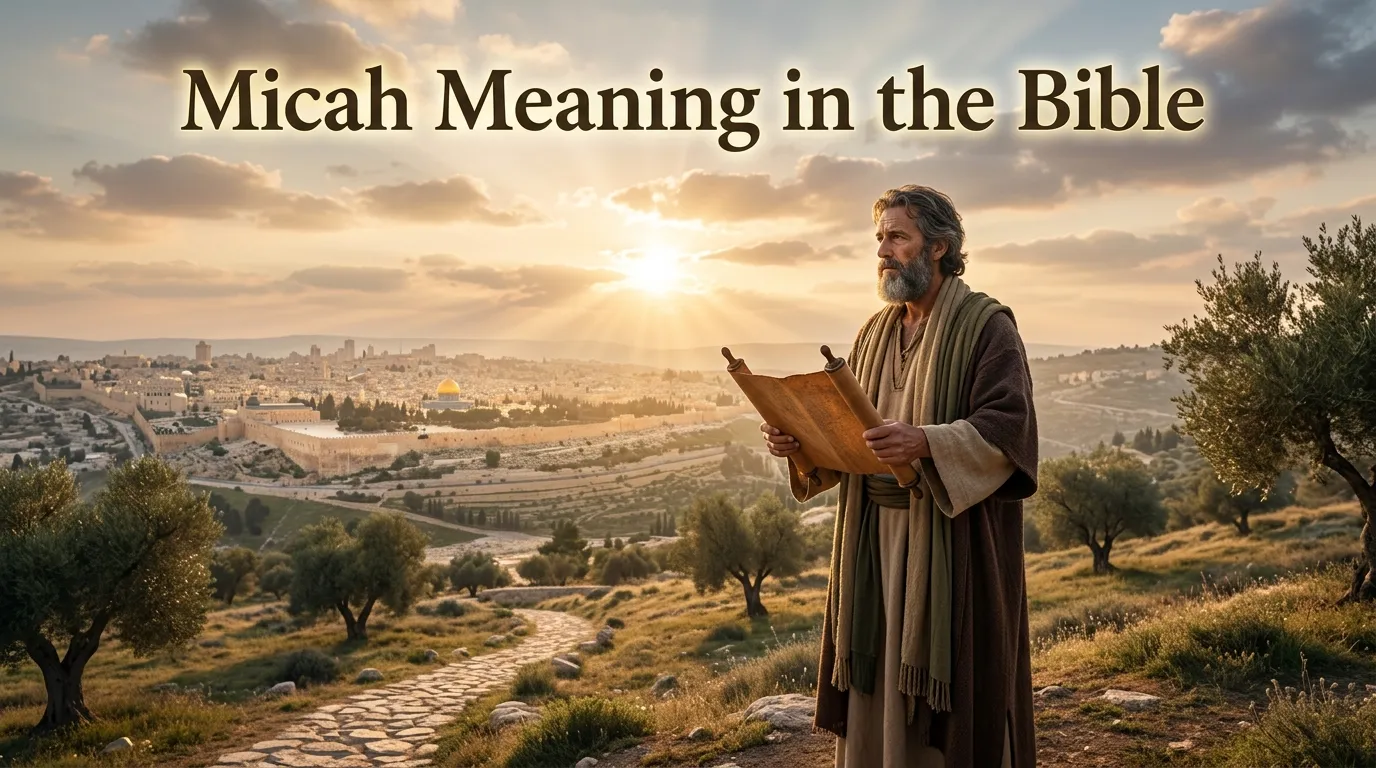
The name Micah in the Bible carries a powerful question: Who is like the LORD? or Who is like Yahweh?
This name perfectly captures the heart of the prophet Micah’s message and the Book of Micah itself.
If you’re exploring this because you’ve come across the name in Scripture, wondered about its significance, or are studying the Minor Prophets, you’re in the right place.
In this article, we’ll unpack the meaning of the name Micah, who the prophet was, the key themes of his book, and how his words still speak hope, justice, and humility into our lives today.
Quick Reference Table
| Aspect | Details |
| Name Meaning | Who is like the LORD? (Hebrew: Mîḵāh, short for Mîḵāyāhû) |
| Prophet’s Time | 8th century BC, during kings Jotham, Ahaz, and Hezekiah of Judah |
| Hometown | Moresheth-Gath (rural Judah) |
| Main Message | Judgment on sin + hope of restoration; justice, mercy, and humble walk with God |
| Key Verse | Micah 6:8 |
| Famous Prophecy | Messiah’s birthplace in Bethlehem (Micah 5:2) |
Hebrew Meaning of the Name Micah
Micah is a shortened form of the Hebrew name Micaiah or Mîḵāyāhû, which literally translates to Who is like Yahweh? This rhetorical question highlights God’s uniquenessHis incomparable holiness, power, mercy, and faithfulness.
In the ancient world, names often carried deep theological weight. By bearing this name, the prophet embodied a central truth: no one and nothing compares to the one true God. This name sets the tone for the entire book, which repeatedly contrasts human sinfulness with God’s unmatched character.
Who Was the Prophet Micah? Biblical Context
Micah was a prophet from the small village of Moresheth-Gath in the foothills of Judah. Unlike the urban prophet Isaiah in Jerusalem, Micah came from a more rural, working-class background. He ministered in the second half of the 8th century BC, a turbulent time when the northern kingdom of Israel faced Assyrian invasion and the southern kingdom of Judah dealt with corruption, idolatry, and social injustice.
He was a contemporary of Isaiah, Hosea, and Amos. While those prophets addressed similar issues, Micah’s voice often focused on the plight of the, people with low-income .and the failures of leaders in Jerusalem. His prophecies warned of coming judgment but always pointed to God’s ultimate mercy and a faithful remnant.
Key Bible Verses from Micah Explained
Micah 6:8
He has shown you, O mortal, what is good. And what does the LORD require of you? To act justly and to love mercy and to walk humbly with your God.
In context, the people were asking what kind of offerings would please Godthousands of rams, rivers of oil, even their firstborn? God’s answer cuts through ritualism: He desires transformed hearts expressed in everyday justice (mishpat), loyal covenant love (hesed), and humble dependence on Him. This verse distills the heart of true religion.
Micah 5:2
But you, Bethlehem Ephrathah, though you are small among the clans of Judah, out of you will come for me one who will be ruler over Israel, whose origins are from of old, from ancient times.
This Messianic prophecy, quoted in Matthew 2 regarding Jesus’ birth, shows God’s pattern of using the small and unlikely. It offers hope amid judgment: a Shepherd-King from David’s line would bring peace.
Micah 7:18-19
Who is a God like you, who pardons sin and forgives the transgression of the remnant of his inheritance? You do not stay angry forever but delight to show mercy. You will again have compassion on us; you will tread our sins underfoot and hurl all our iniquities into the depths of the sea.
The book ends with praise, echoing the name’s meaning. God’s mercy triumphs, and sins are removed completely.
Spiritual Meaning and Symbolism
The name Micah and the book symbolize the tension between divine judgment and divine grace. Micah stands as a voice for the oppressed, calling leaders and people back to covenant faithfulness. His prophecies picture God as both righteous Judge and compassionate Redeemer.
Symbolically, the remnant represents God’s faithful people across timethose preserved through trials. The Bethlehem prophecy points forward to Christ, who perfectly embodies justice, mercy, and humble obedience.
Practical Application for Today
Micah challenges us to live what we profess. In a world of inequality, performative religion, and pride, God still asks: Are you acting justly in your relationships, work, and community? Are you showing steadfast love (hesed) even when it’s costly? Are you walking humblydependent on God rather than your own strength?
For new believers, this means starting with a heart check instead of just external rules. For mature Christians, it’s a call to advocate for the vulnerable and model Christ-like humility. Pastors and leaders especially hear Micah’s warning against exploiting power.
Common Misunderstandings
Some read Micah only for judgment and miss the abundant hope. Others treat Micah 6:8 as a simple checklist without recognizing it flows from relationship with God, not earning His favor. The book does not teach works-based salvation; it calls for response to God’s grace. Scholars agree on the core message, though some debate exact dating of oraclesyet the text’s trustworthiness remains firm.
FAQs
What is the spiritual meaning of the name Micah?
The name Micah spiritually reminds believers to trust God’s justice, humility, and faithful guidance.
How was Micah called by God?
God called Micah as a prophet to warn Israel and Judah, urging them to repent and return to Him.
What is the meaning of Micah in Hebrew?
Micah comes from the Hebrew name Mikhayahu or Mikha, meaning “Who is like the Lord?”
What is the meaning of Micah in English?
In English, Micah means “Who is like God?”, reflecting God’s unmatched greatness.
What is the pronunciation of Micah in the Bible?
Micah (MY-kuh)
Micah is commonly pronounced MY-kuh in English Bible readings.
What is the meaning of Micah in Greek?
In the Greek Old Testament, Micah retains the meaning “Who is like God?”, emphasizing God’s incomparable nature.
How many people named Micah are in the Bible?
The Bible mentions several individuals named Micah, with the best-known being the prophet who wrote the Book of Micah.
Who was the prophet Micah in the Bible?
The prophet Micah was God’s messenger who proclaimed judgment against sin and promised the coming reign of the Messiah.
Conclusion
The meaning of Micah in the Bible ultimately points us to the incomparable God who judges rightly yet delights in mercy. As Micah 7:18 asks, Who is a God like you? The answer is found most fully in Jesus Christ, who was born in Bethlehem, lived justly and mercifully, walked humbly, and now offers forgiveness to all who trust Him.
No matter where you are in your faith journey, Micah invites you to respond: Act justly, love mercy, and walk humbly with your God. He is faithful, and His compassion never fails. May you know the God who is like no othertoday and always.
Discover More post
- Lust Meaning in Bible: A Christian Guide
- Jubilee Meaning in Bible: God’s Year of Freedom
- Parable Meaning in the Bible: Full Guide