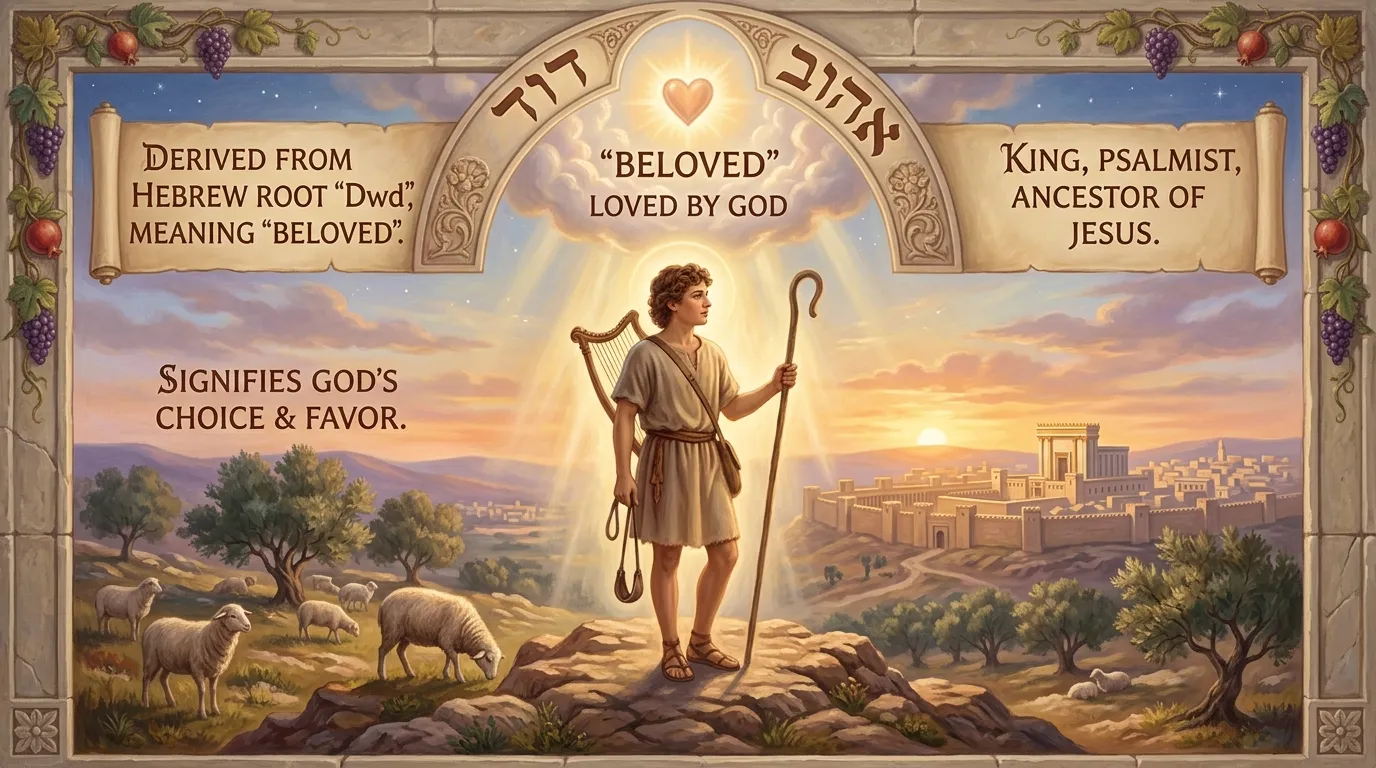
Have you ever wondered why some Bible names still touch hearts today? One of those special names is David. It is a name many parents choose because it sounds strong, kind, and full of faith.
When you hear the name David, you may think of the young shepherd who defeated a giant. You may also remember the king who loved God deeply and wrote many beautiful psalms. But is there more to this name than a famous Bible story?
Names in the Bible often carry deep meaning. They can reveal a person’s purpose, character, or relationship with God.
The name David is no different. It has a rich history and a powerful spiritual message that still speaks to believers today.
Many people search for the meaning of the name David in the Bible because they want to understand its spiritual value. Some are choosing a name for a child. Others want to know how this name connects to faith, hope, and God’s plan.
So, what does the name David really mean in the Bible? Let’s explore its biblical meaning, spiritual symbolism, and the lessons it offers for our Christian journey.
The Story of King David in the Bible
King David is one of the most important people in the Bible. His story begins with a young shepherd whom God chose to become king of Israel. David faced giants, war, fear, family trouble, and his own sins. Yet he often turned back to God with a humble heart. The Bible shows both his strong faith and his human weakness. His life teaches us that God looks at the heart and can use a person who trusts Him. David’s story is mainly told in 1 Samuel, 2 Samuel, 1 Kings, and 1 Chronicles.
Bible reference: 1 Samuel 16:1–13
“The LORD looketh on the heart.”
— 1 Samuel 16:7 (KJV)
David’s Early Life
David was the youngest son of Jesse from Bethlehem. While his older brothers were considered for leadership, David was caring for his father’s sheep. God sent Samuel to Jesse’s house to choose the next king. Samuel did not choose the strongest-looking brother. God chose David because He saw his heart. David’s early life also showed his courage. He protected his sheep from lions and bears. These quiet years prepared him for greater challenges. His life reminds us that small duties can prepare us for a bigger purpose from God.
Bible reference: 1 Samuel 16:11–13; 17:34–37
“The LORD is with him.”
— 1 Samuel 16:18 (KJV)
David and Saul
After David defeated Goliath, King Saul brought him into his service. David became successful and gained the respect of the people. Saul, however, became jealous and afraid of David. He began to see David as a threat to his throne. David had chances to hurt Saul but chose not to take revenge. He trusted God to deal with Saul in His own time. Their relationship became one of the saddest parts of David’s story. It shows how jealousy can destroy peace and how faith can help a person avoid revenge.
Bible reference: 1 Samuel 18:6–12; 24:4–7
“The LORD forbid that I should do this thing unto my master.”
— 1 Samuel 24:6 (KJV)
David and Goliath
David and Goliath is one of the best-known stories in the Bible. Goliath was a huge Philistine warrior who frightened the army of Israel. David was still young and was not dressed as a trained soldier. He trusted God instead of trusting armor or weapons. David took five smooth stones and went toward Goliath with a sling. He defeated the giant with one stone. David knew that the battle belonged to God. This story teaches that faith can give courage when a problem seems far bigger than our strength.
Bible reference: 1 Samuel 17:45–50
“The battle is the LORD’S.”
— 1 Samuel 17:47 (KJV)
True Friendship
David had a deep friendship with Jonathan, the son of King Saul. Jonathan could have viewed David as a rival because David was chosen to become king. Instead, Jonathan loved David and protected him. Their friendship was based on loyalty, trust, and a promise before God. Jonathan warned David when Saul wanted to kill him. David also remembered Jonathan’s family after Jonathan died. Their friendship shows that true friends do not compete out of jealousy. They stand together, speak honestly, and care for each other during hard times.
Bible reference: 1 Samuel 18:1–4; 20:16–17
“The soul of Jonathan was knit with the soul of David.”
— 1 Samuel 18:1 (KJV)
David the Warrior
David became a skilled warrior during the years of his life before and after becoming king. He fought the enemies of Israel and led his men with courage. The Bible also shows that David did not depend only on his own skill. He often asked God what he should do before going into battle. This was an important part of his leadership. David understood that victory was not simply about strength or military skill. His example shows the value of seeking God before making serious decisions.
Bible reference: 1 Samuel 23:2–4; 2 Samuel 5:19
“And David enquired of the LORD.”
— 2 Samuel 5:19 (KJV)
King Saul vs. David
The conflict between Saul and David lasted for years. Saul became deeply jealous because the people praised David’s victories. He tried several times to kill him. David had to hide in caves and move from place to place. Still, David refused to become Saul’s enemy in his heart. When David had the chance to kill Saul, he stopped his men from doing it. David believed that God had authority over kings and that he should not take Saul’s life for personal gain.
Bible reference: 1 Samuel 24:8–12
“The LORD judge between me and thee.”
— 1 Samuel 24:12 (KJV)
Death of Saul and Jonathan
Saul and Jonathan died during a battle with the Philistines on Mount Gilboa. Jonathan was David’s close friend, while Saul had spent years trying to destroy David. Even so, David did not celebrate their deaths. He mourned both men and wrote a song of sorrow for them. His response shows that David understood the pain of loss. He honored Jonathan for his friendship and remembered Saul as the king of Israel. David’s grief also shows that forgiveness and sorrow can exist together in the human heart.
Bible reference: 1 Samuel 31:1–6; 2 Samuel 1:17–27
“How are the mighty fallen!”
— 2 Samuel 1:19 (KJV)
David Crowned as King
After Saul died, David did not immediately rule over all Israel. He first became king over Judah at Hebron. Later, the tribes of Israel came to David and accepted him as their king. This fulfilled the promise God had made many years earlier when Samuel anointed David. David was about thirty years old when he became king. His journey from shepherd to king took many years. The delay was part of his story. David had to learn patience, courage, leadership, and trust before receiving the position God had prepared for him.
Bible reference: 2 Samuel 2:4; 5:1–5
“David made a league with them in Hebron before the LORD.”
— 2 Samuel 5:3 (KJV)
King David’s Victories
David won many battles against Israel’s enemies and made the kingdom stronger. He defeated the Philistines, Moabites, Syrians, Edomites, and other enemies. His military success helped bring greater security to Israel. The Bible connects many of David’s victories with his dependence on God. Before important battles, David often asked God for direction. He did not simply rush into war because he was powerful. His victories show both his leadership and his trust in God. They also helped establish Jerusalem as a major center of David’s kingdom.
Bible reference: 2 Samuel 8:1–15
“And the LORD preserved David whithersoever he went.”
— 2 Samuel 8:14 (KJV)
King David’s Wives
The Bible names several women who became David’s wives, including Michal, Abigail, Ahinoam, Maachah, Haggith, Abital, and Eglah. David’s family became large, but his household also faced serious problems. His marriages and relationships were connected to family struggles that later affected his children and kingdom. The Bible does not hide these difficult parts of David’s life. Instead, it gives an honest account of his choices and their results. His family story reminds readers that power and success cannot protect a home from pain, conflict, or the results of poor decisions.
Bible reference: 2 Samuel 3:2–5; 5:13
“And David took him more concubines and wives out of Jerusalem.”
— 2 Samuel 5:13 (KJV)
King David and Bathsheba
David’s story took a painful turn when he saw Bathsheba and desired her. She was the wife of Uriah, one of David’s soldiers. David took Bathsheba and later arranged for Uriah to be placed in a dangerous part of battle. Uriah died, and David married Bathsheba. God sent Nathan the prophet to confront David about his sin. David admitted his wrong instead of hiding from it. This story shows that even a great king can fall into serious sin. It also shows the need for honest repentance before God.
Bible reference: 2 Samuel 11:2–17; 12:7–13
“I have sinned against the LORD.”
— 2 Samuel 12:13 (KJV)
Birth of Solomon
Solomon was born to David and Bathsheba after the death of their first child. The Bible says that the LORD loved Solomon. David later gave Solomon the special task of building the temple in Jerusalem. Solomon became king after David’s death and became known for his great wisdom. His birth is an important part of David’s later story because Solomon continued the royal line and became the builder of the temple David had desired to build. God also gave Solomon a special place in the history of Israel.
Bible reference: 2 Samuel 12:24–25; 1 Kings 3:5–12
“And the LORD loved him.”
— 2 Samuel 12:24 (KJV)
David’s Other Sons
David had several sons, and the Bible records many events involving his family. His sons included Amnon, Chileab, Absalom, Adonijah, Shephatiah, and others. Some of these family relationships became painful. Amnon committed a serious wrong against Tamar, Absalom later killed Amnon, and Absalom eventually rebelled against David. These events brought great sorrow to the king. David was a powerful ruler, but he could not prevent every problem within his home. His family story gives a strong warning about the lasting effects of sin, anger, poor choices, and broken relationships.
Bible reference: 2 Samuel 3:2–5; 13:1–39
“And the king was much moved, and went up to the chamber over the gate, and wept.”
— 2 Samuel 18:33 (KJV)
David Lives Forever
The Bible does not teach that David continued living on earth forever. Instead, David’s name and royal line became part of God’s promise concerning the coming Messiah. God promised David that his throne and kingdom would have an enduring place in His plan. In the New Testament, Jesus is repeatedly connected to David’s family line. Jesus is called the Son of David, showing the importance of David’s place in biblical history. David’s earthly life ended, but his story points forward to Christ and God’s lasting kingdom.
Bible reference: 2 Samuel 7:12–16; Luke 1:32–33
“He shall be great, and shall be called the Son of the Highest.”
— Luke 1:32 (KJV)
David the Composer
David was more than a king and warrior. He was also a musician and songwriter. The Bible connects him with many psalms that express worship, fear, sorrow, hope, confession, and trust in God. David played the harp and used music to bring comfort to Saul. His songs later became part of Israel’s worship. Psalm 23 is one of the clearest examples of David’s trust in God. His music shows that faith can be expressed through honest words, even during dark and painful seasons.
Bible reference: 1 Samuel 16:23; Psalm 23:1–6
“The LORD is my shepherd; I shall not want.”
— Psalm 23:1 (KJV)
Solomon and the Temple
David wanted to build a temple for the LORD, but God told him that his son Solomon would build it instead. David accepted God’s decision and spent time preparing materials for the future temple. He gathered gold, silver, bronze, wood, stone, and other supplies. David also gave Solomon instructions and encouraged him to be strong. The temple was finally built during Solomon’s reign. This part of David’s story teaches that a person may prepare something important without being the one who finishes it. God can use different people for different parts of His work.
Bible reference: 1 Chronicles 28:2–7; 29:1–5
“Solomon my son is young and tender, and the work is great.”
— 1 Chronicles 29:1 (KJV)
More in this section
The story of David includes many smaller events that help explain his character and faith. Readers can learn about his years as a shepherd, his friendship with Jonathan, his struggles with Saul, his reign in Jerusalem, his family problems, and his worship of God. Reading these events together gives a fuller picture of David. The Bible does not present him as perfect. Instead, it shows his courage, mistakes, repentance, leadership, and trust. Each part of his life can help readers understand how faith can grow through both success and hardship.
Bible reference: 2 Samuel 22:1–7
“The LORD is my rock, and my fortress, and my deliverer.”
— 2 Samuel 22:2 (KJV)
You may also be interested in…
Readers who want to understand David more deeply can explore related Bible stories about Samuel, Saul, Jonathan, Solomon, Bathsheba, and the kings of Israel. These people help explain the world in which David lived. The Psalms are also useful because they give a closer look at David’s thoughts and prayers. Reading the story in both Samuel and Chronicles can help readers see different details about his reign. Most importantly, David’s story points readers toward God’s faithfulness and the promise of a lasting kingdom through his family line.
Bible reference: 1 Chronicles 17:11–14
“I will set up thy seed after thee.”
— 1 Chronicles 17:11 (KJV)
Join the Discussion
David’s life gives readers many questions to think about. What made him brave when he faced Goliath? Why did he refuse to kill Saul when he had the chance? How did his friendship with Jonathan shape his life? What can his repentance after his sin teach us? These questions can lead to meaningful Bible study and honest discussion. David’s story is powerful because it shows both victory and failure. His life reminds us that God cares about a person’s heart and calls people to trust Him, obey Him, and return to Him after failure.
Bible reference: Psalm 51:1–12
“Create in me a clean heart, O God.”
— Psalm 51:10 (KJV)
Spiritual Meaning of the Name David
The spiritual meaning of the name David points to beloved, cherished, or dearly loved. In the Bible, David’s life shows how God can use a person who loves Him, even through weakness and failure. David was a shepherd before he became king, yet God saw his heart and chose him for a great purpose (1 Samuel 16:7, 12–13). His story teaches that true faith is not about being perfect. It is about trusting God, seeking Him, and returning to Him after failure. David’s Psalms also show deep love, worship, trust, and honest prayer (Psalm 23:1–4).
David Meaning in Bible
The name David means “beloved” or “dear one.” It comes from the Hebrew name Dawid (דָּוִד). David is one of the best-known people in the Bible and became the second king of Israel. God chose him while he was still a young shepherd and later promised that his royal line would have lasting importance (1 Samuel 16:1, 12–13; 2 Samuel 7:12–16). David was not without sin, but he often turned back to God with a humble heart. His life shows the value of faith, courage, repentance, and trust in God.
David Bible Name Meaning
The Bible name David means “beloved” or “dearly loved.” The name is closely linked with David’s role as king of Israel and ancestor of Jesus Christ according to the flesh (Matthew 1:1). David began as a shepherd and was later chosen by God to lead His people (1 Samuel 16:11–13). He also became known as a man whose heart sought God, even though he made serious mistakes (Acts 13:22). His story gives a balanced picture of faith: David trusted God, faced fear with courage, worshiped deeply, and learned to seek God after failure.
David Biblical Meaning Name
The biblical meaning of the name David is “beloved” or “dear one.” The name carries a strong place in Scripture because David became king of Israel and received God’s covenant promise concerning his family line (2 Samuel 7:16). His story appears across several books of the Bible, from his early life in 1 Samuel to his final years in 1 Kings. David’s life also points readers toward the coming Messiah, who is called the Son of David (Matthew 21:9). His name can therefore remind believers of love, faith, worship, leadership, and God’s faithfulness.
Biblical Meaning of the Name David
The name David comes from the Hebrew word Dawid, which means beloved or dearly loved. This simple but beautiful meaning is at the heart of David’s story.
David was one of the most important people in the Bible. He was chosen by God while he was still a young shepherd. Even before he became king, God saw something special in him.
In 1 Samuel 16:12-13, God told the prophet Samuel to anoint David as the future king of Israel. This showed that God looks at the heart rather than outward appearance.
David’s life reminds us that God loves and chooses people for His purposes. The meaning beloved points to God’s care, favor, and grace.
One of the most famous stories about David is his battle with Goliath. While others were afraid, David trusted God. He believed that the Lord would help him overcome the giant.
This story teaches an important lesson. When we trust God, He can help us face challenges that seem impossible.
The Bible also describes David as a man after God’s own heart.
According to Acts 13:22, God said:
I have found David son of Jesse, a man after my own heart.
This does not mean David was perfect. In fact, David made serious mistakes during his life. Yet he always returned to God with a humble and repentant heart.
This is one of the strongest spiritual messages connected to the name David. God’s love is not based on perfection. It is based on a relationship built on faith, repentance, and trust.
The name David can also remind believers that they are loved by God. Just as David was beloved, Christians can find comfort in knowing they are cherished by their Heavenly Father.
There is also a warning lesson in David’s story. His failures show that even faithful people can fall into sin if they stop seeking God’s guidance. Yet his repentance shows that God’s mercy is always available to those who return to Him.
Because of this balance of faith, failure, forgiveness, and restoration, David remains one of the most inspiring figures in biblical symbolism.
Meaning of the Name David in the Bible
The name David comes from the Hebrew word Dawid, meaning “beloved” or “dearly loved.” It reflects God’s special relationship with King David, one of the Bible’s most influential leaders. Although the name speaks of being loved, David’s life also highlights faith, repentance, courage, and dependence on God. His story reminds believers that God’s love is available to imperfect people who seek Him sincerely and desire to follow His will.
Is the Name David in the Bible?
Yes, David is one of the most prominent names in the Bible. King David was the second king of Israel and ruled after Saul. He is remembered as a shepherd, warrior, poet, and faithful worshiper. David wrote many of the Psalms and played a central role in God’s plan for Israel. Most importantly, Jesus Christ is described as the Son of David, fulfilling God’s promise that the Messiah would come through David’s royal family line.
Spiritual Meaning of the Name David in the Bible
The spiritual meaning of the name David points to a heart that seeks God with love, faith, and humility. David was not perfect, but he continually turned back to God through repentance and trust. His life teaches that true spiritual strength comes from relying on the Lord rather than personal ability. For Christians today, David’s name symbolizes devotion, forgiveness, courageous faith, and the hope found in God’s unchanging grace and mercy.
Meaning of Name David in the Bible
The biblical meaning of the name David is “beloved,” revealing a message of God’s affection and faithful care. Throughout Scripture, David’s life demonstrates that God values sincere faith more than outward appearance. Despite facing giants, enemies, and personal failures, David experienced God’s guidance and restoration. His name continues to remind believers that God’s love transforms lives and calls His people to walk in obedience, worship, and steadfast trust.
First Occurrence of the Name David in the Bible
The name David first appears in 1 Samuel 16, where God chooses David, the youngest son of Jesse, to become the future king of Israel. While others focused on outward appearance, God looked at David’s heart. This first introduction sets the stage for one of the Bible’s greatest stories of faith and leadership. It also reveals an important biblical truth: God often chooses humble people to accomplish His greater purposes.
Spiritual Significance and Symbolism
The spiritual symbolism of the name David centers on love, faith, courage, and a close relationship with God.
The meaning beloved reminds believers that they are deeply valued by God. In a world where many people feel forgotten, this message brings comfort and hope.
David’s life also symbolizes courage. He trusted God when facing giants, enemies, and difficult seasons. His example encourages Christians to stay strong during hard times.
Another important symbol is worship. David wrote many psalms that express praise, prayer, and trust in God. These songs continue to help believers grow in faith today.
The name David can also represent spiritual growth. David faced victories and failures, yet God continued shaping his heart.
Many Christians experience the same journey. They pray, learn, make mistakes, and grow closer to God over time.
This spiritual message teaches that faith is not about being perfect. It is about walking with God each day and trusting His guidance.
Biblical Interpretations in Dreams or Real Life
Sometimes people see the name David in a dream, hear it repeatedly, or feel drawn to its meaning.
In Christian dream interpretation, the name David may symbolize God’s love, protection, or calling on your life. Since David means beloved, it can remind you that God sees you and cares for you.
A peaceful dream involving David may point to encouragement, faith, or spiritual growth. It could be a reminder to trust God during a difficult season.
If the dream feels challenging or emotional, it may be calling you to examine your relationship with God. Like David, you may need to return to prayer, repentance, or deeper trust.
In real life, hearing the name David may simply encourage reflection on biblical lessons such as courage, worship, humility, and faith.
No dream or experience should replace Scripture. Prayer and God’s Word remain the best sources of guidance and understanding.
Practical Lessons and Faith Insights
The name David teaches us to trust God in every season.
Remember that you are beloved by God. Stay faithful during challenges. Pray often. Worship with a thankful heart. When you make mistakes, return to God with humility. His grace is always greater than your failures.
FAQs
Q: What is the spiritual meaning of the name David?
A: Spiritually, David represents a heart devoted to God, faith, humility, courage, and trust in the Lord.
Q: Is there another name for David in the Bible?
A: David is often called “the son of Jesse,” “the shepherd king,” and “a man after God’s own heart” in the Bible.
Q: What is the David name personality?
A: The name David is commonly associated with qualities such as leadership, loyalty, courage, wisdom, and compassion.
Q: What is the meaning of David in English?
A: In English, the name David means “beloved” or “dearly loved.”
Q: What is the Hebrew meaning of the name David?
A: David comes from the Hebrew name Dawid (דָּוִד), meaning “beloved.”
Q: What country is the name David from?
A: David originated in ancient Israel and has Hebrew roots recorded in the Old Testament.
Q: What is the meaning of David in Arabic?
A: In Arabic, David is written as Dawud (داوود) and refers to the Prophet David, a righteous king and messenger of God.
Q: What does the name David mean in Greek?
A: In Greek, David is written as Δαβίδ (Dabid), preserving the Hebrew meaning of “beloved.”
Conclusion
The meaning of the name David in the Bible is both simple and powerful: beloved. David’s story shows God’s love, mercy, and guidance through every season of life.
His journey reminds us that faith is not about perfection but about trusting God with our whole heart. As you reflect on this name, may you remember that you too are deeply loved and never beyond God’s grace
Discover More Post
- Envy Meaning in the Bible: Definition, Lessons & Warnings
- Circumcision Bible Meaning: Spiritual Meaning & Purpose
- Fortress Meaning in the Bible and Its Spiritual Significance
- Ezekiel Meaning in Bible: Full Bible Meaning