Have you ever stepped outside on a clear night and just stared up? The sky feels enormous. It feels like it goes on forever.
There is something about looking up that makes a person feel small and somehow safe at the same time.
That feeling is not an accident.
The firmament meaning in Bible texts points to something far greater than just the sky above our heads. It speaks of a boundary God set in place. It speaks of His power, His order, and His care for everything He made.
The word shows up early in Genesis, and it echoes through the Psalms, the prophets, and the book of Daniel.
Many people read the word firmament and move right past it. It sounds old-fashioned. It sounds like a science term. But when you slow down and look at what this word really means in Scripture, something opens up. You start to see the sky differently. You start to see God differently.
The firmament is not just a backdrop for stars. It is a declaration. Every time you look up, you are seeing something God built with intention. He named it Heaven.
This article is for anyone who has ever wondered what that word really means. It is for the new believer who wants to understand Genesis better. It is for the longtime churchgoer who never quite knew what to picture. And it is for anyone who feels a quiet hunger to understand creation and the Creator more deeply.
Let’s explore what the Bible says about the firmament.
Biblical Meaning of Firmament in the Bible

The Hebrew Root
The word firmament comes from the Hebrew word raqia (רָקִיעַ). This word comes from a root that means to beat out, spread out, or stamp flat like a metalworker hammering gold into thin sheets. The image is of something stretched wide and extended across a great space.
Some Bible translations use another word instead of firmament. The ESV uses expanse, and the NIV uses vault. Older translations like the King James Version use firmament. Both point to the same idea: a vast, stretched-out space above the earth that God created on purpose.
The Greek translation of the Old Testament, called the Septuagint, used the word stereoma, which means something solid or firm. This is where the Latin word firmamentum came from giving us the English word we use today. The idea of firmness or structure is built right into the name.
First Appearance in the Bible
The firmament in scripture appears first in Genesis 1:6. This is the second day of creation. God speaks, and something happens.
And God said, ‘Let there be an expanse in the midst of the waters, and let it separate the waters from the waters.’ Genesis 1:6 (ESV)
God then called this expanse Heaven or in Hebrew, shamayim. He placed it between the waters below (the waters that would be gathered into seas on the third day) and the waters above (waters the chapter never describes again). On the fourth day, He put the lights in the firmament to mark seasons, days, and years.
And God set them in the expanse of the heavens to give light on the earth. Genesis 1:17 (ESV)
The firmament meaning in Bible passages is tied directly to God’s act of creating structure. He did not leave creation in chaos. He organized it.
A Deeper Meaning
The firmament also carries a meaning of divine separation. God separated the waters above from the waters below. In Hebrew thought, separation meant holiness setting apart something for a purpose. The sky was not random. It was designed.
Psalm 19 connects the firmament to God’s ongoing testimony. It says:
The heavens declare the glory of God, and the sky above proclaims his handiwork. Psalm 19:1 (ESV)
The firmament is not silent. Every sunrise, every storm cloud, every star-filled night all of it speaks. All of it points back to the One who made it.
Connected to Moses
Moses understood the firmament deeply. When God gave Moses the law on Mount Sinai, the elders of Israel saw something stunning:
And they saw the God of Israel. There was under his feet as it were a pavement of sapphire stone, like the very heaven for clearness. Exodus 24:10 (ESV)
The sky above the firmament was used as a comparison for the floor of heaven itself. This tells us that the biblical meaning of firmament is not limited to earth science. It is a window into God’s own dwelling place.
Quick Reference Table
| Aspect | Details |
| Hebrew/Greek Root | Hebrew: raqia (to spread/beat out); Greek: stereoma (firm structure) |
| First Biblical Appearance | Genesis 1:6 second day of creation |
| Core Biblical Meaning | A vast expanse God created to separate and order the waters; the sky/heavens |
| Key Bible Verses | Genesis 1:6–8; Psalm 19:1; Ezekiel 1:22; Daniel 12:3 |
| Connected Biblical Figures | Moses (Exodus 24:10), Ezekiel (Ezekiel 1:22), David (Psalm 19) |
| Spiritual Symbolism | God’s order over chaos; His boundary-setting power; His glory on display |
| Dream/Vision Meaning | Seeing the sky in a dream may point to God’s protection or an expanding vision for your life |
| Faith Lesson | God brings order to what feels chaotic; He stretches out protection over His people |
Spiritual Significance of the Firmament
A Sky Full of Meaning
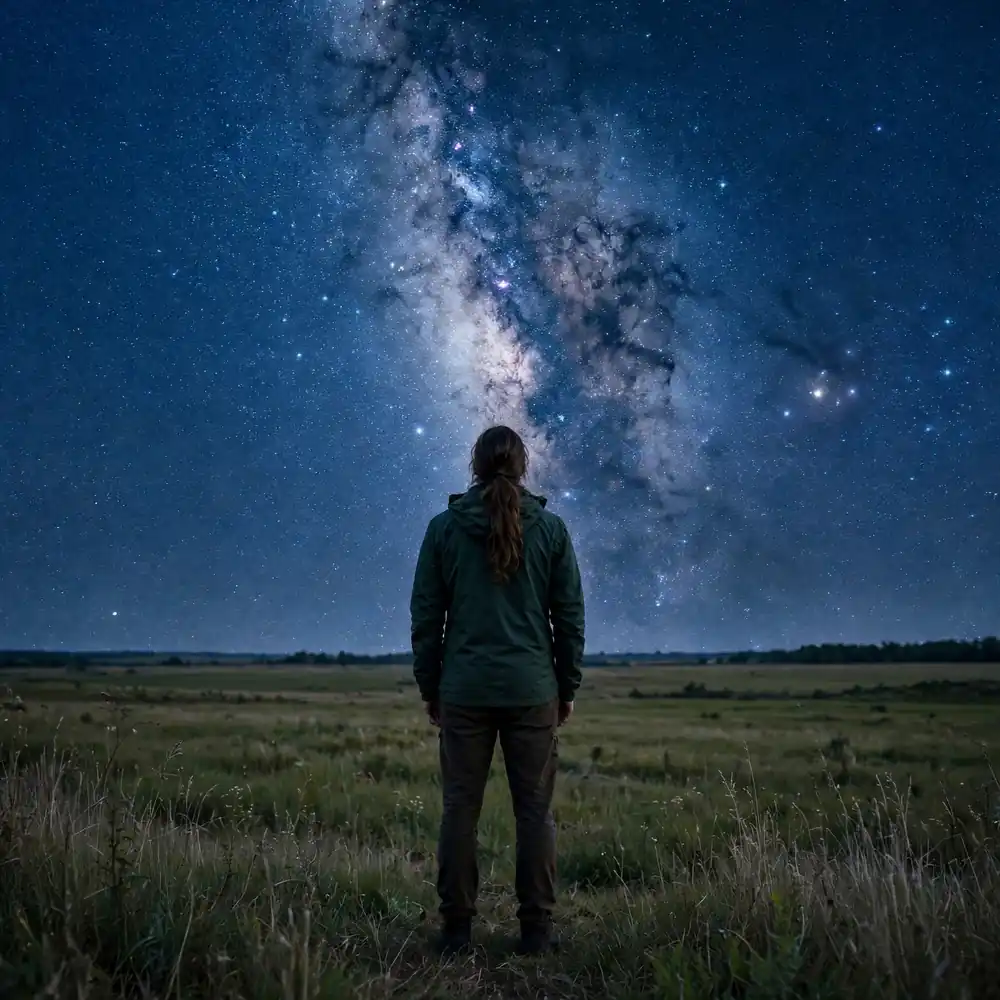
The spiritual significance of the firmament goes far beyond creation week. Throughout the entire Bible, the sky above is connected to God’s glory, His protection, and His presence. When the prophets had visions of God, the firmament was often right there in the picture.
Ezekiel saw a vision of God’s throne. Above the heads of four living creatures, he saw something breathtaking:
Over the heads of the living creatures there was the likeness of an expanse, shining like awe-inspiring crystal, spread out above their heads. Ezekiel 1:22 (ESV)
The firmament in scripture becomes a kind of floor beneath God’s throne. It is the boundary between the earthly and the heavenly. That is not a small idea. The sky above you is, in a sense, the underside of something holy.
What This Means for Christian Life
For believers, the firmament is a daily reminder that God is above all things. He is not absent. He is not far away.
C.S. Lewis once wrote: We may ignore, but we can nowhere evade, the presence of God. The world is crowded with Him. The firmament is one of the loudest ways God crowds the world with Himself. You cannot avoid the sky.
The firmament also speaks of faith. When life feels chaotic and out of control, the sky stands still above you. It was set there by the same God who knows your name. His order is always greater than your chaos.
Personal reflection question: When did you last look up at the sky and let it remind you that God is still in control?
Related Biblical Concepts Table
| Concept | Meaning | Key Verse | Lesson |
| Firmament | God’s vast expanse separating waters; the sky | Genesis 1:6 | God creates order and structure with intention |
| Heaven | God’s dwelling place; also the sky above | Psalm 11:4 | God rules from above and sees everything below |
| Glory of God | God’s radiant presence made visible | Psalm 19:1 | Creation itself carries and displays God’s glory |
| Waters Above | The waters God placed above the firmament | Genesis 1:7 | God holds back what could overwhelm us |
| Stars and Lights | The luminaries God placed in the expanse | Genesis 1:16–17 | God orders time, seasons, and signs through creation |
Dream and Real Life Meaning of the Firmament
When the Sky Appears in Dreams
Dreams about the sky wide open spaces, brilliant light above, or a sense of something vast stretching over you often carry a message of God’s protection and expanding purpose. The firmament meaning in Bible contexts ties the sky to God’s covering and His ordered plan.
A peaceful dream involving the sky might be an invitation to trust. It might mean God is reminding you that He holds the boundaries of your life. He has not let go. He is still above all of it.
A more urgent or stormy sky in a dream might signal a need to pray through something. It might be a call to seek God’s wisdom before moving forward in a big decision.
How to Test If an Experience Is From God
Write it down. Pray over it. Share it with someone you trust spiritually. The Holy Spirit works through Scripture, through wise counsel, and through the quiet peace that passes understanding.
Journaling what you sense God saying through creation, through dreams, through Scripture builds a life of hearing well.
Faith Takeaways

- 🙏 Pray each morning by going outside, looking up at the sky, and thanking God for His order over your day.
- 🤝 Trust that the same God who stretched out the firmament also holds the boundaries of your life firmly in place.
- 🔍 Reflect on the moments when life felt chaotic and notice how God brought structure and peace in His time.
- 📖 Seek a deeper understanding of Genesis 1 this week; read it slowly and let the firmament come alive in your imagination.
- ✨ Remember that Psalm 19:1 is true every single day the sky above you is still declaring the glory of God, whether or not you stop to listen.
FAQs
1. What is the firmament meaning in Bible texts, and why does it matter?
The firmament meaning in Bible passages refers to the expanse God created on the second day of creation the sky above the earth. It matters because it shows us that God is a God of order. He did not create the world in confusion. He set boundaries, named things, and called it good. Understanding the firmament helps us see that every detail of creation was intentional.
2. Is the firmament the same as the sky or heaven?
Yes and no. In Genesis, the firmament is identified as the sky the space above the earth where birds fly and stars appear. But in the prophetic books, the firmament in scripture becomes something closer to a heavenly floor beneath God’s throne. It holds both meanings depending on the context. Both ideas point to God’s space being above ours.
3. What Hebrew word is used for firmament, and what does it really mean?
The Hebrew word is raqia, which comes from a root meaning to beat or stamp out flat like thin metal being hammered wide. The biblical meaning of firmament is not simply sky. It carries the picture of something deliberately spread out. God stretched the firmament the way a craftsman shapes his work with skill and intention.
4. Does the firmament meaning in Bible prophecy appear outside of Genesis?
Absolutely. One of the most vivid appearances is in Daniel 12:3 And those who are wise shall shine like the brightness of the sky above.
5. What does Ezekiel’s vision teach us about the firmament?
In Ezekiel 1:22, the prophet sees a crystal-like expanse stretched above four living creatures. This is his vision of God’s throne room. The spiritual significance of the firmament here is breathtaking the sky is not just physical.
6. How can the firmament increase my faith today?
Look up. That is truly the first step. The firmament meaning in Bible teaching is that the sky declares God’s glory right now today.
More Searched Questions About the Firmament Meaning in the Bible
What does the Hebrew word raqia mean, and how did the word “firmament” get into English Bibles?
The Hebrew word is raqia, and it is built from the verb raqa, which means to beat out, to stamp out, or to spread out thin. It is a metalworker’s verb before it is anything else: in Exodus it is used of the craftsmen who “did beat the gold into thin plates” for the tabernacle work (Exodus 39:3). Something raqa’d is something hammered or spread until it covers a wide space in a thin sheet. The same spreading verb is even used of the sky itself in Job, where Elihu asks, “Hast thou with him spread out the sky, which is strong, and as a molten looking glass?” (Job 37:18). So the picture the Hebrew word carries is of a wide expanse spread out above the earth by God’s hand, and Genesis uses it first when God says, “Let there be a firmament in the midst of the waters, and let it divide the waters from the waters” (Genesis 1:6).
The English word “firmament” arrived by a longer road, and knowing the road explains half the arguments about it. The ancient Greek translators of the Old Testament rendered raqia as stereoma, a word for something firm, solid and established. The Latin Vulgate followed with firmamentum, a support or a firm structure, and from that Latin word the English “firmament” descends, carried into English Bibles from Wycliffe’s version onward and kept by the King James translators. Most modern translations print another word instead: the ESV prints “expanse”, the NIV prints “vault”, and the NLT prints “space”. The honest summary is this: the Hebrew picture is of spreading out; the note of firmness was added by the Greek and Latin words on the way into English. A reader who argues from the English word alone is arguing from the translation’s history, and a reader who goes back to raqia finds the spreading picture that Genesis itself starts with.
What did God make on the second day of creation, and what was the firmament made to do?
The firmament is the work of the second day, and its job is stated before anything is placed in it: “And God said, Let there be a firmament in the midst of the waters, and let it divide the waters from the waters” (Genesis 1:6). It is a division made in the middle of the waters of the deep, separating the waters above it from the waters below it, and when the day closes God gives His making a name: “And God called the firmament Heaven. And the evening and the morning were the second day” (Genesis 1:8). Naming in Genesis is an act of ordering and ownership, the same pattern by which God names the Day, the Night, the Earth and the Seas in the verses around it. On the second day, then, the chapter records a space made, a separation set, and a name given, and it records nothing else: no sun, no stars and no creatures belong to this day in the text.
The order of the chapter is worth holding exactly as it is written, because searches about this word often trip over it. Light is already there before the firmament: it was made on the first day, and of it God said, “And God saw the light, that it was good” (Genesis 1:4). The dry land and the seas are named on the third day. The lights are made and set in the firmament on the fourth day, as the next questions show from Genesis 1:14-17. So the firmament comes into the chapter as an empty, named expanse first, and only afterwards receives what God sets in it and opens it to what flies across it. Genesis gives the sequence plainly and offers no explanation of how light stands before the sun in its account; this article reports the order as the text sets it down and invents no harmonisation for it.
What are the waters above the firmament?
They are part of the second day’s own statement: “And God made the firmament, and divided the waters which were under the firmament from the waters which were above the firmament: and it was so” (Genesis 1:7). The chapter places real waters on both sides of the expanse, below it the waters that would be gathered into seas on the third day, and above it waters it never describes again in the creation account. That Israel’s worship kept the phrase alive is plain from the Psalms, where the heavens are called to praise God together with “ye waters that be above the heavens” (Psalm 148:4). And when the flood comes, the story speaks of heaven’s storehouses being opened from above: in Noah’s day “were all the fountains of the great deep broken up, and the windows of heaven were opened” (Genesis 7:11).
What those upper waters are, the text itself never pauses to explain, and readers have filled the space in more than one way, which should be named rather than settled. Many readers take them as the waters of the sky’s weather, the rain held in the clouds above the earth, pointing to the Bible’s own habit of calling rain the opening of heaven’s windows, as at the flood and in Malachi’s promise of blessing. Many teachers take them as a body of water that really stood above the expanse in the world as first made, and hold that it stood there until the flood, when heaven’s windows were opened; this reading is often called the canopy reading by those who hold it. Others read the whole arrangement as the Bible’s own picture of the ordered world, spoken in the language of the world as it appears, and do not press it for a mechanism at all. This article settles none of these. What Genesis itself insists on is narrower and is not in dispute: in the beginning God set waters above the firmament as deliberately as the seas below it, and no later verse maps where they are now.
Is the firmament a solid dome?
This is the most searched question on the whole subject, and it deserves the evidence set out before any answer. On one side stand the words themselves: raqia comes from beating something out thin, the kind of act that produces a plate or a sheet; the Greek translators of the Old Testament, who stood far closer to the ancient world than we do, chose stereoma, a firm and solid structure, as the word for it; Job speaks of the sky spread out “strong, and as a molten looking glass” (Job 37:18); and Ezekiel’s vision sets a gleaming platform above the living creatures’ heads with the throne above it. On the other side stands the use of the word across the chapter itself: birds fly in the open firmament (Genesis 1:20), the Psalms use it for the sky that declares God’s glory (Psalm 19:1), and no verse in the Bible ever stops to state the sky’s material, its thickness, or how anything passes through it.
Scholars and careful readers divide on the question, and the main readings should be labelled rather than one of them handed down as this article’s verdict. Many scholars read raqia inside the picture of the world that Israel shared with its ancient neighbours: a solid vault overhead, holding back the waters above, with the sun, moon and stars set in it or beneath it, and they take the Hebrew and Greek words at their most physical. Other readers, including many scholars, take raqia to name the visible expanse, the sky as it opens above the earth and appears to everyone under it, and point out that the chapter’s business is God’s ordering of His world, not a lesson in what the sky is made of. This article settles neither reading. What it will say is only what does not depend on the choice: the Bible presents the firmament as God’s made and named work, set between waters, carrying the lights and declaring His glory, and any reader, of either reading, is reading the same verses to get there.
What does Isaiah mean by “the circle of the earth”, and do these texts teach the shape of the earth?
Searchers bring this question to the firmament because the two subjects travel together online, and the honest way to answer it is from the texts people actually cite. The chief one is Isaiah’s comfort song: “It is he that sitteth upon the circle of the earth, and the inhabitants thereof are as grasshoppers; that stretcheth out the heavens as a curtain, and spreadeth them out as a tent to dwell in” (Isaiah 40:22). The Hebrew word is chug, a circle or a circuit, the word for a line drawn round. Notice what the verse is doing and what surrounds it: God is enthroned above the whole scene, the earth’s inhabitants are grasshoppers beneath Him, and the heavens are spread like a curtain and a tent, the same spreading picture that stands behind raqia’s root in Genesis. The verse’s subject, in a chapter written to comfort God’s people, is the greatness of God over everything beneath Him.
Readers have taken the shape question out of these texts in different directions, and the readings should be labelled plainly. Some read “circle” together with the firmament passages as the ancient world’s own picture, the round disc of the earth under the spread heavens its writers saw, and hold that the Bible describes the world in that picture without correcting it. Others read the verse as the poetry it is, “circle” naming the horizon’s round or the whole earth in its circuit under God’s rule, and answer that a comfort chapter is not setting out the earth’s shape as teaching at all. This article asserts no shape claim from these texts and mocks none: Genesis 1 gives no measurement and no diagram of the earth, Isaiah 40 gives a song about God, and the reader who wants the Bible’s own emphasis in both places will find it where the texts put it, on the God who sits above the circle and stretched out the heavens, and not on a geometry lesson neither passage is giving.
What does the firmament look like? Can you see it, and how big is it?
Begin with what the text does not give, because the searches behind this question ask for details the Bible simply never supplies. Genesis gives the raqia no colour, no size, no thickness and no material. Scripture is quite willing to measure other things when it wants to, arks, tabernacles, temples and cities all carry cubits, but for the firmament it gives a job and a name and no measurements at all. The one place where anything like its appearance is described is a prophet’s vision, and the vision itself marks its words as a likeness: “And the likeness of the firmament upon the heads of the living creature was as the colour of the terrible crystal, stretched forth over their heads above” (Ezekiel 1:22). A gleaming, crystal brightness overhead is what Ezekiel saw in vision; it is the nearest thing in the Bible to a description of the firmament’s look, and it is deliberately given as “the likeness of” what he saw, not as a surveyor’s report.
What a reader can see, under the word’s own Bible use, is the sky itself. The Psalm that searches quote most uses the word for the open heavens over every reader’s head: “The heavens declare the glory of God; and the firmament sheweth his handywork” (Psalm 19:1). In the Bible’s usage the firmament is not a hidden object behind the sky; it is the expanse God made and named, the thing a person is looking at on any clear day or starry night. That is also why the pictures that fill image searches, the drawn dome over a disc, with waters sloshing above it, should be held for what they are: reconstructions drawn from one reading of the texts, useful for seeing what that reading imagines, but drawn by modern hands. The Bible gives no picture to copy, and searches for the firmament’s colour and size receive the same honest answer from the text: it does not say, and this article will not invent either for it.
Why does Genesis say the sun, moon and stars were set in the firmament, and that birds fly in it?
Both statements come from the same chapter, and they belong together. Of the fourth day Genesis says, “And God said, Let there be lights in the firmament of the heaven to divide the day from the night; and let them be for signs, and for seasons, and for days, and years” (Genesis 1:14), and then, “And God set them in the firmament of the heaven to give light upon the earth” (Genesis 1:17). The lights are placed in the firmament and given their work there: dividing day from night, marking signs and seasons, and giving light on the earth. Of the fifth day the same chapter says, “and fowl that may fly above the earth in the open firmament of heaven” (Genesis 1:20): the birds fly across the firmament’s open face, in the air immediately above the earth. In one chapter, then, the same word covers the height where the lights stand and the open sky the birds cross.
That double use is itself the answer to most of the puzzle readers bring to it. The firmament in Genesis is the sky as it opens above the earth, near at the birds and far at the lights, and the chapter speaks of it throughout from the standpoint of the earth beneath, the place where the light is received (“to give light upon the earth”) and where the seasons are kept. Teachers note that this is the Bible’s ordinary way of speaking about the heavens everywhere, by appearance and by office rather than by construction: the sun is given a rising and a setting, the stars a shining, the firmament a placing of them, and no verse gives their distances or their substance. This article makes no claim from these verses about modern astronomy, in either direction. What the text claims is what it says: the lights are God’s, set by Him in the expanse He made, for work He names, and the birds under them are His creatures flying in the same open heaven.
Is the firmament the same thing as heaven?
In Genesis 1 the two meet in one sentence: “And God called the firmament Heaven” (Genesis 1:8). The expanse God made on the second day receives heaven’s own name, the Hebrew shamayim, so that within the creation chapter the firmament simply is the heaven, the made sky above the earth in which the lights are set and across which the birds fly. When the chapter is finished, it looks back over the whole in the same words: “Thus the heavens and the earth were finished, and all the host of them” (Genesis 2:1). A reader who stays inside Genesis 1 should therefore not drive a wedge between the firmament and heaven: the text names the one by the other, and searches asking whether the firmament is the sky or heaven are answered there with yes, in that chapter it is the heaven God made over the earth.
But shamayim is the wider word across the whole Bible, and the distinction readers are reaching for is a real one. The same word also names the place of God’s own throne, beyond anything a bird crosses: “The LORD is in his holy temple, the LORD’S throne is in heaven” (Psalm 11:4), and the Psalms can call on “ye heavens of heavens” to praise Him in the same breath as the waters above the heavens (Psalm 148:4), language that reaches past the visible sky altogether. So the careful answer is two-sided. The firmament is heaven in the creation sense, the expanse named Heaven on the second day. Heaven in the Bible’s full use is more than the firmament, since it also names where God reigns in glory, which no chapter measures and no bird crosses. Holding both sides keeps the reader accurate to Genesis and to the Psalms at once.
Why does Genesis not say “it was good” at the end of the second day?
The question is a real one, and it can be checked verse by verse. God’s verdict, “it was good”, stands over the light on the first day (Genesis 1:4), over the gathered waters and the dry land on the third day and again over the plants of that same day (Genesis 1:10 and 1:12), and over the finished lights on the fourth day (Genesis 1:18). But at the close of the second day the words are simply, “And God called the firmament Heaven. And the evening and the morning were the second day” (Genesis 1:8), and the verdict is not there. In the Hebrew text as it stands, and in the translations that follow it, the refrain is missing at day two alone, though a few ancient Greek copies supply the words at this verse. Over the completed whole, firmament included, the verdict does come, and in its strongest form: “And God saw every thing that he had made, and, behold, it was very good” (Genesis 1:31).
Teachers have explained the missing refrain in more than one way, and the explanations should be labelled as explanations, since the text itself gives no reason at all. The explanation heard most often is that the work of the second day was finished on the third: the firmament separated the waters, but the waters below it were only gathered and the dry land only appeared on day three, and that day then carries the verdict twice, as though covering both days’ work. Other readers answer more simply that the refrain is the narrator’s pattern and not a daily stamp the chapter owes the reader, and that day two’s work stands inside the “very good” spoken over everything at the end, so nothing in creation is left unapproved by its Maker. This article settles neither. What it will insist on is the fact itself, because so much is built on it in both directions: Genesis 1 does not say that God saw the firmament and called it good, and it does say that He made it, named it Heaven, and finally called the whole work, with the firmament in it, very good.
How many times is the firmament mentioned in the Bible, and where?
The King James Bible prints the word seventeen times, and every one of them can be listed, which is a better answer than a bare number. Nine stand in Genesis 1: the word appears once in verse 6, three times in verse 7, and once each in verses 8, 14, 15, 17 and 20, as God makes the firmament, names it Heaven, sets the lights in it and opens it to the birds. Two stand in the Psalms: “The heavens declare the glory of God; and the firmament sheweth his handywork” (Psalm 19:1), and the call to praise God “in the firmament of his power” (Psalm 150:1). Five stand in Ezekiel, all inside the prophet’s visions of the throne: the likeness of the firmament over the living creatures’ heads (Ezekiel 1:22), the space under it and the voice from it (Ezekiel 1:23 and 1:25), and the throne seen above it (Ezekiel 1:26 and 10:1). One stands in Daniel, and it is the subject of the next question.
Two honest edges belong with the number. First, all seventeen stand in the Old Testament; the English word never appears in the New Testament, whose writers speak of heaven with the Greek word ouranos instead. Second, the seventeen count an English word in one translation: count “expanse” in a modern version, or count the Hebrew raqia wherever it stands, and the figure shifts its dress, though the passages named above are the same passages under every name. That is why the list matters more than the total. A reader who has the passages has everything the number was ever for: the word belongs to one creation chapter, two psalms, one prophet’s throne visions and one promise in Daniel, and nowhere else in the Bible at all.
What does Daniel 12:3 mean, that the wise “shall shine as the brightness of the firmament”?
The verse stands in the Bible’s last use of the word, at the end of Daniel’s visions: “And they that be wise shall shine as the brightness of the firmament; and they that turn many to righteousness as the stars for ever and ever” (Daniel 12:3). Its setting is the chapter around it, which speaks of a time of trouble such as never was, and then of the dead awakening, some to everlasting life and some to shame (Daniel 12:1-2). In that setting “they that be wise” are the faithful of God’s people in the trouble, and the verse joins them to a second group, those who turn many to righteousness, the teachers and guides by whom others are brought to stand with God. The promise made to both is a shining: first like the brightness of the firmament itself, then, lifted higher, like the stars, and for the same length of time, for ever and ever.
The picture is borrowed deliberately from Genesis. The firmament’s brightness is the lights God set in it on the fourth day, the sun, moon and stars that give light upon the earth (Genesis 1:14-17), and Daniel promises the wise a place in that same order of shining, fixed and enduring like the stars rather than brief like a flame. Teachers read the verse as a promise of honour in the resurrection scene its chapter describes, in which those who stayed faithful, and above all those who brought others with them, are raised to a glory pictured by the heavens they once looked up at. Read in its place, the verse is not information about the sky’s construction and was never meant to be; it is the firmament’s last appearance in Scripture, and characteristically it is used, as in Psalm 19, to point away from itself, this time to the future of the people who trusted God under it.
What is above the firmament?
Above the firmament, in Ezekiel’s vision, stands the throne of God. Ezekiel sees “the likeness of a throne” above the firmament that was over the heads of the living creatures (Ezekiel 1:26), and in the later vision the same throne appears in the firmament above the cherubim (Ezekiel 10:1). The Psalms reach past the visible sky in the same direction: “The LORD is in his holy temple, the LORD’s throne is in heaven” (Psalm 11:4), and the call to praise includes “ye heavens of heavens, and ye waters that be above the heavens” (Psalm 148:4). So the firmament is not the top of everything. It is the expanse God made and named Heaven on the second day, and above it, beyond anything a bird crosses or a star marks, Scripture sets the throne where God reigns. The firmament is the floor beneath that throne in Ezekiel’s picture, and the sky above every reader is, in that picture, the underside of something holy.
What does “the firmament of his power” mean in Psalm 150:1?
The verse reads, “Praise ye the LORD. Praise God in his sanctuary: praise him in the firmament of his power” (Psalm 150:1). The firmament here is the same raqia of Genesis 1:6, the expanse God spread out, and “of his power” names it as the place where God’s power is most plainly displayed: the sun, moon, and stars He set in it (Genesis 1:14-17) and the sky that declares His glory (Psalm 19:1). Modern versions render the phrase “his mighty heavens” (ESV) or “his mighty expanse” (NASB), which catches the same sense. The verse pairs two places of praise: the sanctuary, where God’s people gather on earth, and the firmament, the whole heavens above, so that praise rises from the temple and from the entire creation at once. It is the last psalm’s opening call, and it makes the sky itself a sanctuary of praise.
Does the firmament still exist today?
Yes. Nothing in Scripture says the firmament was ever taken away. The expanse God made and named Heaven on the second day is the same sky above every reader today, and the Psalm that describes it speaks in the present tense: “The heavens declare the glory of God; and the firmament sheweth his handywork” (Psalm 19:1). The flood did open the windows of heaven (Genesis 7:11), but the same story says they were afterwards stopped: “The fountains also of the deep and the windows of heaven were stopped, and the rain from heaven was restrained” (Genesis 8:2). The windows closed; the firmament remained. The waters above it are still a question the Bible leaves open, as this article’s earlier answer explains, but the expanse itself, the sky that holds the clouds and the stars, is still there, still declaring God’s glory every day.
What does it mean that God stretched out the heavens like a curtain?
The picture comes from the Psalms and the prophets: “Who stretchest out the heavens like a curtain” (Psalm 104:2), and “that stretcheth out the heavens as a curtain, and spreadeth them out as a tent to dwell in” (Isaiah 40:22). A curtain or a tent is spread out by hand to make a dwelling, and the image says God made the heavens the way a person spreads a tent: deliberately, widely, and to live in, since the same verse in Isaiah calls the heavens a tent “to dwell in”. It is the same spreading picture that stands behind the Hebrew word raqia, which comes from a verb meaning to beat out or spread thin. The prophets return to the image again and again: “he that created the heavens, and stretched them out” (Isaiah 42:5), “I am the LORD that maketh all things; that stretcheth forth the heavens alone” (Isaiah 44:24), and “which stretcheth forth the heavens” (Zechariah 12:1). The point of the picture is not the shape of the sky but the power of the One who spread it: the heavens are God’s handiwork, stretched out by Him alone, and they stay spread because He holds them.
What does Job 37:18 say about the firmament?
The verse is a question, and it is Elihu speaking, not God from the whirlwind: “Hast thou with him spread out the sky, which is strong, and as a molten looking glass?” (Job 37:18). The verb “spread out” is the same raqa root behind the word raqia in Genesis 1, so Elihu is pointing Job back to the second day of creation and asking whether Job helped God do it. The “molten looking glass” is a cast bronze mirror, the kind of polished metal mirror used in the ancient world (Exodus 38:8 mentions mirrors made from the bronze of the women’s looking glasses), so the picture is of a sky spread out hard and bright like poured metal set firm. Elihu’s point is humility: only God could spread the skies, and the man who cannot do it cannot judge how God runs the world. The verse stands just before God Himself speaks from the whirlwind (Job 38), where He asks the same kind of question: “Where wast thou when I laid the foundations of the earth?” (Job 38:4).
What are the windows of heaven in Genesis 7:11?
The verse says, “In the six hundredth year of Noah’s life, in the second month, the seventeenth day of the month, the same day were all the fountains of the great deep broken up, and the windows of heaven were opened” (Genesis 7:11). The “windows of heaven” are the floodgates of the sky, the openings through which the waters above the firmament were released. The Hebrew word is arubboth, lattice windows or sluices, and the picture is of the firmament’s storehouses thrown open so that rain falls as if from opened gates. The flood came from two directions at once: the fountains of the great deep broke up from below, and the windows of heaven opened from above. The same phrase is used for blessing as well as judgment: “prove me now herewith, saith the LORD of hosts, if I will not open you the windows of heaven, and pour you out a blessing, that there shall not be room enough to receive it” (Malachi 3:10). And it is used for doubt: the officer who asked, “Behold, if the LORD would make windows in heaven, might this thing be?” (2 Kings 7:2). After the flood the windows were stopped (Genesis 8:2), so the phrase always means the same thing: God opening heaven above to pour out, whether in judgment or in blessing, exactly what He chooses.
Is the firmament the atmosphere?
In part, yes, and the verse that proves it is Genesis 1:20: “and fowl that may fly above the earth in the open firmament of heaven.” Birds fly in the firmament, and birds fly in the air, so the firmament includes the atmosphere, the expanse of clear air where clouds form and birds fly. But the firmament is not only the atmosphere, because the same chapter sets the sun, moon, and stars in it: “And God set them in the firmament of the heaven to give light upon the earth” (Genesis 1:17). So the Bible’s firmament covers both the air near the earth and the heavens where the lights stand, and that is why the word “heaven” in Scripture is used in more than one sense: the sky where birds fly, the outer heavens where the stars shine, and the dwelling place of God (2 Corinthians 12:2). The atmosphere is the nearest part of the firmament, the part every reader breathes and looks up into, but the firmament as Genesis uses it is the whole expanse, from the air above the earth to the lights God set in it.
What are the three heavens in the Bible?
The Bible does not give a numbered list of three heavens, and that should be said plainly. The framework is a teaching summary drawn from how Scripture uses the word “heaven” in three ways, and the only number in the New Testament comes from Paul, who says he knew a man “caught up to the third heaven” (2 Corinthians 12:2). If there is a third heaven, there must be a first and a second, and readers have long understood them this way: the first heaven is the sky, the firmament where birds fly and clouds form (Genesis 1:20); the second heaven is the realm of the sun, moon, and stars, what we call outer space (Genesis 1:14-17); and the third heaven is the dwelling place of God, the paradise Paul also names in the same passage (2 Corinthians 12:4). The firmament belongs to the first heaven in this picture, the expanse God made and named Heaven on the second day. The framework is a helpful map of the Bible’s language, not a verse that lists three heavens, and no verse gives the third heaven a location, since God’s presence is not a place in the sky.
What happened to the waters below the firmament?
They were gathered into seas on the third day. The firmament divided the waters on the second day, and on the third day God finished the work: “And God said, Let the waters under the heaven be gathered together unto one place, and let the dry land appear: and it was so. And God called the dry land Earth; and the gathering together of the waters called he Seas: and God saw that it was good” (Genesis 1:9-10). So the waters below the firmament became the seas, the oceans, lakes, and rivers of the earth, and the dry land appeared between them. That is why the second day carries no “it was good” in the text, while the third day carries the verdict twice: the work of separating the waters was only completed when the waters below were gathered and the land appeared. The waters below are the easy half of Genesis 1:7 to understand, because they are the waters every reader can see, and their gathering is the first time in the chapter that God gives the waters a name, Seas, and calls the result good.
What does “the firmament sheweth his handywork” mean in Psalm 19:1?
The verse reads, “The heavens declare the glory of God; and the firmament sheweth his handywork” (Psalm 19:1). “Sheweth” is the old spelling of “showeth”, or shows, and “handywork” is handiwork, the work of God’s hands, so the line means the firmament shows, displays, and proclaims what God has made. Modern versions say the same thing in today’s words: “the sky above proclaims his handiwork” (ESV). The two halves of the verse say one thing in two ways: the heavens declare God’s glory, and the firmament shows His handiwork, so that the sky above every reader is a witness that never stops speaking. The word “declare” is the key: the firmament does not merely exist, it testifies, and its testimony is available to everyone who looks up, in every language and every age, without a single word being spoken.
Conclusion
The firmament meaning in Bible texts carries two great spiritual truths. First, God is a God of order. He does not leave things in chaos. He speaks, He separates, He names, and He calls things good. Second, the sky above you is not empty. It is full of declaration. It has been speaking of God’s glory since the second day of creation and it has never stopped.
Every morning when the light comes through your window, you are seeing the firmament. Every evening when the stars come out, the expanse God stretched is still there.
Hold on to these words:
He who made the Pleiades and Orion, and turns deep darkness into the morning and darkens the day into night… the Lord is his name. Amos 5:8 (ESV)
You are never under a silent sky. You are always under a sky that speaks of the One who loves you.