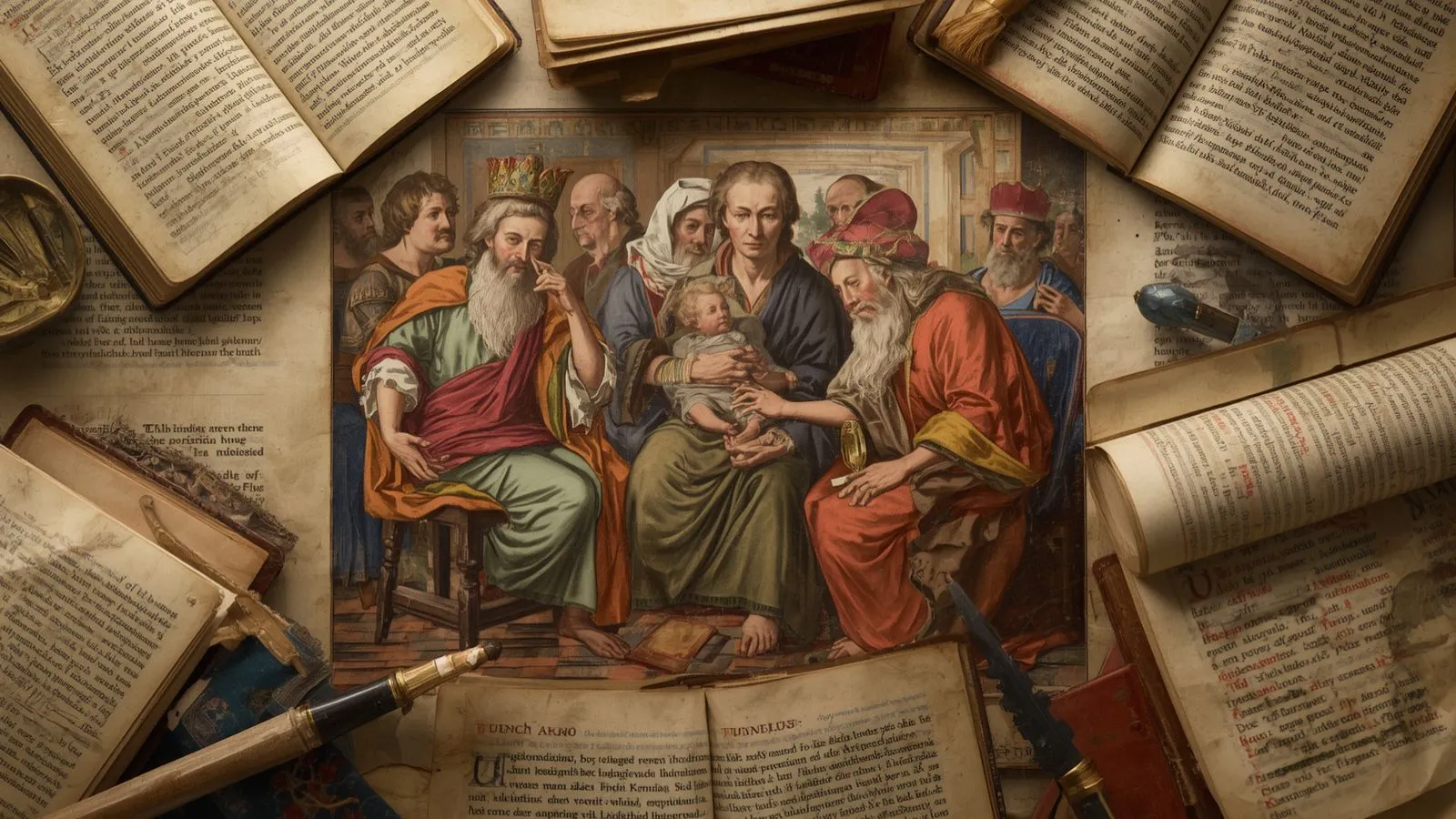
Picture a young man far from home, serving a foreign king, with no family of his own to return to.
He has no children, no legacy in the traditional sense and yet, God uses him in a powerful way. That image might surprise you. But the Bible is full of stories like this one.
The eunuchs meaning in the Bible is one of those topics many people skip over. The word sounds strange or uncomfortable at first.
But when you look closely, you find something beautiful. You find stories of faith, service, and divine purpose even in the most unexpected lives.
A eunuch, in the ancient world, was a man who had been castrated either by force or by choice. Sometimes this happened to palace servants.
Sometimes it happened to prisoners of war. In other cases, as Jesus describes, some men chose this path for the sake of God’s kingdom.
The Bible does not ignore this topic. It addresses it with honesty and with grace. From the courts of Babylon to the road from Jerusalem to Ethiopia, eunuchs appear at key moments in Scripture. Their stories teach us about belonging, about transformation, and about how God sees people whom society often overlooks.
This article will walk you through the Hebrew and Greek roots of the word, key Bible verses, the spiritual significance of eunuchs in scripture, and practical faith lessons you can carry with you. Whether you are a longtime Bible reader or just starting out, there is something here for you.
Let’s explore what the Bible says about eunuchs meaning in the Bible.
Biblical Meaning of Eunuchs in the Bible
The Hebrew and Greek Roots
The Hebrew word for eunuch is סָרִיס (saris). It appears throughout the Old Testament, especially in royal court settings. The word generally refers to an official in service to a king and in many cases, this official had been castrated as a condition of palace service.
In the New Testament, the Greek word is εὐνοῦχος (eunouchos). It literally means keeper of the bed or guardian of the bedroom. This reflects the role many eunuchs held trusted attendants who guarded the private chambers of royalty, including the quarters of queens and concubines.
The first appearance of the word saris in the Bible comes in Genesis 37:36 (NIV):
Meanwhile, the Midianites sold Joseph in Egypt to Potiphar, one of Pharaoh’s officials, the captain of the guard.
The word translated official here is saris in Hebrew. So even in the story of Joseph, a eunuch plays a supporting role in God’s larger plan.
Key Bible Verses on Eunuchs
Isaiah 56:3–5 (ESV) gives one of the most powerful and positive statements about eunuchs in all of Scripture:
Let not the foreigner who has joined himself to the LORD say, ‘The LORD will surely separate me from his people’; and let not the eunuch say, ‘Behold, I am a dry tree.’ For thus says the LORD: ‘To the eunuchs who keep my Sabbaths, who choose the things that please me and hold fast my covenant, I will give in my house and within my walls a monument and a name better than sons and daughters; I will give them an everlasting name that shall not be cut off.’
This is a radical promise. In ancient Israel, a man’s legacy was tied to having children especially sons. A eunuch had none of that. But God says: I will give you something better. A name. A place. An everlasting identity in His house.
Matthew 19:12 (NIV) records Jesus speaking directly about eunuchs:
For there are eunuchs who were born that way, and there are eunuchs who were made that way by others; and there are those who choose to live like eunuchs for the sake of the kingdom of heaven. The one who can accept this should accept it.
Jesus names three kinds of eunuchs here those born differently, those changed by others, and those who voluntarily choose celibacy for God’s kingdom. This was a stunning statement in His time. Jesus dignifies all three.
Connected Biblical Figure: The Ethiopian Eunuch
Acts 8:26–39 tells one of the most moving conversion stories in the New Testament. Philip, guided by the Holy Spirit, meets an Ethiopian official a eunuch on a desert road. The man is reading Isaiah 53 and does not understand it. Philip explains the Gospel. The eunuch believes and asks to be baptized immediately.
And he gave orders to stop the chariot. Then both Philip and the eunuch went down into the water and Philip baptized him. When they came up out of the water, the Spirit of the Lord suddenly took Philip away, and the eunuch did not see him again, but went on his way rejoicing. Acts 8:38–39 (NIV)
This man was an outsider in many ways a foreigner, a eunuch, someone the Old Testament law had restrictions around. And yet the Holy Spirit led Philip directly to him. Grace reached him on a desert road. He went home rejoicing. That is the heart of the biblical meaning of eunuchs God sees and calls those the world passes by.
Quick Reference Table
| Aspect | Details |
| Hebrew/Greek Root | Hebrew: saris (סָרִיס) official/court servant; Greek: eunouchos (εὐνοῦχος) keeper of the bed |
| First Biblical Appearance | Genesis 37:36 Potiphar, an official (saris) of Pharaoh |
| Core Biblical Meaning | A man set apart from normal family life, often in royal service; spiritually, one called to unique devotion to God |
| Key Bible Verses | Isaiah 56:3–5; Matthew 19:12; Acts 8:26–39 |
| Connected Biblical Figures | Potiphar (Genesis), the Ethiopian Eunuch (Acts 8), Ebed-melech (Jeremiah 38) |
| Spiritual Symbolism | Total consecration; identity found in God rather than legacy or lineage |
| Dream/Vision Meaning | May symbolize a call to set aside earthly attachments for a deeper purpose; a season of focused devotion |
| Faith Lesson | God gives a lasting name and place to those who seem forgotten by the world |
Spiritual Significance of Eunuchs in the Bible
Set Apart for Something Greater
The spiritual significance of eunuchs in scripture runs deeper than biology or history. At its core, the eunuch represents someone who has been set apart separated from the normal paths of life and who finds their identity entirely in God.
In the ancient world, your identity came from your family, your tribe, your children. A eunuch had none of those anchors. That could have been a source of despair. But in Isaiah 56, God turns the table completely. He offers something better than sons and daughters an everlasting name written in His house.
This speaks to anyone who feels they do not fit the expected mold. Anyone who has felt like an outsider, someone with a different life path, someone who wonders if God has a place for them. The answer the Bible gives is a clear and warm yes.
The story of Ebed-melech in Jeremiah 38 adds another layer. He was a eunuch who showed great courage pulling the prophet Jeremiah out of a muddy cistern where he had been left to die. God later spoke a special word of protection over him (Jeremiah 39:16–18). A eunuch. A hero. Chosen by God.
Charles Spurgeon once said: God does not regard men as the world regards them. He looks not on the outward appearance but on the heart, and often he chooses the weak and despised things of the world to confound the mighty.
That captures the spirit of the eunuchs meaning in the Bible beautifully.
Personal Reflection Question: Is there an area of your life where you feel like an outsider or overlooked? What might God be calling you to find in Him instead?
Related Biblical Concepts Table
| Concept | Meaning | Key Verse | Lesson |
| Eunuchs meaning in the Bible | Men set apart from normal family life, called to serve God with undivided devotion | Isaiah 56:4–5 | God gives identity and legacy to those the world overlooks |
| Celibacy for the Kingdom | Voluntary choice to remain unmarried in order to serve God fully | Matthew 19:12 | Some callings require laying down earthly attachments |
| Belonging in God’s House | God’s covenant extends to those excluded by traditional social structures | Isaiah 56:3 | No one is too different or too broken to belong to God |
| Holy Spirit Guidance | The Spirit actively leads believers to unexpected people and places | Acts 8:29 | God orchestrates divine meetings for the sake of one soul |
| Courage in God’s Service | Faithful action even at personal risk, like Ebed-melech rescuing Jeremiah | Jeremiah 38:12 | God honors those who act with bravery on behalf of others |
Dream and Real Life Meaning of Eunuchs in the Bible
What It Might Mean in a Dream
Dreams and visions are personal, and not every dream carries a divine message. But if you dream about themes connected to the eunuchs meaning in the Bible such as setting something aside, being set apart, or serving in an unexpected role it may be worth paying attention.
A peaceful dream in this theme might signal a season of focus and consecration. God may be inviting you to lay aside distractions and give Him your full attention. This is not a call to sadness it is a call to deeper faith.
An urgent or unsettling dream with these themes might prompt you to ask whether you are holding on too tightly to an identity or legacy that God is asking you to release. Transformation often begins with letting go.
How to Test the Experience
Not every impression is from God. The Bible gives us a simple test in 1 John 4:1 test the spirits. Ask: Does this align with Scripture? Does it lead me toward prayer, humility, and love? Does it bring peace, even if it is challenging?
Keep a journal. Write down what you felt, what you saw, and what Bible verses come to mind. Bring it to prayer. Talk to a trusted pastor or spiritual mentor. God is not in a hurry, and He will confirm what is truly from Him.
Faith Takeaways
- Pray for the courage to embrace the unique path God has placed before you, even when it looks different from others around you.
- Trust that God’s promise of an everlasting name means your life has eternal significance no matter how your story appears on the outside.
- Reflect on any area where you have felt excluded or overlooked, and ask God to show you how He sees you in that place.
- Seek the stories in Scripture of people who were unexpected heroes the Ethiopian eunuch, Ebed-melech and let their faith encourage yours.
- Remember that the Holy Spirit leads believers toward people and places that the world would pass by, and He may be leading you there too.
FAQs
What is the simple definition of eunuchs meaning in the Bible?
A eunuch in the Bible was a man who could not father children, either from birth, by force, or by choice. In ancient times, eunuchs often served in royal courts. The Bible uses the word to describe real historical figures and also as a picture of those who give themselves fully to God’s service. The biblical meaning of eunuchs carries themes of grace, identity, and unexpected purpose.
Did God accept eunuchs in the Old Testament? Yes and the prophet Isaiah makes this especially clear. In Isaiah 56:4–5, God promises eunuchs who keep His covenant a place in His house and an everlasting name. This was a remarkable statement in a culture where identity came largely from having children and a family legacy. Grace reached those who felt excluded.
What did Jesus say about eunuchs meaning in the Bible?
In Matthew 19:12, Jesus described three kinds of eunuchs those born that way, those made that way by others, and those who chose celibacy for God’s kingdom. He honored all three without shame or judgment. Jesus was inviting people to understand that some callings look different from the norm, and that is perfectly acceptable in God’s eyes.
Who is the Ethiopian eunuch in Acts 8, and why does his story matter?
The Ethiopian eunuch was a high-ranking official from Ethiopia who was reading the scroll of Isaiah when Philip met him. He believed the Gospel message, was baptized, and went home rejoicing. His story matters because it shows the Holy Spirit crossing every barrier race, culture, nationality, and personal history to bring someone into God’s family.
Is the word eunuchs connected to any specific Hebrew or Greek term?
Yes. The Hebrew word is saris, meaning a court official or royal servant. The Greek word is eunouchos, meaning keeper of the bed. Both words appear in key moments in Scripture and help us understand the cultural roles these individuals played. The eunuchs meaning in the Bible is rooted in both history and spiritual transformation.
What spiritual lesson can modern believers draw from the eunuchs in the Bible?
The biggest lesson is that God gives identity, belonging, and purpose to people the world overlooks. Whether someone feels excluded because of life circumstances, physical differences, or an unusual calling, God’s promise in Isaiah 56 still stands. A divine message of belonging runs through every eunuch story in the Bible.
What does it mean spiritually to become a eunuch for the kingdom of heaven?
This phrase from Matthew 19:12 describes a voluntary life of celibacy and focused devotion to God. It does not apply to everyone Jesus Himself said, The one who can accept this should accept it. For those who are called to it, this path is a gift, not a burden. It reflects a life poured out in complete surrender to God’s purposes.
Conclusion
The eunuchs meaning in the Bible carries two big spiritual truths. First, God’s grace has no boundaries it reaches people who feel excluded, overlooked, and different. Second, God gives a lasting identity to those who hold fast to Him, even when life looks nothing like what they expected.
From the Ethiopian eunuch rejoicing on a desert road to Isaiah’s stunning promise of an everlasting name, the Bible makes one thing clear: no one is too different to belong to God.
Hold onto this promise from Isaiah 56:5 (ESV):
I will give them an everlasting name that shall not be cut off.

Hi, I’m James Patterson, a storyteller who loves creating thrilling mysteries, unforgettable characters, and page-turning adventures. Through TheBiblimeaning, I share insights about authors, books, literary meanings, biographies, and the stories behind famous writers. My goal is to help readers discover the deeper world of literature while enjoying engaging and informative content.