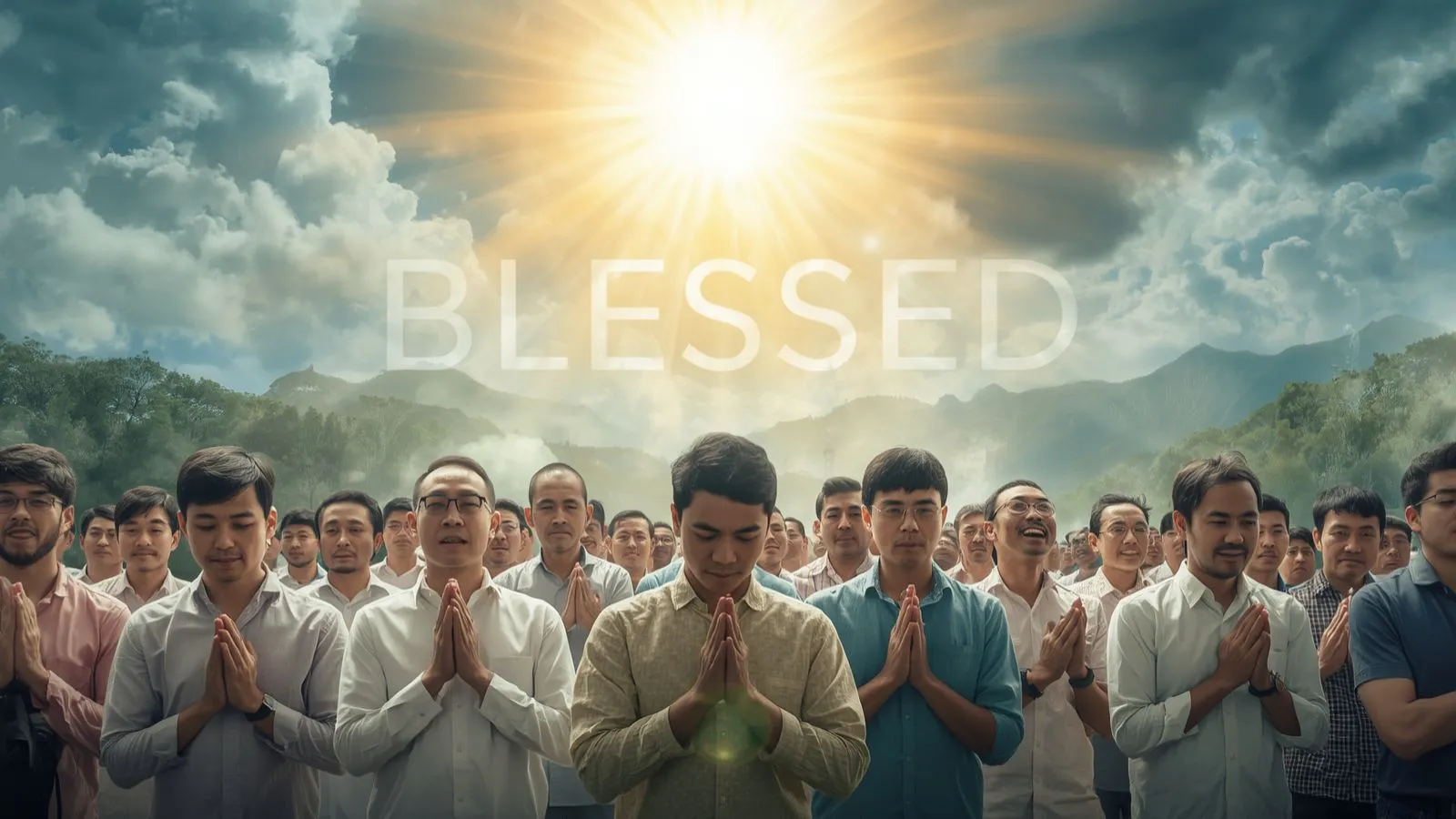
Have you ever looked at someone’s life and thought, They are truly blessed? Maybe they have a loving family, good health, or a strong faith.
Many people use the word blessed every day, but the blessed meaning in the Bible is much deeper than earthly success or happiness.
In Scripture, being blessed means experiencing God’s favor, presence, and goodness. It is not limited to material wealth.
A person can face hardships and still be blessed because God’s hand is upon them. The Bible teaches that true blessing comes from a relationship with the Lord and a heart that trusts Him.
Throughout Scripture, God blesses people, nations, and generations. From the creation account in Genesis to the promises of eternal life in Revelation, blessings reveal God’s love and care for His people.
Understanding the biblical meaning of blessed helps believers grow in faith, seek God’s will, and recognize His work in their lives.
One encouraging verse says:
Blessed is the one who trusts in the Lord, whose confidence is in him. Jeremiah 17:7 (NIV)
This verse reminds us that blessing begins with trust. It is rooted in God’s character rather than our circumstances. Through grace, prayer, the Holy Spirit, and spiritual transformation, Christians can experience God’s blessings every day.
Whether you are studying Scripture for the first time or seeking a deeper understanding of God’s promises, this guide will help you discover the rich and powerful meaning behind this important biblical word.
Let’s explore what the Bible says about blessed meaning in the Bible.
Biblical Meaning of Blessed Meaning in the Bible
The word blessed comes from several Hebrew and Greek words. In the Old Testament, one common Hebrew word is barak, which means to bless, to kneel, or to receive favor. Another important Hebrew word is ashre, which describes a state of happiness, joy, and spiritual well-being.
In the New Testament, the Greek word makarios is often translated as blessed. It refers to a person who enjoys God’s favor and experiences deep spiritual joy.
The first appearance of blessing in the Bible occurs in Genesis 1:22:
God blessed them and said, ‘Be fruitful and increase in number and fill the water in the seas, and let the birds increase on the earth.’ Genesis 1:22 (NIV)
This first blessing shows God’s desire for life, growth, and flourishing.
Another powerful passage appears in Psalm 1:
Blessed is the one who does not walk in step with the wicked or stand in the way that sinners take or sit in the company of mockers. Psalm 1:1 (NIV)
This verse teaches that blessing comes through obedience and a life centered on God.
Jesus also spoke extensively about blessing during the Sermon on the Mount:
Blessed are the pure in heart, for they will see God. Matthew 5:8 (NIV)
Here, Jesus shows that true blessing is spiritual. It flows from a heart devoted to God.
The blessed meaning in the Bible includes several key ideas:
- God’s favor upon a person.
- Spiritual joy and peace.
- A close relationship with God.
- Protection and guidance.
- Eternal hope through Christ.
However, Scripture also contains a warning. People sometimes mistake blessings for personal achievement. The Bible reminds believers that every good gift comes from God. Blessings should lead to gratitude rather than pride.
One biblical figure strongly connected to blessing is King David. David experienced victories, prosperity, and God’s protection. Yet he understood that God’s presence was the greatest blessing of all. Many of the Psalms celebrate the joy of living under God’s care.
Mary, the mother of Jesus, is another example. The angel declared her blessed among women because she was chosen to bear the Savior. Her blessing came through obedience and faith rather than status or wealth.
The spiritual significance of blessed extends beyond temporary success. It points to God’s ongoing work in a believer’s life. Through Christ, believers receive forgiveness, adoption into God’s family, and the promise of eternal life.
In Scripture, blessing is both a gift and a calling. God blesses His people so they can reflect His love and become a blessing to others.
Quick Reference Table
| Aspect | Details |
| Hebrew/Greek Root | Barak, Ashre, Makarios |
| First Biblical Appearance | Genesis 1:22 |
| Core Biblical Meaning | God’s favor, joy, and spiritual well-being |
| Key Bible Verses | Genesis 1:22, Psalm 1:1, Matthew 5:8 |
| Connected Biblical Figures | David, Mary, Abraham |
| Spiritual Symbolism | Divine favor, peace, relationship with God |
| Dream/Vision Meaning | God’s encouragement, guidance, or provision |
| Faith Lesson | Trust God and walk in obedience |
Spiritual Significance
The spiritual significance of blessed reaches far beyond earthly success. In the Bible, blessing points to a life shaped by God’s presence. It reflects a heart that trusts Him and follows His ways.
Many people chase happiness through possessions, achievements, or recognition. Scripture teaches that lasting joy comes from knowing God. A blessed person may face challenges, but they possess inner peace because they walk with the Lord.
A well-known quote from C.S. Lewis says:
God cannot give us a happiness and peace apart from Himself, because it is not there.
This insight reflects the biblical view of blessing. True fulfillment comes from God’s presence.
Blessing also involves transformation. As believers grow in faith, prayer, and obedience, the Holy Spirit shapes their character. They become more loving, patient, and compassionate.
Romans 15:13 offers encouragement:
May the God of hope fill you with all joy and peace as you trust in him. Romans 15:13 (NIV)
This verse shows that blessing produces hope, joy, and peace.
Personal Reflection Question:
Are you seeking God’s presence as your greatest blessing, or are you focused mainly on temporary rewards?
Related Biblical Concepts Table
| Concept | Meaning | Key Verse | Lesson |
| Blessed | God’s favor and spiritual joy | Matthew 5:8 | True blessing comes from God |
| Grace | God’s undeserved favor | Ephesians 2:8 | Salvation is a gift |
| Faith | Trust in God’s promises | Hebrews 11:1 | Trust leads to blessing |
| Peace | Inner rest from God | John 14:27 | Christ gives lasting peace |
| Obedience | Following God’s commands | Deuteronomy 28:1 | Obedience brings spiritual growth |
Dream & Real Life Meaning
Dreams about blessings often symbolize encouragement, provision, growth, or a reminder of God’s promises. A peaceful dream may suggest reassurance from God during a difficult season. It can point to hope, healing, or renewed faith.
An urgent dream may serve as a call to examine your heart. It could encourage repentance, deeper prayer, or greater trust in God’s direction.
The Bible teaches believers to test spiritual experiences carefully. Not every dream carries divine meaning. Compare the message with Scripture and seek wisdom through prayer.
One helpful verse says:
Test everything. Hold on to the good. 1 Thessalonians 5:21 (NIV)
If you believe God may be speaking through a dream or vision, spend time in prayer. Ask the Holy Spirit for understanding. Write your thoughts in a journal and watch for patterns or confirmations through Scripture.
Remember that God’s primary guidance comes through His Word. Dreams may encourage faith, but the Bible remains the believer’s foundation.
Faith Takeaways
- Pray for a deeper understanding of God’s blessings in your life.
- Trust God’s plan even when circumstances seem difficult.
- Reflect on the blessings that come from His presence rather than possessions.
- Seek opportunities to bless others with kindness and generosity.
- Remember that true blessing begins with a relationship with Jesus Christ.
FAQs
1. What is the blessed meaning in the Bible?
The blessed meaning in the Bible refers to God’s favor, joy, and spiritual well-being. It describes people who live in a close relationship with Him. Biblical blessing often includes peace, purpose, and eternal hope.
2. Does being blessed mean being wealthy?
No. Many faithful people in Scripture experienced hardship. The Bible teaches that true blessing comes from God’s presence rather than material possessions.
3. What is the biblical meaning of blessed in the Beatitudes?
In the Beatitudes, Jesus described blessed people as those who trust God and reflect His character. Their reward comes from God’s kingdom rather than worldly success.
4. How can I experience blessed meaning in the Bible personally?
You can experience God’s blessing through faith, prayer, obedience, and a relationship with Christ. As you follow Him, you grow in peace, wisdom, and spiritual strength.
5. Why is blessed in scripture important?
Blessed in scripture reveals God’s desire to care for His people. It shows His love, guidance, and promises throughout biblical history.
6. Can difficult seasons still be blessings?
Yes. God often uses challenges to strengthen faith and shape character. Many biblical figures grew closer to God during times of hardship.
7. What is the spiritual significance of blessed?
The spiritual significance of blessed is found in God’s favor and presence. It points believers toward eternal realities and reminds them that true joy comes from Him.
More Searched Questions About the Blessed Meaning in the Bible
What are the Hebrew words for blessed in the Bible, and how do barak and ashar differ?
Two different Hebrew words stand behind the single English word blessed, and they do different work. The first is barak, a verb: to bless. It is the word of action. God baraks His creatures in the beginning, and then man and woman: the searchers who ask for the Hebrew word for blessed in Genesis 1:28 are asking about this word, for there God blessed them and sent them out fruitful. Spoken by God, barak is God granting life, favour and increase; spoken by His priests, it is His favour pronounced in His name: “The LORD bless thee, and keep thee: The LORD make his face shine upon thee, and be gracious unto thee: The LORD lift up his countenance upon thee, and give thee peace” (Numbers 6:24-26). And the same word runs the other way, when men barak God, which the English Bible prints as blessing the LORD in praise. It is a doing word on both sides. The same root also gives the Hebrew word for a knee, and in Scripture blessing is very often spoken by people who bow.
The second word is ashar, and its form in the Psalms is ashre. It is not an action word but a state word, and its plain sense is happy, or fortunate: the person it describes is to be congratulated because of where he stands with God. It opens the book of Psalms: “Blessed is the man that walketh not in the counsel of the ungodly, nor standeth in the way of sinners, nor sitteth in the seat of the scornful” (Psalm 1:1). The readers who search for the Hebrew word for blessed in Psalm 1, and in Psalm 119, are meeting ashre and not barak: “Blessed are the undefiled in the way, who walk in the law of the LORD. Blessed are they that keep his testimonies, and that seek him with the whole heart” (Psalm 119:1-2). So the difference can be held in one line: barak is blessing done, by God to men or by men to God; ashre is the happy state of the person who stands under God’s favour. The New Testament word of the Beatitudes, makarios, is the Greek heir of ashre, as the next answer shows.
What does the Greek word makarios mean in Matthew chapter 5?
Every “blessed” in the Beatitudes is one Greek word, makarios, and the Greek Old Testament had already used that same word to translate ashre, so Jesus’ hearers were standing in the Psalms’ own stream when He spoke. Makarios names a state before it names a feeling. It describes a person as standing in God’s favour, in the place of congratulation, whatever his outward circumstances look like at the moment. That is why teachers sometimes render it “to be congratulated”, and why it can be spoken, without any contradiction, over people who are mourning, meek, hungry for righteousness or persecuted. If blessed were mainly a feeling, Jesus’ list would make no sense. As a verdict of God pronounced over His people, it makes complete sense: He is telling them what they are in His kingdom, not how they happen to feel that day.
Read that way, the nine blessed statements of Matthew 5:3-11 are descriptions of the kingdom’s people with God’s promises attached to each, and they should not be read as a payment ladder, as though mourning purchased heaven or meekness bought the earth. No one climbs into the kingdom by performing the Beatitudes one by one. Jesus is describing who is already called blessed in His kingdom, and what God has pledged to each of them. There is also a second Greek word readers meet, eulogetos, which means well spoken of. In the New Testament it is used of God and of Christ, and Paul sets the two word families side by side in one line: “Blessed be the God and Father of our Lord Jesus Christ, who hath blessed us with all spiritual blessings in heavenly places in Christ” (Ephesians 1:3). God is the blessed One who speaks well of His people; His people are makarios because He does.
What does “blessed are the poor in spirit” mean in Matthew 5:3?
The first Beatitude reads: “Blessed are the poor in spirit: for theirs is the kingdom of heaven” (Matthew 5:3). The poverty here is poverty of spirit, and Matthew’s two added words matter. Jesus is not pronouncing a blessing on material poverty by itself, nor on low self esteem. The poor in spirit are the people who know, and admit, that they bring God nothing: no righteousness of their own to trade, no spiritual wealth to bargain with. They come to Him the way a beggar comes to a door, empty handed and knowing it. Luke’s version of the saying is shorter, “blessed be ye poor” (Luke 6:20), spoken to disciples who had in fact left what they had; Matthew’s fuller form makes the inner state plain, so that no rich man excuses himself and no poor man flatters himself that his bank balance, or lack of one, settles the question.
Notice the tense of the promise. Most of the Beatitudes say “shall”: they shall be comforted, they shall inherit, they shall be filled. This one says “is”: theirs is the kingdom of heaven, present tense. Poverty of spirit is not one virtue among others; it is the door of the kingdom, the posture in which a person enters. Jesus’ own parable of the two men at prayer draws the same picture: the publican who would not lift up his eyes, and asked only for mercy, went home justified, while the man rich in his own righteousness did not (Luke 18). The poor in spirit are blessed not because emptiness is fine in itself, but because empty hands are the only kind that can receive a kingdom given as a gift.
What does “blessed are they that mourn” mean in Matthew 5:4?
The saying is short: “Blessed are they that mourn: for they shall be comforted” (Matthew 5:4). Mourning in the Bible covers more than grief at a grave, though it includes that grief honestly. It is also the sorrow a person feels over his own sin when he sees it clearly, and the sorrow of God’s people over a world broken by death, cruelty and loss. The Old Testament had already joined mourning to comfort in God’s promise: the anointed one of Isaiah 61 is sent “to comfort all that mourn”. Jesus takes that promise up and puts His own “shall” under it. The comfort is not described as immediate, and it is not a technique. It is God’s pledge, and its last form in Scripture is God Himself wiping away tears from His people’s eyes (Revelation 21:4).
One honest distinction keeps this Beatitude from being misread. The verse does not call grief good, and it does not ask anyone to be grateful for the loss that caused it. It calls the mourner blessed, because God has pronounced him so and has bound Himself to comfort him. That is a very different thing from the advice the world gives, which is to stop mourning as quickly as possible. In Jesus’ kingdom, the tears are neither denied nor worshipped; they are answered. Readers who come to this verse in actual bereavement should be given exactly what it gives: not an explanation of their loss, but God’s verdict over them in it, and a comfort that is promised in the future tense because it is certain, not because it has all arrived.
What does “blessed are the meek” mean in Matthew 5:5?
“Blessed are the meek: for they shall inherit the earth” (Matthew 5:5). Meekness in the Bible is not weakness, timidity or a quiet personality, though it is often mistaken for all three. The meek person is the one who has strength and grievance enough to fight, and does not grasp, force or retaliate, because he has handed his cause to God. Moses is called very meek in Scripture (Numbers 12:3), and he confronted Pharaoh, led a nation and judged Israel; his meekness was not an absence of force but force under God’s rule. And Jesus is nearly quoting an older text here. David had written: “But the meek shall inherit the earth; and shall delight themselves in the abundance of peace” (Psalm 37:11), in a psalm written for people tempted to fret while the violent prospered for a season.
The promise turns the world’s arithmetic upside down on purpose. In the world, the earth is taken by the aggressive, held by the strong and inherited, if at all, by accident of birth. Jesus says the meek shall inherit it, and inheritance is the opposite of seizure: it is received, as a gift, in the Father’s time. Jesus uses this same word of Himself, describing Himself as meek and lowly in heart (Matthew 11:29), the Son of God who could have summoned heaven’s armies and instead bore the cross. So the meek are not blessed because the world rewards gentleness, for it usually does not. They are blessed because God has named them the heirs, and His inheritance outlasts every seizure.
What does “blessed are the peacemakers” mean in Matthew 5:9?
The verse reads: “Blessed are the peacemakers: for they shall be called the children of God” (Matthew 5:9). Note the word: makers, not merely lovers, keepers or enjoyers of peace. A peacemaker does work, the costly work of bringing estranged people back together: telling the truth without cruelty, absorbing an offence instead of returning it, standing between two sides that would rather fight. God is the first peacemaker in this sense: Paul says He made peace through the blood of Christ’s cross, reconciling things to Himself (Colossians 1:20). Human peacemaking is the family trade learned from that Father, and it is not the same as avoiding conflict at any price or calling wrong things right for the sake of quiet. Biblical peace is wholeness restored, not silence imposed.
The promise explains itself: “they shall be called the children of God”. Children resemble their father, and God recognises His own likeness in the people who reconcile. The calling is God’s verdict, not a compliment paid by the crowd, for peacemakers are often blamed by both sides of the quarrel they are healing. That is also why this Beatitude belongs in a section on what blessed means: like all the others, it is God’s pronouncement over a kind of person, and it holds even when the peacemaking fails outwardly and the two sides refuse to be reconciled. The maker’s blessedness rests on God’s calling him a child, not on his success rate.
Can a person be blessed while suffering or being persecuted?
Scripture answers this question directly, and its answer is the strongest proof of what blessed means. Jesus ends the Beatitudes here: “Blessed are they which are persecuted for righteousness sake: for theirs is the kingdom of heaven” (Matthew 5:10). He then turns from “they” to “you”, and tells His hearers that when men revile them and say all manner of evil against them falsely, for His sake, the right response is the opposite of self pity: “Rejoice, and be exceeding glad: for great is your reward in heaven” (Matthew 5:12). Peter repeats the verdict to suffering churches in the KJV’s other word for the same Greek: “But and if ye suffer for righteousness’ sake, happy are ye: and be not afraid of their terror, neither be troubled” (1 Peter 3:14). James says the same of the trial itself: “Blessed is the man that endureth temptation: for when he is tried, he shall receive the crown of life, which the Lord hath promised to them that love him” (James 1:12), and again, “Behold, we count them happy which endure. Ye have heard of the patience of Job, and have seen the end of the Lord; that the Lord is very pitiful, and of tender mercy” (James 5:11).
So the honest limits must be stated plainly. Blessed in the Bible is never a promise that faith brings wealth, health or an easy life, and no verse makes comfort the measure of God’s favour. Some of the loudest blessed statements in Scripture are pronounced over mourners, over the reviled, over a man enduring trial and over Job on his ash heap. What God calls blessed in those places is the person, not the pain: He is not asking anyone to name suffering itself good. He is declaring that His verdict and His reward stand over His people inside the suffering, where the world’s eye can see only loss. A faith that measures blessing by circumstances will call these verses contradictions. A faith that takes blessed as God’s word of favour will recognise them as the centre of the whole subject.
Why do Christians say “blessed be the name of the LORD”, and what does it mean that God himself is called blessed?
The word barak runs in two directions, and this phrase runs in the upward one. When God blesses men, He gives; when men bless God, they ascribe: they declare, in praise, that all blessing comes from Him and that He is worthy of the thanks for it. David turns that declaration on his own soul like a command: “Bless the LORD, O my soul: and all that is within me, bless his holy name. Bless the LORD, O my soul, and forget not all his benefits” (Psalm 103:1-2). Job spoke the famous form of it at the worst moment of his life, when the news of his losses had all arrived in one day: “the LORD gave, and the LORD hath taken away; blessed be the name of the LORD” (Job 1:21). The name stands for the LORD Himself as He has made Himself known, and to bless that name, in loss as in plenty, is to say that God’s worthiness does not rise and fall with His gifts.
When Scripture calls God blessed, it cannot mean that He receives favour He lacks, as we do. It declares Him to be the blessed One in Himself: the source of all blessing, complete in His own happiness, needing nothing from outside. Paul opens his greatest letter of praise with the Greek word eulogetos: “Blessed be the God and Father of our Lord Jesus Christ, who hath blessed us with all spiritual blessings in heavenly places in Christ” (Ephesians 1:3). And twice he uses makarios, the Beatitudes’ own word, of God directly: the gospel is “the glorious gospel of the blessed God” (1 Timothy 1:11), and God is “the blessed and only Potentate, the King of kings, and Lord of lords” (1 Timothy 6:15). Our blessedness is a share in His: He is blessed in Himself, and we are blessed in Him.
What is the blessed hope in Titus 2:13?
Paul gives one of the New Testament’s great expectations a title searchers keep asking about: “Looking for that blessed hope, and the glorious appearing of the great God and our Saviour Jesus Christ” (Titus 2:13). The blessed hope is not a mood of optimism and it is not a technique for feeling better. It is an event: the appearing of Jesus Christ. The hope and the appearing are so joined in the sentence that they are nearly one thing: the hope is the appearing, waited for. It is called blessed for two reasons that meet in the word itself. It is certain, resting on God’s announcement rather than on human wishing; and when it arrives it will make its waiting people blessed in the fullest sense, in the presence of the Saviour they have been looking for.
Hope in the Bible’s use is not the “I hope so” of everyday speech, which usually means “I want it but doubt it”. It is a settled expectation that organises the present. In its own paragraph, the blessed hope is a teacher: Paul has just said that the grace of God teaches believers to live soberly, righteously and godly in this present world, and to live that way looking, eyes up, for the appearing (Titus 2:11-13). That is why this verse belongs in an article on blessed. The largest blessing in Scripture is still on its way, and the people who wait for it are pronounced blessed now, in the waiting, because the God who promised it does not lie.
Is “count your blessings” a Bible verse, and where does the idea come from?
The exact words “count your blessings” do not appear in any verse of the Bible, and readers searching for the verse behind the phrase deserve to be told so plainly. The phrase became a household saying through a hymn, “Count Your Blessings”, written in 1897 by Johnson Oatman Jr., whose chorus tells the singer to count his blessings and name them one by one. As with many hymn phrases, it feels biblical because the practice it names is biblical, even though the slogan itself is a hymn writer’s. The Bible root underneath it is David’s command to his own soul, already quoted in this section: “Bless the LORD, O my soul, and forget not all his benefits” (Psalm 103:2). Counting is simply what “forget not” looks like when it is done deliberately: benefits named, one by one, instead of being left as a blur.
That is also why the practice matters more than the slogan. Again and again, Scripture treats forgetting as the first step away from God: Israel is warned that when they are full and settled they will forget the LORD who brought them out (Deuteronomy 8), and David’s psalm treats remembering as the soul’s duty rather than its mood. A reader who counts blessings one by one is doing the Psalm 103 discipline with a hymn’s words, and there is no harm in the borrowed words as long as their shelf is known: the hymn is a fine servant, but it is not a verse, and it should never be quoted with a chapter and verse attached to it.
Is “blessed assurance” a Bible verse, and what does the Bible itself say about assurance?
Like “count your blessings”, “blessed assurance” is a hymn phrase and not a Bible quotation. It opens Fanny Crosby’s hymn of 1873, “Blessed assurance, Jesus is mine”, and from that hymn it passed into ordinary Christian speech, which is why so many searchers type it as though it were a verse address. No verse of the King James Bible or of any standard translation contains the two words together. But the hymn did not invent its subject. Assurance is a real Bible word, and the text the phrase grows out of stands in Hebrews: “Let us draw near with a true heart in full assurance of faith, having our hearts sprinkled from an evil conscience, and our bodies washed with pure water” (Hebrews 10:22). There, full assurance of faith is the ground on which a believer draws near to God, resting on what Christ has done rather than on the strength of his own feelings.
That root is worth keeping, because it corrects both errors people make with the word. Assurance in Scripture is not a mood to be worked up; it rests on God’s promise and on Christ’s finished work, and it is meant to hold on an ordinary day and a dark one alike. Neither is it presumption, a careless certainty that asks nothing and examines nothing: the same chapter of Hebrews that speaks of full assurance also calls believers to hold fast and to provoke one another to love and good works. So the honest answer to the search is twofold. Enjoy the hymn as a hymn, one of the church’s best known songs of confidence. But when you want the doctrine, go to the texts, where assurance is built on Christ and not on the temperature of your own heart.
Is “too blessed to be stressed” a Bible verse?
No. No verse of the Bible says “too blessed to be stressed”, and the phrase is not a translation of anything in Hebrew or Greek. It is a modern saying of popular Christian speech, printed on shirts and mugs and repeated in pulpits, and its rhyming shape is exactly why it is remembered and mistaken for Scripture. Searchers who go looking for its address in the Bible will not find one, because there is none to find. What the saying is reaching for is real enough: a gratitude that refuses to let pressure have the last word, the same instinct this article has met in Psalm 103. As a reminder to give thanks, it can do a believer no harm.
Where it misleads is in what it quietly promises: that a truly blessed person will not feel stress. Scripture does not say that, and its blessed people plainly do feel it. Paul tells the Corinthians that he and his companions were pressed out of measure, above strength, in their affliction in Asia (2 Corinthians 1:8), and the Lord Jesus in Gethsemane was sorrowful even to death as He prayed. Being blessed, as every answer in this section has shown, is God’s verdict over a person, not an anaesthetic given to him. Readers who want the Bible’s actual words for a stressed heart will find them not in a slogan but in the Psalms of trust, in the Saviour’s own invitations, and in promises like the one this article ends with, that the one who takes refuge in the LORD is blessed (Psalm 34:8).
How many times is the word blessed in the Bible?
There is no single number, and any page that prints one exact total without naming its translation and its method should be read with care. The reason is simple: “blessed” is an English word, and the Bible was not written in English. A count of it counts a translator’s choices. Every translation renders the Hebrew barak and ashar and the Greek makarios and eulogetos by several different English words, blessed, happy, favoured, praise, bless, blessing, and the family splits and joins differently in the King James Bible, the NIV and every other version. Count only the exact word “blessed” in one version and you get that version’s number; count the whole family of words across the original languages and you get a number in the hundreds. Both counts can be honest. Neither is the count of something the Bible itself totals.
The King James Bible itself proves the point in a way any reader can check. The Greek word makarios stands some fifty times in the New Testament. In Matthew 5 the KJV prints it “blessed” nine times in eleven verses. At 1 Peter 3:14 the very same word, in the very same translation, is printed “happy”: “happy are ye”. James 5:11 uses the word’s own verb, “we count them happy which endure”, where other translations print blessed. So even inside one beloved translation, the same word wears two English coats, and a search for the word blessed alone walks straight past verses where the identical Greek word is standing in a “happy” coat. Behind them all, the Hebrew barak in its various forms stands in the Old Testament hundreds of times. The Bible’s answer to “how many” is therefore not a figure but a fullness: blessed is not a rare word scattered thinly, but one of the load bearing words of the whole book.
What did Gabriel mean by calling Mary “highly favoured” and “blessed art thou among women”?
This answer is kept brief, because the meeting it belongs to is treated fully in this site’s article on Elizabeth, but the words themselves are searched often enough to deserve a plain explanation here. Gabriel’s greeting in the King James Bible reads: “Hail, thou that art highly favoured, the Lord is with thee: blessed art thou among women” (Luke 1:28). Highly favoured means favoured by God’s grace for a task: Mary is blessed not because of a rank she had earned but because of the choice God had made, to make her the mother of the Saviour. Elizabeth greets her with the matching words a few verses later, speaking, Luke says, with a loud voice: “Blessed art thou among women, and blessed is the fruit of thy womb” (Luke 1:42). Readers comparing translations should know that the KJV prints the phrase in both Gabriel’s greeting and Elizabeth’s, while most modern translations print it in Elizabeth’s greeting only; the woman and the blessing are the same in either case.
Mary’s own song gives the Bible’s explanation of her title, and it points away from herself: generations would call her blessed, she says, because of what the Mighty One had done for her and because of His mercy (Luke 1:48-49). Her blessing, as this whole article has shown blessing works, is God’s favour resting on a person for His purposes, received in faith: Elizabeth’s last word on her is “blessed is she that believed” (Luke 1:45). That is the sense in which Mary is blessed among women in Scripture, honoured above every other woman by the child she carried, and an example of the article’s whole subject rather than an exception to it.
Conclusion
The blessed meaning in the Bible reveals two powerful truths. First, true blessing comes from God’s presence rather than earthly success. Second, blessing grows through faith, obedience, and a relationship with Him.
Throughout Scripture, blessed people are those who trust the Lord and walk in His ways. Their joy does not depend on circumstances because they rest in God’s promises.
A fitting final verse is:
Taste and see that the Lord is good; blessed is the one who takes refuge in him. Psalm 34:8 (NIV)
May this truth encourage you to seek God’s presence daily, trust His guidance, and discover the lasting joy that comes from living under His loving care.

Hi, I’m James Patterson, a storyteller who loves creating thrilling mysteries, unforgettable characters, and page-turning adventures. Through TheBiblimeaning, I share insights about authors, books, literary meanings, biographies, and the stories behind famous writers. My goal is to help readers discover the deeper world of literature while enjoying engaging and informative content.