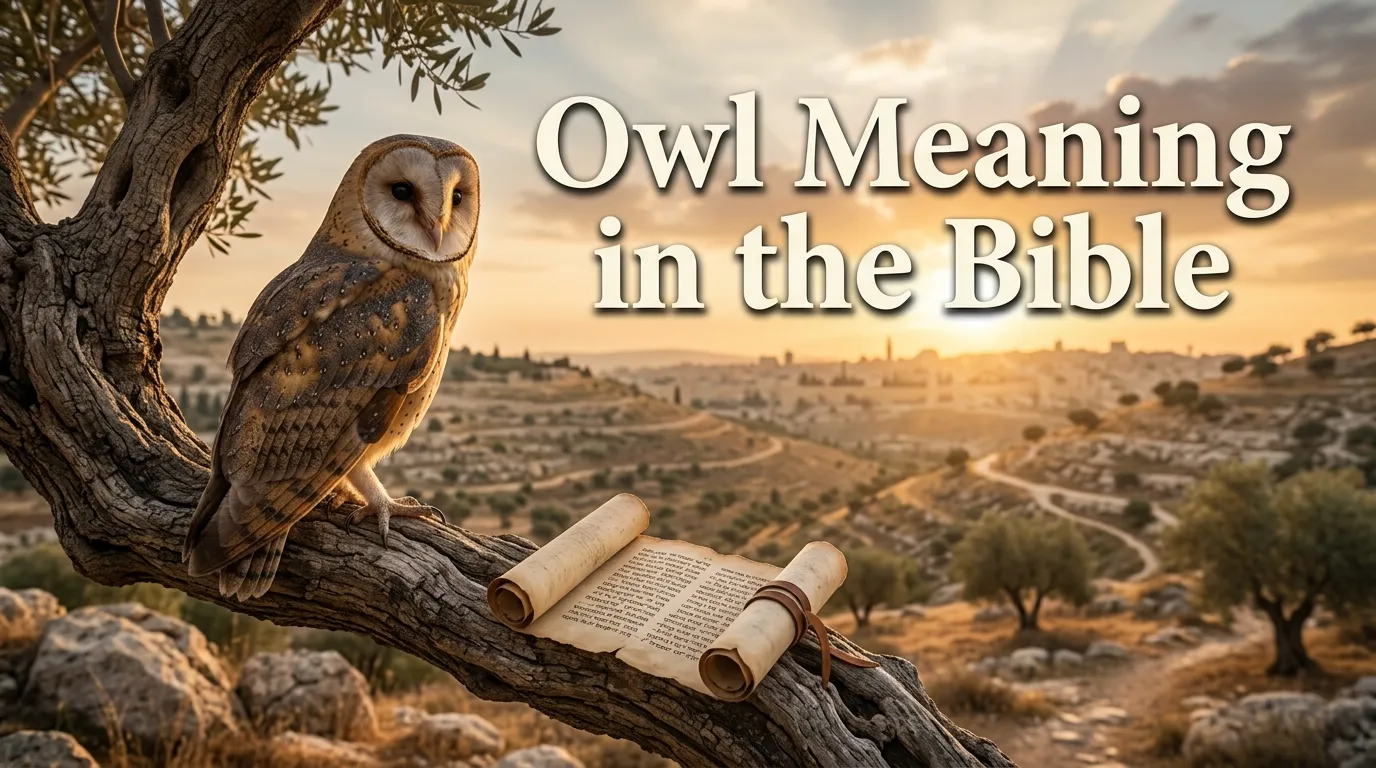
Many people wonder about the owl meaning in the bible. This quiet night bird shows up in a few Old Testament passages. Some readers feel curious. Others feel worried after seeing an owl at night.
The Bible does not ignore this bird. It gives us real clues about what owls symbolize. We will look at Hebrew words, actual Bible verses, and honest spiritual meaning.
This article stays close to Scripture. No guessing. No fear-based claims. Just clear biblical truth about the owl meaning in the bible.
Owls fly at night. They live in caves and empty buildings. That alone made ancient people connect them with quiet, hidden places.
But Scripture gives more than folklore. It gives real context, real Hebrew words, and real spiritual lessons we can trust today.
Let’s explore what the Bible says about owl meaning in the bible.
Biblical Meaning of Owl Meaning in the Bible
In Scripture, the owl is mostly listed as an unclean bird. It appears in lists God gave to Israel about food. The Hebrew words behind owl include yanshuph, kos, qippoz, and lilith.
These words are tricky to translate. Bible scholars still debate exact species. Some versions say owl, others say screech owl or night creature.
The biblical meaning of owl connects to desolation, loneliness, and ruined places. Owls often appear in verses describing empty cities or judged lands. This is not random. It reflects how owls naturally live in quiet, abandoned places.
Yet the owl also shows God’s wide creation. Job 39 reminds us that God made every wild creature with purpose. Even the owl fits into His design.
It helps to remember that ancient Israelites did not view animals the way modern readers do. They did not assign secret magical meanings to birds. Instead, they saw animals through the lens of God’s Law and His created order.
The biblical meaning of owl is tied closely to place, not superstition. Owls live where people do not. Ruins, deserts, and abandoned towns become their homes.
This is why biblical writers used the owl as a picture of emptiness. It was not because the bird itself carried evil power. It was because owls naturally gather where human life has faded away.
Understanding this helps us read verses like Isaiah 34 correctly. The prophet is not warning readers to fear owls. He is describing what desolate land looks like after judgmentquiet, wild, and taken over by creatures like the owl.
Featured Snippet Answer: The owl in the Bible mainly symbolizes desolation, loneliness, and judgment on empty places. It was also listed as ceremonially unclean under Old Testament law, though it still reflects God’s wisdom in creation.
Quick Reference Table
| Aspect | Meaning |
| Hebrew Names | Yanshuph, Kos, Qippoz, Lilith |
| First Appearance | Leviticus 11:17 |
| Old Testament Status | Unclean bird |
| Common Symbolism | Desolation, ruin, loneliness |
| Positive Angle | Part of God’s wise creation |
| Warning Angle | Judgment on sinful, abandoned places |
| Related Figures | Job, Isaiah (prophet), Israelites in the wilderness |
Key Bible Verses
Scripture mentions owls in a few clear places. These verses help us understand the owl in scripture and its true context.
Leviticus 11:17 (ESV): The little owl, the cormorant, the short-eared owl.
Isaiah 34:11 (NIV): The desert owl and screech owl will possess it; the great owl and the raven will nest there. God will stretch out over Edom the measuring line of chaos and the plumb line of desolation.
Job 39:26 (ESV): Is it by your understanding that the hawk soars, spreading his wings toward the south?
Psalm 102:6 (NIV): I am like a desert owl, like an owl among the ruins.
These verses show a pattern. Owls appear near ruins, deserts, and lonely places. They also show up in lists of unclean animals given to Moses.
Notice how each verse uses the owl differently. Leviticus uses it in a legal, priestly context. Isaiah uses it as a picture of judgment on a nation. Psalm 102 uses it as a personal, emotional image of grief.
This variety matters. It tells us the owl in scripture is not a single fixed symbol. Context always shapes the meaning, just like it does with any biblical image such as lions, doves, or eagles.
Reading these three verses together gives a fuller, more honest picture. The owl is a real bird, living in real places, used by real biblical writers to teach real spiritual lessons.
Biblical Context
To understand the owl meaning in the bible, we need historical background. Ancient Israel followed strict food laws. Leviticus 11 and Deuteronomy 14 list clean and unclean animals.
Owls fall under unclean birds. This did not mean owls were evil. It simply meant Israelites could not eat them.
Owls are night hunters. They live in caves, ruins, and quiet deserts. Ancient writers often linked them with desolate, forgotten places because that is literally where owls nest.
In Isaiah 34, the prophet describes Edom’s coming judgment. Owls and other wild creatures take over the land after God’s judgment falls. This is symbolic language, not a curse tied to the bird itself.
Psalm 102 uses the owl differently. Here, a suffering psalmist compares his loneliness to a desert owl. This shows raw human emotion, not evil symbolism.
The Israelites also lived close to nature. They knew which birds nested in cliffs, which hunted in daylight, and which only came out at night. This everyday knowledge shaped how biblical writers used animal pictures in their poetry and prophecy.
When Isaiah wanted to describe a ruined, lifeless Edom, the owl was a natural choice. Everyone listening would have pictured an empty land taken over by wild, quiet creatures. It painted a vivid, accurate picture without needing extra explanation.
This is a good reminder for modern readers. Bible verses about animals often reflect real ancient life, not secret codes. Understanding the biblical context keeps us from adding meanings Scripture never intended.
Spiritual Meaning
The spiritual significance of owl in Scripture often centers on isolation. When people feel alone, forgotten, or in a spiritual desert, the Bible uses the owl as an image of that emotion.
This does not mean seeing an owl is a bad omen. Scripture never teaches that owls carry curses or demonic power. That idea comes from folklore, not the Bible.
Psalm 102:6-7 shows a man crying out to God during deep sorrow. He feels like a lonely owl. Yet the same psalm ends in hope, trusting God’s eternal faithfulness.
This teaches us something beautiful. Even in seasons that feel like a spiritual desert, God stays near. Faith does not depend on feelings of loneliness.
The owl’s habitatruins, deserts, quiet cavesalso reminds believers of forgotten or broken places. But Scripture always points toward restoration through grace and trust in God.
Think about how many biblical figures walked through lonely seasons. Job lost everything and sat in silence. Elijah hid in a cave, feeling forgotten. Even Jesus withdrew to quiet, desert places to pray.
None of these moments were wasted. Each led to renewed strength, clearer purpose, or a fresh word from God. The owl’s lonely habitat can remind believers that quiet seasons are not punishmentthey are often preparation.
This is the true spiritual significance of owl imagery in Scripture. It is not a warning to fear. It is an invitation to bring loneliness honestly before God and trust His timing for restoration.
Biblical Symbolism
Owls symbolize a few connected biblical ideas.
1. Desolation and Judgment Isaiah 34:11 shows owls filling a judged, empty land. This symbolizes what happens when a nation turns from God.
2. Loneliness Psalm 102:6 uses the owl to picture deep human sorrow. It is emotional, honest, and relatable.
3. Ceremonial Uncleanness Leviticus 11:17 places the owl among birds Israel could not eat. This symbolized spiritual separation from things linked to death, wilderness, and decay.
4. Creation’s Mystery Job’s wilderness chapters remind readers that even strange, night-dwelling creatures reflect God’s wisdom. Nothing exists outside His design.
These symbols work together. They paint a picture of a fallen world needing redemption, while still showing God’s careful hand over creation.
It also helps to compare the owl with other biblical birds. The dove often represents peace and the Holy Spirit. The eagle often pictures strength and renewal, as seen in Isaiah 40:31.
The owl stands apart from these positive bird images. It leans more toward warning and reflection rather than celebration. Yet even this contrast serves a purpose, helping readers feel the full range of emotion found throughout Scripture.
Christians today can appreciate this balance. Not every biblical symbol is meant to comfort. Some, like the owl, are meant to make us pause and consider the seriousness of turning away from God.
Dream Meaning
Some Christians ask about owl dreams. Scripture does not directly interpret owl dreams. The Bible gives principles instead of fixed dream symbols for every animal.
If someone dreams about an owl, it may reflect feelings already present in their heartloneliness, transition, or a season of quiet reflection. This lines up with how Psalm 102 uses the owl emotionally.
It does not automatically mean something evil or prophetic. Christians are encouraged to test dream feelings against Scripture and prayer, not folklore.
1 Thessalonians 5:21 (ESV): But test everything; hold fast what is good.
This verse offers wise guidance for any dream interpretation, including owl dreams.
Common Misunderstandings
Many people believe owls are a biblical symbol of witchcraft or death omens. This idea comes from folklore and cultural myths, not Scripture. The Bible never says seeing an owl brings a curse.
Another myth claims owls represent demons directly. Scripture does not support this. Owls are simply listed as unclean animals for food, similar to pigs or certain sea creatures.
Some assume every mention of an owl is negative. But Job’s wilderness poetry shows creation with wonder, not fear. Context always matters when studying owl meaning in the bible.
Daily Christian Application
Understanding the owl meaning in the bible can help believers in real, practical ways. When life feels like a lonely desert, Psalm 102 reminds us that honest prayer is welcome.
We do not need to fear symbols or omens. Instead, we can bring our loneliness straight to God in prayer. Isaiah 41:10 promises His presence even in dry, hard seasons.
Christians can also learn from Job’s lesson. Every creatureeven strange night birdsfits into God’s wise design. This builds trust in His sovereignty over all creation, including seasons that feel confusing or forgotten.
Try this simple practice. The next time you feel isolated, read Psalm 102 slowly. Notice how the psalmist moves from despair to hope by the end of the chapter.
This shift did not happen because circumstances changed right away. It happened because the psalmist kept talking to God. That same pattern is available to every believer today.
Journaling can help too. Write down moments when you felt like a desert owl, alone and unseen. Then write how God met you in that season, even quietly.
Faith Takeaways
- Pray honestly, even when you feel isolated like the psalmist in Psalm 102.
- Trust that God’s design includes every creature, even ones we misunderstand.
- Reflect on desolate seasons as opportunities for deeper reliance on God.
- Seek truth in Scripture instead of folklore or superstition.
- Remember that God’s presence never leaves, even in life’s quiet deserts.
FAQs
1. What does the owl symbolize in the Bible?
The owl mainly symbolizes desolation, loneliness, and unclean status under Old Testament law. It also appears in poetic language describing emotional isolation, as seen in Psalm 102:6.
2. Is the owl meaning in the bible always negative?
Not always. While owls appear in judgment scenes like Isaiah 34, they also appear in Job’s wonder-filled poetry about creation, showing a broader, more balanced picture.
3. Does seeing an owl mean something spiritually?
The Bible does not teach that owls are omens. Any spiritual meaning should come from prayer and Scripture, not folklore or superstition.
4. What is the Hebrew word for owl in the Bible?
Several Hebrew words are translated owl, including yanshuph, kos, and qippoz. Scholars still debate the exact species behind each term.
5. Where does the owl first appear in the Bible?
The owl first appears in Leviticus 11:17, listed among birds considered ceremonially unclean for the Israelites to eat.
6. What is the spiritual significance of owl in Psalm 102?
In Psalm 102:6, the owl reflects deep human loneliness and sorrow. The psalmist uses this image while still trusting God’s eternal faithfulness.
7. Are owls mentioned as unclean animals in Scripture?
Yes. Leviticus 11 and Deuteronomy 14 list several owl species among birds Israel could not eat, similar to other unclean creatures in the Law.
Conclusion
The owl meaning in the bible is richer than modern superstition suggests. Scripture uses this bird to picture loneliness, judgment, and the mystery of creation. It never teaches fear or curses tied to owls.
Instead, the Bible points us toward God’s presence in every season, even lonely ones. Psalm 102 reminds us that honest prayer always has a place in God’s heart.
As you reflect on the biblical meaning of owl, let it lead you closer to trust, not fear. God’s wisdom covers every creature, every season, and every quiet desert we walk through.
Discover More Articles
- Shaddai Meaning in the Bible: What Does It Really Mean?
- What Is Circumcision in the Bible Meaning? A Simple Biblical Guide
- Glory Meaning in the Bible: What God’s Glory Really Means