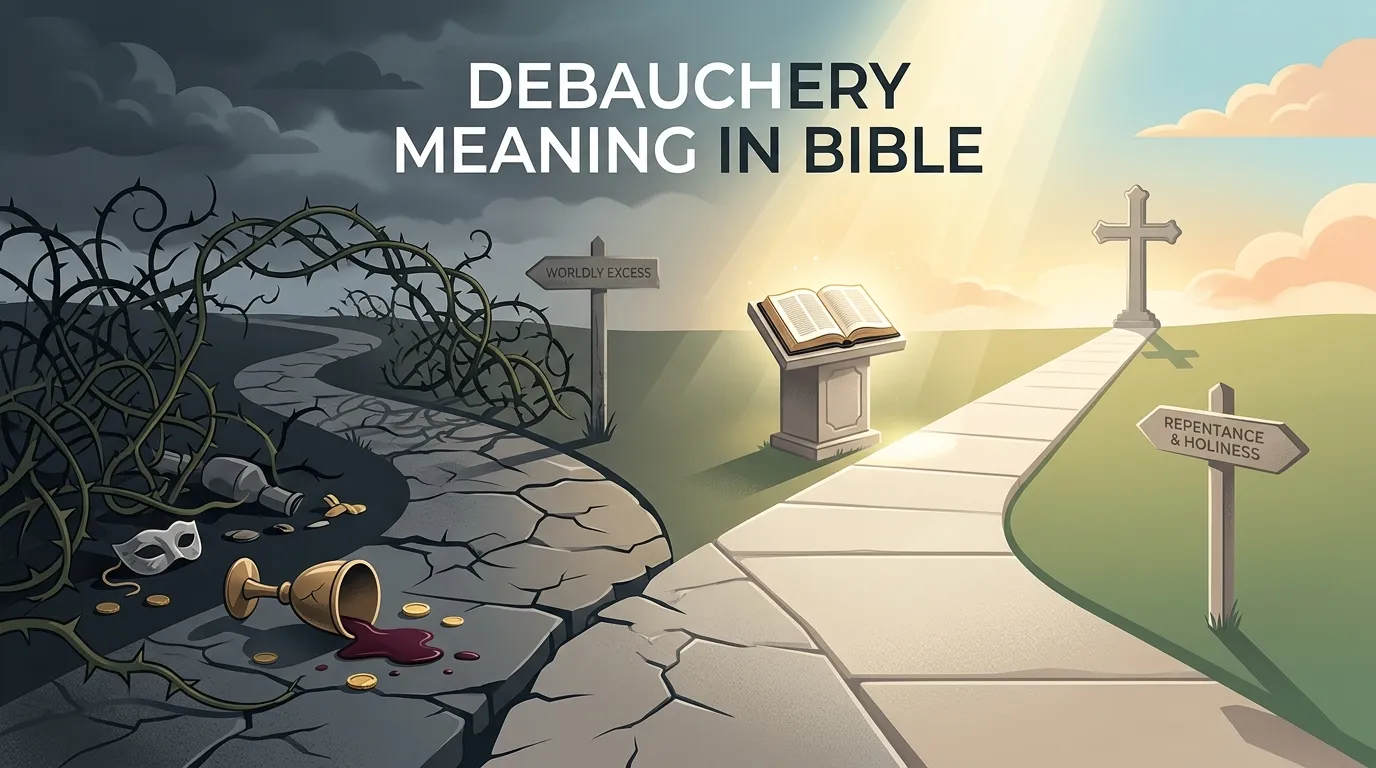
Debauchery meaning in the Bible points to a lifestyle of unrestrained excess. It describes habitual indulgence in sensual pleasures that ignores God’s boundaries.
This includes sexual immorality, drunkenness, reckless living, and a complete lack of self-control.
Scripture never treats it as harmless fun. Instead, it lists debauchery among the works of the flesh that oppose the Spirit and keep people from inheriting God’s kingdom.
In this article you will learn the precise biblical meaning of debauchery. You will see the Greek words behind the English term. You will examine key passages with full context.
You will discover practical ways this truth shapes Bible study materials, devotionals, and teaching for American Christian readers.
Biblical Meaning of Debauchery
Debauchery means more than one bad night or a single mistake. It marks a pattern of living that wastes life, resources, and moral restraint. The Bible presents it as the opposite of a Spirit-filled life. Believers leave this way of life behind when they follow Christ.
Paul places it among the obvious acts of the flesh. Peter links it to the old pagan lifestyle that Christians abandon. Jesus’ parable of the prodigal son shows its end result: empty pockets, empty heart, and a desperate need for the Father’s mercy.
Scripture always contrasts debauchery with holiness, self-control, and being filled with the Spirit. Therefore the call is clear. Put off the old way. Put on Christ.
Hebrew and Greek Meaning
The English word “debauchery” does not appear in Hebrew. The Old Testament warns against related sins through other languages. Proverbs and Isaiah repeatedly condemn drunkenness and excess that destroy judgment and lead to poverty. The Hebrew concept of zenuth (harlotry or unfaithfulness) often describes both sexual sin and spiritual idolatry. These ideas form the background for New Testament teaching.
In the New Testament two primary Greek words stand behind “debauchery.”
The first is asōtia (Strong’s G810). It comes from the negative particle a- (not) and sōzō (to save or preserve). Literally it means that which cannot be saved—reckless, wasteful living that ruins what should be preserved. English versions often render it “debauchery,” “dissipation,” or “riotous living.” It appears in Ephesians 5:18, Titus 1:6, and 1 Peter 4:4. The related adverb asōtōs describes the prodigal son’s lifestyle in Luke 15:13.
The second word is aselgeia (Strong’s G766). It means unbridled lust, licentiousness, wantonness, or sensuality that shocks others. Many modern translations, including the NIV, render it “debauchery” in Galatians 5:19. It also appears in Romans 13:13, Ephesians 4:19, 1 Peter 4:3, 2 Corinthians 12:21, and 2 Peter 2. The term stresses shameless excess that refuses any restraint.
Together these words paint a clear picture. Debauchery is not moderate enjoyment of God’s good gifts. It is the abandonment of restraint that turns good gifts into masters.
Key Bible Verses with Full Explanation
Galatians 5:19–21 gives one of the clearest lists. “The acts of the flesh are obvious: sexual immorality, impurity and debauchery; idolatry and witchcraft; hatred, discord, jealousy, fits of rage, selfish ambition, dissensions, factions and envy; drunkenness, orgies, and the like. I warn you, as I did before, that those who live like this will not inherit the kingdom of God” (NIV).
Paul writes to believers who faced pressure from both legalism and license. He groups debauchery with other fleshly acts. The warning is serious. A lifestyle marked by these things shows a heart not ruled by the Spirit. The next verses list the fruit of the Spirit, including self-control. Therefore the contrast is deliberate. Walk by the Spirit and you will not gratify the desires of the flesh.
Ephesians 5:18 states, “Do not get drunk on wine, which leads to debauchery. Instead, be filled with the Spirit” (NIV).
Paul calls for visible Christian living in a watching world. Daytime behavior leaves no room for the hidden excesses of night. The practical solution is simple: put on Christ and make no provision for the flesh.
Spiritual Meaning and Application
Debauchery reveals a heart that treats God’s gifts as ends in themselves. Sex becomes pure self-gratification. Wine becomes an escape. Pleasure becomes the highest goal. In each case the person sits on the throne rather than God.
The Bible answers with the gospel. Christ died to free us from slavery to sin. The Spirit produces self-control as part of His fruit. Believers therefore put to death the deeds of the flesh by the Spirit’s power (Romans 8:13). They live as those who belong to the day.
For the individual Christian this means honest inventory. Where has excess taken root? Where has self-control slipped? Repentance and renewed filling with the Spirit restore freedom. For the church it means clear teaching that does not soften hard texts. Grace never becomes a license for the flesh.
Quick Reference Table
| Greek Word | Strong’s | Primary Sense | Key Verse | Modern Translation Examples |
| asōtia | G810 | Reckless waste, dissipation | Ephesians 5:18 | Debauchery, dissipation, excess |
| aselgeia | G766 | Unbridled lust, sensuality | Galatians 5:19 | Debauchery, sensuality, lewdness |
| asōtōs | related | Wild, profligate living | Luke 15:13 | Wild living, reckless living |
Common Misunderstandings
Some readers think debauchery only means extreme sexual sin or ancient orgies. Scripture includes those things, yet the words also cover broader lack of restraint—drunkenness, wasteful partying, and any pattern that refuses God’s limits.
Others claim the warnings no longer apply because culture has changed. The texts remain clear. The acts of the flesh still oppose the kingdom. Cultural acceptance never rewrites God’s standard.
A third mistake treats every use of alcohol or every moment of celebration as debauchery. The Bible affirms wine as a gift when used with self-control (Psalm 104:15; 1 Timothy 5:23). The issue is the loss of control that leads to excess.
Practical Application for Bible Book Creators and Authors
When you write devotionals, study guides, or commentaries, treat the word with precision. Define the Greek terms briefly so readers see the range of meaning. Quote the full verse and surrounding context so the warning lands with force and hope.
Show the contrast clearly. Pair the works of the flesh with the fruit of the Spirit. Move from diagnosis to the gospel. Always point readers to the power of the Spirit rather than mere willpower.
In American Christian culture many readers face constant pressure toward excess—entertainment, consumption, sexual messaging, and alcohol-centered social life. Your materials can equip pastors and small-group leaders to address these realities without harshness or compromise. Use real-life application questions that invite honest reflection. Offer pastoral encouragement rooted in Scripture’s call to freedom in Christ.
Avoid both legalism that adds extra rules and license that softens the text. Let the Bible speak. Readers who create or teach faith-based content carry a special responsibility. Accuracy builds trust. Clarity protects the flock. Grace invites transformation.
FAQs
How to pronounce debauchery in the bible
debauchery (dih-BAW-chuh-ree)
Debauchery is pronounced “dih-BAW-chuh-ree” and refers to excessive or immoral behavior.
Examples of debauchery in the Bible
Biblical examples of debauchery include drunkenness, sexual immorality, uncontrolled pleasure, and other forms of reckless sinful living.
Discord meaning in the Bible
In the Bible, discord refers to conflict, disagreement, or division that damages unity among people.
Debauchery meaning in Greek
The Greek concept of debauchery is often expressed by words describing reckless, immoral, or wasteful living without self-control.
Debauchery examples
Examples of debauchery include excessive drinking, sexual immorality, reckless pleasure, and behavior that ignores moral boundaries.
Dissensions meaning in the Bible
Dissensions in the Bible refer to serious disagreements, divisions, or disputes that create conflict within a community.
Debauchery synonym
Common synonyms for debauchery include immorality, indulgence, excess, depravity, and reckless living.
Is debauchery a sin
Yes, the Bible treats debauchery as sinful because it reflects uncontrolled desires and behavior that goes against God’s holy standards.
Conclusion
Debauchery in the Bible is the lifestyle of unrestrained excess that wastes the good gifts of God and refuses His loving boundaries. The Greek words asōtia and aselgeia make the meaning plain: reckless living that cannot be saved and shameless sensuality that ignores restraint. Key passages in Galatians, Ephesians, 1 Peter, and Romans call believers out of that darkness and into the light of Spirit-filled living.
“Clothe yourselves with the Lord Jesus Christ, and do not think about how to gratify the desires of the flesh” (Romans 13:14). That invitation remains open. May the materials you create help many walk in it.
Discover More Post
- Testimony Meaning in the Bible: Faith, Truth & Purpose
- Hummingbird Meaning Bible: Hope, Faith & Symbolism
- Adrian Name Meaning in Bible: Is This Name in the Bible?
- Jacob Name Meaning in Bible: Biblical Meaning & Lessons

I’m Nicholas Sparks, and storytelling has always been my passion. Through TheBiblimeaning, I share insights about my books, unforgettable characters, romance, emotions, and the deeper meanings behind my stories. This platform brings readers closer to my writing journey, latest releases, and the inspiration that shapes every novel I create.