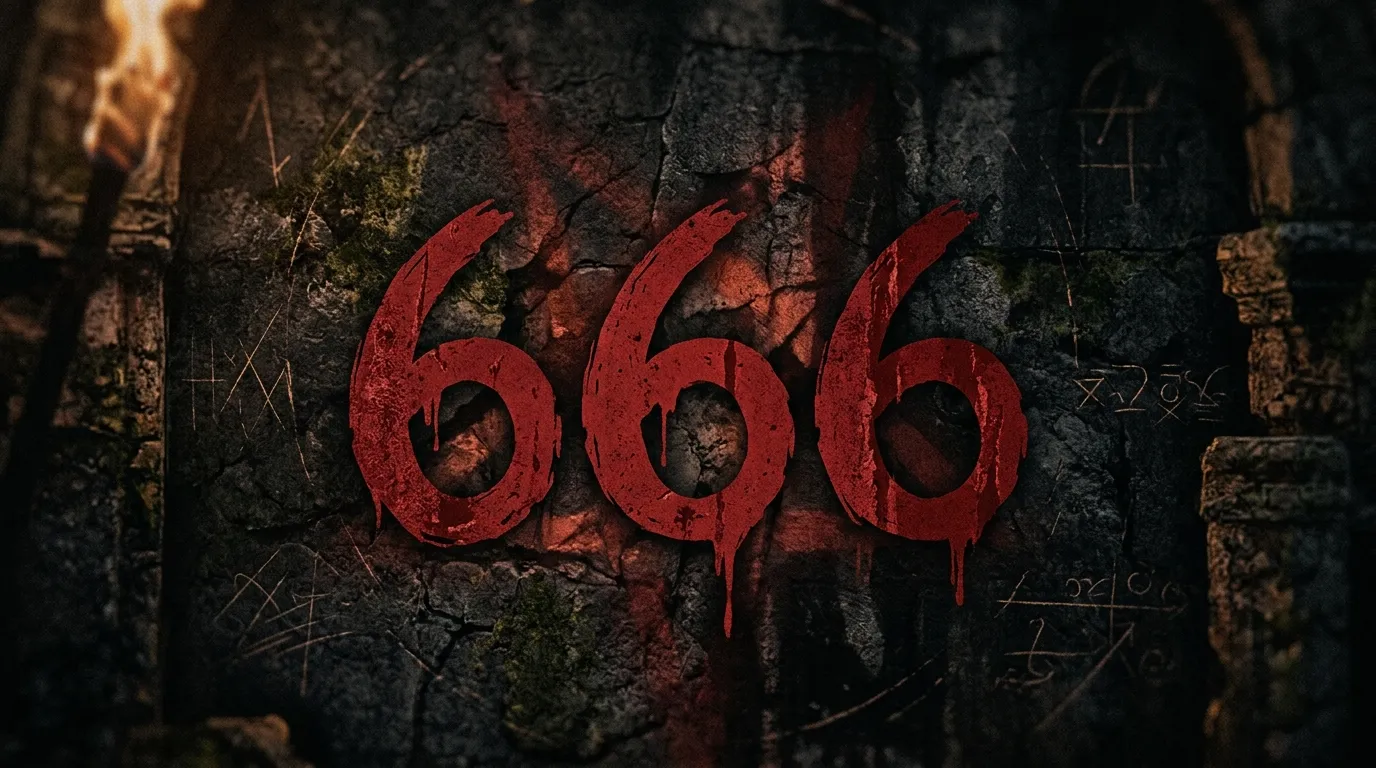
Have you ever noticed the number 666 and wondered why it keeps showing up? Maybe you saw it on a clock, a receipt, a license plate, or even in a dream.
For many people, this number brings questions, fear, or curiosity.
The number 666 is one of the most talked-about numbers in the Bible. It often carries a mysterious meaning.
Some people see it as a warning. Others wonder if it has a deeper spiritual message. Because of its strong connection to Bible prophecy, it has become a symbol that many Christians want to understand.
When we encounter a number repeatedly, it is natural to ask if God is trying to teach us something. While the Bible does not encourage fear of numbers, it does encourage wisdom, prayer, and understanding.
The biblical meaning of number 666 is not about living in fear. Instead, it points us toward the importance of staying faithful to God and avoiding anything that pulls us away from Him.
It reminds believers to trust God’s truth rather than the values of the world.
So, what does the Bible really say about 666? Let’s explore its meaning, symbolism, and spiritual lessons through the lens of Scripture.
Biblical Meaning of Number 666
The most famous mention of 666 is found in the book of Revelation.
In Revelation 13:18, the Bible says:
This calls for wisdom. Let the person who has insight calculate the number of the beast, for it is the number of a man. That number is 666.
This verse connects 666 with the beast, a symbol of opposition to God. Because of this connection, the number has often been viewed as a warning sign rather than a blessing.
In biblical symbolism, the number 7 often represents completeness, perfection, and God’s divine work. Since 666 falls short of 777, many Bible scholars believe it symbolizes human weakness, imperfection, and rebellion against God.
The number can represent:
- Human pride without God.
- Trust in worldly power instead of divine guidance.
- Spiritual deception.
- Opposition to God’s truth.
- A warning to remain faithful.
However, Christians should remember that the Bible focuses more on faith than fear. Revelation was written to encourage believers to stay loyal to Christ even during difficult times.
The biblical meaning of number 666 reminds us that human efforts alone can never replace God. When people depend only on wealth, power, success, or personal wisdom, they may drift away from God’s purpose.
At the same time, this number can serve as a spiritual wake-up call. It invites believers to examine their hearts and ask important questions:
- Am I trusting God fully?
- Have I allowed fear to control me?
- Am I following God’s truth or worldly influences?
The Bible repeatedly teaches that God is greater than any symbol, challenge, or spiritual battle.
In Romans 8:37, believers are reminded that they are more than conquerors through Christ.
This means that seeing or thinking about 666 should not lead to panic. Instead, it can inspire prayer, reflection, and a renewed commitment to faith.
The number’s deeper message is not that evil wins. The book of Revelation ultimately shows God’s victory over darkness. Therefore, Christians can find hope even when reading passages that contain warnings.
Through biblical symbolism, 666 points to the limitations of humanity and the need for God’s grace. It reminds us that true security comes from the Lord, not from earthly systems or personal achievements.
Spiritual Significance and Symbolism
The spiritual symbolism of 666 teaches an important lesson about dependence on God.
Many people spend their lives chasing success, approval, money, or control. While these things are not always wrong, they can become distractions when they take God’s place in our hearts.
The number 666 symbolizes what happens when human desires become more important than God’s will.
This spiritual message encourages believers to:
- Stay rooted in prayer.
- Seek God’s wisdom daily.
- Trust His guidance.
- Resist spiritual deception.
- Keep Christ at the center of life.
Think about a person who becomes overwhelmed by worry. They may try to solve every problem alone. Eventually, fear grows stronger. But when they pray and surrender their concerns to God, peace begins to return.
This is one of the key lessons connected to the biblical symbolism of 666. Human strength has limits, but God’s power does not.
The number can also inspire a spiritual awakening. It encourages Christians to evaluate their priorities and strengthen their relationship with God.
Biblical Interpretations in Dreams or Real Life
Some people dream about the number 666 or notice it repeatedly in everyday life. This can lead to confusion or concern.
From a Christian perspective, dreams should always be tested against Scripture and prayer.
If 666 appears in a dream, it may symbolize:
- A warning against unhealthy influences.
- A reminder to stay close to God.
- A call for spiritual discernment.
- Concern about misplaced priorities.
The emotional tone of the dream matters.
If the dream feels fearful or dark, it may encourage prayer and reflection. If it simply brings curiosity, it may be an invitation to seek biblical understanding.
In real life, repeatedly noticing 666 does not automatically mean something negative is about to happen. Sometimes people become more aware of a number after thinking about it.
Instead of focusing on fear, Christians can use the experience as an opportunity to pray, read Scripture, and seek God’s peace.
God’s presence is greater than any number or symbol.
Practical Lessons & Faith Insights
The biblical meaning of number 666 reminds believers to keep their eyes on Christ. Instead of fearing symbols, focus on faith. Pray regularly, seek God’s wisdom, and trust His guidance. Let every concern draw you closer to God. His truth brings peace, hope, and protection for those who trust Him.
FAQs
Is 666 always a symbol of evil in the Bible?
The number 666 is connected to the beast in Revelation and is generally seen as a warning symbol. However, Christians should focus on God’s power rather than fear of the number itself.
What does Revelation 13:18 say about 666?
Revelation 13:18 identifies 666 as the number of the beast and calls for wisdom and understanding when interpreting its meaning.
Is seeing 666 a message from God?
Not necessarily. Seeing 666 may simply be a coincidence. If it causes concern, use it as an opportunity for prayer, reflection, and seeking God’s guidance.
What is the spiritual message behind 666?
The spiritual message often centers on human imperfection, dependence on God, and the importance of remaining faithful to biblical truth.
Should Christians be afraid of 666?
No. Christians are called to trust God, not fear numbers. The Bible teaches that God’s power is greater than any symbol or spiritual challenge.
More Searched Questions About the Number 666 in the Bible
Is 666 the number of the devil?
Not in the Bible’s own wording. Revelation does speak of Satan in this part of the book, but it gives him a different figure and a different description: “the great dragon was cast out, that old serpent, called the Devil, and Satan” (Revelation 12:9). When the beast appears in the next chapter, the dragon is the one standing behind him: “the dragon gave him his power, and his seat, and great authority” (Revelation 13:2). The number itself is then assigned, in so many words, to the beast and not to the dragon. It is “the number of the beast”, and, the verse adds, “it is the number of a man” (Revelation 13:18). So the popular label “the devil’s number” joins together two figures that Revelation keeps apart: the dragon, who is Satan, and the beast, presented as a man, whose name the number is said to count. No verse anywhere calls 666 Satan’s own number.
What is the mark of the beast in Revelation 13?
The mark is introduced in the second half of Revelation 13, where John writes that the second beast “causeth all, both small and great, rich and poor, free and bond, to receive a mark in their right hand, or in their foreheads: and that no man might buy or sell, save he that had the mark, or the name of the beast, or the number of his name” (Revelation 13:16-17). Three things stand out in the text itself. First, the mark is a sign of belonging: it is the beast’s name, or the number of his name, set on a person, and it stands over against God’s own marking of His people, who are sealed “in their foreheads” (Revelation 7:3) and who later stand with the Lamb “having his Father’s name written in their foreheads” (Revelation 14:1). Hand and forehead are also the very places where Israel was told to bind God’s words, “for a sign upon thine hand” and “as frontlets between thine eyes” (Deuteronomy 6:8), the places of action and of thought. Second, the mark is tied to worship, not to paperwork: in the same chapter, those who refuse to worship the beast’s image are put to death (Revelation 13:15), and chapter 14 warns of judgment on anyone who worships the beast and receives his mark (Revelation 14:9-11). Third, Revelation never describes what the mark is made of. The Greek word used, charagma, means a stamped or engraved mark, but the passage gives no material, no shape and no device, and this article adds none.
Who is the beast in Revelation 13?
Revelation 13 shows two beasts, and the number belongs to the first of them. The first beast rises out of the sea with seven heads and ten horns, looking like a leopard, a bear and a lion combined (Revelation 13:1-2), the same animal images that picture empires in Daniel 7. The dragon gives him his power and authority. One of his heads appears to be mortally wounded and then healed, and the world marvels and worships him (Revelation 13:3-4). He speaks blasphemies, carries on for forty and two months, and makes war with the saints (Revelation 13:5-7). The second beast comes up out of the earth, has two horns like a lamb but speaks like a dragon, performs signs, and sets up an image of the first beast (Revelation 13:11-15). Later in the book this second beast is called the false prophet (Revelation 19:20), and it is he who gives out the mark. As to who the first beast is, Christians have read the chapter in several long standing ways: as the power of Rome and its emperor worship in John’s own century; as a ruler or system still to come at the end of the age; or as the recurring pattern of God defying empire in every age, with the first century as its first great example. This article does not settle that question, and it does not name any modern person, country or institution as the beast. What the text itself fixes is the pattern the number hangs on: a human power, backed by the dragon, demanding the worship that belongs to God.
How does counting the number of the beast work, and why do scholars point to Nero Caesar?
The verse itself gives the instruction: “Let him that hath understanding count the number of the beast” (Revelation 13:18). In the ancient world, counting a name was a familiar exercise, because in both Greek and Hebrew the letters of the alphabet also served as numbers, so every written name had a total. This practice is often called gematria, and verse 17 points the same way when it calls the mark “the number of his name”. The best known worked example is in Hebrew letters. “Nero Caesar”, spelled the Hebrew way as NRWN QSR, adds up letter by letter: the first word comes to 306 and the second to 360, which makes 666 exactly. Nero was the emperor under whom the first imperial persecution of Christians broke out at Rome, and the fit between the count, the century in which Revelation was written, and a ruler who was honoured as more than a man is why many scholars treat Nero as the leading proposal. It remains a proposal, not a proven fact, and the method itself warns against certainty. Names can be spelled more than one way, and other names reach the same total: as early as the second century, Irenaeus was weighing Greek names such as Lateinos, which also adds up to 666. Across history the same counting has been turned on popes, kings and modern leaders, with conflicting results, which is what one expects when spelling choices decide the answer. The verse says only that the number is “the number of a man”. This article reports the Nero reading as the most widely held scholarly view and leaves the identification where the evidence leaves it: unsettled.
Why do some ancient copies of Revelation read 616 instead of 666?
The difference between 666 and 616 is not a modern translation choice. It is a difference between ancient copies of Revelation itself. Most Greek manuscripts read 666, but a small number read 616, among them the fifth century Codex Ephraemi Rescriptus and the early papyrus known as Papyrus 115. The 616 reading is very old. Irenaeus, writing in about AD 180, already knew of copies that contained it, and he argued against it: in his judgment 666 was the number found in the approved and ancient copies, and 616 had crept in through a copyist’s slip. Most printed Bibles today follow 666, and some note the 616 reading in a footnote. The two numbers may also be connected. If the name behind the count is spelled the shorter, Latin style way, NRO QSR, without the final letter, a letter worth 50, the total falls from 666 to exactly 616. That neat fit is one reason many scholars think both readings grew out of the same name in two spellings. Others keep Irenaeus’s simpler explanation of a copying error. This article does not decide between them. What is certain is the shape of the evidence: two very old readings, 666 carried by most copies, 616 carried by a few, and a discussion that is nearly as old as the book itself.
How is 666 written in the Greek text of Revelation?
Revelation was written in Greek, and in Greek copies the number in Revelation 13:18 is usually written not in words but in the Greek number letters: chi, which stands for 600; xi, which stands for 60; and stigma, an old letter that had fallen out of the alphabet and survived only as the sign for 6. Together the three letters are simply “six hundred sixty six” in the notation of the time. Irenaeus already treated the number in this form in the second century, testing proposed names by adding up their Greek letters to see which of them reached the total of these three signs. The letter form matters mainly because it has attracted claims of its own, including claims that the three letters picture a word or phrase in some other language. Those claims read the shapes of Greek letters through much later alphabets and associations, and they are not something the text itself says. In the passage, the three letters do one job: they hand the reader a number, attached to a man, and invite exactly the counting described in the answers above.
Why does the Bible say Solomon received 666 talents of gold in one year?
Solomon’s 666 has nothing to do with prophecy in its own passage. “Now the weight of gold that came to Solomon in one year was six hundred threescore and six talents of gold” (1 Kings 10:14), and the verse that follows adds that this was besides what came in through traders and the traffic of merchants (1 Kings 10:15). It was the crown’s yearly income at the height of Solomon’s reign, in the same chapter as the visit of the queen of Sheba. A talent was a large unit of weight, roughly 75 pounds, or about 34 kilograms, so the figure comes to something like 22 to 25 tons of gold in a single year, the Bible’s way of saying that wealth poured into Jerusalem on a scale no other king of Israel matched. The passage itself draws no warning from the number; it simply records the amount. Still, readers have long noticed where the verse sits in Solomon’s story. God’s law for kings had warned that a king must not “greatly multiply to himself silver and gold” (Deuteronomy 17:17), and in the chapters around this one Solomon multiplies gold, horses brought from Egypt, and wives, until in old age “his wives turned away his heart after other gods” (1 Kings 11:4). Some teachers therefore read the 666 talents as an early shadow of his fall. That is a reader’s observation about the story as a whole, and it may be worth noticing, but it is not a meaning the text states for the number, and Scripture nowhere connects Solomon’s gold with the beast of Revelation.
Is the mark of the beast a barcode or a microchip?
The barcode claim spread through prophecy books in the late twentieth century. It rests on the long guard bars found at the start, middle and end of a standard product barcode, which some writers described as hidden sixes built into every code. People who design and standardise barcodes have answered that the guard bars are alignment patterns: they are not the digit 6, they carry no number at all, and the actual digits of a code are printed openly beneath the bars for anyone to read. The deeper problem is the fit with the text. In Revelation, the mark is placed on people, in the right hand or the forehead, and it is received as part of worshipping the beast: the same chapter says that those who refuse to worship the beast’s image are put to death (Revelation 13:15). Nobody in the passage receives the mark by accident, as a side effect of buying, selling or handling a product. The microchip version of the claim works the same way, pointing to implant technology that Revelation never mentions. The book describes the mark in the language of allegiance and worship, and it describes no technology of any kind. For that reason this article does not identify any barcode, microchip or other present day technology as the mark of the beast. Those identifications are guesses laid over the text, not things found in it.
Conclusion
The biblical meaning of number 666 is often linked to warning, spiritual discernment, and the limits of human strength apart from God.
While it carries serious symbolism in Scripture, its purpose is not to create fear. Instead, it encourages believers to remain faithful, seek God’s wisdom, and trust His guidance.
When questions arise, remember that God’s love, truth, and victory are always greater than any symbol. Walk forward in faith, knowing He is with you every step of the way.