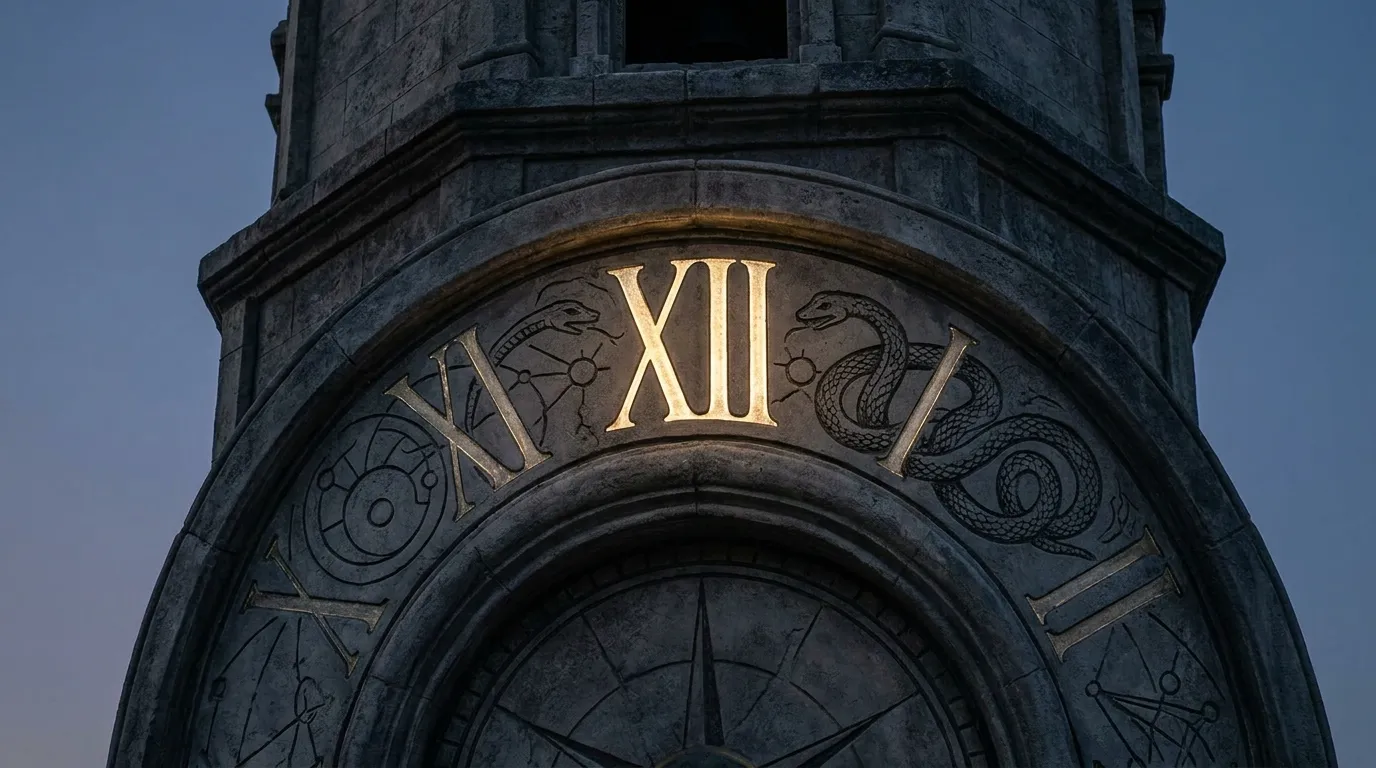
Have you noticed the number 12 showing up often in your life? Maybe you see it on clocks, dates, addresses, or even in dreams.
When a number appears again and again, many Christians wonder if there is a deeper spiritual message behind it.
The Bible uses numbers in meaningful ways. Certain numbers carry special symbolism that helps reveal God’s plans, promises, and purposes. Among these numbers, 12 stands out as one of the most important.
Think about a family gathering where everyone has a place and purpose. There is order, unity, and belonging.
In a similar way, the number 12 in the Bible often points to God’s perfect order and His people working together under His guidance.
Many believers see the number 12 and ask, “What is God trying to show me?” Is it a sign of blessing, leadership, or spiritual growth? Could it be a reminder of God’s promises?
The Bible gives many clues about the meaning of this number. As we explore the biblical meaning of number 12, we will discover its connection to faith, divine order, and God’s kingdom.
Biblical Meaning of Number 12
The biblical meaning of number 12 is often linked to God’s authority, divine order, completeness, and His chosen people.
One of the clearest examples is the twelve tribes of Israel. From the twelve sons of Jacob came the tribes of Israel, though not one tribe per son: Joseph’s share passed to his two sons, Ephraim and Manasseh, and Levi was set apart for God’s service. These tribes formed God’s covenant people and played a key role in His plan.
Another important example is the twelve apostles chosen by Jesus. These men were called to spread the Gospel and help build the early church. Their number was not random. It reflected God’s perfect order and purpose.
The Bible also mentions twelve gates and twelve foundations in the New Jerusalem described in the book of Revelation. These images point to completeness, security, and God’s eternal kingdom.
Some key Bible verses connected to the number 12 include:
- Genesis 49, which speaks of the twelve tribes of Israel.
- Matthew 10:1-4, where Jesus appoints the twelve apostles.
- Revelation 21:12-14, which describes the twelve gates and foundations of the heavenly city.
The number 12 often symbolizes a group chosen by God for a special purpose. It shows organization, leadership, and unity under God’s direction.
There is also a message of hope in this number. When believers see 12, it can serve as a reminder that God is in control. Even when life feels confusing, God brings order out of chaos.
In some situations, the number 12 may also act as a gentle warning. It reminds us that God’s plans work best when we follow His guidance. Ignoring His direction can lead to disorder and spiritual struggle.
Still, the overall biblical symbolism of 12 is positive. It points to God’s faithfulness, His promises, and His desire to gather His people together.
For Christians, the number 12 can represent the strength of faith, the beauty of God’s kingdom, and the certainty that His plans are complete and perfect.
Spiritual Significance and Symbolism
The spiritual symbolism of the number 12 reaches beyond Bible history. It carries lessons that believers can apply in daily life.
First, it reminds us that God works with purpose. He is not random or careless. Every detail of His plan has meaning.
Second, the number 12 points to unity. Just as the twelve tribes formed one nation and the twelve apostles served one mission, Christians are called to work together in faith.
Third, it symbolizes spiritual growth. God often uses people, families, churches, and communities to carry out His work. The number 12 reminds us that everyone has a place in His plan.
Imagine a church family praying together during a difficult season. Each person brings something valuable. Together, they grow stronger in faith. This reflects the message behind the number 12.
Many believers also connect this number with a divine message of trust. God sees the whole picture, even when we only see a small part.
When the number 12 appears in your life, it may encourage you to keep praying, stay faithful, and trust God’s timing.
Biblical Interpretations in Dreams or Real Life
Seeing the number 12 in dreams or daily life can have different meanings depending on the situation.
A peaceful dream involving the number 12 may symbolize spiritual progress, God’s guidance, or a season of growth. It can suggest that God is leading you toward greater purpose and understanding.
If the number appears during a time of uncertainty, it may remind you that God is bringing order to your circumstances. Even when answers seem delayed, He is still working.
In real life, repeatedly noticing 12 could encourage you to pay attention to your spiritual journey. It may be a call to deepen your prayer life or strengthen your trust in God.
A fearful or confusing dream involving the number 12 does not automatically mean something bad. Instead, it may be a reminder to seek God’s wisdom through prayer and Scripture.
Christian dream interpretation should always remain grounded in faith and God’s Word. Dreams can encourage reflection, but the Bible remains our most reliable source of guidance.
Practical Lessons and Faith Insights
The number 12 teaches us to trust God’s order and purpose.
Pray for wisdom when life feels uncertain. Remember that God has a plan for His people. Stay faithful, walk in obedience, and trust that He is guiding each step. His timing is perfect, even when we do not understand everything right away.
FAQs
What does the number 12 mean in the Bible?
The number 12 usually symbolizes God’s authority, divine order, completeness, and His chosen people.
Why are there 12 tribes of Israel?
The twelve tribes came from the twelve sons of Jacob, though not one tribe per son: Joseph’s share passed to his two sons, Ephraim and Manasseh, and Levi was set apart for God’s service, and together they formed the nation of Israel.
Why did Jesus choose 12 apostles?
Jesus selected twelve apostles to represent God’s people and help establish the foundation of the Christian church.
Is seeing the number 12 a spiritual sign?
Many believers view repeated appearances of 12 as a reminder of God’s guidance, order, and faithfulness.
What does the number 12 mean in dreams?
It often symbolizes spiritual growth, divine purpose, unity, or encouragement to trust God’s plan.
More Searched Questions About the Number 12 in the Bible
Why are there 12 tribes of Israel and not 13?
Jacob had twelve sons: “Now the sons of Jacob were twelve” (Genesis 35:22), and their names are listed in the verses that follow (Genesis 35:23-26). But the family did not stay at twelve names. Before he died, Jacob took Joseph’s two sons into his own line: “And now thy two sons, Ephraim and Manasseh, which were born unto thee in the land of Egypt before I came unto thee into Egypt, are mine; as Reuben and Simeon, they shall be mine” (Genesis 48:5). Counted that way, the house of Israel carried thirteen tribal names, and searchers who find them ask why the Bible still says twelve.
The answer is in how the tribes are numbered. When the camp and the land are organized, one tribe is held back from the count: “But the Levites after the tribe of their fathers were not numbered among them” (Numbers 1:47). God had “separated the tribe of Levi, to bear the ark of the covenant of the LORD, to stand before the LORD to minister unto him” (Deuteronomy 10:8), and Levi received cities to live in but no tribal territory of its own. So Joseph is counted through his two sons, Levi is set apart for the service of the tabernacle, and the number that comes out is twelve, the same twelve Moses marked at Sinai with an altar “and twelve pillars, according to the twelve tribes of Israel” (Exodus 24:4). One more searched detail belongs here. The tribal list in Revelation 7 is not identical to the older lists: Dan is not named, Ephraim is not named separately, and Levi and Joseph both appear beside Manasseh (Revelation 7:5-8). The passage gives no reason for the differences, and the explanations readers offer are not confirmed by the text. What never changes is the shape: twelve names, and twelve thousand sealed from each.
What were the 12 loaves of showbread?
Inside the tabernacle, on the pure table before the LORD, stood twelve loaves of bread: “And thou shalt take fine flour, and bake twelve cakes thereof: two tenth deals shall be in one cake” (Leviticus 24:5). The twelve cakes, called the showbread or the bread of the Presence, were set in two rows on the table, one loaf standing for each tribe of Israel before God. They were not a one time offering. They were renewed every week without fail: “Every sabbath he shall set it in order before the LORD continually, being taken from the children of Israel by an everlasting covenant” (Leviticus 24:8). When the fresh loaves were laid in each Sabbath, the loaves that came off the table were eaten by Aaron and his sons in the holy place (Leviticus 24:9). So week by week, year by year, the whole people of God lay represented in His presence in bread, and the number on the table was the tribe count exactly: twelve, no more and no less.
What happened at Elim, where Israel found 12 wells of water?
Three days after crossing the Red Sea, and just after the bitter waters of Marah had been made sweet, Israel reached an oasis: “And they came to Elim, where were twelve wells of water, and threescore and ten palm trees: and they encamped there by the waters” (Exodus 15:27). Twelve wells, one for a tribe as the camp was about to be organized, and seventy palm trees for shade. The match with the twelve tribes is there for any reader to see, but an honest limit belongs with it: no verse in Exodus calls the wells a symbol of the tribes, and the text gives the place no explanation at all. What the passage itself shows is simpler and kinder. A people who had just complained about bitter water were brought to water in plenty and rest in the shade, provided by God before the journey into the wilderness of Sin began (Exodus 16:1). Elim stands in the record as a gift of rest, and its twelve wells are counted, not decoded.
Who were the 12 spies Moses sent into Canaan?
When Israel stood at the edge of the promised land, God told Moses to send men to search it out, and the number was fixed by the tribes: “Send thou men, that they may search the land of Canaan, which I give unto the children of Israel: of every tribe of their fathers shall ye send a man, every one a ruler among them” (Numbers 13:2). One ruler from each of the twelve tribes went up, and their names are listed in Numbers 13:4-15. They searched the land for forty days and came back carrying its fruit (Numbers 13:25-26). Then the twelve divided. Ten of them spread a fearful report that melted the hearts of the people, and only Caleb and Joshua urged Israel to go up and take the land (Numbers 13:30-33; 14:6-9). The sentence that fell on that generation spared the two who believed: the people would not enter, “save Caleb the son of Jephunneh, and Joshua the son of Nun” (Numbers 14:30). The twelve spies are the wilderness generation in miniature: twelve men standing for the whole nation, and the nation’s future carried through by the two of the twelve who trusted God’s promise.
What were the 12 stones taken from the Jordan River?
When Israel crossed the Jordan on dry ground behind the ark, Joshua had one man chosen from each tribe, and each man carried a stone up out of the riverbed, from the place where the priests’ feet stood firm (Joshua 4:2-5). The stones were set up at Gilgal, where Israel camped (Joshua 4:20), and their purpose was stated before the first stone was lifted: “That this may be a sign among you, that when your children ask their fathers in time to come, saying, What mean ye by these stones?” (Joshua 4:6). The stones were a teaching memorial: when children asked, their fathers were to tell them how the LORD had cut off the waters of the Jordan so His people could cross (Joshua 4:7, 21-23). And there was a second setting of twelve: “And Joshua set up twelve stones in the midst of Jordan, in the place where the feet of the priests which bare the ark of the covenant stood: and they are there unto this day” (Joshua 4:9). Twelve stones on the bank at Gilgal and twelve in the middle of the river: the whole nation, tribe by tribe, was written into the crossing, so that no tribe’s children would ever have to ask whether their people had been there.
What are the 12 stones on the high priest’s breastplate?
Aaron the high priest wore a breastplate over his heart when he went into the holy place, and set into it were twelve precious stones in four rows of three: “And the stones shall be with the names of the children of Israel, twelve, according to their names, like the engravings of a signet; every one with his name shall they be according to the twelve tribes” (Exodus 28:21). Each stone carried one tribe’s name, cut into it the way a seal is engraved, and Aaron also bore the same twelve names on two onyx stones on his shoulders, six on each (Exodus 28:9-12). The reason is given in the same chapter: “And Aaron shall bear the names of the children of Israel in the breastplate of judgment upon his heart, when he goeth in unto the holy place, for a memorial before the LORD continually” (Exodus 28:29). The stones were not decoration. They were the names of the whole people, carried on the high priest’s heart into God’s presence, tribe by tribe, every time he ministered: twelve names, the full count of Israel, remembered before the LORD without one missing.
Why did Jesus choose exactly 12 apostles?
The choice was deliberate and made after a whole night of prayer: “And when it was day, he called unto him his disciples: and of them he chose twelve, whom also he named apostles” (Luke 6:13; the night of prayer is Luke 6:12). Jesus Himself explains the number by tying it to Israel. Promising His followers their place in the world to come, He said: “ye also shall sit upon twelve thrones, judging the twelve tribes of Israel” (Matthew 19:28). Twelve apostles answer to twelve tribes: in the little company around Jesus, the people of God were being gathered and pictured whole again, under their Messiah. The first church guarded the number the same way. After Judas fell away, and before Pentecost, Peter showed from the Scriptures that another man had to take the office, one who had been with Jesus and could witness to His resurrection (Acts 1:20-22). Two men were put forward, the believers prayed, and “they gave forth their lots; and the lot fell upon Matthias; and he was numbered with the eleven apostles” (Acts 1:26). The twelve were complete again before the Spirit fell, because the number itself was part of the message: God’s people, in full count, gathered around His Son.
Why were 12 baskets of fragments gathered after the feeding of the five thousand?
After the crowd had eaten, more was left over than had been served at the start: “And they did all eat, and were filled: and they took up of the fragments that remained twelve baskets full” (Matthew 14:20). John records that the gathering was Jesus’ own order, so that nothing He had given would be wasted, and that the twelve baskets were filled “with the fragments of the five barley loaves, which remained over and above unto them that had eaten” (John 6:12-13). Searchers also ask why the second great feeding, of the four thousand, left seven baskets instead (Mark 8:8), and the answer is that Jesus treats the two numbers as the memory of the two events. Reminding the disciples, He asked: “And when the seven among four thousand, how many baskets full of fragments took ye up? And they said, Seven” (Mark 8:20; the twelve of the first feeding are recalled in the verse before it, Mark 8:19). Twelve full baskets from five loaves, gathered by twelve apostles: readers have long noticed the match, and it is fair to notice it. But no verse says the twelve baskets were a symbol of the apostles or the tribes, and this article leaves it where the text leaves it, as abundance measured, remembered, and not a crumb of it thrown away.
Why does the number 12 mark both lives in the story of Jairus’s daughter?
In Mark 5, two stories are woven into one, and the number twelve stands at the centre of both. On the road to the house of Jairus, whose daughter lay dying, a woman in the crowd touched Jesus’ garment and was healed: “And a certain woman, which had an issue of blood twelve years” (Mark 5:25). She had been sick for twelve years, shut out and spending all she had on physicians without getting better (Mark 5:26). By the time Jesus reached the house, the girl had died, and He raised her: “And straightway the damsel arose, and walked; for she was of the age of twelve years” (Mark 5:42). The woman had suffered for exactly as long as the girl had lived. Luke tells the same two stories in the same woven order (Luke 8:42-48). It is right to notice the pairing, because Mark plainly places the two twelves side by side and lets them comment on each other: one life drained away for twelve years, one life only twelve years long, both restored by the same Lord on the same day. But no verse explains the matching numbers, and any meaning beyond what the story itself shows, the length of the suffering and the youth of the girl, is read into the passage rather than out of it.
What does Revelation show with the 12 gates, 12 foundations and 12 fruits?
The last picture the Bible gives of the number twelve is the city of God, and every detail John records is built on the two twelves of this article. Of the New Jerusalem he writes: the city “had a wall great and high, and had twelve gates, and at the gates twelve angels, and names written thereon, which are the names of the twelve tribes of the children of Israel” (Revelation 21:12). Then the base of the same wall: “And the wall of the city had twelve foundations, and in them the names of the twelve apostles of the Lamb” (Revelation 21:14). The gates Israel enters by carry Israel’s names; the foundations the city stands on carry the apostles’ names. John adds that “the twelve gates were twelve pearls; every several gate was of one pearl” (Revelation 21:21), and inside the city the tree of life grows by the river, which “bare twelve manner of fruits, and yielded her fruit every month: and the leaves of the tree were for the healing of the nations” (Revelation 22:2). That is the whole of what the text assigns: the tribes on the gates, the apostles in the foundations, fruit in every month with no barren season. Charts that hand a private meaning to each gate, each stone and each fruit go beyond anything John wrote, and this article does not build one. In Revelation’s own picture, the two twelves of God’s people, Israel and the church, stand together in one city, and the number that ran from Jacob’s sons to Jesus’ apostles closes the Bible where it began, around the whole family of God.
What is the meaning of the 144,000 in Revelation?
The number is built out of twelves, and the text shows its working. John hears the count of the sealed: “And I heard the number of them which were sealed: and there were sealed an hundred and forty and four thousand of all the tribes of the children of Israel” (Revelation 7:4). The verses that follow give twelve thousand sealed from each of the twelve tribes, one list after another (Revelation 7:5-8): twelve times twelve thousand, which is 144,000. The same company appears again standing with Christ: “And I looked, and, lo, a Lamb stood on the mount Sion, and with him an hundred forty and four thousand, having his Father’s name written in their foreheads” (Revelation 14:1). On who these are, faithful readers have long divided, and this article does not settle the division. Some take the number as a literal count: a sealed company drawn from Israel’s tribes in the last days, exactly as the list reads. Others read it as a symbolic figure, twelve squared and multiplied by a thousand, picturing the complete people of God, sealed and kept without one missing. Both readings work from real features of the text: the list in chapter 7 is precise and detailed, yet it is not identical to any Old Testament tribal list, since Dan is absent and Levi is counted, which is one of the things the two readings explain differently. What the text itself makes plain is the shape of the number and its comfort: God counts His people twelve by twelve, tribe by tribe, and seals every one of them by name.
How many times does the number 12 appear in the Bible?
This is one of the most searched questions about the number, and it has no single agreed answer, so this article does not print a total as fact. The reason is method, not modesty. Any count changes with the translation counted, because versions word numbers and ordinals differently. It changes with the tool used, because searching the word “twelve” and searching the digits “12” give different results. And it changes most of all with what the counter decides to include: the bare word twelve on its own; its ordinal twelfth; and compound numbers that contain it, above all the twelve thousand that Revelation 7 repeats tribe by tribe, which one counter logs as a single pattern and another as twelve separate appearances of the number. Totals printed in books and on websites therefore disagree with one another, and a figure is only as good as the rules behind it. What can be said from the texts themselves, and what this article’s answers show, is the spread: twelve runs from the sons of Jacob in Genesis, through the pillars, loaves, wells, spies, stones and breastplate of the wilderness years, to the apostles, the baskets and the little girl of the Gospels, and it closes the Bible in the gates, foundations and fruits of God’s city. The number’s weight in Scripture is proven by the company it keeps, not by a total nobody can fix.
Conclusion
The biblical meaning of number 12 points to God’s order, authority, completeness, and faithfulness.
From the twelve tribes of Israel to the twelve apostles, this number appears throughout Scripture as a symbol of God’s perfect plan.
If you keep noticing the number 12, let it remind you that God is at work in your life. Trust His guidance, stay close to Him in prayer, and walk forward in faith. His plans are good, and His promises never fail.