Have you ever stood by a river or watched someone step into a pool of water during a church service and wondered why this act feels so powerful?
Maybe you’ve thought about your own life and asked what it really means to start fresh, to leave the old behind. I remember talking with a friend who felt lost after some tough years.
One day, he saw a baptism and it hit him this wasn’t just getting wet. It pointed to something much deeper about faith and starting over.
The baptism meaning in Bible touches so many hearts because it speaks to our longing for change. People have asked about it for centuries.
Biblical Meaning of Baptism Meaning in Bible
The word baptism comes from the Greek term baptizo. It means to dip, immerse, or submerge something completely. This wasn’t a made-up religious word. Everyday Greek speakers used it for things like dyeing cloth or washing dishes by plunging them in water. In the Bible, it carries that full sense of going under and coming up changed.
You won’t find the exact Christian practice of baptism in the Old Testament the same way. But the roots run deep. Jewish ritual washings for cleansing pointed ahead to something more. The first clear picture in the New Testament comes with John the Baptist. He baptized people in the Jordan River as a sign of repentance. People came from all around, confessing their sins and turning toward God.
Matthew 3:11 records John’s words: I baptize you with water for repentance. But after me comes one who is more powerful than I, whose sandals I am not worthy to carry. He will baptize you with the Holy Spirit and fire. That’s a powerful setup for what Jesus brings. John prepared the way, but Jesus fulfilled it.
3 Reasons Why Baptism Is Important
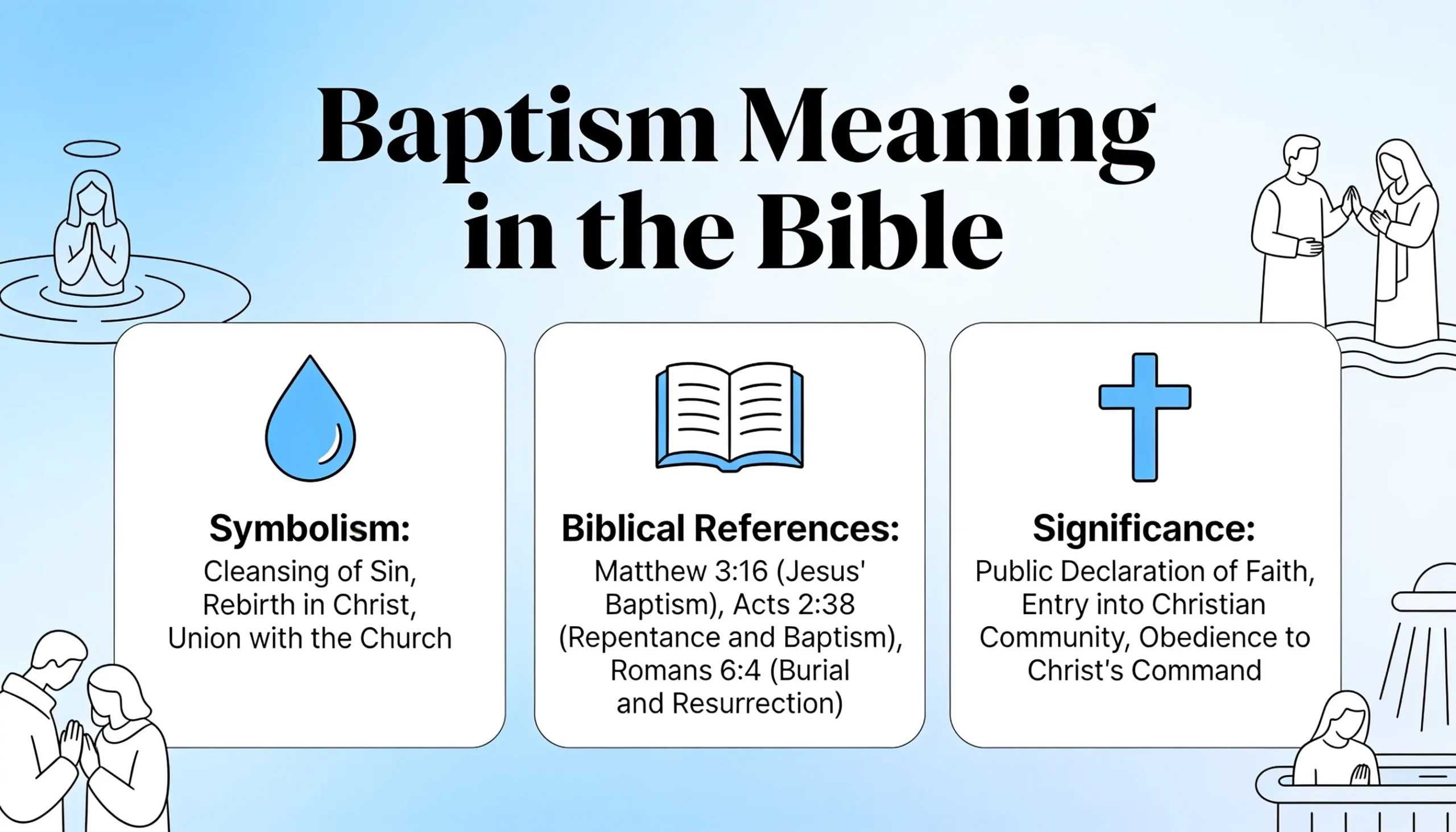
Baptism is important because it reflects obedience to Jesus Christ, symbolizes a believer’s new life, and publicly declares faith. It does not earn salvation, but it demonstrates a heart committed to following God. Through baptism, Christians identify with Jesus’ death, burial, and resurrection. It also strengthens personal faith and encourages others who witness this act of obedience. For many believers, baptism marks the beginning of a lifelong journey of spiritual growth and faithful discipleship.
What Is Baptism Meaning
Baptism is a Christian practice that symbolizes cleansing from sin, new life in Christ, and a believer’s commitment to follow Jesus. The word describes being immersed in or washed with water as a sign of inward spiritual transformation. While water itself does not save, baptism represents the change God has already begun in a believer’s heart through faith. It is a meaningful act that expresses repentance, obedience, and trust in God’s saving grace.
Why Baptism Is Important Bible Verses
The Bible highlights the importance of baptism through passages such as Matthew 28:19, Mark 16:16, Acts 2:38, Romans 6:3–4, and 1 Peter 3:21. These verses show that baptism is connected with obedience, repentance, faith, and new life in Christ. They remind believers that baptism is not simply a tradition but a God-given command. Each passage points to the spiritual significance of publicly identifying with Jesus and living a transformed Christian life.
Baptism Meaning and Purpose
The meaning and purpose of baptism go beyond a religious ceremony. Baptism represents a believer’s faith in Jesus, the forgiveness found through Him, and the beginning of a new spiritual life. It serves as a public testimony that a person has chosen to follow Christ. Baptism also symbolizes dying to an old way of living and rising to a renewed life. Its purpose is to honor God, strengthen faith, and encourage the Christian community.
10 Importance of Baptism
Baptism is important because it demonstrates obedience to Christ, publicly declares faith, symbolizes forgiveness, reflects new life, identifies believers with Jesus’ death and resurrection, strengthens spiritual commitment, encourages church fellowship, follows the example of Jesus, celebrates God’s grace, and marks the beginning of faithful discipleship. These truths show why baptism holds a special place in the Christian life. It is a joyful expression of faith that points others toward the hope found in Christ.
Baptism Meaning in Hebrew
Although the New Testament commonly uses the Greek word baptizo, the Hebrew background includes ideas of washing, cleansing, and ritual purification. The Hebrew word mikveh refers to a gathering of water used for ceremonial cleansing under the Old Testament law. These purification practices prepared the way for the New Testament understanding of baptism. Christian baptism, however, points beyond outward cleansing to the inward transformation that God accomplishes through faith in Jesus Christ.
Types of Baptism in the Bible
The Bible mentions several types of baptism, including John’s baptism of repentance, Christian baptism in water, baptism into Christ’s death and resurrection, baptism with the Holy Spirit, and the symbolic baptism of suffering that Jesus described. Each serves a different purpose within God’s plan. Together, they reveal themes of repentance, obedience, spiritual renewal, empowerment, and commitment. Understanding these types helps readers see the full biblical picture of baptism and its significance.
Bible Verses About Baptism and Salvation
Many Bible verses connect baptism with salvation, including Mark 16:16, Acts 2:38, Acts 22:16, Romans 6:3–4, Galatians 3:27, Titus 3:5, and 1 Peter 3:21. These passages emphasize faith, repentance, and God’s saving grace while showing baptism as an important act of obedience. Christians differ on how baptism relates to salvation, but all agree that genuine faith in Jesus Christ is essential and that baptism is a meaningful expression of that faith.
Quick Reference Table
| Aspect | Description | Key Bible Reference |
| Greek Origin | Baptizo – to immerse, dip, submerge | Various NT usages |
| First Major Appearance | John the Baptist’s ministry | Matthew 3 |
| Symbolism | Death to sin, new life in Christ | Romans 6:3-4 |
| Command | Make disciples, baptizing them | Matthew 28:19 |
| Gift Received | Holy Spirit, forgiveness | Acts 2:38 |
| Example | Jesus’ own baptism | Matthew 3:13-17 |
| Response | Public declaration of faith | Acts 8:36-38 |
This table gives you the main points at a glance. Feel free to come back to it whenever you want a quick reminder.
Dream & Real Life Meaning
Sometimes baptism shows up in dreams, and that can stir up all kinds of feelings. A peaceful dream of clear water and coming up refreshed might point to God inviting you into deeper faith or confirming a season of transformation. It feels like a gentle nudge toward renewal. On the other hand, an urgent or troubling dream about baptism could highlight something unresolved maybe a call to address sin or step out in obedience.
In real life, the baptism meaning in bible shows up when someone decides to follow Jesus publicly. It might happen at a quiet lakeside or in a busy church. Either way, it marks a real shift. The old patterns lose their grip as God’s new life takes root.
How do you test if an experience like this comes from God? Look for alignment with Scripture. Does it lead to more love, humility, and obedience? The Holy Spirit brings peace, not confusion. Talk with trusted friends in faith. Pray and ask God to confirm it.
I encourage you to keep a journal. Write down your thoughts, prayers, and any Bible verses that stand out. Over months and years, you’ll see God’s hand at work. Baptism whether the memory of your own or a fresh understanding becomes part of your testimony. It reminds you that God is faithful even when life feels messy.
Faith Takeaways
- Pray for a fresh awareness of what God has done for you through Christ, letting baptism remind you of His grace.
- Trust that your identity is secure in Jesus, no matter what challenges come your way.
- Reflect on how the waters of baptism picture leaving the old life behind and embracing newness.
- Seek opportunities to share your story of faith with others who are curious about following Jesus.
- Remember that the Holy Spirit empowers you daily to live out the meaning of your commitment.
FAQs
What is the baptism meaning in bible?
The baptism meaning in bible centers on identification with Jesus’ death and resurrection. It pictures dying to sin and rising to new life. It’s an act of obedience and a public declaration of faith. Water itself doesn’t save, but it beautifully illustrates the cleansing and transformation God provides through Christ.
Does baptism save you according to Scripture?
The Bible ties baptism closely to salvation, but faith in Jesus is the key. Passages like Mark 16:16 connect belief and baptism, yet we know the thief on the cross was saved without it. Baptism serves as a step of obedience that follows genuine repentance. It doesn’t replace the cross.
Why was Jesus baptized if He had no sin?
Jesus asked for baptism to fulfill all righteousness. He identified with us sinners even though He was perfect. His baptism also showed approval from the Father and marked the start of His public ministry. It sets a powerful example for us.
What does the spiritual significance of baptism include?
It includes forgiveness of sins, receiving the Holy Spirit, and joining the family of God. It marks a new beginning filled with grace. The baptism meaning in bible encourages believers to live differently because of what God has done.
How does baptism in scripture connect to the Holy Spirit?
John the Baptist said Jesus would baptize with the Holy Spirit and fire. On Pentecost, the Spirit came powerfully. Baptism often pairs with this inner work. It reminds us that God doesn’t leave us to struggle alone. His Spirit helps us grow.
Can you be baptized more than once?
Many people choose to be baptized once as a believer. Some get baptized again if they feel their first experience didn’t reflect true faith. The Bible doesn’t give strict rules, but the heart matters most. Pray and seek wise counsel if you’re wondering about this.
What if I want to understand baptism meaning in bible better?
Start by reading the Gospels and Acts. Talk with a pastor or mature Christian. Journal your questions and pray for insight. God loves when we seek Him with an open heart. The journey of understanding deepens your faith over time.
More Searched Questions About Baptism in the Bible
What is the difference between John’s baptism and Christian baptism?
John’s baptism looked backward in repentance and forward in promise; Christian baptism looks back at a finished cross. John “preach[ed] the baptism of repentance for the remission of sins” (Mark 1:4), and he said plainly that his water baptism was not the end: “there cometh one mightier than I after me… I indeed have baptized you with water: but he shall baptize you with the Holy Ghost” (Mark 1:7–8). Christian baptism is into Jesus Himself — in His name, joined to His death and resurrection, and joined to the gift of the Spirit (Acts 2:38). The difference became visible at Ephesus, where Paul met disciples who knew only John’s baptism. When he explained that John had told the people to believe on the One coming after him, “that is, on Christ Jesus”, the record says, “when they heard this, they were baptized in the name of the Lord Jesus” (Acts 19:4–5). John’s baptism prepared the way; it was never meant to replace the baptism that belongs to the risen Christ.
Why was Jesus baptized — and how old was He?
Jesus gave His own reason. When He came to the Jordan, John at first refused: “I have need to be baptized of thee, and comest thou to me?” Jesus answered, “Suffer it to be so now: for thus it becometh us to fulfil all righteousness” (Matthew 3:14–15). He had no sin to repent of; He was baptized in obedience to the Father and in open identification with the sinners He came to save. What followed showed heaven’s approval: the heavens were opened, the Spirit of God descended like a dove, and the Father’s voice declared, “This is my beloved Son, in whom I am well pleased” (Matthew 3:16–17). The baptism opened His public ministry. And how old was He? Luke places it directly before his note that “Jesus himself began to be about thirty years of age” (Luke 3:23) — about thirty is the honest answer, because it is the only one the Bible gives.
What does “Repent, and be baptized” mean in Acts 2:38?
It is Peter’s answer to a direct question. On the day of Pentecost his preaching cut the crowd to the heart — they were “pricked in their heart” and cried, “Men and brethren, what shall we do?” (Acts 2:37). Peter replied: “Repent, and be baptized every one of you in the name of Jesus Christ for the remission of sins, and ye shall receive the gift of the Holy Ghost” (Acts 2:38). Repentance is the inward turn; baptism in Jesus’ name is the open, embodied response to Him; and Peter joins both to two gifts — sins forgiven and the Holy Spirit given. The response was immediate: “they that gladly received his word were baptized: and the same day there were added unto them about three thousand souls” (Acts 2:41). Whatever else churches discuss about this verse, its setting is clear: it is the gospel’s first invitation, spoken to convicted hearers, and baptism stands in it as the normal, unashamed way believers answered the preaching of Christ.
What does 1 Peter 3:21 mean when it says baptism “saves us”?
Peter writes carefully, and his own explanation must be allowed to finish the sentence. He has just spoken of Noah, in whose day “eight souls were saved by water”, and continues: “The like figure whereunto even baptism doth also now save us (not the putting away of the filth of the flesh, but the answer of a good conscience toward God,) by the resurrection of Jesus Christ” (1 Peter 3:20–21). So Peter himself rules out the crude reading: the saving is not the water washing dirt off a body. He points instead to the conscience’s answer — the appeal a person makes to God from a cleansed conscience — and he anchors even that “by the resurrection of Jesus Christ”, not by the water. Christians differ over exactly how water baptism and that inward answer belong together, and this verse is one of the main texts they discuss. What no reading may do is delete Peter’s own guardrail: whatever baptism does, he says it is not a bath for the flesh, and the resurrection of Jesus is what gives it power.
What does baptism picture in Romans 6:3–4?
Romans 6 is the New Testament’s great picture of what baptism portrays: union with Christ in His death and resurrection. “Know ye not, that so many of us as were baptized into Jesus Christ were baptized into his death? Therefore we are buried with him by baptism into death: that like as Christ was raised up from the dead by the glory of the Father, even so we also should walk in newness of life” (Romans 6:3–4). Paul is not writing a baptism manual here — his subject is why a believer cannot go on living in sin — but he reaches for baptism as the picture his readers already know: going under the water pictures a burial, the end of the old life; coming up pictures resurrection, the start of a new one. That is why this chapter stands behind almost everything this article has said about baptism as dying to sin and rising to new life — the image is Paul’s before it is ours.
What is the baptism of the Holy Spirit?
It is the gift John promised and Jesus repeated. John said the coming One would “baptize you with the Holy Ghost, and with fire” (Matthew 3:11). Just before He ascended, Jesus put it in His own words: “For John truly baptized with water; but ye shall be baptized with the Holy Ghost not many days hence” (Acts 1:5) — and at Pentecost the Spirit came on the waiting believers (Acts 2). The same gift reached the Gentiles at Caesarea, where the Spirit fell on Cornelius’s household before they were baptized in water, and Peter later explained it in exactly John’s terms: “Then remembered I the word of the Lord, how that he said, John indeed baptized with water; but ye shall be baptized with the Holy Ghost” (Acts 10:44–48; 11:16). Paul uses the phrase for every believer’s place in the body: “For by one Spirit are we all baptized into one body” (1 Corinthians 12:13). Christians understand the timing and experience of this baptism differently from church to church; the texts themselves tie it to God’s gift of His Spirit, bringing people to Christ and into His body — an act of God, not a human technique.
Does baptism mean immersion? What about pouring or sprinkling?
Start with the word and the scenes. As this article has said, baptizo means to dip or immerse, and the New Testament scenes fit that sense: after His baptism Jesus came “up out of the water” (Mark 1:10); John baptized at Aenon “because there was much water there” (John 3:23); and when Philip baptized the Ethiopian official, “they went down both into the water, both Philip and the eunuch; and he baptized him” (Acts 8:38). At the same time, honesty requires the other half: the New Testament nowhere pauses to legislate a technique, and no passage commands sprinkling or pouring for baptism either. Churches today practise immersion, pouring and sprinkling, and they differ — sincerely and from the same Bible — over what the wording and the scenes require. This article’s place is to give you the word and the texts exactly as they stand; the practice of your own church is a question to weigh with those texts open, not one a word study alone can settle for everyone.
Does the Bible teach infant baptism? Is there a right age for baptism?
This is one of the most searched baptism questions, and it deserves a plain answer. The New Testament contains no command to baptize infants, and no account clearly names an infant being baptized. Every baptism actually described follows the same pattern — people hear the message, believe or repent, and are baptized (Acts 2:38, 41; 8:12; 18:8). Whole households were baptized, however: Lydia “and her household” (Acts 16:15), the Philippian jailer, baptized “he and all his” in the night he believed (Acts 16:33–34), and the household of Stephanas (1 Corinthians 1:16). Churches that baptize infants rest much of their case on those household baptisms, together with God’s covenant promises to believers and their children; churches that baptize only believers rest theirs on the consistent pattern of faith and repentance coming first, and note that no household text mentions a baby. The Bible also prescribes no age — no verse says “at twelve” or “at sixteen” — so any exact age you have heard is a church’s practice, not a Bible command. (The word “christening”, by the way, belongs to this question: it is the later church word for baptizing and naming a baby, and the word itself never appears in the Bible.)
What does it mean to be baptized “in the name of Jesus”?
Two sets of words stand side by side in the New Testament, and both should be heard. The risen Jesus commanded baptism “in the name of the Father, and of the Son, and of the Holy Ghost” (Matthew 28:19). The apostles’ practice, as Luke records it, is summed up in a shorter phrase: believers were baptized “in the name of Jesus Christ” (Acts 2:38), “in the name of the Lord Jesus” (Acts 8:16; 19:5), or “in the name of the Lord” (Acts 10:48). In Bible language, to do something in a person’s name is to do it by his authority and as belonging to him — so baptism in Jesus’ name marks the baptized person as Christ’s own, under His lordship. Churches differ over the exact words to be spoken at the water, and this article will not settle that for them; what the texts together make unmistakable is whose name the baptized person now bears. One related question can be answered exactly: what name was Jesus Himself baptized in? The Gospels record no formula spoken over Him at all — what they record is the Father’s voice from heaven (Matthew 3:17), and honesty leaves that silence unfilled.
Who was baptized in the Bible — and who did the baptizing?
The book of Acts keeps a running record. About three thousand were baptized at Pentecost (Acts 2:41). In Samaria, men and women who believed Philip were baptized (Acts 8:12), and so was the Ethiopian official, whose question still speaks for searchers: “See, here is water; what doth hinder me to be baptized?” (Acts 8:36). Saul of Tarsus was baptized after Ananias came to him (Acts 9:18; 22:16). Cornelius’s household was baptized at Peter’s command (Acts 10:48). Lydia and her household, and the Philippian jailer with his, were baptized the same day — in the jailer’s case, the same night — they believed (Acts 16:15, 33). Crispus and “many of the Corinthians hearing believed, and were baptized” (Acts 18:8), and the Ephesus disciples were baptized in the Lord Jesus’ name (Acts 19:5). Luke never totals these into a number, so neither will this article. As for who baptizes: the text shows John, Jesus’ disciples (John 4:2 — “Jesus himself baptized not, but his disciples”), Philip, Peter directing it, and Paul (1 Corinthians 1:14–16). It lays down no ordination checklist for the baptizer; churches order that responsibility in different ways.
How many baptisms does the Bible teach — one, or seven?
Paul’s own count is one: “One Lord, one faith, one baptism” (Ephesians 4:5), set in a list of the unities that hold the one body of Christ together (Ephesians 4:4–6). The “seven baptisms” lists found in books and sermons are a later teaching device: teachers gather the Bible’s different uses of the word — John’s baptism, Christian water baptism, baptism with the Holy Spirit, the “baptism” of suffering Jesus spoke of (Mark 10:38–39), Israel “baptized unto Moses in the cloud and in the sea” (1 Corinthians 10:2), and others — and arrange them into a scheme. The mentions themselves are real, and this article’s Types section names several of them; but the numbering is the teachers’, not the Bible’s. When Scripture speaks of the baptism that marks out Christ’s people, it speaks of one — a useful anchor when the groupings multiply.
Conclusion
At its heart, the baptism meaning in bible boils down to two big truths. First, God offers complete cleansing and new life through Jesus. Second, He calls us to respond with genuine faith and obedience. These truths bring hope on ordinary days and strength when life feels heavy.
One final powerful Bible verse comes from Galatians 3:27: For as many of you as were baptized into Christ have put on Christ. What a beautiful picture of being clothed in His righteousness.
No matter where you are in your journey, there’s room for more of God’s grace. May you walk forward with fresh joy and confidence in Him. He’s with you every step.
Discover More articles
- Refuge Meaning in the Bible: A Biblical Guide
- Variance Meaning in the Bible: What Does It Mean?
- Variance Meaning in the Bible: What Does It Mean?