Have you ever been in the middle of a family argument that just wouldn’t stop?
Maybe it started over something small, like how to celebrate the holidays, but it grew into bigger disagreements that left everyone feeling hurt and distant.
I remember sitting at my grandparents’ table one Thanksgiving, watching relatives talk past each other. The tension was thick, and it made me wonder why relationships can break down so easily.
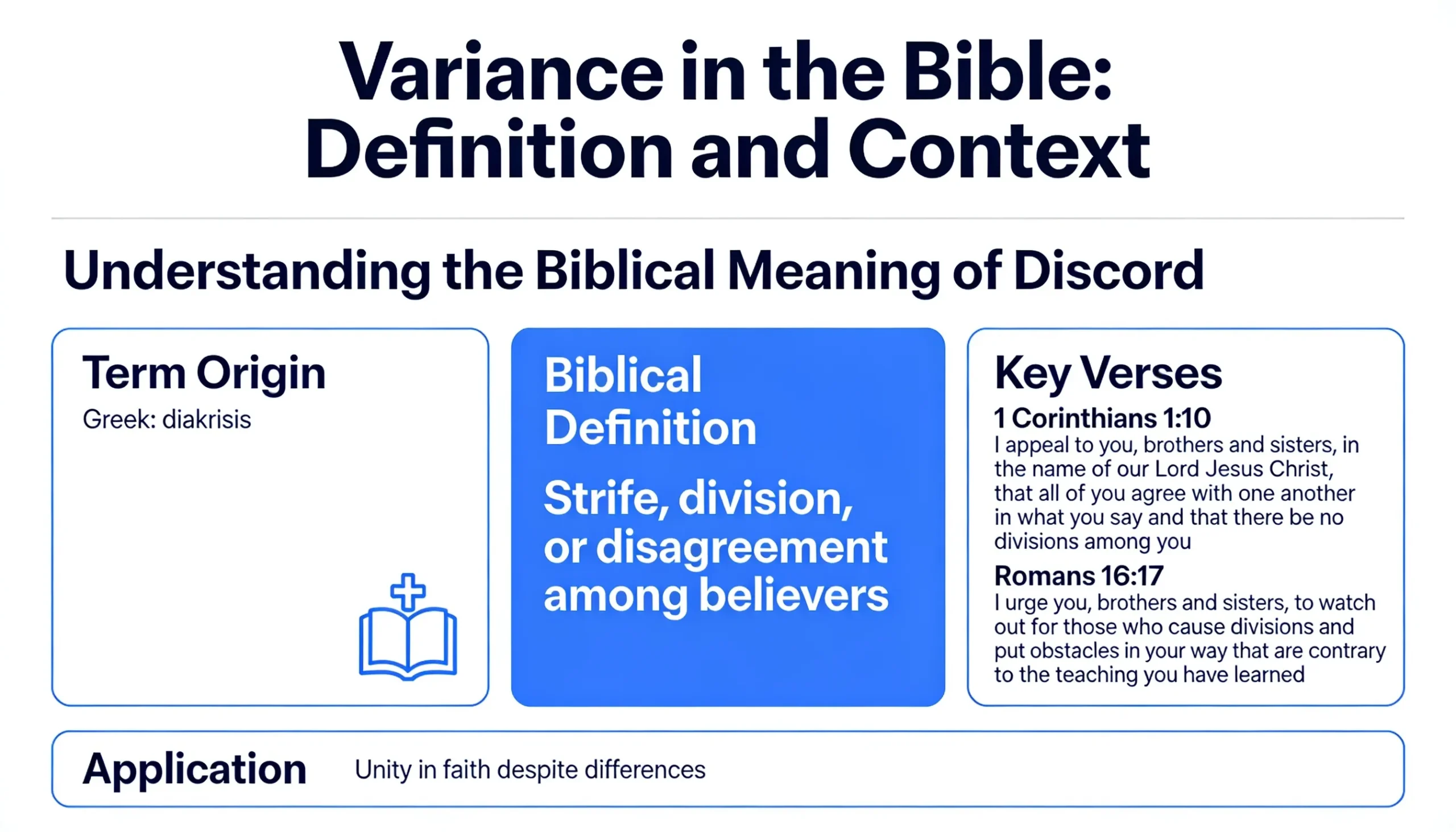
That’s where the idea of variance comes in. When we look for the variance meaning in the Bible, we find it’s an old word that points to discord, strife, or being at odds with others.
The Bible doesn’t shy away from tough topics like this. It shows us how division affects our hearts and communities.
In Scripture, variance often shows up as a warning against letting conflicts tear things apart.
Variance Definition Bible
In the Bible, variance means a state of disagreement, conflict, or division between people. It can describe tension that harms peace and unity. In the KJV, the word appears among the works of the flesh in Galatians 5:20, alongside hatred, strife, and envy. The idea is not simply having a different opinion. It points to conflict that damages relationships and works against godly love. Jesus also taught His followers to seek peace and reconciliation with others (Matthew 5:23–24). The Bible calls believers to choose patience, forgiveness, and peace instead of ongoing conflict.
Variance Meaning in the Bible
The variance meaning in the Bible is closely linked to disagreement, strife, and division. The KJV uses “variance” in Galatians 5:20 as part of a list of sinful attitudes and actions. This shows that harmful conflict can come from the heart and affect how people treat one another. Scripture does not say that every disagreement is sinful. Believers may hold different views while still showing love and respect. However, when disagreement turns into anger, hostility, or division, it becomes a spiritual problem. Ephesians 4:2–3 urges Christians to live with humility, patience, and unity.
Variance Bible Definition
The variance Bible definition refers to serious disagreement or conflict between people. In the KJV, “variance” is used in Galatians 5:20 and carries the idea of strife or discord. It describes behavior that can break peace and damage relationships. Scripture places this kind of conflict among works that come from a life ruled by sinful desires. By contrast, the Holy Spirit produces qualities such as love, patience, kindness, and self-control (Galatians 5:22–23). The Bible therefore points believers away from needless quarrels and toward peace, forgiveness, and loving treatment of others.
Variance Meaning in Bible
The variance meaning in Bible passages points to conflict, disagreement, or discord. One clear example is Galatians 5:20 in the KJV, where variance appears in a list of works of the flesh. The verse connects it with other forms of harmful conflict, showing that the issue goes beyond a simple difference of opinion. Scripture teaches that believers should not let conflict control their relationships. Proverbs 15:1 shows how a gentle answer can turn away wrath. The biblical lesson is clear: Christians should seek peace and handle disagreements with wisdom, grace, patience, and love.
Meaning of Variance in the Bible
The meaning of variance in the Bible is disagreement that can lead to strife, division, or broken fellowship. The KJV uses this older English word in Galatians 5:20. In that setting, variance is grouped with other sinful behaviors that harm relationships. The Bible also gives a better path. Colossians 3:12–13 tells believers to put on kindness, humility, meekness, and patience, while forgiving one another. This does not mean avoiding every difficult conversation. Instead, it teaches Christians to deal with conflict in a way that protects love, truth, peace, and unity.
Variance Definition in Bible
The variance definition in Bible usage is conflict or disagreement between people. In Galatians 5:20, the KJV uses “variance” to describe a sinful form of discord. The word reflects an older English usage and may sound unfamiliar to modern readers. The surrounding words help explain its meaning because the verse also mentions strife, jealousy, wrath, and divisions. These actions can destroy healthy relationships and church unity. Scripture gives believers another way to respond. Romans 12:18 teaches Christians to live peacefully with others whenever it depends on them, making peace a clear biblical goal.
Variance in the Bible
Variance in the Bible is connected with conflict, strife, and division. The clearest KJV reference is Galatians 5:20, where variance is listed among the works of the flesh. The passage warns that such behavior does not reflect a Spirit-led life. The Bible instead calls believers to walk in love and peace. James 3:17–18 describes godly wisdom as peaceable and shows that righteousness grows where peace is practiced. So, variance is more than having different thoughts. It describes harmful discord that can pull people apart and weaken the unity God desires.
Variance Meaning in the Bible KJV
The variance meaning in the Bible KJV is disagreement, strife, or discord. The word appears in Galatians 5:20 in the KJV, where Paul lists it among the works of the flesh. The older word “variance” can be easier to understand when read with the words around it, including strife, hatred, and divisions. The passage warns against behavior that creates conflict and breaks unity. In contrast, Galatians 5:22–23 describes the fruit of the Spirit, including love, peace, gentleness, and self-control. The KJV usage therefore points readers toward peace rather than harmful division.
Biblical Meaning of Variance
The word variance in the Bible usually comes from older translations like the King James Version. It carries the sense of disagreement or contention that creates separation between people. In the New Testament, it often translates the Greek word eris, which means strife, quarreling, or wrangling. This isn’t just a mild difference of opinion. It points to ongoing conflict that stirs up trouble and breaks unity.
Another Greek root appears in Matthew where Jesus talks about setting people at variance. The word dichazo means to divide or cut in two, like splitting something apart. So the biblical meaning of variance highlights how differences can lead to real division if we don’t handle them with care.
The first clear appearance of this idea shows up in the teachings of Jesus. In Matthew 10:35 (KJV), He says, For I am come to set a man at variance against his father, and the daughter against her mother, and the daughter in law against her mother in law. Here, Jesus isn’t promoting fights. He’s being honest about what happens when people choose to follow Him. Some family members accept the message while others reject it, creating natural tension.
Emulations Bible Definition
In the Bible, emulations describe intense jealousy, selfish rivalry, or a desire to outdo others for personal glory rather than honoring God. In the KJV, the word appears among the works of the flesh in Galatians 5:19–21. Instead of encouraging healthy motivation, biblical emulations promote envy, pride, and conflict. Scripture teaches believers to pursue humility, love, and unity, allowing the Holy Spirit to shape attitudes that reflect Christ instead of selfish ambition.
Examples of Variance in the Bible
The Bible illustrates variance through disagreements, divisions, and conflicts caused by sinful attitudes. Examples include the dispute between Paul and Barnabas (Acts 15:36–41), the quarrels within the Corinthian church (1 Corinthians 1:10–13), and the rivalry among Jesus’ disciples over greatness (Luke 22:24). These accounts reveal how unresolved conflict can damage relationships, while forgiveness, humility, and reconciliation restore peace and strengthen the body of Christ.
Variance Meaning in the Bible KJV
In the King James Version (KJV), variance refers to strife, discord, and ongoing disagreement between people. It appears in Galatians 5:20 as one of the works of the flesh, highlighting attitudes that divide rather than unite. Biblical variance grows from selfishness, pride, and unforgiveness. God calls His people to pursue peace, patience, and love, encouraging relationships that reflect Christ’s character and promote harmony within the church and everyday life.
Seditions Meaning in the Bible
In the Bible, seditions refer to actions or attitudes that stir up rebellion, division, or factions within a community. Listed in Galatians 5:20, seditions are works of the flesh that threaten unity among God’s people. They often arise from selfish ambition, pride, or resentment. Scripture encourages believers to reject divisive behavior and instead cultivate humility, peace, and mutual respect, preserving the unity that Christ desires for His followers.
Emulations Meaning in the Bible KJV
In the KJV, emulations describe jealous competition and resentful ambition that seek personal recognition rather than God’s glory. Found in Galatians 5:20, the term warns against attitudes that create conflict and envy among believers. Biblical teaching contrasts emulations with the fruit of the Spirit, such as love, kindness, and self-control. Christians are encouraged to celebrate others’ blessings, serve faithfully, and seek God’s approval instead of competing for status.
Lasciviousness Meaning in the Bible
Lasciviousness in the Bible refers to shameless lust, sexual immorality, and behavior that openly rejects God’s standards of purity. It appears in passages such as Galatians 5:19 and Mark 7:22 as a serious sin flowing from a corrupted heart. Scripture calls believers to flee impurity and pursue holiness in both actions and thoughts. Through the Holy Spirit, Christians are empowered to live with self-control, integrity, and a life that honors God.
Revellings Meaning in the Bible
In the Bible, revellings describe wild parties, drunken celebrations, and reckless behavior that promote sinful living. The term appears in Galatians 5:21 and Romans 13:13, where believers are warned to avoid lifestyles marked by excess and moral compromise. Instead of seeking temporary pleasure through uncontrolled indulgence, Scripture encourages Christians to live wisely, remain spiritually alert, and find lasting joy through obedience and fellowship with God.
Wrath Meaning in the Bible
In the Bible, wrath refers to intense anger expressed either by sinful humans or by God’s perfect justice. Human wrath often leads to harmful words, conflict, and poor decisions, while God’s wrath is always righteous and directed against sin and evil. Verses such as James 1:20 warn against uncontrolled anger, whereas Romans 1:18 reveals God’s holy judgment. Believers are called to practice patience, forgiveness, and self-control while trusting God’s righteous justice.
Quick Reference Table
| Term | Biblical Meaning | Key Verses | Spiritual Lesson |
| Variance | Strife, discord, contention, or division between people | Galatians 5:20 (KJV), Matthew 10:35 (KJV) | Avoid works of the flesh; pursue unity in the Spirit |
| Eris (Greek) | Quarreling, wrangling, party spirit | Galatians 5:20, 1 Corinthians 1:11 | Leads to factions; opposite of love and peace |
| Dichazo (Greek) | To set at variance or divide | Matthew 10:35 | Following Jesus may cause division but calls for peace |
| Opposite: Unity | Harmony and oneness in Christ | John 17:21, Ephesians 4:3 | Fruit of the Spirit brings together what variance tears apart |
Dream & Real Life Meaning
When variance shows up in dreams, it often feels uneasy. You might dream of arguing with loved ones or standing in the middle of a heated crowd. Peaceful dreams could mean God is highlighting a relationship that needs mending. An urgent dream, full of chaos, might signal the Holy Spirit warning you about growing conflict in your waking life. Pay attention to how you feel when you wake up.
In real life, variance appears in everyday disagreements at work, home, or church. It might look like gossip that divides friends or stubborn arguments over small things. The Bible helps us test if an experience is from God by checking it against Scripture and the fruit it produces. Does it lead to peace and love, or more anger and separation? James 3:17-18 reminds us that wisdom from above is pure, peace-loving, and full of mercy.
I encourage you to pray about any variance you’re facing. Ask the Holy Spirit to show you your part in it. Journaling helps toowrite down the situation, what the Bible says, and what God might be teaching you. Over time, this practice brings clarity and transformation. Many people find that bringing conflicts to prayer softens their hearts and opens doors for reconciliation. Remember, God cares about your relationships and wants to guide you through them.
Faith Takeaways
- Pray for unity in your family and church, asking God to remove any roots of variance.
- Trust that the Holy Spirit can change contentious hearts, including your own.
- Reflect on times when small disagreements grew bigger and what you learned.
- Seek God’s wisdom before responding in anger during conflicts.
- Remember that true peace comes from putting Christ first over personal opinions.
FAQs
What is the variance meaning in the Bible?
Variance refers to strife or discord that creates division. In Galatians 5, Paul lists it as something that comes from our human nature and keeps people from God’s kingdom. The Bible urges us to choose love instead.
Where does variance first appear in Scripture?
The concept shows up in Jesus’ words in Matthew 10 about family division. It warns that His message will sometimes separate people, even close relatives, based on their response to Him.
How does variance differ from healthy disagreement?
Healthy differences can lead to growth when handled with respect. Variance, though, involves selfish fighting and bitterness that tears relationships apart. The Bible calls us to resolve issues in a way that honors God.
What does the Bible say about overcoming variance?
Scripture points to the fruit of the Spiritlove, joy, peaceas the solution. Ephesians 4 encourages us to make every effort to keep the unity of the Spirit through the bond of peace.
Can variance ever serve a good purpose?
In some cases, like standing for truth, division happens naturally. But the Bible warns against creating unnecessary conflict. Jesus modeled both boldness and compassion.
How can I spot variance in my own life?
Look for patterns of arguing, jealousy, or taking sides. Prayer and honest feedback from trusted friends help reveal blind spots. God’s Word acts as a mirror for our hearts.
What is the spiritual significance of variance in scripture?
It shows how sin disrupts the harmony God desires. Yet it also highlights our need for grace and the power of the Holy Spirit to bring real change and unity.
Conclusion
The top spiritual truths about variance are clear: it harms relationships and communities when left unchecked, but God’s Spirit offers a better way through love and humility. We don’t have to live divided. Jesus brings the power to heal what strife breaks.
One final powerful Bible verse comes from Galatians 5:22-23 (NIV): But the fruit of the Spirit is love, joy, peace, forbearance, kindness, goodness, faithfulness, gentleness and self-control. Against such things there is no law.
Friend, no matter what conflicts you’re facing today, there’s hope. Turn to prayer, lean on God’s grace, and watch how He works in your heart and relationships. You are not alone in this journey.
Discover More Post
- Serendipity Meaning in Simple Words Complete Guide
- Twin Flame Meaning: The Complete Spiritual Guide
- What Does 444 Mean? A Complete Spiritual Guide