Have you ever felt completely overwhelmed, like life was throwing one storm after another at you?
Maybe it was a tough diagnosis, a broken relationship, or just the weight of everyday worries that left you searching for a safe place to hide.
I remember a time when I felt that wayeverything seemed uncertain, and I just wanted somewhere solid to rest. In moments like those, many people turn to the idea of finding refuge.
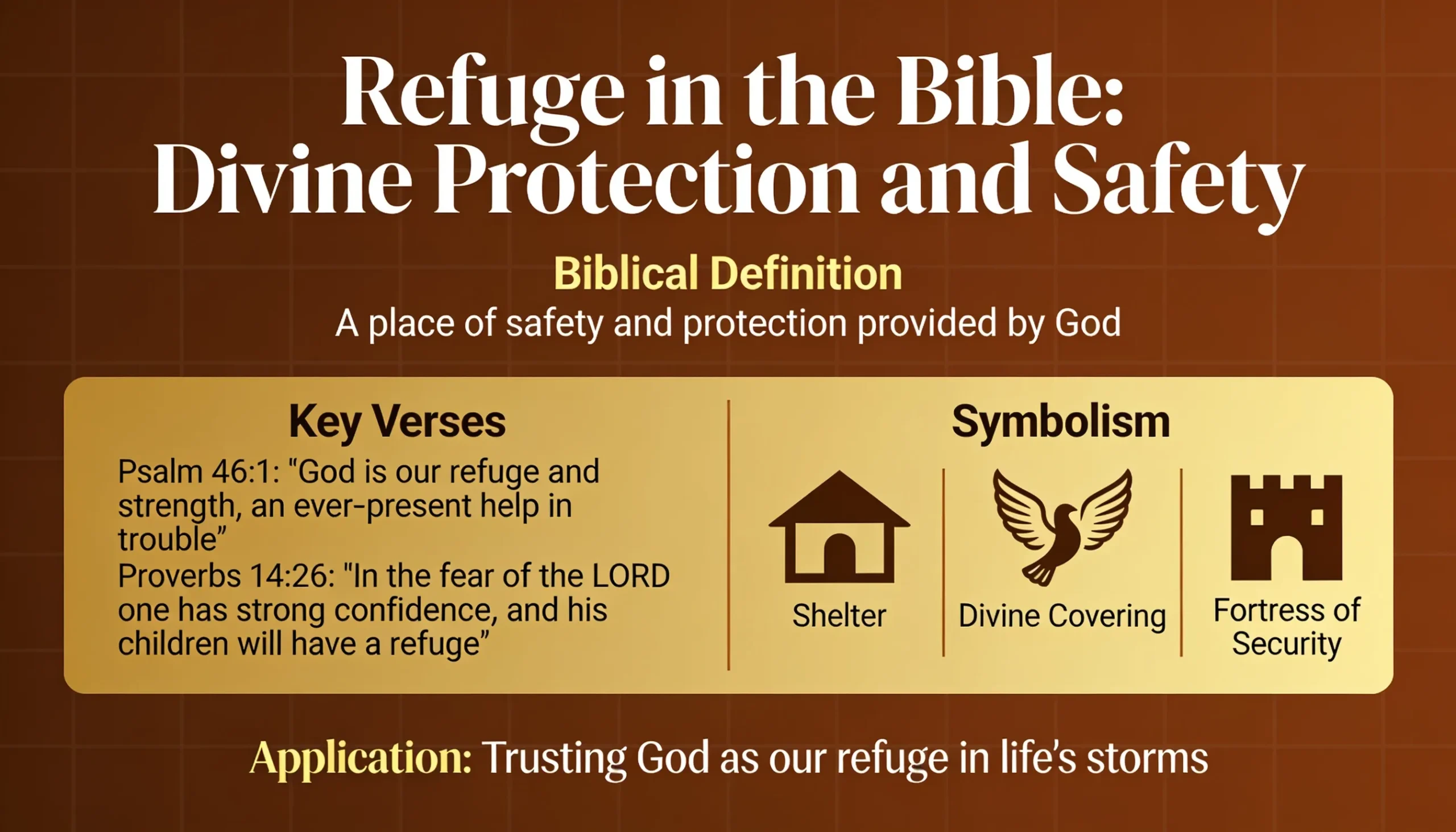
The refuge meaning in the Bible goes far deeper than a simple hiding spot. It speaks of God’s loving protection, a secure shelter where we can run when trouble comes.
Let’s explore what the Bible says about refuge meaning in the Bible.
Biblical Meaning of Refuge Meaning in the Bible
The word refuge in the Bible carries rich layers of meaning rooted in the original languages. In the Old Testament, the main Hebrew term is machaseh, which comes from the root chasah. This word means a shelter or place of protection, often from storms, enemies, or danger. It implies running to something or someone for safety and putting your confidence there. Sometimes it connects to the idea of mercy or pity, showing how God offers compassionate cover.
In the New Testament, related Greek ideas appear, like fleeing for safety, pointing forward to Jesus as our ultimate place of asylum. The first clear appearances of cities of refuge show up in the law given through Moses, with fuller details in Numbers and Joshua. But the personal, heartfelt use of God as refuge explodes in the Psalms.
Fortress Meaning in the Bible
In the Bible, a fortress represents God’s powerful protection, safety, and unshakable defense for His people. Unlike a physical stronghold, God’s fortress offers spiritual security during fear, hardship, and temptation. Believers are encouraged to trust Him because His strength never fails. Throughout Scripture, faithful men and women found peace by relying on God’s protection instead of their own abilities. This image reminds Christians that true safety is found in a close relationship with the Lord.
Refuge and Fortress Meaning in the Bible
The phrase “refuge and fortress” describes God as both a safe shelter and a mighty defender. A refuge is a place of comfort where people can run in times of trouble, while a fortress symbolizes strength that cannot easily be overcome. Together, these images reveal God’s complete care for His people. He not only welcomes those who seek Him but also stands guard over them. This biblical truth encourages believers to place their confidence in God’s unfailing protection.
Refuge Meaning in Hebrew
The Hebrew word commonly translated as “refuge” carries the idea of a safe place where someone can flee for protection. It reflects security, trust, and peace in the presence of God. In the Old Testament, this word often describes the Lord as the One who shields His people from danger and fear. Rather than depending on human strength, believers are invited to find lasting hope in God’s faithful care. His refuge brings comfort during every season of life.
Benefit of Making God Our Refuge
Making God our refuge brings lasting peace, courage, and confidence even in difficult circumstances. When believers place their trust in Him, they discover strength that goes beyond human understanding. God provides wisdom during confusion, comfort in sorrow, and hope when life feels uncertain. Depending on Him also strengthens faith and reminds Christians that they are never alone. Choosing God as a refuge helps people face challenges with assurance, knowing that His love and protection remain constant.
The Lord Is My Refuge Meaning
The statement “The Lord is my refuge” is a personal declaration of complete trust in God. It means recognizing Him as the safest place to turn during fear, danger, or uncertainty. Instead of relying only on personal abilities, believers depend on God’s power, guidance, and faithfulness. This expression reflects a heart that finds peace through a close relationship with the Lord. It reminds Christians that God’s presence offers lasting security no matter what circumstances they face.
How Many Times Is Refuge Used in the Bible
The word “refuge” appears many times throughout the Bible, especially in the Book of Psalms, where God’s protection is a central theme. While the exact number depends on the Bible translation, the message remains the same. Scripture consistently presents God as a reliable refuge for everyone who trusts Him. These repeated references emphasize His faithfulness, mercy, and desire to protect His people. They encourage believers to seek the Lord first in every situation.
Refuge in the Bible KJV
In the KJV, the word “refuge” frequently describes God as a place of safety and hope. Many well-known verses teach that those who trust in the Lord can find protection during trouble and peace in difficult times. The King James Version highlights God’s enduring faithfulness through beautiful, timeless language. These passages encourage readers to rely on God’s strength rather than fear. They remain a powerful source of comfort for Christians studying Scripture today.
Strength Meaning in the Bible
In the Bible, strength is more than physical power. It includes spiritual endurance, courage, faith, and the ability to remain faithful through every trial. True strength comes from God, not from human ability alone. Scripture teaches that the Lord empowers His people to overcome fear, resist temptation, and continue serving Him with confidence. When believers rely on God’s strength instead of their own, they experience renewed hope, greater perseverance, and deeper trust in His promises.
Quick Reference Table
| Bible Reference | Key Verse Snippet (ESV/NIV) | Main Theme |
| Deuteronomy 33:27 | The eternal God is your refuge… | Everlasting support |
| Psalm 46:1 | God is our refuge and strength… | Help in trouble |
| Psalm 91:2 | He is my refuge and my fortress… | Personal trust |
| Psalm 9:9 | The Lord is a refuge for the oppressed… | Justice for the hurting |
| Proverbs 14:26 | …his children shall have a place of refuge. | Family blessing |
| Hebrews 6:18 | …we who have fled for refuge… | Hope in Christ |
| Nahum 1:7 | The Lord is good, a stronghold in the day of trouble… | Care for those who trust |
This table gives you quick verses to turn to when you need encouragement about finding refuge in God.
Dream & Real Life Meaning
Sometimes the idea of refuge shows up in dreams too. A peaceful dream of finding a safe, warm shelter might point to God’s invitation for rest in Him. You could wake up feeling calm, sensing the Holy Spirit’s comfort. On the other hand, an urgent dream where you’re running to a hiding place might reflect real-life stress or a call to seek God more intentionally during a difficult season.
In real life, the refuge meaning in the Bible plays out when we face trials. Maybe work pressure builds up, or family conflicts arise. That’s when we can choose to pause and pray instead of spiraling. God often uses these moments to draw us closer, showing His faithfulness.
To test if an experience or dream is from God, check it against Scripture. Does it line up with His character of love, truth, and peace? The Holy Spirit brings clarity and conviction, never confusion or fear that leads away from faith. Talk to trusted Christian friends toothey can offer wise perspective.
I encourage you to keep a journal. Write down your prayers, the verses that stand out, and how God shows up as your refuge. Over time, you’ll see patterns of His care. This practice builds transformation as you learn to trust more deeply. Prayer becomes your first response, not your last resort. In both dreams and daily life, God wants you to know you have a safe place in Him.
Faith Takeaways
- Pray for God’s protection each morning, inviting Him to be your refuge before troubles arise.
- Trust in His promises even when you cannot see the way forward, knowing He holds you securely.
- Reflect on past times when God provided shelter and thank Him for His faithfulness.
- Seek community with other believers who can remind you of biblical truth during hard times.
- Remember that Jesus is our eternal refuge, offering forgiveness and new life to all who come to Him.
FAQs
What is the refuge meaning in the Bible?
The refuge meaning in the Bible describes God as a safe shelter where we can find protection and peace. It comes from Hebrew words meaning to hide or trust for safety.
How does the Bible describe God as our refuge?
The Bible often calls God a fortress, rock, or hiding place. David used these images many times in the Psalms because he lived through danger.
Why did God create cities of refuge in the Old Testament?
These special cities gave protection to people who accidentally caused harm. They kept families from endless revenge and showed God’s mercy mixed with justice. The system pointed forward to how we can find safety in Christ from the results of sin. It was a beautiful example of grace in action.
What is the biblical meaning of refuge in scripture for today?
The biblical meaning of refuge in scripture still applies perfectly. In our fast-paced world, we face different kinds of stormsstress, doubt, loss..
Can dreams about refuge have spiritual meaning?
Yes, they can. Peaceful dreams of safety often reflect God’s comfort, while urgent ones might prompt us to pray about current worries. Always test them with the Bible.
How can I find refuge in God during difficult times?
Start by speaking honest prayers, just like David did. Read verses about God’s protection out loud. Spend time in quiet with Him, maybe journaling your thoughts.
Conclusion
The top two spiritual truths about refuge stand out clearly. First, God is always a safe place for those who run to Him. Second, choosing Him as your refuge brings lasting peace and strength no matter what comes.
One final powerful Bible verse comes from Psalm 34:8 (NIV): Taste and see that the Lord is good; blessed is the one who takes refuge in him.
No matter where you are right now, you can find shelter in God’s love today. He welcomes you with open arms. Turn to Him, friendtrue rest awaits.
Discover More Post
- Serendipity Meaning in Simple Words Complete Guide
- Twin Flame Meaning: The Complete Spiritual Guide
- What Does 444 Mean? A Complete Spiritual Guide

I’m Nicholas Sparks, and storytelling has always been my passion. Through TheBiblimeaning, I share insights about my books, unforgettable characters, romance, emotions, and the deeper meanings behind my stories. This platform brings readers closer to my writing journey, latest releases, and the inspiration that shapes every novel I create.