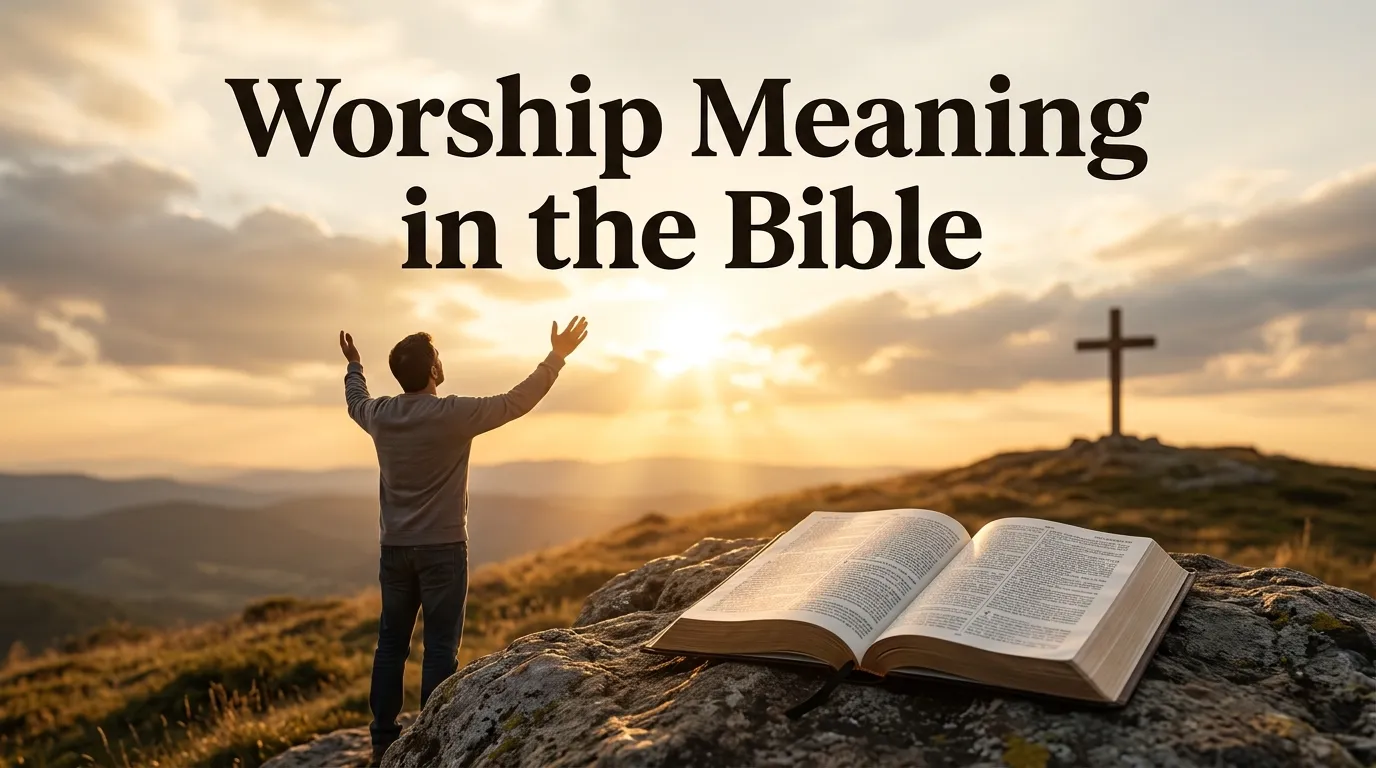
Worship in the Bible goes far deeper than singing songs or attending a service.
It is the heart’s response to who God isour Creator, Redeemer, and King.
At its core, biblical worship means humbly bowing before God in reverence, surrendering our lives to Him, and living in a way that honors His worth above everything else.
If you’re a new believer seeking to understand this practice, a mature Christian wanting to go deeper, or simply someone drawn to authentic faith, this article will explore the rich biblical meaning of worship.
You’ll discover its original languages, key examples from Scripture, common pitfalls, and how to live it out daily in a way that draws you closer to God.
Biblical Meaning
Biblical worship is not primarily about rituals or emotions, though both can play a role. It is an all-encompassing response to God’s glory and grace. The English word worship comes from the idea of worth-shipdeclaring and responding to God’s supreme worth.
In Scripture, worship involves both attitude and action: a humble heart posture combined with obedient living. It acknowledges God’s holiness, celebrates His goodness, and aligns our entire lives with His will. True worship flows from knowing God through His Word and responding with love, trust, and obedience.
Hebrew and Greek Meaning
The Bible uses several words for worship, each painting a vivid picture.
In the Old Testament, the primary Hebrew word is shachah (שָׁחָה). It means to bow down, prostrate oneself, or kneel in humble submission before a superioroften God. This physical act symbolized inner reverence and surrender. Another key word, ‘avad (עָבַד), means to serve or work as an act of devotion, linking worship to everyday obedience and labor for God.
In the New Testament, proskuneo (προσκυνέω) is the most common Greek term. It literally means to fall down before or kiss toward someone in adoration and homage. It carries the sense of humble reverence and wholehearted devotion. Another word, latreuo, emphasizes service and priestly ministry to God.
These words together show worship as both inward posture (humility and love) and outward expression (obedience and service).
Worship Meaning in the Bible
In the Bible, worship means honoring God with sincere love, obedience, and reverence. It is much more than singing songs or attending church. True worship begins in the heart and is reflected through faithful living, prayer, gratitude, and trust in God. Scripture teaches that believers should worship God in spirit and truth, making Him the center of every part of life. Biblical worship draws people closer to God and helps them grow in faith, humility, and devotion.
Phallic Worship Meaning in the Bible
Phallic worship refers to the practice of honoring fertility symbols or idols connected to pagan religions. Although the Bible does not use the exact phrase, it strongly condemns every form of idol worship and the immoral practices often linked to it. The Israelites were repeatedly warned not to imitate the customs of surrounding nations that worshiped false gods. Instead, God called His people to remain spiritually pure, worship Him alone, and reject every practice that turned hearts away from His truth.
Heart of Worship Meaning in the Bible
The heart of worship in the Bible is about having a genuine relationship with God rather than simply performing religious actions. God looks beyond outward rituals and values a humble, faithful, and obedient heart. True worship flows from gratitude, love, repentance, and complete trust in Him. Jesus taught that the Father seeks those who worship in spirit and truth, showing that authentic worship is centered on God’s presence and not on personal performance or external traditions.
Biblical Context
Worship appears throughout the Bible, from the patriarchs to the early church. In the Old Testament, it often centered on the tabernacle and temple, with sacrifices expressing dependence on God’s mercy. Yet prophets like Isaiah and Amos reminded Israel that external forms without a humble, obedient heart were empty.
Jesus revolutionized understanding by teaching that true worship is not tied to a specific location or ritual but flows from a relationship with God. The early church continued this, gathering to pray, teach, break bread, and live sacrificially as an act of worship (Acts 2:42-47).
Key Bible Verses on Worship
Here are several powerful verses, each with context and relevance:
John 4:23-24 (NIV): Yet a time is coming and has now come when the true worshipers will worship the Father in the Spirit and in truth, for they are the kind of worshipers the Father seeks. God is spirit, and his worshipers must worship in the Spirit and in truth.
Jesus spoke these words to the Samaritan woman at the well. In their conversation about where to worship, He shifted focus from mountains or temples to the heart. In Spirit means genuine, Spirit-led devotion rather than mere formality. In truth means according to God’s revealed character in Scripture. This verse shows God actively seeks worshipers who engage Him authentically.
Romans 12:1 (NIV): Therefore, I urge you, brothers and sisters, in view of God’s mercy, to offer your bodies as a living sacrifice, holy and pleasing to Godthis is your true and proper worship.
Paul has just finished explaining God’s amazing grace in the first eleven chapters. In response, he calls believers to present their entire livesdaily choices, relationships, workas a living sacrifice. Worship here is not occasional but continual, rooted in gratitude for the gospel.
Psalm 95:6-7 (NIV): Come, let us bow down in worship, let us kneel before the Lord our Maker; for he is our God and we are the people of his pasture, the flock under his care.
This psalm invites communal and personal response to God as Creator and Shepherd. Bowing physically reminds us of our dependence on Him.
Matthew 4:10 (NIV): Jesus said to him, Away from me, Satan! For it is written: ‘Worship the Lord your God, and serve him only.’
In resisting temptation, Jesus affirmed exclusive worship belongs to God alone.
Spiritual Meaning
Spiritually, worship realigns our hearts with reality: God is worthy, and we are not independent but dependent on Him. It combats pride, idolatry, and self-centeredness. Through worship, we experience God’s presence, find transformation, and reflect His glory to the world. It is both a privilege and a command that brings joy and purpose.
Practical Application
For new believers: Start simplyread a psalm aloud, thank God for specific blessings, and obey one clear command from Scripture today. Let everyday tasks become offerings to Him.
For mature Christians and pastors: Examine your life for areas where actions contradict your words of praise. Lead others by modeling Spirit-and-truth worship in both private devotion and public gatherings.
Worship happens in the car, at work, in suffering, and in celebration. Ask: Does this choice honor God’s worth? Am I bowing my will to His?
Common Misunderstandings
Many people think worship is mainly singing emotional songs on Sunday. While music can be a beautiful expression, it is not the sum total. Biblical worship is a lifestyle, not an event.
Others assume worship is about feeling good or receiving a blessing. True worship centers on God’s worth, not our comfort. It may involve joy but also costly obedience and sacrifice.
Some believe worship is confined to a building or specific style. Jesus taught otherwiselocation and outward forms matter far less than the heart.
FAQs
Q: What is the definition of worship in the Bible KJV?
A: In the KJV Bible, worship means showing reverence, honor, and devotion to God through prayer, praise, obedience, and service.
Q: What is the Hebrew definition of worship?
A: The primary Hebrew word for worship is shachah, which means to bow down, prostrate oneself, or show deep reverence to God.
Q: What is the meaning of worship?
A: Worship is the act of honoring, loving, and glorifying God with your heart, mind, and actions.
Q: What are the 7 types of worship in the Bible?
A: Common biblical expressions of worship include praise, prayer, thanksgiving, singing, giving, serving, and obedience to God.
Q: Why is worship important in the Bible?
A: Worship is important because it strengthens our relationship with God and acknowledges His greatness, love, and authority.
Q: What is worship in Christianity?
A: In Christianity, worship is the response of believers to God’s holiness and grace through praise, prayer, obedience, and devotion.
Q: What is true worship in the Bible?
A: True worship is worshiping God in spirit and truth with a sincere heart, as taught by Jesus in John 4:24.
Q: What is the meaning of worship in Hebrew and Greek?
A: In Hebrew, worship often means “to bow down” (shachah), while in Greek it commonly means “to show reverence or adoration” (proskuneo).
Conclusion
Understanding worship in the Bible invites us into a beautiful, life-shaping relationship with God.
As Jesus said, the Father seeks true worshipers who come to Him in spirit and truth. May your life become a living expression of His worthhumble, obedient, joyful, and fully surrendered.
Therefore, since we are receiving a kingdom that cannot be shaken, let us be thankful, and so worship God acceptably with reverence and awe (Hebrews 12:28, NIV).
Start today. Bow your heart before the Lord, and watch how He transforms every part of your life. You were made for this.
Discover More Post
- Hope Meaning in the Bible Explained Clearly
- Hope Meaning in the Bible Explained Clearly
- Understanding the Meaning of Proverbs in the Bible
- Lust Meaning in Bible: A Christian Guide

I’m Nicholas Sparks, and storytelling has always been my passion. Through TheBiblimeaning, I share insights about my books, unforgettable characters, romance, emotions, and the deeper meanings behind my stories. This platform brings readers closer to my writing journey, latest releases, and the inspiration that shapes every novel I create.