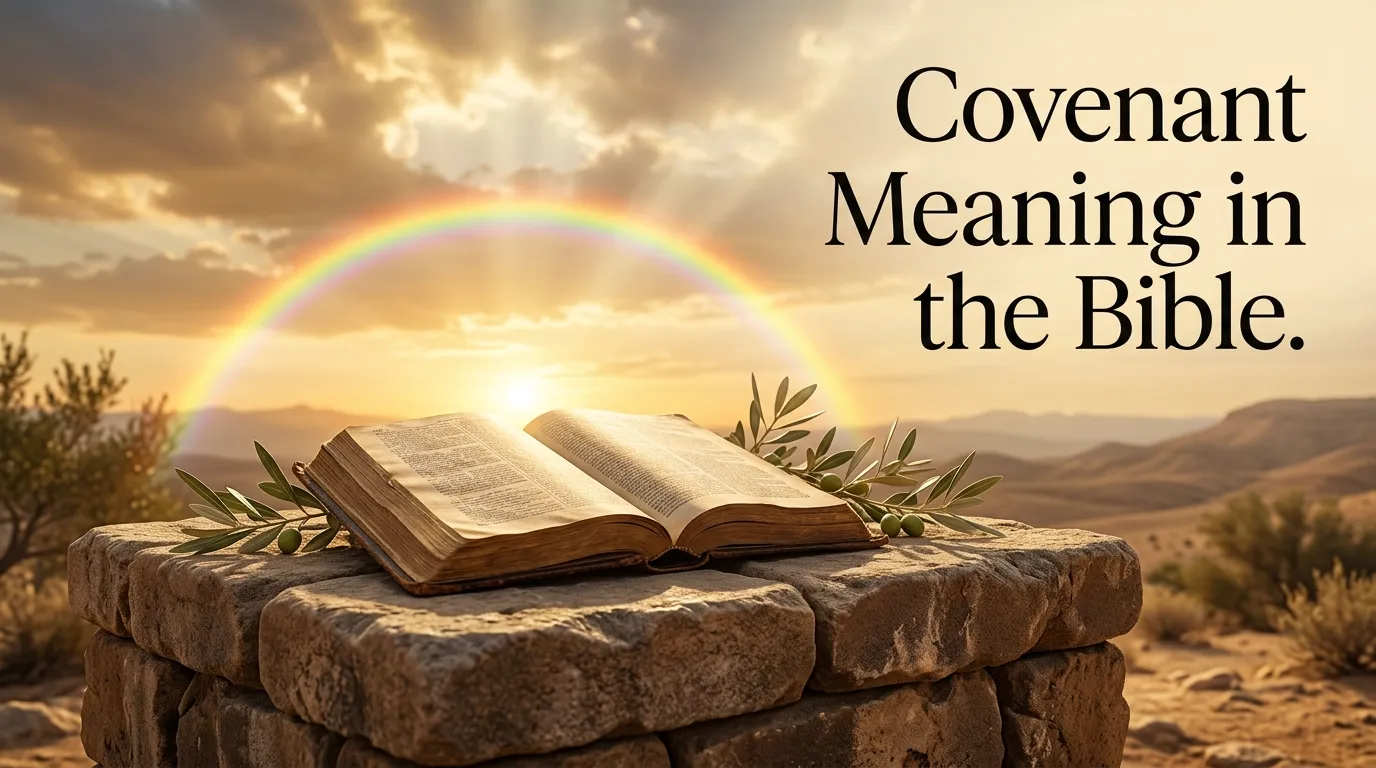
A covenant in the Bible is far more than a contract or legal agreement. It is a sacred, binding relationship initiated by God with His people, marked by promises, faithfulness, and mutual commitment.
If you’re wondering what covenant means in Scripture, you’ll discover it reveals God’s loving pursuit of humanity from creation to redemption through Jesus Christ.
In this article, you’ll explore the biblical definition, key examples, original language insights, and how this truth applies to your life today.
You’re new to faith or deepening your walk with God, understanding covenants will help you grasp the Bible’s overarching story of grace and relationship.
Quick Reference Table: Major Biblical Covenants
| Covenant | Key Figure(s) | Main Promise | Type | Sign |
| Noahic | Noah | Never again destroy earth by flood | Unconditional | Rainbow |
| Abrahamic | Abraham | Land, descendants, blessing to nations | Unconditional | Circumcision |
| Mosaic (Old) | Israel/Moses | Relationship through law and obedience | Conditional | Ten Commandments |
| Davidic | David | Eternal kingdom and throne | Unconditional | Royal line |
| New Covenant | Jesus | Forgiveness, transformed hearts | Unconditional | Lord’s Supper/Blood |
This table highlights how God progressively reveals His plan through relational promises.
Biblical Meaning
In Scripture, a covenant establishes a deep, personal bond between God and people. Unlike modern contracts focused on terms and conditions, biblical covenants emphasize relationship, loyalty, and love. God often initiates them unilaterally, promising faithfulness even when humans fall short.
Covenants define God’s commitment to bless, protect, and redeem. They form the backbone of the Bible, showing how God works through history to restore broken relationships caused by sin.
Covenant Meaning in the Bible
A covenant in the Bible is a sacred agreement established by God with His people. Unlike a simple human contract, a biblical covenant is built on God’s faithfulness, promises, and desire for a lasting relationship. Throughout Scripture, God made several covenants with figures such as Noah, Abraham, Moses, and David, each revealing His plan of redemption. These covenants demonstrate God’s unwavering commitment, inviting believers to respond with trust, obedience, and faithful devotion to Him.
New Covenant Meaning in the Bible
The New Covenant is God’s promise of salvation through Jesus Christ. It replaced the old system of animal sacrifices by offering complete forgiveness through Christ’s death and resurrection. Under this covenant, believers receive a transformed heart, the indwelling Holy Spirit, and direct access to God. The New Covenant highlights God’s grace rather than human effort, making eternal life available to everyone who places their faith in Jesus and follows His teachings.
Ark of the Covenant Meaning in the Bible
The Ark of the Covenant was a sacred chest that represented God’s presence among the Israelites. It contained the stone tablets of the Ten Commandments, Aaron’s staff that budded, and a jar of manna, reminding God’s people of His guidance and provision. Placed inside the Most Holy Place, the Ark symbolized God’s holiness and covenant with Israel. It pointed believers toward the importance of reverence, obedience, and God’s desire to dwell with His people.
The Covenant Meaning in the Bible
The covenant in the Bible refers to God’s binding promise that establishes His relationship with humanity. From Genesis to Revelation, these divine agreements reveal God’s character, justice, mercy, and faithfulness. Whether speaking of the covenant with Abraham, Israel, or the New Covenant through Christ, each one unfolds God’s redemptive plan. Understanding the covenant helps believers see how God’s promises remain trustworthy and how His love extends across every generation.
Salt of the Covenant Meaning in the Bible
The salt of the covenant symbolizes permanence, faithfulness, and enduring commitment before God. In the Old Testament, salt accompanied certain offerings as a sign that God’s covenant would not fail or be forgotten. Because salt preserves and protects from decay, it became a powerful picture of lasting loyalty and purity. This expression reminds believers that God’s promises are reliable and encourages them to remain faithful, devoted, and spiritually steadfast in their relationship with Him.
Hebrew and Greek Meaning
The primary Hebrew word for covenant is berith (or beriyth), appearing about 280 times in the Old Testament. It conveys a solemn bond or compact, often sealed by cutting animals in a ritual (suggesting to cut a covenant), symbolizing the serious, life-binding nature of the agreement. It speaks of loyalty and mutual obligation rooted in God’s initiative.
In the New Testament, the Greek word diatheke translates covenant (and gives us testament for Old and New). While it could mean a last will in secular Greek, in the Bible it carries the relational weight of God’s unbreakable promiseespecially the new covenant sealed by Jesus’ death.
These words underscore that God’s covenants are not casual but eternal and trustworthy.
Biblical Context
Covenants appear throughout Scripture as God responds to humanity’s need for relationship after the fall. Starting with Noah after the flood, God makes promises that preserve creation. With Abraham, He chooses a people through whom blessing will flow to the world. The Mosaic covenant at Sinai gives Israel the law to guide holy living. The Davidic covenant points to an eternal king. All these find fulfillment in the new covenant prophesied in Jeremiah and established by Jesus.
The Bible divides into Old Testament (Old Covenant era focused on law and promise) and New Testament (New Covenant era of grace through Christ). This progression shows God’s consistent character: faithful, merciful, and redemptive.
Bible Verses with Explanations
Here are key verses that illuminate the covenant meaning, with context and relevance:
- Genesis 9:11-13 (Noahic): After the flood, God declares, I establish my covenant with you: Never again will all life be destroyed by the waters of a flood… The rainbow serves as a sign. This unconditional promise assures us of God’s mercy toward creation despite human sin.
- Genesis 17:7 (Abrahamic): I will establish my covenant as an everlasting covenant between me and you and your descendants after you… God promises to be their God and multiply them. This covenant introduces the blessing that extends to all nations through Abraham’s offspringultimately Jesus.
- Exodus 19:5-6 (Mosaic): God tells Israel at Sinai, Now if you obey me fully and keep my covenant, then out of all nations you will be my treasured possession. This conditional aspect highlights the call to faithful obedience as a response to God’s grace, forming them as a holy nation.
- Jeremiah 31:31-34 (New Covenant prophecy): The days are coming… when I will make a new covenant with the house of Israel… I will put my law in their minds and write it on their hearts. I will be their God, and they will be my people… I will forgive their wickedness. Unlike the old, this one transforms from within through the Holy Spirit.
- Luke 22:20 (New Covenant fulfillment): Jesus says, This cup is the new covenant in my blood, which is poured out for you. At the Last Supper, Jesus institutes the covenant sealed by His sacrifice, offering forgiveness and new life to all who believe.
Each verse shows covenants as God drawing near, forgiving, and empowering relationship.
Spiritual Meaning
Spiritually, covenant reveals God’s desire for intimate fellowship. It is not about earning favor but receiving God’s steadfast love (hesed). Through covenants, we see humanity’s story: brokenness met by divine initiative, leading to restoration. The new covenant especially emphasizes graceGod writes His law on hearts and remembers sins no more.
Symbolism
Covenants often include signs: the rainbow (mercy), circumcision (set-apart people), the Sabbath and tablets (holiness), and the bread and cup (Christ’s body and blood). These symbols point to deeper realitiesGod’s presence, sacrifice, and enduring faithfulness. Blood rituals underscore the cost of covenant, fulfilled perfectly in Jesus.
Practical Application
For new believers and seekers, embrace the new covenant by trusting in Jesus’ finished work. His blood covers your sins and invites you into God’s family. Daily, respond with obedience, prayer, and communityliving as God’s treasured people.
Mature Christians: Let covenant truth fuel gratitude and perseverance. When you fail, remember God’s faithfulness isn’t based on your perfection but His promise. Teach others about this relational God.
Pastors and leaders: Ground your ministry in covenant theology to help people see the Bible as one unified story of redemption.
Common Misunderstandings
Some view covenants as rigid rules rather than loving relationships. Others think the old covenant is entirely discarded; instead, it is fulfilled in Christ, with its moral principles still guiding us. The new covenant does not abolish God’s character but internalizes it through the Spirit. Not every promise is covenant in the technical sensecontext matters.
FAQs
Q: What are the 7 covenants of the Bible?
A: The seven biblical covenants commonly include the Edenic, Adamic, Noahic, Abrahamic, Mosaic, Davidic, and New Covenant.
Q: What are the 10 covenants in the Bible?
A: Some Bible studies list ten covenants by including additional agreements, but there is no single universally accepted list.
Q: What are the types of covenant in the Bible?
A: The Bible includes conditional and unconditional covenants, each revealing God’s promises, laws, and relationship with His people.
Q: What is the meaning of covenant?
A: A covenant is a sacred and binding agreement between God and people, established through His promises and faithfulness.
Q: What is the power of covenant in the Bible?
A: The power of a biblical covenant is seen in God’s faithful promises, bringing blessing, protection, redemption, and a lasting relationship with Him.
Q: What are the 9 covenants in the Bible?
A: Some biblical scholars identify nine covenants, though the exact number varies depending on how covenants are classified.
Q: What does covenant with God mean?
A: A covenant with God is a sacred relationship in which God makes promises and calls His people to trust and obey Him.
Q: What does covenant mean in Hebrew?
A: The Hebrew word for covenant is berith (בְּרִית), meaning a binding agreement, treaty, or solemn promise.
Conclusion
The covenant meaning in the Bible ultimately points to a God who refuses to abandon us. He binds Himself to His people with unbreakable promises, culminating in the cross and resurrection of Jesus. As Hebrews 13:20 reminds us, this is the eternal covenant through the blood of the great Shepherd.
If you’re seeking God today, know that He invites you into this relationship of grace. Come as you are, trust in Christ, and experience the joy of belonging to the covenant-keeping God. May you walk confidently in His faithful love, sharing this good news with others. For the mountains may depart… but my steadfast love shall not depart from you (Isaiah 54:10). Amen.
Discover More Post
- Hope Meaning in the Bible Explained Clearly
- Hope Meaning in the Bible Explained Clearly
- Understanding the Meaning of Proverbs in the Bible
- Lust Meaning in Bible: A Christian Guide

Hi, I’m James Patterson, a storyteller who loves creating thrilling mysteries, unforgettable characters, and page-turning adventures. Through TheBiblimeaning, I share insights about authors, books, literary meanings, biographies, and the stories behind famous writers. My goal is to help readers discover the deeper world of literature while enjoying engaging and informative content.