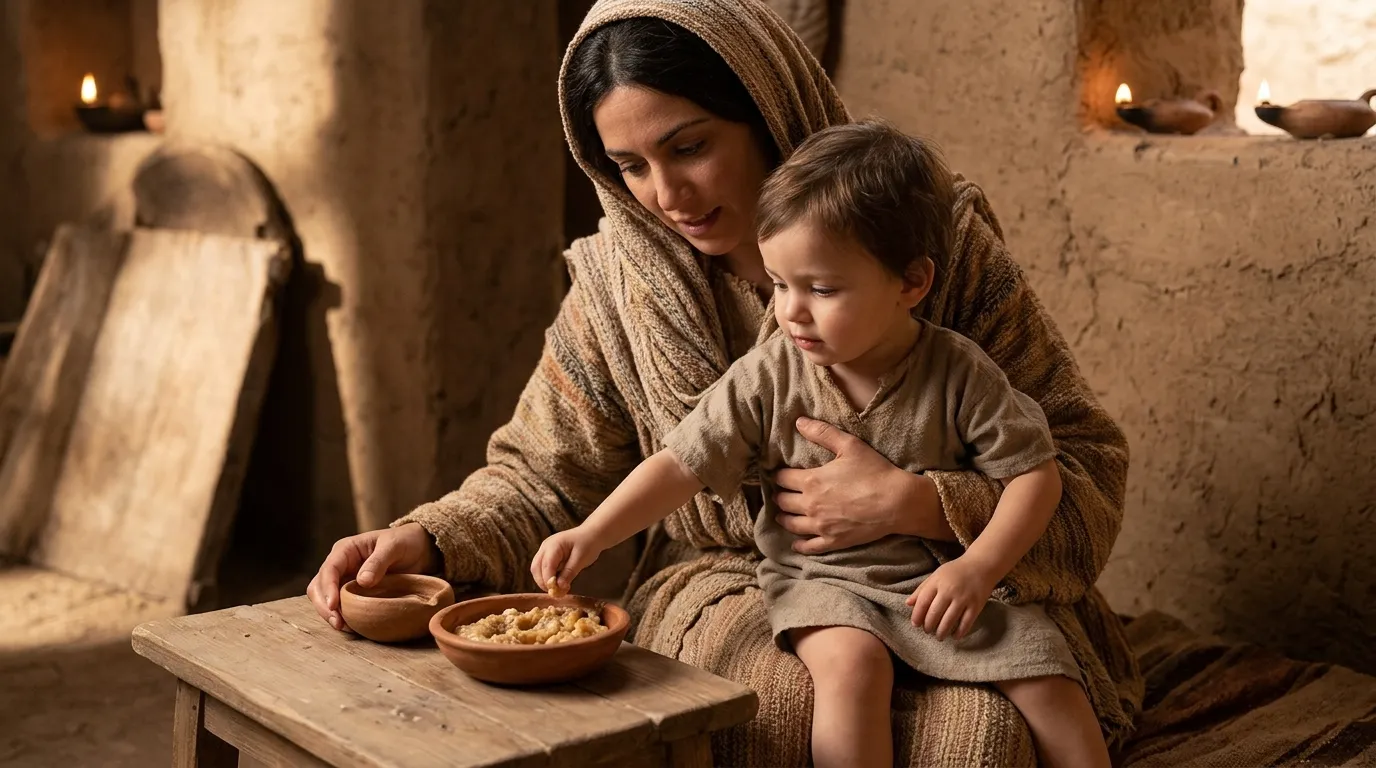
Have you ever read a Bible story about a weaned child and wondered what it truly means?
The word weaned shows up in a few key Bible passages, and each time, it carries deep spiritual weight.
In simple terms, weaning means a child stops nursing and moves to solid food.
But in Scripture, this small life event becomes a picture of trust, growth, and spiritual maturity. God often uses ordinary human moments to teach us extraordinary truths.
From Isaac’s weaning feast to the psalmist’s quiet soul, the Bible paints weaning as a symbol of peace and readiness for what comes next.
This article will walk you through every angle of this topic. We will look at the Hebrew roots, the key verses, and what weaning teaches us about our walk with God today.
Let’s explore what the Bible says about weaned meaning in the bible.
Weaned Meaning in the Bible 1 Samuel 1:24
In the Bible, weaned means a child was no longer fed with milk and was ready for other food. It also marked a step toward growth and greater independence. Hannah weaned Samuel before she brought him to the house of the Lord. She had promised him to God, so this moment was very important. The word can show both physical growth and a new stage of life. In Scripture, weaning can remind us that growth takes time and that each stage has its own purpose.
Bible Verse:
“But when she had weaned him, she took him up with her…”
1 Samuel 1:24 (ESV)
Weaned Definition Bible 1 Samuel 1:23–24
The Bible uses weaned for a child who has stopped nursing. This was a normal part of early childhood in biblical times. In 1 Samuel, Hannah cared for Samuel until he was weaned. Then she took him to Eli and gave him to the Lord. The word does not carry a secret meaning in this passage. It points to a real stage of growth. It also shows Hannah’s care and faith. She kept her promise to God after Samuel reached the right stage to leave home.
Bible Verse:
“And the child was weaned, and she took him up with her…”
1 Samuel 1:24 (ESV)
Meaning of Weaned in the Bible Genesis 21:8
The meaning of weaned in the Bible is closely tied to growth. Genesis tells us that Abraham held a great feast when Isaac was weaned. This shows that weaning was seen as an important family event. A child was moving from one stage of life to another. The word itself does not mean spiritual maturity. Yet, the event can remind us that growth happens step by step. God works through each season of life. What seems small can still be an important part of His plan.
Bible Verse:
“And the child grew and was weaned. And Abraham made a great feast…”
Genesis 21:8 (ESV)
What Is the Meaning of Weaned in the Bible Isaiah 28:9
In the Bible, weaned can also appear in a teaching context. Isaiah uses the image of children who have been weaned from milk. The picture helps describe people who need simple teaching before they can understand deeper lessons. This gives the word a wider biblical picture. Weaning is first about physical growth, but Scripture can use it as an image for learning and maturity. The key idea is moving from one stage to another. God invites His people to grow in understanding and not remain spiritually immature.
Bible Verse:
“Whom will he teach knowledge, and to whom will he explain the message?”
Isaiah 28:9 (ESV)
What Does Weaned Mean in the Bible Psalm 131:2
Weaned means a child has moved beyond nursing. Psalm 131 uses this picture in a beautiful way. David compares his calm soul to a weaned child with its mother. A weaned child no longer depends on milk in the same way. The image points to quiet trust and peace. David says his soul is calm before God. This teaches that faith can grow into a steady trust. Instead of always demanding what we want, we can rest in God and trust His care.
Bible Verse:
“But I have calmed and quieted my soul, like a weaned child with its mother.”
Psalm 131:2 (ESV)
Weaned Meaning in Bible 1 Samuel 1:24
The Bible’s use of weaned points to a clear stage of childhood growth. In 1 Samuel, Samuel was weaned before Hannah brought him to Shiloh. She had prayed for a son and promised to give him to the Lord. After caring for him during his early years, she kept that promise. This makes the passage meaningful because weaning comes before a major change in Samuel’s life. It shows care, growth, and preparation. The story also reminds us that faithful steps can prepare us for God’s greater work.
Bible Verse:
“And when she had weaned him, she took him up with her…”
1 Samuel 1:24 (ESV)
Biblical Meaning of Weaned Meaning in the Bible
The weaned meaning in the bible points to a season of transition. A baby moves from milk to solid food, from total dependence to a new stage of growth. This physical change becomes a spiritual metaphor throughout Scripture.
Featured Snippet Answer: In the Bible, weaned means the shift from milk to solid food, symbolizing spiritual growth, maturity, and quiet trust in God. It appears in stories like Isaac’s weaning feast and in Psalm 131, where the soul rests calmly in God like a weaned child with its mother.
Weaned Child Meaning in Psalm 131
A weaned child in Psalm 131 is a picture of quiet trust. The little one no longer cries for milk. He rests calm against his mother. David uses this image to show a heart that has stopped striving. He has learned to wait on God without worry or pride. The soul becomes still and peaceful. This is not baby faith that demands everything at once. It is grown-up trust that rests in the Lord’s care every day.
Psalm 131:2
But I have calmed and quieted my soul, like a weaned child with its mother; like a weaned child is my soul within me.
Isaac Was Weaned Meaning (Genesis 21)
When Isaac was weaned, Abraham held a great feast. The boy had stopped nursing and was ready for solid food. In those days this marked a happy step into early childhood. Sarah watched her long-promised son grow strong. The event also brought tension with Hagar and Ishmael. God used this moment to show that Isaac was the child of promise. Freedom and blessing followed the weaning day for Abraham’s household.
Genesis 21:8
The child grew and was weaned, and on the day Isaac was weaned Abraham held a great feast.
Weaned Meaning in Hebrew (Genesis 21)
In Hebrew the word for weaned is gamal. It means to complete, to ripen, or to deal fully with someone. When a child is weaned, the mother has finished the nursing stage. The same root can speak of God finishing His good work in a person. In the story of Isaac the word shows a finished step of growth. God brings His people to full strength in His perfect time.
Genesis 21:8
The child grew and was weaned, and on the day Isaac was weaned Abraham held a great feast.
Weaned Child Bible Verse (Psalm 131)
The clearest Bible picture of a weaned child sits in Psalm 131. David says his soul is like a child who no longer needs the breast. The child rests quiet and content. This verse invites every believer to the same calm. We stop fighting for control. We stop fretting over what we cannot fix. We simply rest against the Lord who holds us.
Psalm 131:2
But I have calmed and quieted my soul, like a weaned child with its mother; like a weaned child is my soul within me.
Scoffing Meaning in the Bible (Proverbs 1)
Scoffing in the Bible means open mockery of God and His wisdom. A scoffer laughs at truth and refuses to listen. Proverbs warns that such people love their own pride more than instruction. They spread trouble and close their hearts. God calls the wise to turn away from scoffing and walk in the fear of the Lord. Soft hearts grow; hard hearts stay empty.
Proverbs 1:22
How long will you who are simple love your simple ways? How long will mockers delight in mockery and fools hate knowledge?
Reckoned Meaning in the Bible (Romans 4)
Reckoned means counted or credited as true. In Romans God reckons faith as righteousness. Abraham believed God, and the Lord counted that trust as right standing. The same gift comes to everyone who believes in Jesus. We do not earn it. God simply writes it down as ours. This truth brings deep peace to the heart that trusts Him.
Romans 4:3
What does Scripture say? “Abraham believed God, and it was credited to him as righteousness.”
What Is the Meaning of Weaned (Psalm 131)
To be weaned means a child has moved past nursing and can rest without constant demand. In the Bible it becomes a picture of mature trust. The soul no longer cries for every desire to be met at once. It learns to stay quiet and content in God’s arms. This growth brings freedom from worry and pride. The weaned heart simply leans on the Lord and finds rest.
Psalm 131:2
But I have calmed and quieted my soul, like a weaned child with its mother; like a weaned child is my soul within me.
Bondwoman Meaning in the Bible (Galatians 4)
A bondwoman in the Bible is a female slave. Hagar was the bondwoman who bore Ishmael. Paul uses her story to show the difference between law and grace. The bondwoman stands for life under rules that cannot free us. Sarah, the free woman, stands for the promise of God. Believers belong to the free woman. We are children of promise, not of slavery.
Galatians 4:30
But what does Scripture say? “Get rid of the slave woman and her son, for the slave woman’s son will never share in the inheritance with the free woman’s son.”
Quick Reference Table
| Aspect | Details |
| Hebrew Word | Gamal (גָּמַל) |
| Meaning | To ripen, complete, deal fully with |
| First Appearance | Genesis 21:8 |
| Key Verse | Psalm 131:2 |
| Symbolizes | Maturity, trust, spiritual growth |
| Related Figures | Isaac, Samuel, Hannah |
| Spiritual Lesson | Calm dependence on God, not self |
Key Bible Verses
The Bible gives us clear pictures of what weaning looked like and what it meant spiritually. Here are three important verses.
Genesis 21:8 (ESV):
And the child grew and was weaned. And Abraham made a great feast on the day that Isaac was weaned.
Psalm 131:2 (ESV):
But I have calmed and quieted my soul, like a weaned child with its mother; like a weaned child is my soul within me.
Isaiah 28:9 (ESV):
To whom will he teach knowledge, and to whom will he explain the message? Those who are weaned from the milk, those taken from the breast?
These verses show weaning as a happy milestone, a peaceful heart posture, and a marker of readiness to receive deeper truth. Each one adds a new layer to the biblical meaning of weaned.
Biblical Context
In ancient Israel, weaning a child was a big event worth celebrating. Genesis 21:8 tells us Abraham threw a feast when Isaac was weaned. This was not a small snack party.
It marked the moment Isaac survived infancy, a real accomplishment in a time when child mortality was high. Families saw this as a gift from God, a reason for joy and thanksgiving. The feast also pointed to God’s faithfulness in fulfilling His promise of a son to Abraham and Sarah.
Another example is Samuel, whose mother Hannah dedicated him to the Lord. In 1 Samuel 1:22-24, Hannah waited until Samuel was weaned before bringing him to serve at the temple. This shows weaning as a marker of readiness for a new calling.
The context always centers on transition. A weaned child has grown past total dependence but is not yet fully grown. This in-between stage carries spiritual meaning for believers today.
Spiritual Meaning
The spiritual meaning of weaned in the Bible centers on trust without striving. Psalm 131:2 gives us the clearest picture. David compares his soul to a weaned child resting calmly with its mother.
A weaned child no longer cries out for milk. It sits contently, not because it needs nothing, but because it trusts the parent fully. This is a beautiful image of faith.
Many Christians struggle with anxious striving, always demanding, always restless before God. But the weaned soul has learned to rest. It trusts God’s timing, His provision, and His love without constant demanding.
This kind of maturity does not happen overnight. Just like physical weaning takes time, spiritual weaning is a process guided by the Holy Spirit. It requires letting go of old patterns and leaning into quiet trust.
Biblical Symbolism
Weaning symbolizes several deep spiritual truths throughout Scripture. First, it represents growth from milk to solid food, a picture Paul uses in 1 Corinthians 3:2 and Hebrews 5:12-14.
Hebrews 5:13-14 (NIV):
Anyone who lives on milk, being still an infant, is not acquainted with the teaching about righteousness. But solid food is for the mature, who by constant use have trained themselves to distinguish good from evil.
This connects directly to the weaned meaning in the bible. New believers start with milk, simple truths about grace and salvation. As they mature, God calls them toward deeper, solid spiritual food.
Second, weaning symbolizes covenant fulfillment, as seen in Isaac’s story. God promised Abraham a son, and Isaac’s weaning feast celebrated that promise coming fully to life. Third, weaning symbolizes readiness for calling, as shown through Samuel’s dedication to temple service.
Common Misunderstandings
Some readers assume weaning in the Bible was harsh or sudden, like modern quick weaning methods. In reality, it was often a slow, gentle process lasting two to three years. This long bond built deep trust between mother and child.
Another misunderstanding is thinking weaning means no longer needing God or others. Actually, it means moving to a new kind of dependence, one rooted in mature trust rather than constant demanding. The weaned child still needs its mother; it simply relates to her differently now.
Some also confuse weaning with rejection or abandonment. Nothing in Scripture supports that idea. Every biblical mention of weaning connects it to joy, celebration, or peaceful rest, never separation or loss.
Daily Christian Application
You can apply the spiritual significance of weaned in practical ways today. Start by noticing where you still demand instant answers from God like a nursing infant demands milk. Ask the Holy Spirit to help you grow into calm trust instead.
Practice Psalm 131 as a daily prayer. Speak the words out loud: I have calmed and quieted my soul. Let this shape your heart before you even ask God for anything.
When facing uncertainty, remember Isaac’s story. God’s promises unfold in His timing, not ours, and there is reason to celebrate even the waiting seasons. Like Hannah, offer your children, your plans, and your future back to God with open hands.
Finally, seek solid food in your faith. Read Scripture that challenges you, not just verses that comfort you. Spiritual maturity, like physical weaning, is a sign of growth, not loss.
Faith Takeaways
- Pray for a calm and quiet soul like the weaned child in Psalm 131.
- Trust God’s timing, even in seasons that feel like waiting or transition.
- Reflect on where you still demand instant answers instead of resting in faith.
- Seek solid spiritual food through deeper study of God’s Word.
- Remember that spiritual weaning is growth, not rejection or loss.
FAQs
What does weaned mean in the Bible?
Weaned in the Bible means a child has stopped nursing and moved to solid food, symbolizing growth, maturity, and calm trust in God, as seen in Genesis 21:8 and Psalm 131:2.
What is the biblical meaning of weaned in Psalm 131?
In Psalm 131, weaned describes a soul that rests calmly and humbly in God, without anxious striving, just like a weaned child feels safe and content with its mother.
Why did Abraham celebrate Isaac’s weaning?
Abraham held a feast in Genesis 21:8 because Isaac survived infancy and reached a healthy milestone, showing God’s faithfulness to His promise of a son.
What age were children weaned in Bible times?
Most scholars believe children in biblical culture were weaned around age two or three, much later than modern weaning practices today.
How does weaned meaning in the bible relate to spiritual maturity?
The weaned meaning in the bible connects to spiritual maturity through passages like Hebrews 5:13-14, where believers move from spiritual milk to deeper solid food teachings.
Is weaning in scripture a positive or negative symbol?
Weaned meaning in the bible is always positive in scripture, tied to joy, celebration, readiness, and trust, never to rejection or abandonment.
What can Christians learn from the story of Hannah and Samuel?
Hannah waited until Samuel was weaned before dedicating him to temple service, teaching Christians about patient obedience and trusting God with what we love most.
Conclusion
The weaned meaning in the bible offers a gentle but powerful picture of spiritual growth. From Isaac’s joyful feast to David’s quiet soul in Psalm 131, weaning always points toward trust, maturity, and God’s perfect timing. It reminds us that growing up in faith is not about needing God less, but trusting Him more deeply.
As you walk through your own seasons of change, let the image of a weaned child guide your heart. Rest in God’s arms, not because you need nothing, but because you trust Him fully. May your soul, like the psalmist’s, be calmed and quieted before the Lord today.
Discover More Articles
- What Is the Holy Meaning in the Bible? Full Guide
- Revelation Meaning in Bible: A Complete Bible Guide
- What Is the Joy Meaning in the Bible? Complete Guide