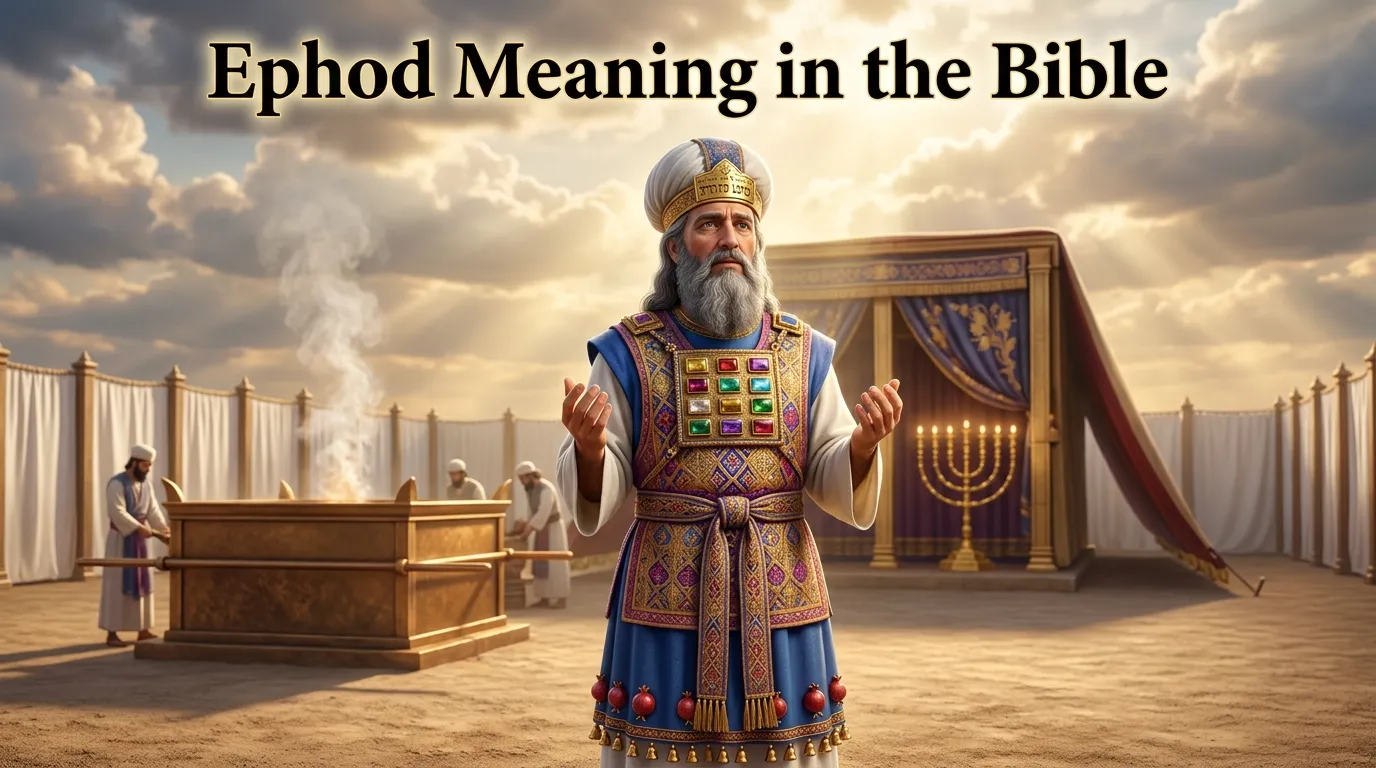
Have you ever read the Old Testament and wondered about the ephod meaning in the Bible? This special garment appears many times in Scripture.
It was not just clothing. It carried deep spiritual weight and holy purpose.
The ephod connects to worship, priesthood, and God’s guidance for His people. Many believers today still ask what this ancient object teaches us about faith and obedience.
Understanding the ephod meaning in the Bible helps us see how God cared about details, order, and holiness.
This article will walk through its Hebrew origin, its use in worship, and its spiritual lessons for Christians today.
We will look at real Bible verses, biblical figures, and common questions people ask. Let’s explore what the Bible says about ephod meaning in the Bible.
Biblical Meaning of Ephod
Featured Snippet Answer: The ephod was a sacred garment worn by the high priest in ancient Israel. It symbolized holiness, divine calling, and closeness to God. The word comes from the Hebrew term ephod, meaning a covering or vestment used in priestly service.
The ephod meaning in the Bible points to something worn close to the heart. It was made with fine linen and precious threads. God gave exact instructions for how it should look.
This shows that worship matters to God in small details, not only big gestures. The ephod was never a fashion choice. It was a tool for service and spiritual duty.
And they shall make the ephod of gold, of blue and purple and scarlet yarns, and of fine twined linen, skillfully worked. Exodus 28:6 (ESV)
Quick Reference Table
| Detail | Information |
| Hebrew Word | Ephod (אֵפוֹד) |
| First Appearance | Exodus 25:7 |
| Worn By | High Priest (Aaron and successors) |
| Materials | Gold, blue, purple, scarlet yarn, fine linen |
| Purpose | Worship, guidance, priestly identity |
| Symbolic Meaning | Holiness, divine calling, intercession |
| Related Object | Breastpiece with Urim and Thummim |
| Related Figures | Aaron, Samuel, David, Gideon |
Key Bible Verses
The Bible gives clear details about the ephod and its purpose. These verses show how God designed it with care.
You shall make a breastpiece of judgment, in skilled work… And you shall set in it four rows of stones. Exodus 28:15-17 (ESV)
And Samuel was ministering before the Lord, a boy clothed with a linen ephod. 1 Samuel 2:18 (ESV)
And David danced before the Lord with all his might. And David was wearing a linen ephod. 2 Samuel 6:14 (ESV)
These verses show the ephod was tied to worship, service, and even joyful praise. It appears across different books, from Exodus to 1 Samuel and 2 Samuel.
Biblical Context
The ephod first appears when God gives instructions to Moses for the tabernacle and priestly garments. This happens in Exodus 28, a chapter full of holy detail. God wanted His priests to look and act set apart.
Aaron, the first high priest, wore the ephod as part of his sacred duties. Later, we see other people wearing a simpler linen ephod, like young Samuel and King David. This shows two versions existed: a detailed priestly one and a plain linen one for worship.
So Aaron shall bear the names of the sons of Israel in the breastpiece of judgment on his heart, when he goes into the Holy Place, to bring them to regular remembrance before the Lord. Exodus 28:29 (NIV)
This context reminds us that the ephod meaning in the Bible is tied to representation. The priest carried the people’s names before God. It was a picture of intercession and care.
Spiritual Meaning
The spiritual significance of ephod goes beyond fabric and gold. It points to how God wants His people represented before Him. The high priest carried the tribes of Israel on his shoulders and heart.
This is a picture of grace and love. God did not want His people forgotten. He wanted someone to stand between Him and them, pointing forward to Jesus Christ as our perfect High Priest.
Consequently, he is able to save to the uttermost those who draw near to God through him, since he always lives to make intercession for them. Hebrews 7:25 (ESV)
The ephod in scripture also connects to guidance. The Urim and Thummim, kept in the breastpiece, helped leaders seek God’s will. This shows believers should always seek God’s direction, not their own understanding.
Biblical Symbolism
The ephod carries rich symbolism throughout Scripture. Each part of its design pointed to something greater than itself. Let’s look at what it represented.
- Gold threads – God’s glory and majesty
- Blue, purple, scarlet colors – royalty, heaven, and sacrifice
- Two shoulder stones – bearing the people’s burdens
- Breastpiece stones – each tribe held close to God’s heart
- Fine linen – purity and righteousness
This symbolism reminds Christians that worship should be beautiful, ordered, and set apart. It also shows that God sees every person individually, like each stone on the breastpiece. The ephod meaning in the Bible teaches us that we are never forgotten by our Creator.
He shall carry the names of the sons of Israel in the breastpiece of judgment on his heart before the Lord regularly. Exodus 28:30 (ESV)
Common Misunderstandings
Some people think the ephod was simply a robe or fancy clothing. It was much more than decoration. It held deep priestly and spiritual function tied to God’s presence.
Another misunderstanding involves Gideon. In Judges 8:27, Gideon made an ephod that later became an object of false worship for Israel. This shows a warning meaning too.
And Gideon made an ephod of it and put it in his city… And all Israel whored after it there, and it became a snare to Gideon and to his family. Judges 8:27 (ESV)
This teaches us that even holy symbols can become idols if we misuse them. The ephod itself was not evil, but wrong use of sacred things can lead hearts away from God. This is a strong caution for believers today about turning objects into idols.
Daily Christian Application
Understanding the ephod meaning in the Bible can shape how we live today. We may not wear a physical ephod, but we can carry others before God in prayer. Just like the priest bore Israel’s names, we can bear our loved ones in our hearts before the Lord.
This teaches us to pray for others daily, not just ourselves. It also reminds us that worship should be intentional and reverent, never careless. God still cares about the heart behind our actions, just like He cared about the details of the ephod.
Therefore let us draw near with confidence to the throne of grace, that we may receive mercy and find grace to help in time of need. Hebrews 4:16 (ESV)
Believers today can also seek God’s guidance the way ancient Israel sought Him through the ephod. Instead of stones, we now have the Holy Spirit leading us daily. This is a beautiful shift from symbol to living relationship with God.
Faith Takeaways
- Pray – Bring others before God’s presence daily like the priest carried Israel’s names
- Trust – Rest in Jesus as our perfect and eternal High Priest
- Reflect – Consider if anything good in your life has quietly become an idol
- Seek – Ask God for guidance through prayer and His Word, not guesswork
- Remember – God sees and values each person individually, just like the breastpiece stones
FAQs
What is the ephod meaning in the Bible? The ephod meaning in the Bible refers to a sacred garment worn by the high priest during worship and service. It symbolized holiness, divine representation, and closeness to God. It first appears in Exodus 28.
What was the biblical meaning of ephod used for? It was used for priestly duties, worship, and seeking God’s guidance through the Urim and Thummim. The high priest wore it while representing Israel before God. It showed order and holiness in worship.
Who wore the ephod in scripture? Aaron the high priest wore the detailed golden ephod. Samuel and David wore a simpler linen ephod during worship and service. Both versions connected to honoring God.
What is the spiritual significance of ephod today? It reminds Christians that God cares about His people individually and wants intercession for others. It also points forward to Jesus as our eternal High Priest. It teaches reverence in worship.
Did the ephod ever become sinful in the Bible? Yes, in Judges 8:27, Gideon’s ephod became an idol that led Israel astray. This shows how good things can be misused. It serves as a biblical warning against idolatry.
Is the ephod mentioned in the New Testament? The ephod itself is not directly named in the New Testament, but its purpose points to Jesus Christ as the perfect High Priest in Hebrews. His intercession fulfills what the ephod represented in a deeper way.
What materials made up the ephod in the Bible? It was made of gold, blue, purple, scarlet yarn, and fine twined linen. These materials reflected glory, sacrifice, purity, and royal honor. Each detail had spiritual meaning tied to worship.
Conclusion
The ephod meaning in the Bible teaches us so much about worship, holiness, and God’s heart for His people. From Aaron’s priestly garment to Samuel’s simple linen robe, this sacred object carried deep spiritual purpose. It reminds us that God notices details and cares about how we approach Him.
Today, we may not wear an ephod, but we can still carry others in prayer and seek God’s guidance daily. Through Jesus Christ, our perfect High Priest, we have even greater access to God’s presence. May this study encourage your faith and draw you closer to the Lord.
Discover More Articles
- What Is the Holy Meaning in the Bible? Full Guide
- Revelation Meaning in Bible: A Complete Bible Guide
- What Is the Joy Meaning in the Bible? Complete Guide