Many people search for the eschatology meaning bible teaches because they want to understand what happens at the end of time.
This word sounds big, but the truth behind it is simple and hopeful. Eschatology is the study of last things, including Christ’s return, judgment, and eternal life.
The Bible speaks about these events from Genesis all the way to Revelation.
Understanding eschatology in scripture helps believers live with hope instead of fear. It also helps us see God’s full plan, not just pieces of it.
This article will explain the biblical meaning of eschatology in a simple, faith-filled way.
Let’s explore what the Bible says about eschatology meaning bible.
Biblical Meaning of Eschatology
The word eschatology comes from the Greek word eschatos, meaning last or final. In the Bible, eschatology refers to teachings about the last days, the return of Jesus Christ, the resurrection, final judgment, and the new heaven and new earth. It is not just about fear or disaster.
It is about hope, restoration, and God’s promise to make all things new. The biblical meaning of eschatology centers on Christ’s victory over sin and death. Paul writes about this hope clearly.
For the trumpet will sound, and the dead will be raised imperishable, and we will be changed. 1 Corinthians 15:52 (ESV)
This verse shows that eschatology is not only about endings. It is about transformation and new beginnings through God’s power.
Featured Snippet Answer: Eschatology in the Bible means the study of last things, including Christ’s return, judgment, resurrection, and eternal life. It comes from the Greek word eschatos, meaning final or last.
Quick Reference Table
| Aspect | Meaning |
| Word Origin | Greek eschatos (last, final) |
| First Mentioned Concept | Genesis 3:15 (promise of a Redeemer) |
| Main Bible Book | Revelation |
| Key Figure | Jesus Christ |
| Core Promise | Resurrection and new creation |
| Emotional Tone | Hope, not fear |
| Opposite Idea | Hopelessness or despair |
Key Bible Verses
The Bible gives many verses that reveal the true eschatology meaning bible readers search for today. These verses show both comfort and warning.
Look, he is coming with the clouds, and every eye will see him. Revelation 1:7 (NIV)
Then we who are alive, who are left, will be caught up together with them in the clouds to meet the Lord in the air. 1 Thessalonians 4:17 (ESV)
And he will wipe away every tear from their eyes, and death shall be no more. Revelation 21:4 (ESV)
These verses connect directly to eschatology in scripture, showing that God’s plan ends in comfort, not confusion.
Biblical Context
Eschatology did not start in the New Testament. It began early in Genesis, when God promised that a Savior would crush evil. The prophets continued this theme, speaking of a coming Messiah and a future kingdom.
Daniel, Isaiah, and Ezekiel wrote about visions of the future. Jesus expanded on this teaching directly.
But concerning that day and hour no one knows, not even the angels of heaven, nor the Son, but the Father only. Matthew 24:36 (ESV)
This shows that while timing is hidden, the promise is certain. The spiritual significance of eschatology is rooted in trust, not calculation.
Spiritual Meaning
The spiritual meaning of eschatology is deeply tied to hope and faith. It reminds believers that history is moving toward a purpose, not spinning in circles. God is not distant from time; He is guiding it.
This teaching encourages holy living, because believers know Christ will return. It also strengthens prayer and dependence on the Holy Spirit.
Therefore, since we are receiving a kingdom that cannot be shaken, let us be thankful. Hebrews 12:28 (ESV)
The biblical meaning of eschatology is not meant to scare people. It is meant to prepare hearts for grace, transformation, and eternal life with God.
Biblical Symbolism
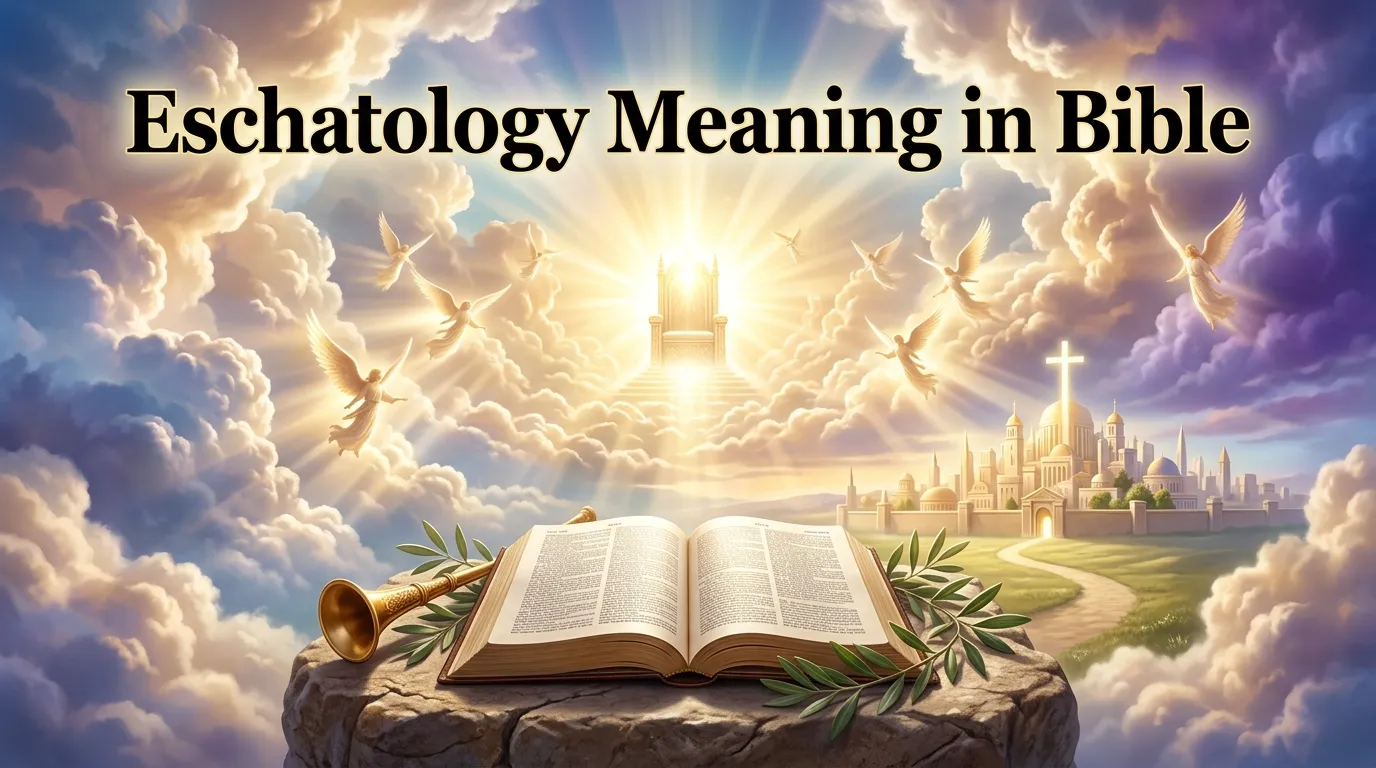
The Bible uses rich symbols to describe eschatology. These symbols are not random; they carry deep spiritual truth.
- Trumpet – announcement of Christ’s return
- Clouds – God’s glory and presence
- New Jerusalem – perfect fellowship with God
- Lamb – Jesus as sacrifice and King
- White robes – righteousness given through Christ
Blessed are those who are invited to the marriage supper of the Lamb. Revelation 19:9 (ESV)
This symbolism strengthens the eschatology in scripture theme of celebration after struggle. God’s ending is always a wedding, not just a war.
Common Misunderstandings
Many people think eschatology is only about fear, fire, and destruction. This is a common misunderstanding of the eschatology meaning bible actually teaches. The Bible does include warnings, but its main goal is hope.
Some also believe end-times teaching is meant to predict exact dates. Jesus corrected this idea directly, saying no one knows the exact hour. Others assume eschatology only applies to Revelation, but it appears throughout Scripture, from Genesis promises to Paul’s letters.
Understanding this correctly protects believers from unnecessary fear. It also protects them from ignoring the topic completely.
Daily Christian Application
Believers can apply eschatology in practical, everyday ways. It is not just a theory for theologians; it shapes daily choices.
Living with eschatological hope means choosing integrity even when no one is watching. It means forgiving others quickly, because life is short and eternity is long. It also means serving others with love, since Jesus taught that our actions matter for eternity.
So then, my beloved, be steadfast, immovable, always abounding in the work of the Lord. 1 Corinthians 15:58 (ESV)
This verse connects eschatology directly to daily faithfulness. The spiritual significance of eschatology is seen in how we treat people today, not just in future events.
Faith Takeaways
- Pray for wisdom to understand God’s timing without fear.
- Trust that God’s promises about the future are certain.
- Reflect on how eternity should shape today’s choices.
- Seek the Holy Spirit’s guidance in daily decisions.
- Remember that Christ’s return brings hope, not despair.
FAQs
1. What is the simple eschatology meaning bible teaches? Eschatology means the study of last things in the Bible, including Christ’s return, judgment, resurrection, and the new creation. It focuses on hope and God’s final restoration of all things.
2. Where does eschatology first appear in scripture? The first hint of eschatology appears in Genesis 3:15, where God promises a Redeemer who will defeat evil. This promise unfolds fully through the rest of the Bible.
3. Is eschatology only found in Revelation? No, eschatology in scripture appears in many books, including Daniel, Isaiah, Matthew, and 1 Thessalonians. Revelation simply gives the fullest picture of these final events.
4. What is the spiritual significance of eschatology for believers today? The spiritual significance of eschatology is that it builds hope, encourages holy living, and reminds believers that God is in control of history. It motivates faithful daily living.
5. Does the Bible give an exact date for the end times? No, Jesus clearly said no one knows the day or hour, not even angels. Believers are called to stay watchful and faithful instead of predicting dates.
6. What is the biblical meaning of eschatology in simple words? The biblical meaning of eschatology is simply God’s plan for how history ends, centered on Jesus Christ’s return and the renewal of all creation.
7. How should Christians respond to eschatology teachings? Christians should respond with hope, prayer, and faithful living rather than fear. Eschatology is meant to encourage trust in God’s promises.
Conclusion
The eschatology meaning bible reveals is full of hope, not fear. It shows that God has a plan, and that plan ends in restoration, joy, and eternal life with Him. From Genesis to Revelation, this theme reminds believers that history is moving toward a beautiful purpose.
As you reflect on eschatology in scripture, let it strengthen your faith rather than create anxiety. Trust the One who holds the future in His hands. His promises are certain, and His love never fails.
Discover More Articles
- What Is the Holy Meaning in the Bible? Full Guide
- Revelation Meaning in Bible: A Complete Bible Guide
- What Is the Joy Meaning in the Bible? Complete Guide

I’m Nicholas Sparks, and storytelling has always been my passion. Through TheBiblimeaning, I share insights about my books, unforgettable characters, romance, emotions, and the deeper meanings behind my stories. This platform brings readers closer to my writing journey, latest releases, and the inspiration that shapes every novel I create.