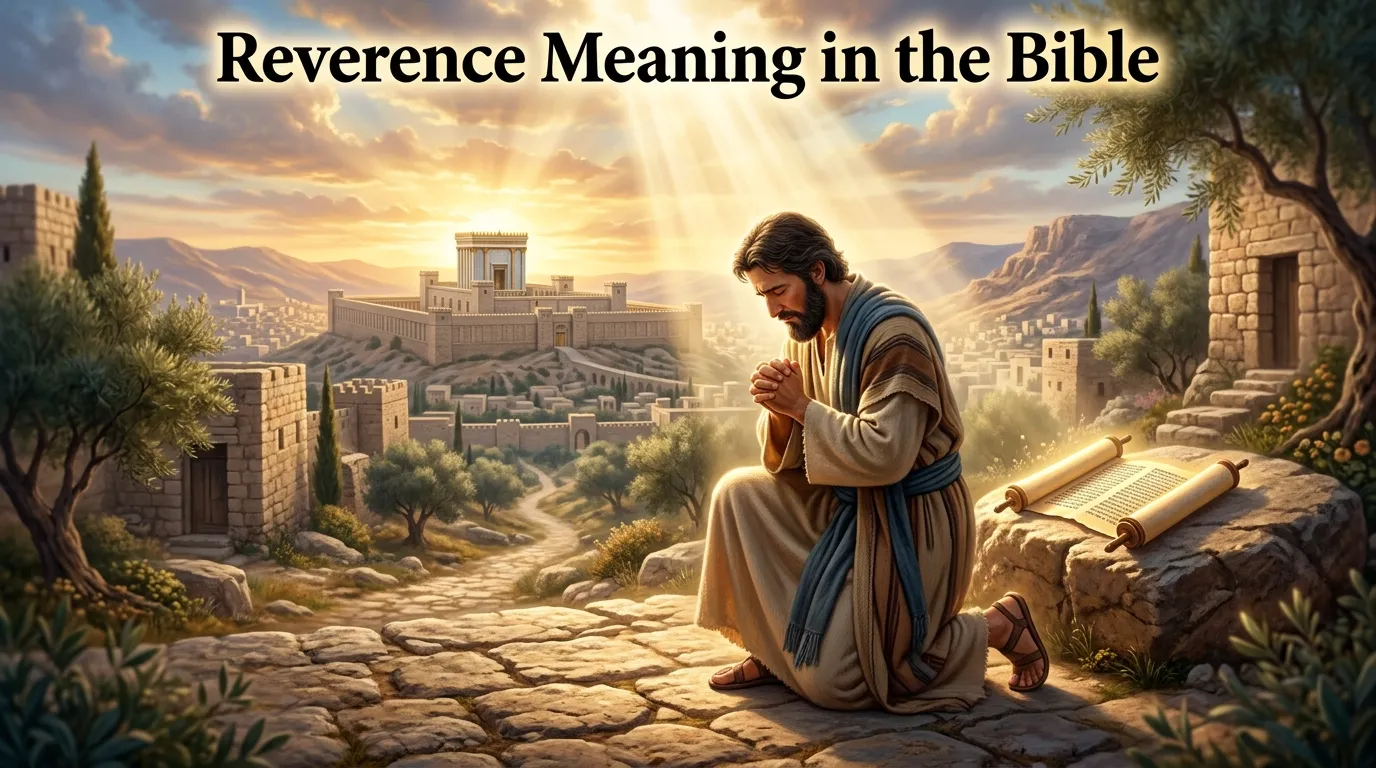
Have you ever felt a deep sense of awe when you think about God? That feeling has a name in Scripture.
It is called reverence. Many people ask what the reverence meaning in the Bible truly is, and the answer is richer than simple respect.
Reverence is a holy mix of love, fear, and honor toward God. It shapes how believers pray, worship, and live each day.
The Bible speaks of reverence again and again, from Genesis to Revelation. It is tied closely to faith, the Holy Spirit, and a transformed heart.
This article will walk you through the full biblical meaning of reverence, its Hebrew and Greek roots, key verses, and how you can live it out today.
Let’s explore what the Bible says about reverence meaning in the Bible.
Biblical Meaning of Reverence
Featured Snippet Answer: The reverence meaning in the Bible refers to a deep sense of awe, honor, and holy fear toward God. It is not fear of punishment but a loving respect for His power, holiness, and goodness. Reverence leads believers to worship, obey, and trust God with humble hearts.
In Hebrew, the word most linked to reverence is yirah (יִרְאָה), often translated as fear of the Lord. This is not terror. It is awe that draws you closer to God, not away from Him.
In Greek, the New Testament uses phobos (φόβος) and eulabeia (εὐλάβεια), which mean reverent fear or godly respect. Both words point to a heart that honors God above all else.
The first appearance of this idea is in Genesis 22:12, when Abraham showed reverence by trusting God fully, even in a hard test. This moment set the pattern for true reverence in scripture throughout the Bible.
Reverence is more than a feeling. It is a response. It shows up in worship, obedience, and daily choices.
reverence meaning in the bible
In the Bible, reverence means deep respect, honor, and awe toward God. It is more than fear. It shows that we know God is holy and worthy of our praise. Reverence shapes how we speak, worship, and live. Psalm 111:10 links the fear of the Lord with wisdom. This shows that true reverence helps us live with care and trust. It also means giving God first place in our lives. When we revere God, we do not treat Him as common or ignore His Word. We honor Him with both our hearts and our actions.
Bible Verse: “The fear of the LORD is the beginning of wisdom.” — Psalm 111:10
revere meaning in the bible
To revere God means to honor Him with deep respect and awe. The Bible teaches that God is holy, powerful, and worthy of honor. To revere Him is to take His Word seriously and seek to obey Him. Deuteronomy 10:12 calls God’s people to fear the Lord, walk in His ways, love Him, and serve Him. This shows that reverence is not only a feeling. It should affect the way we live. When we revere God, we recognize His greatness and respond with humble faith, loving obedience, and sincere worship.
Bible Verse: “And now, Israel, what does the LORD your God require of you?” — Deuteronomy 10:12
reverence definition bible
A simple reverence definition in the Bible is deep honor and awe toward God. It means seeing Him as holy and treating Him with the respect He deserves. Reverence can lead us to worship, obey, and trust Him. Leviticus 19:30 connects reverence for God with keeping His commands. This helps us see that biblical reverence is not empty words or outward acts. It reaches into daily life. We show reverence when we honor God’s name, respect His Word, love others, and choose what is right even when no one is watching.
Bible Verse: “You shall keep my Sabbaths and reverence my sanctuary: I am the LORD.” — Leviticus 19:30
what does it mean to reverence god
To reverence God means to honor Him with deep awe, love, and respect. It means knowing that God is holy and that His ways are good. Reverence also affects our choices. Ecclesiastes 12:13 teaches that fearing God and keeping His commands are central to a faithful life. This does not mean living in panic. Instead, it means giving God the honor He deserves. A person who reverences God listens to His Word, seeks to obey Him, and trusts His wisdom. Reverence helps turn faith into a way of life.
Bible Verse: “Fear God and keep his commandments, for this is the whole duty of man.” — Ecclesiastes 12:13
reverence meaning bible
The reverence meaning in the Bible points to honor, awe, and respect for God. It begins with knowing who God is. He is holy, just, loving, and worthy of worship. Hebrews 12:28 calls believers to worship God with reverence and awe. This shows that reverence belongs in both worship and daily life. It is not about putting on a show. It is a sincere response to God’s greatness. When we hold God in high honor, we become more careful about our words, choices, and treatment of others.
Bible Verse: “Let us offer to God acceptable worship, with reverence and awe.” — Hebrews 12:28
reverence meaning in bible
In the Bible, reverence means giving God the honor and respect that belong to Him. It includes awe before His holiness and a willing heart that follows His ways. Malachi 1:6 speaks of the honor a son gives to his father and a servant gives to his master. The passage then asks where God’s honor is. This gives a clear picture of reverence: God should not receive careless or empty honor. True reverence comes from the heart and shows itself through worship, obedience, gratitude, and respect for His holy name.
Bible Verse: “If then I am a father, where is my honor?” — Malachi 1:6
reverence bible definition
A Bible definition of reverence is deep honor, awe, and respect toward God because of who He is. Biblical reverence is closely tied to worship and obedience. Psalm 5:7 shows David approaching God with reverence because of God’s steadfast love. This is important because reverence is not only about fear. It can grow from love, trust, and wonder. We honor God because He is worthy. True reverence changes how we approach prayer, worship, Scripture, and daily choices. It helps us keep a humble heart before God and remember that our lives belong to Him.
Bible Verse: “I will bow down toward your holy temple in the fear of you.” — Psalm 5:7
Quick Reference Table
| Aspect | Meaning |
| Hebrew Root | Yirah (יִרְאָה) – awe, fear of the Lord |
| Greek Root | Phobos / Eulabeia – reverent fear, godly respect |
| First Mention | Genesis 22:12 |
| Core Meaning | Holy awe and honor toward God |
| Related Terms | Fear of the Lord, worship, holiness, humility |
| Opposite | Pride, disrespect, careless living |
| Key Figures | Abraham, Moses, Isaiah, Job, Mary |
| Symbol | Bowed head, removed sandals, silence before God |
Key Bible Verses
The spiritual significance of reverence is shown clearly through Scripture. Here are three powerful verses.
Proverbs 9:10 (NIV) The fear of the Lord is the beginning of wisdom, and knowledge of the Holy One is understanding.
Hebrews 12:28 (ESV) Let us be grateful for receiving a kingdom that cannot be shaken, and thus let us offer to God acceptable worship, with reverence and awe.
Psalm 89:7 (NIV) In the council of the holy ones God is greatly feared; he is more awesome than all who surround him.
These verses show that reverence in scripture is tied to wisdom, worship, and awe of God’s greatness.
Biblical Context
The idea of reverence runs through the whole Bible story. In the Old Testament, God asked His people to remove their sandals on holy ground, as seen in Exodus 3:5. This small act showed deep respect for God’s presence.
Moses trembled before the burning bush, yet he still drew near to listen. This is the heart of reverence meaning in the Bible: fear mixed with trust. Isaiah saw God’s glory in the temple and cried out in humility in Isaiah 6:5.
In the New Testament, reverence takes on a personal tone through Jesus Christ. Believers now approach God through grace, but still with deep honor, not casual pride. Hebrews 12:28 reminds Christians that worship must always include awe, even under grace.
The Holy Spirit helps believers grow in this holy fear. As faith deepens, reverence becomes natural, not forced.
Spiritual Meaning
The spiritual meaning of reverence points to a changed heart. When you truly know who God is, awe naturally follows. This is not about being scared of God. It is about being amazed by Him.
Reverence brings transformation. It softens pride and builds humility. Job experienced this after his suffering, saying in Job 42:5-6 (NIV), My ears had heard of you but now my eyes have seen you. Therefore I despise myself and repent in dust and ashes.
This kind of reverence leads to repentance and closeness with God, not distance. Prayer becomes deeper when reverence guides it. Worship becomes real, not routine.
The spiritual significance of reverence also connects to obedience. Those who truly revere God want to follow His ways, not out of fear of punishment, but out of love and honor.
Biblical Symbolism
Reverence often connects to physical symbols in Scripture. Bowing down, kneeling, or covering one’s face are common signs of holy fear. Removing shoes, as Moses did, symbolizes leaving behind pride before God.
Silence is another symbol of reverence. Habakkuk 2:20 (NIV) says, But the Lord is in his holy temple; let all the earth be silent before him. Silence shows that words are not always needed when standing before God’s greatness.
Light and fire also symbolize God’s holiness, which stirs reverence in those who witness it. The burning bush, the pillar of fire, and the glory cloud all point to a God worthy of deep respect. These images help believers understand reverence in scripture in a visual way.
Common Misunderstandings
Some people confuse reverence with fear of punishment. This is not correct. Biblical reverence is about awe and love, not being scared of God like an enemy.
Others think reverence means being distant or cold in worship. In truth, reverence draws people closer to God, not further away. 1 John 4:18 (NIV) reminds us, There is no fear in love. But perfect love drives out fear.
Some also believe reverence is only for church settings. But true reverence shapes daily life, decisions, and relationships. It is not limited to Sunday worship.
Lastly, some think reverence means being silent or passive in faith. Instead, reverence often leads to bold prayer and confident trust, because it flows from knowing God deeply.
Daily Christian Application
Living with reverence changes daily choices. It starts with how you begin your morning, often through prayer and Scripture reading. When you remember who God is, your whole day shifts.
Reverence shapes how you speak about God, avoiding careless or joking words about holy things. It also shapes how you treat others, since honoring God includes honoring people made in His image. Small acts, like being still before prayer, help build this holy habit.
Reverence in scripture also calls believers to obey even when it is hard, just like Abraham did. This obedience is not out of fear, but out of trust in God’s goodness. Daily reverence keeps faith strong and steady.
Faith Takeaways
- Pray with a humble and honest heart before God.
- Trust God’s plan, even when life feels uncertain.
- Reflect on God’s holiness and goodness each day.
- Seek a closer walk with the Holy Spirit through worship.
- Remember that true reverence brings peace, not fear.
FAQs
Examples of reverence in the Bible
Examples of reverence in the Bible include worshiping God, obeying His commands, honoring His name, and approaching Him with humility.
Reverence Definition Bible KJV
In the Bible KJV, reverence means showing deep honor, respect, awe, and humble devotion toward God.
Reverence meaning in Hebrew
The Hebrew idea of reverence is often linked with yare, which expresses awe, respect, and a proper fear of God.
Reverence to God verses
Bible verses about reverence to God teach believers to honor Him with worship, obedience, humility, and holy living.
Reverence to God meaning
Reverence to God means recognizing His holiness and greatness and responding to Him with sincere honor, awe, and obedience.
Fear and reverence of God Scripture
Scripture connects the fear and reverence of God with wisdom, obedience, humility, and a life that honors Him.
Importance of reverence to God
Reverence to God is important because it helps believers honor His holiness, trust His wisdom, and live with humble hearts.
How to reverence God in praye
To reverence God in prayer, approach Him with humility, honor His holiness, thank Him sincerely, and submit to His will.
Conclusion
The reverence meaning in the Bible is not about fear that pushes people away from God. It is a holy awe that draws hearts closer to Him. From Abraham’s trust to Isaiah’s vision, Scripture shows that true reverence changes how people live, pray, and worship.
As you grow in faith, let reverence shape your daily walk with God. Let it guide your prayers, your words, and your choices. When you truly understand reverence in scripture, you begin to see God not as distant, but as worthy of your deepest honor and love.
Discover More Articles
- What Is the Holy Meaning in the Bible? Full Guide
- Revelation Meaning in Bible: A Complete Bible Guide
- What Is the Joy Meaning in the Bible? Complete Guide