Jacob was the grandson of Abraham and the twin brother of Esau. His birth name came from the Hebrew word for heel because he grasped Esau’s heel at birth (Genesis 25:26). The name also carried the sense of supplanter or deceiver, fitting his early life of scheming to gain the birthright and blessing.
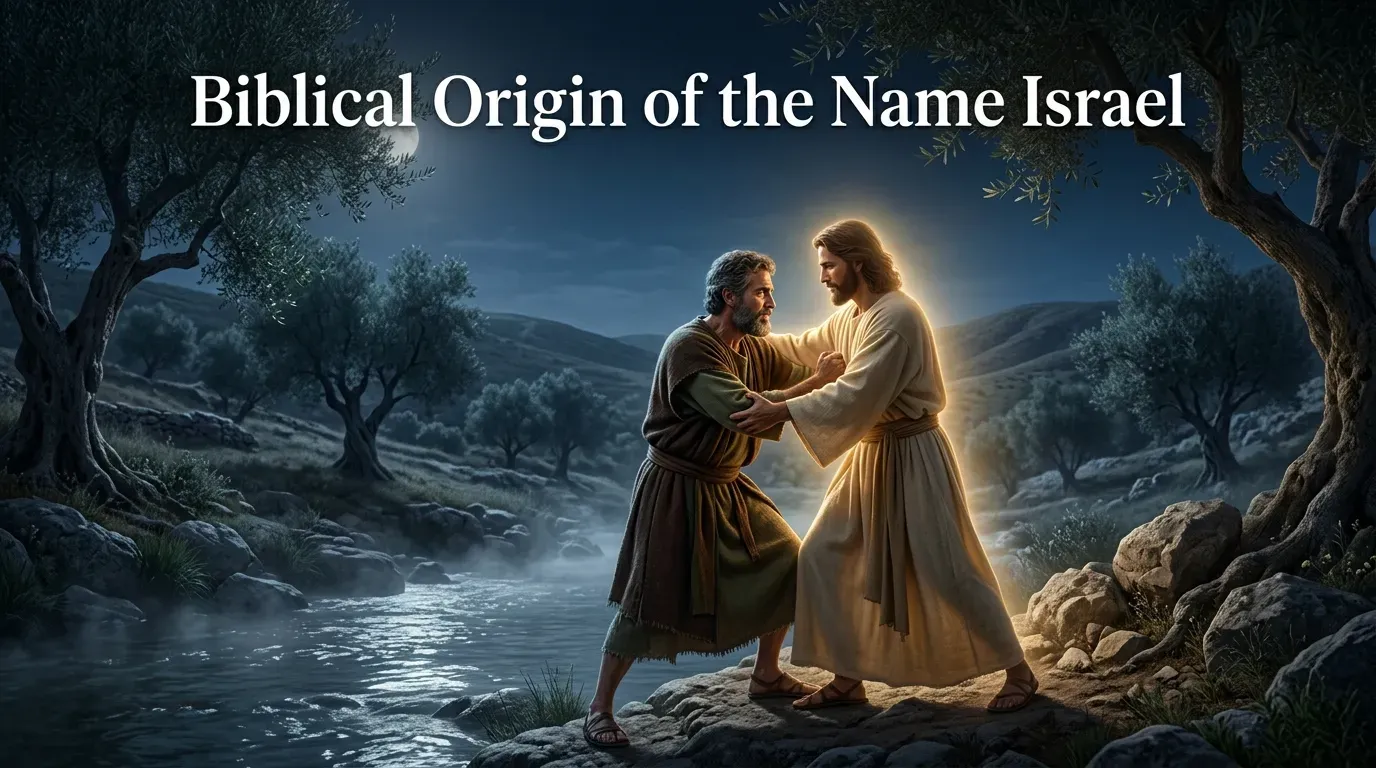
Years later, as Jacob prepared to meet Esau, he spent a night alone by the Jabbok River. A man wrestled with him until daybreak. When Jacob refused to let go without a blessing, the man said:
Your name will no longer be Jacob, but Israel, because you have struggled with God and with humans and have overcome (Genesis 32:28, NIV).
This encounter changed Jacob. The name Israel became the defining identity for him and, later, for his descendantsthe twelve tribes that formed the nation of Israel.
Hebrew Meaning of Israel
The Hebrew name is יִשְׂרָאֵל (Yisra’el or Yisrael).
Most scholars link it to the verb sara (שָׂרָה), meaning to struggle, to strive, to contend, or to wrestle, combined with El (אֵל), the common short form for God. The result is he struggles with God, God strives, or one who contends with God.
Some older or alternative readings connect it to ideas of prince or ruler (from a related root meaning to rule or be a prince) or even God is upright. The biblical text itself, however, directly explains the name through the wrestling event in Genesis 32. The play on words between Jacob’s struggle (sarita) and the new name is intentional and clear.
Different English translations reflect slight nuancesstruggled, striven, wrestled, or contendedbut the core idea remains the same: a person (and later a people) marked by real engagement with God that ends in prevailing by grace.
How the Bible Uses the Name Israel
The Bible applies Israel in layered but connected ways:
- The person: Jacob himself is repeatedly called Israel after the renaming (Genesis 35:10; 46:1–2). Both names appear side by side at times, showing the continuity of the man and the new identity God gave him.
- The people: Jacob’s twelve sons became the heads of the twelve tribes. Their descendants are called the children of Israel, the house of Israel, or simply Israel. This is the primary national identity throughout the Old Testament.
- The land: The territory promised to Abraham’s descendants is often called the land of Israel or the land of Canaan before the conquest. After the monarchy split, Israel usually referred to the northern kingdom while Judah named the southern kingdom. After the exile, the name again applied more broadly to the restored people and land.
- Spiritual Israel: In the New Testament, the term can point to the faithful remnant or, in some contexts, to those who share Abraham’s faith through Christ (Romans 9:6–8; Galatians 6:16). Context always determines the precise sense.
These uses are not contradictory. They flow from the original renaming of one man whose family became a nation living in covenant relationship with the God who renames and redeems.
Key Bible Verses Explained
Genesis 32:24–30
Jacob is left alone and wrestles until dawn. He is injured yet refuses to release his opponent without a blessing. The divine figure renames him Israel and blesses him. Jacob names the place Peniel (face of God) because he saw God and lived. The passage shows that real encounter with God involves struggle, vulnerability, and transformation. The limp that remains is a lasting reminder of grace received through dependence, not self-strength.
Genesis 35:9–12
God appears to Jacob again at Bethel, reaffirms the name Israel, and repeats the covenant promises of nationhood, kings, and land. The renaming is not a one-time event but is confirmed as part of God’s ongoing purpose.
Hosea 12:3–4
The prophet looks back: In the womb he grasped his brother’s heel; as a man he struggled with God. He struggled with the angel and overcame him; he wept and begged for his favor. Hosea uses the story to call the later nation of Israel back to genuine seeking of God rather than empty ritual. The original struggle is held up as a model of earnest dependence.
Romans 9:6
It is not as though God’s word had failed. For not all who are descended from Israel are Israel. Paul distinguishes physical descent from the spiritual reality of belonging to God’s people by faith and promise. The name continues to carry covenant significance even as its application is clarified in light of Christ.
Each verse ties the meaning of the name to relationship with Godstruggle that leads to blessing, identity rooted in divine initiative, and a people defined by more than bloodline.
Spiritual Meaning and Practical Application
The name Israel reminds us that authentic faith often includes wrestling. Jacob did not receive a new name by pretending everything was fine or by outsmarting God. He clung to the One who could bless him even while injured and afraid.
For new believers and seekers, this means God is not offended by honest questions, doubts, or desperate prayers. He meets people in the dark nights of the soul and gives a new identity rooted in His purpose rather than past failures.
For mature Christians, the name challenges superficial religion. The people of Israel repeatedly struggled with God through idolatry and disobedience, yet God remained faithful to His covenant. The same God invites persistent, honest engagement today rather than polished performance.
Practically, this looks like bringing real strugglesfear, grief, unanswered prayer, moral failureinto God’s presence instead of hiding them. It means receiving the identity God gives (beloved, chosen, forgiven) even when old patterns of Jacob still try to surface. And it means living as part of a larger story: the people of God who continue to walk with a limp yet press on because His blessing is stronger than our weakness.
Common Misunderstandings
Some treat the name as purely political or ethnic and miss its spiritual root in personal encounter with God. Others spiritualize it so completely that they erase the ongoing significance of the Jewish people and the land promises in Scripture. The Bible holds both the historical people and the spiritual reality together without contradiction.
Another misunderstanding is that struggling with God means perpetual doubt or defiance. In the biblical picture, the struggle ends in prevailing through clinging to God and receiving His blessing. It is not endless combat; it is transformation through dependence.
FAQs
What is the spiritual meaning of Israel?
The spiritual meaning of Israel is a life of faith, perseverance, and a close relationship with God.
What was Israel’s old name in the Bible?
Israel’s old name was Jacob before God changed it after he wrestled with the angel.
What is the meaning of Israel in Hebrew?
In Hebrew, Israel means “one who struggles with God” or “God prevails.”
What is the meaning of Israel in Greek?
In Greek, Israel is written as Israēl and carries the same meaning as the Hebrew name.
What is the meaning of the name Israel in Islam?
In Islam, Israel refers to Prophet Yaqub (Jacob), whose descendants are known as the Children of Israel.
What is the full meaning of Israel?
The full meaning of Israel is “one who struggles with God” or “God rules and prevails.”
What is the meaning of Israel in Arabic?
In Arabic, Israel (إسرائيل) refers to Prophet Yaqub and reflects the same biblical meaning.
What is the meaning of Israel in Aramaic?
In Aramaic, Israel retains the meaning of one who struggles with God or one ruled by God.
Conclusion
The meaning of Israel in the Bible is far more than an etymology. It is the story of a man who met God in the dark, refused to let go, and walked away with a new name, a limp, and a blessing. That same name became the identity of a nation chosen to carry God’s revelation to the world.
Whether you are just beginning to explore faith or have walked with God for years, the name invites the same response Jacob gave: hold on. Bring your real struggles. Trust the God who renames, transforms, and keeps His promises. In Christ, the ultimate Israelite and the fulfillment of every covenant hope, every believer is invited into that same enduring relationshipone marked not by perfection, but by persistent trust in the God who prevails.
Discover More Post
- Worship Meaning in the Bible: A Simple Biblical Guide
- Covenant Meaning in the Bible: Biblical Guide
- Exalt Meaning in the Bible Explained Simply
- Passover Meaning in the Bible: God’s Powerful Message