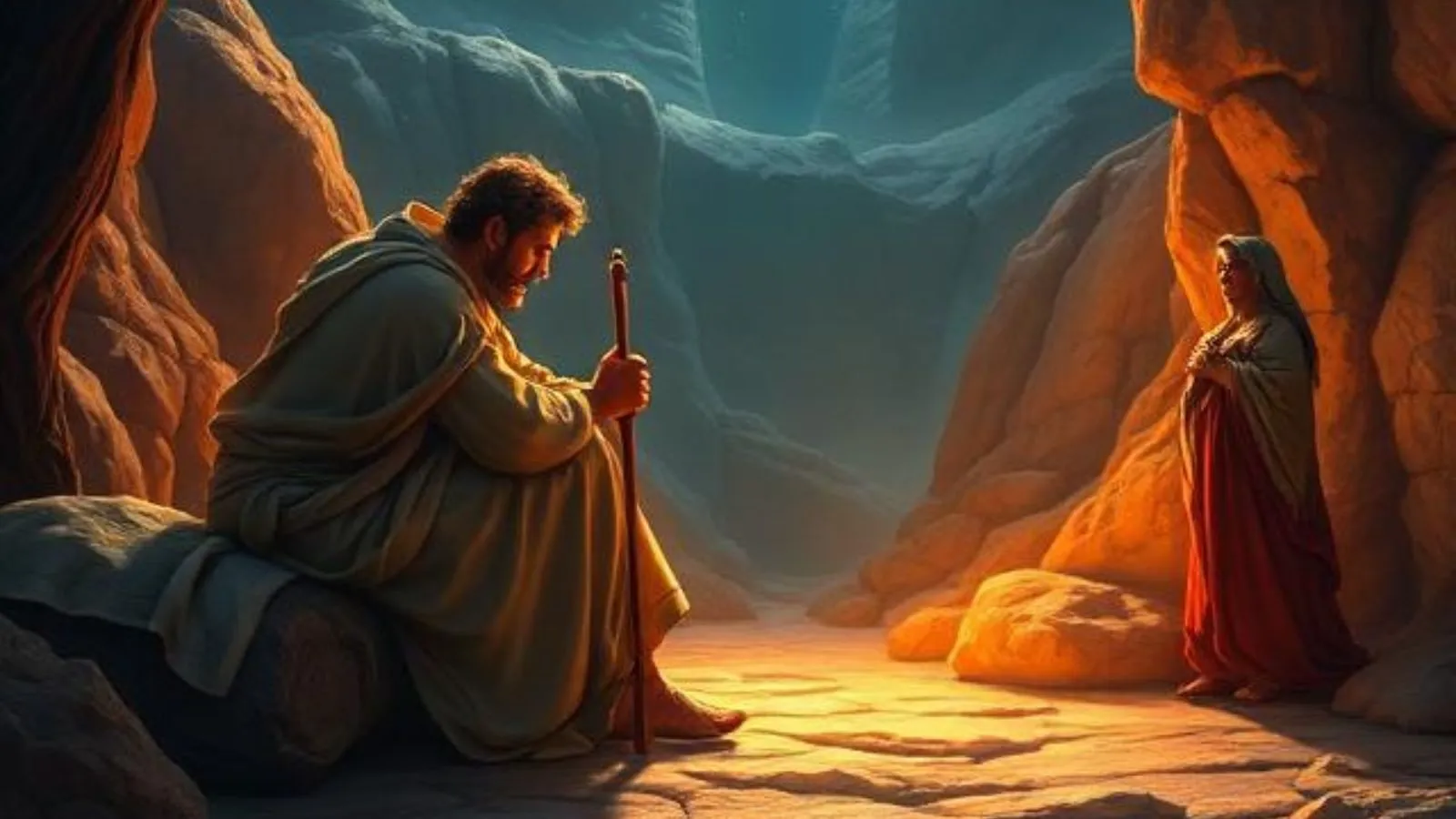
Have you ever felt forgotten? Like you were doing everything right, and somehow life still fell apart? Most of us know that feeling.
And honestly, that’s exactly where the story behind joseph meaning in the bible begins with a young man thrown into a pit by his own brothers.
The name Joseph carries more weight than most people realize. It’s not just a name on a family tree or a colorful coat in a Sunday school story.
It’s a name wrapped in divine promise, suffering, and an almost impossible kind of faith. The biblical meaning of joseph reaches far deeper than the person who wore it first.
Biblical Meaning of Joseph in the Bible
Joseph comes from the Hebrew name Yosef (יוֹסֵף), rooted in the verb yasaf, which means to add or may He add. Some scholars also connect it to asaph, meaning to take away. So right from the start, the name holds two movements addition and removal. God adds blessings. God removes shame. Both are present in Joseph’s life in powerful ways.
The name first appears in Genesis 30:24, when Rachel gives birth to her son after years of barrenness. She says, May the Lord add to me another son! (Genesis 30:24, ESV). She named him Joseph a prayer stitched into a name. A mother’s hope turned into identity.
That’s already remarkable. This child was born as an answered prayer, and his very name was a declaration of faith.
Quick Reference Table
| Aspect | Details |
| Hebrew/Greek Root | Hebrew: Yosef (יוֹסֵף) from yasaf, meaning to add or may He add |
| First Biblical Appearance | Genesis 30:24 Rachel names her son after years of barrenness |
| Core Biblical Meaning | God adds blessing; He removes shame and replaces it with purpose |
| Key Bible Verses | Genesis 30:24; Genesis 39:2; Psalm 105:17–19; Genesis 50:20 |
| Connected Biblical Figures | Joseph (son of Jacob), Joseph (husband of Mary, father of Jesus) |
| Spiritual Symbolism | Divine providence, suffering redeemed, dreams fulfilled, favor restored |
| Dream/Vision Meaning | Calling to interpret, guide, and lead through Spirit-given insight |
| Faith Lesson | What others mean for harm, God turns for good trust the process |
Spiritual Significance of Joseph in Christian Life
The spiritual significance of joseph in the bible goes far beyond one man’s story. Joseph’s life is a mirror. When you look at it carefully, you see a pattern that God seems to love choosing the unlikely, putting them through fire, and bringing them out refined.
This is why so many theologians have seen Joseph as a type of Christ. He was betrayed by those closest to him. Sound familiar? The spiritual significance of joseph echoes the gospel itself.
Arti nama yusuf dalam alkitab
The name Yusuf is the Indonesian form of Joseph. In the Bible, Joseph was the son of Jacob and Rachel. Rachel named him Joseph because she hoped God would give her another son. The name points to the idea of “He will add” or “God will add.” His story shows how God can use a hard life for a good purpose. Joseph faced loss, slavery, and prison, yet God stayed with him. His life in Genesis 30:22–24 shows that his name has a deep link to God’s gift and faithfulness.
Bible Verse: “The LORD shall add to me another son.” — Genesis 30:24
Joseph meaning in bible
In the Bible, Joseph means “He will add” or “God will add.” The name comes from the story of Rachel, who had longed for a child. When God gave her Joseph, she saw him as a gift from God. Genesis 30:23–24 gives the reason for his name. Joseph later became a key figure in Egypt. God used him to save many people from hunger. His story teaches that a name can remind us of God’s gifts and His work in our lives.
Bible Verse: “God has taken away my reproach.” — Genesis 30:23
Meaning of joseph in the bible
The meaning of Joseph in the Bible is tied to addition, increase, and God’s gift. Rachel gave Joseph this name after God answered her prayer for a son. The name comes from the Hebrew name Yosef. Joseph’s life also gives the name a rich biblical setting. He did not have an easy path, but God was with him through every trial. Genesis 39:2 says that the LORD was with Joseph. His story reminds us that God can work through pain, delay, and change.
Bible Verse: “The LORD was with Joseph.” — Genesis 39:2
Arti yusuf dalam alkitab
Dalam Alkitab, Yusuf adalah nama yang sama dengan Joseph. Arti nama ini berkaitan dengan “God will add” atau “He will add.” Rachel memberi nama Yusuf setelah Tuhan memberinya seorang anak. Kisah ini ada dalam Genesis 30:22–24. Yusuf kemudian menjadi seorang pemimpin di Mesir. Tuhan memakai hidupnya untuk menolong banyak orang saat masa kelaparan. Karena itu, nama Yusuf tidak hanya memiliki arti tentang pertambahan. Kisah Yusuf juga mengingatkan kita bahwa Tuhan dapat memakai hidup seseorang untuk membawa berkat bagi banyak orang.
Bible Verse: “God has taken away my reproach.” — Genesis 30:23
Joseph biblical meaning
The biblical meaning of Joseph points to God adding or giving more. Rachel chose this name after God answered her prayer and gave her a son. The reason is clearly shown in Genesis 30:24. Joseph’s story gives the name an even deeper meaning. He suffered because of the actions of his brothers, yet God did not leave him. Later, Joseph rose to a place of power in Egypt. His life shows that God can bring good from deep trials. His story is told through Genesis 37–50.
Bible Verse: “God meant it for good.” — Genesis 50:20
Biblical meaning of joseph
The biblical meaning of Joseph is “He will add” or “God will add.” The name first appears with Joseph, the son of Jacob and Rachel. Rachel connected his birth with God giving her another child, as recorded in Genesis 30:24. Joseph later became known for his wisdom, faith, and trust in God. He went from being sold by his brothers to serving as a ruler in Egypt. His story teaches that God can guide a person through suffering and use that life for a greater purpose.
Bible Verse: “The LORD was with Joseph.” — Genesis 39:21
Related Biblical Concepts Table
| Concept | Meaning | Key Verse | Lesson |
| Joseph | God adds divine increase through hardship | Genesis 50:20 | Your suffering is not wasted; God turns it for good |
| Providence | God’s sovereign hand guiding all events | Romans 8:28 | Nothing in your life is outside of God’s reach |
| Forgiveness | Releasing others from debt, as God releases us | Ephesians 4:32 | Bitterness keeps you in the pit; forgiveness lifts you out |
| Dreams & Visions | God speaking direction and warning through sleep | Joel 2:28 | Pay attention God still speaks through dreams today |
| Favor | Supernatural blessing and open doors from God | Proverbs 3:4 | Favor isn’t luck it’s God’s grace working in visible ways |
Dream and Real Life Meaning of Joseph
The spiritual significance of joseph shows up in a very specific way when it comes to dreams. If you’ve had a dream involving the name Joseph, or even a dream about colorful clothing, pits, or being falsely accused pay attention.
In peaceful dreams, Joseph’s presence often speaks of God’s provision coming. Something long-delayed is about to arrive. A breakthrough is near. If the dream feels warm, reassuring, and full of color that’s often a sign of hope being restored.
Don’t dismiss what God might be saying in the night hours. Joseph didn’t. And it changed history.
Faith Takeaways
- Pray before dismissing any hard season God may be setting up your story just like He set up Joseph’s.
- Trust that what looks like a pit is often a preparation. God’s timing is never wrong, even when ours feels broken.
- Reflect on Genesis 50:20 and ask yourself: Where in my life am I choosing bitterness instead of believing God is working?
- Seek God in the ordinary, not just the miraculous. Joseph found favor in a prison cell, not just a palace.
- Remember that your name your story is also being written by a God who adds and never wastes. The biblical meaning of joseph is your reminder that God is still adding to your life, even now.
FAQs
Spiritual meaning of the name Joseph
The name Joseph carries a spiritual meaning of increase and reminds believers of God’s faithfulness, favor, and purpose.
Story of Joseph in the Bible summary
Joseph’s story in Genesis shows how God used betrayal, hardship, and forgiveness to fulfill His purpose and save many lives.
Joseph meaning in English
Joseph means “God will increase” or “He will add,” expressing the idea of God adding or increasing something.
Meaning of Joseph in Hebrew
Joseph comes from the Hebrew name Yosef (יוֹסֵף), meaning “He will add” or “God will increase.”
Joseph name characteristics
Joseph is often associated with wisdom, faithfulness, patience, forgiveness, leadership, and trust in God through hardship.
Joseph meaning in Arabic
Joseph is known in Arabic as Yusuf (يوسف), a name linked with the biblical Joseph and commonly understood as “God will increase.”
Another name for Joseph in the Bible
Joseph was also given the Egyptian name Zaphenath-Paneah by Pharaoh in Genesis 41:45.
Joseph meaning in Greek
Joseph is written as Iōsēph (Ἰωσήφ) in Greek and carries the meaning “He will add” or “God will increase.”
More Searched Questions About the Meaning of Joseph in the Bible
What does the Bible itself say when Rachel names Joseph?
The naming is told in two verses, and they should be heard whole: “And she conceived, and bare a son; and said, God hath taken away my reproach: And she called his name Joseph; and said, The LORD shall add to me another son” (Genesis 30:23-24). Rachel’s own words hold two movements at once. God hath taken away my reproach answers her years of barrenness and shame among the wives; the name Joseph itself carries the forward prayer, the LORD shall add. In Hebrew the two thoughts play on two near sounding roots: asaf, to take away or gather in, and yasaf, to add or increase. The verse lets both stand, and the name is born carrying both: a thanksgiving for what God had removed, and a request for what He might yet add.
Teachers therefore explain the name Joseph, Hebrew Yosef, from yasaf: “he will add”, or with God understood as the doer, “may He add” and “God will add”. That explanation is sound as far as it goes, and it is the one name books print. But honest teaching keeps the naming verse in charge of the derivation. The Bible does not settle the name on the adding root alone and discard the other; the mother who gave the name explained it herself in the same breath, in both directions at once. Readers who meet the name flattened to a single slogan, “God will increase”, are meeting only half of the words the text actually gives at his birth.
What was Joseph’s coat of many colours, and why did it matter?
The coat enters the story in one sentence: “Now Israel loved Joseph more than all his children, because he was the son of his old age: and he made him a coat of many colours” (Genesis 37:3). Whatever its exact making, the coat was a public garment of favour. The beloved son wore his father’s special love where every brother had to look at it daily, and Genesis says the brothers saw that their father loved him more and hated him, and could not speak peaceably unto him (Genesis 37:4). The same coat ends the story’s first act: stripped from Joseph before the pit, it was carried back to Jacob dipped in blood, “And they took Joseph’s coat, and killed a kid of the goats, and dipped the coat in the blood” (Genesis 37:31), and the father who had given it in love read it as the evidence of his son’s death.
A wording note belongs here, because searches run on the phrase itself. “Coat of many colours” is the King James Bible’s rendering of the Hebrew ketonet passim, and it follows the ancient Greek translation, which describes a many coloured garment. The Hebrew words themselves point to a special long robe, and teachers divide over the picture: some keep the ornamented, many coloured coat of the old translations, others describe a long sleeved robe reaching to the hands and feet, the dress of a son of rank rather than of a working shepherd. Neither picture should be printed as the certain one. What the narrative itself makes certain is the coat’s meaning inside the family: it declared the father’s favour, and that declaration, more than any colour, is what the story uses.
What did Joseph’s two dreams mean, and who understood them?
Joseph dreamed twice as a boy, and Genesis gives both dreams in his own telling. The first: “For, behold, we were binding sheaves in the field, and, lo, my sheaf arose, and also stood upright; and, behold, your sheaves stood round about, and made obeisance to my sheaf” (Genesis 37:7). The second: “Behold, I have dreamed a dream more; and, behold, the sun and the moon and the eleven stars made obeisance to me” (Genesis 37:9). No interpreter was needed, and none was called. His brothers read the dreams instantly: “Shalt thou indeed reign over us? or shalt thou indeed have dominion over us? And they hated him yet the more for his dreams, and for his words” (Genesis 37:8). His father read them just as fast, and rebuked him with the meaning already plain in his mouth: “Shall I and thy mother and thy brethren indeed come to bow down ourselves to thee to the earth?” (Genesis 37:10).
The dreams were fulfilled in Egypt in the same picture language, when the brothers came down to buy corn: “And Joseph was the governor over the land, and he it was that sold to all the people of the land: and Joseph’s brethren came, and bowed down themselves before him with their faces to the earth” (Genesis 42:6). This is how dreams work in Joseph’s story, and the pattern matters for every modern dream question built on him: the dreams were given to a named person, their meaning was understood inside the account itself, and their truth was shown by the event, not worked out afterwards from a list of symbols. Joseph never treats his boyhood dreams as a technique to teach, and Genesis gives no reader a method to copy.
For how much was Joseph sold, and how does Genesis 50:20 judge what his brothers did?
The sale is recorded with the price in the verse: “Then there passed by Midianites merchantmen; and they drew and lifted up Joseph out of the pit, and sold Joseph to the Ishmeelites for twenty pieces of silver: and they brought Joseph into Egypt” (Genesis 37:28). Twenty pieces of silver was the price set on a seventeen year old brother, drawn up out of the pit he had begged in and carried down to a country where no one knew his name. The verse names Midianites and Ishmeelites in one breath, as the text stands; the traders who took him to Egypt are the account’s own concern, and the price, not the caravan’s composition, is the detail Genesis fixes.
The story’s own verdict on the sale comes decades later, from Joseph’s mouth, after Jacob’s death, when the brothers feared the reckoning had only been postponed: “But as for you, ye thought evil against me; but God meant it unto good, to bring to pass, as it is this day, to save much people alive” (Genesis 50:20). The verse holds both truths without softening either. What the brothers did is named evil, in their intent; what God did with it is named good, in its outcome, the saving of many lives through the famine. Joseph does not call the evil good, and he does not call himself the judge of it; the same chapter has him ask whether he is in the place of God (Genesis 50:19). Forgiveness here is not amnesia about the pit. It is the refusal to repay it, grounded in seeing the whole road.
What did Joseph tell Pharaoh about who interprets dreams?
Pharaoh sent for the prisoner because he had heard a report: “I have heard say of thee, that thou canst understand a dream to interpret it.” Joseph’s first words in the palace correct the report before he hears a single dream: “And Joseph answered Pharaoh, saying, It is not in me: God shall give Pharaoh an answer of peace” (Genesis 41:16, the exchange standing at Genesis 41:15-16). Only then does he interpret, and his interpretation begins the same way: “The dream of Pharaoh is one: God hath shewed Pharaoh what he is about to do” (Genesis 41:25). The dreams of the kine and the ears were two tellings of one warning, seven years of plenty and seven of famine, given to the one man in Egypt whose hand could store against them.
Joseph explains the doubling with the same plainness: “And for that the dream was doubled unto Pharaoh twice; it is because the thing is established by God, and God will shortly bring it to pass” (Genesis 41:32). Everything here runs against the idea of dream interpretation as a human skill. The interpreter disowns the gift twice, ascribes the showing and the meaning to God both times, and speaks to a king about a public matter of harvests and famine, not about private fortunes. Nothing in Genesis 41 gives steps, symbols or promises by which later readers could decode their own dreams, and this site’s teaching on dreams says the same in full: Scripture gives the meaning with the dream, or it does not give the dream a meaning the reader may claim.
What does Zaphnath-paaneah mean, and what do the names of Joseph’s sons mean?
Pharaoh renamed his new governor in the same act that married him: “And Pharaoh called Joseph’s name Zaphnath-paaneah; and he gave him to wife Asenath the daughter of Poti-pherah priest of On. And Joseph went out over all the land of Egypt” (Genesis 41:45). The name is Egyptian, not Hebrew, and its meaning is honestly debated. Teachers’ glosses run from “revealer of secrets” to renderings built out of Egyptian words for the god speaking and life; none of them can be proved from the text, because Genesis, unusually, does not explain this name. It should be held as what it is: the throne name of Joseph in Egypt, its sense discussed by scholars and settled by no verse. (The King James Bible prints the name exactly as quoted here, Zaphnath-paaneah, one word, with no e after Zaphn.)
With his sons, Genesis does the opposite and explains everything. “And Joseph called the name of the firstborn Manasseh: For God, said he, hath made me forget all my toil, and all my father’s house. And the name of the second called he Ephraim: For God hath caused me to be fruitful in the land of my affliction” (Genesis 41:51-52). Manasseh carries the forgetting of the pit and the prison; Ephraim carries fruitfulness in the very land where he had suffered. These two verses also answer the plain family questions the searches ask: Joseph had one wife, Asenath, given him by Pharaoh, and by her two sons, born before the famine years came. The names are the father’s own sermon on his road: the pain no longer ruling him, and the place of pain become the place of increase.
Why did Joseph charge his brothers to carry his bones out of Egypt?
Joseph died in Egypt, honoured and old, and his last recorded words look past Egypt entirely: “And Joseph said unto his brethren, I die: and God will surely visit you, and bring you out of this land unto the land which he sware to Abraham, to Isaac, and to Jacob. And Joseph took an oath of the children of Israel, saying, God will surely visit you, and ye shall carry up my bones from hence” (Genesis 50:24-25). The governor of Egypt did not count Egypt his home. His faith was fixed on the promise made to his fathers, and the bones were its pledge: when the family went up to the land, he would go up with them, though only his coffin made the journey in his generation.
The oath was kept across centuries. At the exodus, “Moses took the bones of Joseph with him: for he had straitly sworn the children of Israel, saying, God will surely visit you; and ye shall carry up my bones away hence with you” (Exodus 13:19), and the letter to the Hebrews files the charge among the acts of faith: “By faith Joseph, when he died, made mention of the departing of the children of Israel; and gave commandment concerning his bones” (Hebrews 11:22). The journey ends in Joshua’s day, when the bones brought up out of Egypt were buried at Shechem, in the ground Jacob had bought, and the place became the inheritance of Joseph’s children (Joshua 24:32). Few Bible details travel so far: sworn in Genesis, carried in Exodus, praised in Hebrews, and buried in Joshua.
What is the tribe of Joseph in the Bible?
Strictly, Israel’s land was divided among twelve tribes, and Joseph’s name stands in the division by a double share rather than a single one. Dying Jacob adopted Joseph’s two sons as his own: “And now thy two sons, Ephraim and Manasseh, which were born unto thee in the land of Egypt before I came unto thee into Egypt, are mine; as Reuben and Simeon, they shall be mine” (Genesis 48:5). So Joseph’s inheritance ran through two tribes, Ephraim and Manasseh, each counted in the twelve, while Levi, set apart for the priesthood, received no land portion of his own; teachers point to this as how the count of twelve is kept with Joseph doubled. Ezekiel’s vision of the restored land states it in a sentence: “Joseph shall have two portions” (Ezekiel 47:13).
That is also why the tribe of Joseph can be named as one tribe in a list. In the sealing of Revelation 7 the tribes are named one by one, and among them: “Of the tribe of Joseph were sealed twelve thousand” (Revelation 7:8), while Manasseh stands separately in the same list (Revelation 7:6). The name Joseph in the tribal lists is the father’s name carried by his house, and which of his lines a given list counts is a matter of the list itself. What no list does is treat Joseph as a thirteenth tribe beside his sons; his portion is two portions, and his tribe is his sons’ tribes wearing his name.
Why does Matthew call Mary’s husband a just man?
The Gospel introduces him at the crisis, in one verse: “Then Joseph her husband, being a just man, and not willing to make her a publick example, was minded to put her away privily” (Matthew 1:19). Mary was found with child before their life together had begun, and Joseph, who knew the child was not his, had the law’s remedies open to him, including public disgrace. Just here does not mean lenient with the law; it means righteous under it, and the verse’s point is what his righteousness did with a hard case: he chose the quiet way, a private putting away, to spare her shame while he still believed the worst explanation available to him. His mercy was in the manner of the act he thought justice required.
Then the dream changed what he knew: “But while he thought on these things, behold, the angel of the Lord appeared unto him in a dream, saying, Joseph, thou son of David, fear not to take unto thee Mary thy wife: for that which is conceived in her is of the Holy Ghost. And she shall bring forth a son, and thou shalt call his name JESUS: for he shall save his people from their sins” (Matthew 1:20-21). Joseph’s answer is recorded in deeds, not words: he rose, took Mary as his wife, and when the child was born “he called his name JESUS” (Matthew 1:25), obeying the command and giving the child his name and his Davidic house in law. The just man’s justice and mercy meet in that obedience: he sheltered Mary first from disgrace, and then the child from Herod, and he did both without a recorded speech.
Was Joseph of Nazareth a carpenter, and does he ever speak in the Gospels?
The townspeople of Nazareth name his trade in their astonishment at Jesus: “Is not this the carpenter’s son? is not his mother called Mary? and his brethren, James, and Joses, and Simon, and Judas?” (Matthew 13:55). Mark’s account of the same scene calls Jesus Himself “the carpenter” (Mark 6:3), the trade passing from father to son in the ordinary way of a family workshop. The Greek word, tekton, is broader than the English carpenter: teachers explain it as a craftsman or builder, working in wood and in the building trades generally. The Gospels give no more detail than that, and the picture of his workshop beyond it is imagination, however harmless.
His silence is the record’s most striking fact about him. In no Gospel is a single word of Joseph quoted. What is recorded is a chain of obedient acts: warned in dreams, he arose and took the child and his mother and fled into Egypt by night (Matthew 2:13-14), returned when told, settled at Nazareth, and went up to Jerusalem year by year for the feast. The last scene that names him is the visit when Jesus was twelve, after which the boy “went down with them, and came to Nazareth, and was subject unto them” (Luke 2:51). After that the record speaks of Mary and the brothers, and at the cross Joseph is not named. A man entrusted with the childhood of the Son of God is remembered entirely by what he did.
How old was Joseph when he married Mary, and when did he die?
The honest answer is that the Bible does not say, in either case. No verse gives Joseph’s age at the betrothal, at the birth of Jesus, or at any other point, and no verse records his death, its date, its place, or its cause. The searches behind this question are many, and they are usually answered elsewhere with confident numbers; every one of those numbers comes from somewhere other than Scripture. Later tradition filled the silence in its own way: an early writing outside the Bible, the Gospel of James, pictures Joseph as an older widower with sons already grown, and that picture passed into centuries of art and plays. It is tradition, and often tenderly meant, but it is not a Bible account, and it should never be quoted as one.
What the record does allow is plainer and smaller. Joseph was alive and acting as the child’s guardian through the flight to Egypt, the return, and the Jerusalem visit when Jesus was twelve (Luke 2:41-51). In the ministry years that follow he is not named beside Mary: at the wedding in Cana and at the cross, Mary stands in the record without him. From that silence most readers conclude he had died before the ministry began, and that conclusion is reasonable; but it is a conclusion drawn from silence, and honesty labels it as such. The Bible that names him a just man leaves his years unnumbered, and this article leaves them there with it.
Who was Joseph of Arimathea, and whose tomb was Jesus buried in?
A third Joseph closes the Gospel story, and Mark introduces him at the evening of the crucifixion: “Joseph of Arimathaea, an honourable counsellor, which also waited for the kingdom of God, came, and went in boldly unto Pilate, and craved the body of Jesus” (Mark 15:43). Matthew adds that he was a rich man and himself Jesus’ disciple, and tells what he gave: he took the body, “wrapped it in a clean linen cloth, And laid it in his own new tomb, which he had hewn out in the rock: and he rolled a great stone to the door of the sepulchre, and departed” (Matthew 27:57-60). A member of the council that had condemned Jesus spent his standing in one bold request, and laid the Lord in the tomb cut for himself. So the answer to the tomb searches is direct: Jesus was buried in Joseph of Arimathea’s own new tomb, by Joseph’s own hands.
John fills in the man’s caution and his company: he was “a disciple of Jesus, but secretly for fear of the Jews” (John 19:38), and Nicodemus came with him to the burial, whose part in that evening, with the great weight of myrrh and aloes, is told in this site’s article on myrrh and is not repeated here. Two questions in the searches should be answered plainly. Scripture states no family relation between Joseph of Arimathea and Jesus; the uncle of later stories is not in any Gospel. And the famous legends that carry him afterwards to England, with the holy grail and the thorn of Glastonbury, belong to medieval tradition, centuries after the texts: they are part of his fame, not of his Bible account, and they are named here as legend, not history.
How many Josephs are there in the Bible?
The honest way to answer is by the list, because the texts name the men one by one and print no total. The Josephs of the Bible narrative are these. Joseph the son of Jacob and Rachel, the dreamer of Genesis. Joseph of Nazareth, the husband of Mary and guardian of Jesus. Joseph of Arimathea, the counsellor who gave his tomb. Joseph Barsabas, surnamed Justus, one of the two put forward to replace Judas: “And they appointed two, Joseph called Barsabas, who was surnamed Justus, and Matthias” (Acts 1:23). Joseph the Levite from Cyprus: “And Joses, who by the apostles was surnamed Barnabas, (which is, being interpreted, The son of consolation,) a Levite, and of the country of Cyprus” (Acts 4:36), the Barnabas of the Acts story, whose name is the same name in its Joses form. And Joses, named among the brethren of Jesus in His own town’s list: “his brethren, James, and Joses, and Simon, and Judas” (Matthew 13:55).
Why, then, do printed counts of Josephs differ from site to site? Because the counters draw their lines differently. Some count only the men of the narrative, as above. Others add every Joseph who stands in the genealogies, where the name occurs again in the ancestry lines of the Gospels, men of whom nothing is told but their place in a list. Others again fold in or leave out the Joses forms, though Joses is simply Joseph in the dress the Greek text and the King James Bible sometimes give it. Each count can be defended on its own rule, and none of them is a number the Bible itself gives. The list above is the answer that can be checked name by name, and it is the one this article stands by.
What is Joseph called in the Quran?
In the Quran he is Yusuf, the Arabic form of the same name, and his place there is large enough to state briefly and neutrally. The Quran’s twelfth chapter bears his name, Surah Yusuf, and is given over to his story: the dream of the sun, the moon and the stars, the brothers and the pit, Egypt, the prison and the king’s dream retold in the Quran’s own words. Muslims honour Yusuf as a prophet, and his story is one of the Quran’s best loved. These are facts about the Quran, stated as such; the Bible’s account is the one this article teaches from, in Genesis 37 to 50, and readers comparing the two will find the same man at the centre and the tellings differing in the ways the two books differ.
The name travels in everyday use along the same line. In Arabic the prophet and the son of Jacob are Yusuf; in Indonesian, the language of two sections of this very article, Yusuf is likewise the form of Joseph. The Hebrew Yosef, the Greek Ioseph, the Arabic Yusuf and the English Joseph are one name at every stop, and at every stop it traces back to the naming in Genesis 30, where Rachel’s words fix what the name carries: reproach taken away, and the prayer that the LORD shall add.
Is Joseph a good name for a baby boy?
The question is fair, and the Bible gives it real ground to stand on. Joseph enters Scripture as a name that is itself a prayer answered and a prayer still open: “God hath taken away my reproach”, and “The LORD shall add to me another son” (Genesis 30:23-24). Parents who choose it choose a name tied to gratitude for a child given and hope for God’s adding hand. Its bearers widen what the name carries for a child to grow into: the dreamer who forgave his brothers and fed nations, the just man of Nazareth who protected a mother and child by quiet obedience, and the counsellor who spent his own tomb on his Lord. Few names in the Bible are carried by three such men.
One honest limit should be kept with the choosing. Scripture attaches no promise, protection or destiny to carrying a name: the second Joseph of the Bible is not blessed because he shares the first one’s name, but because of what he himself did in faithfulness. A name in the Bible is a gift and a memory, not a guarantee, and parents do their child the best service by giving him the stories with the name. Chosen so, with its texts known, Joseph is as good a name as the Bible affords: old, honest, and heavy with exactly the hope Rachel put into it.
Conclusion
Joseph’s name holds two of the most comforting truths in all of Scripture. First God adds. He adds blessing, purpose, and restoration to lives that feel empty or broken. Second God redeems. Nothing that happens to you is wasted.
The biblical meaning of joseph is ultimately a story about faith that doesn’t collapse under pressure. It’s about a God who sees the end from the beginning and whispers trust Me through every confusing chapter.
Carry this verse with you today: And we know that in all things God works for the good of those who love him, who have been called according to his purpose. (Romans 8:28, NIV).
Discover More Post
- Love Bible Meaning: What Does the Bible Really Say About Love?
- Kimberly Name Meaning: What Does Kimberly Mean?
- Grand Rising Meaning: Spiritual, Biblical & Everyday Use
- What Does Grand Rising Mean? Origin, Meaning & Use

Hi, I’m James Patterson, a storyteller who loves creating thrilling mysteries, unforgettable characters, and page-turning adventures. Through TheBiblimeaning, I share insights about authors, books, literary meanings, biographies, and the stories behind famous writers. My goal is to help readers discover the deeper world of literature while enjoying engaging and informative content.










