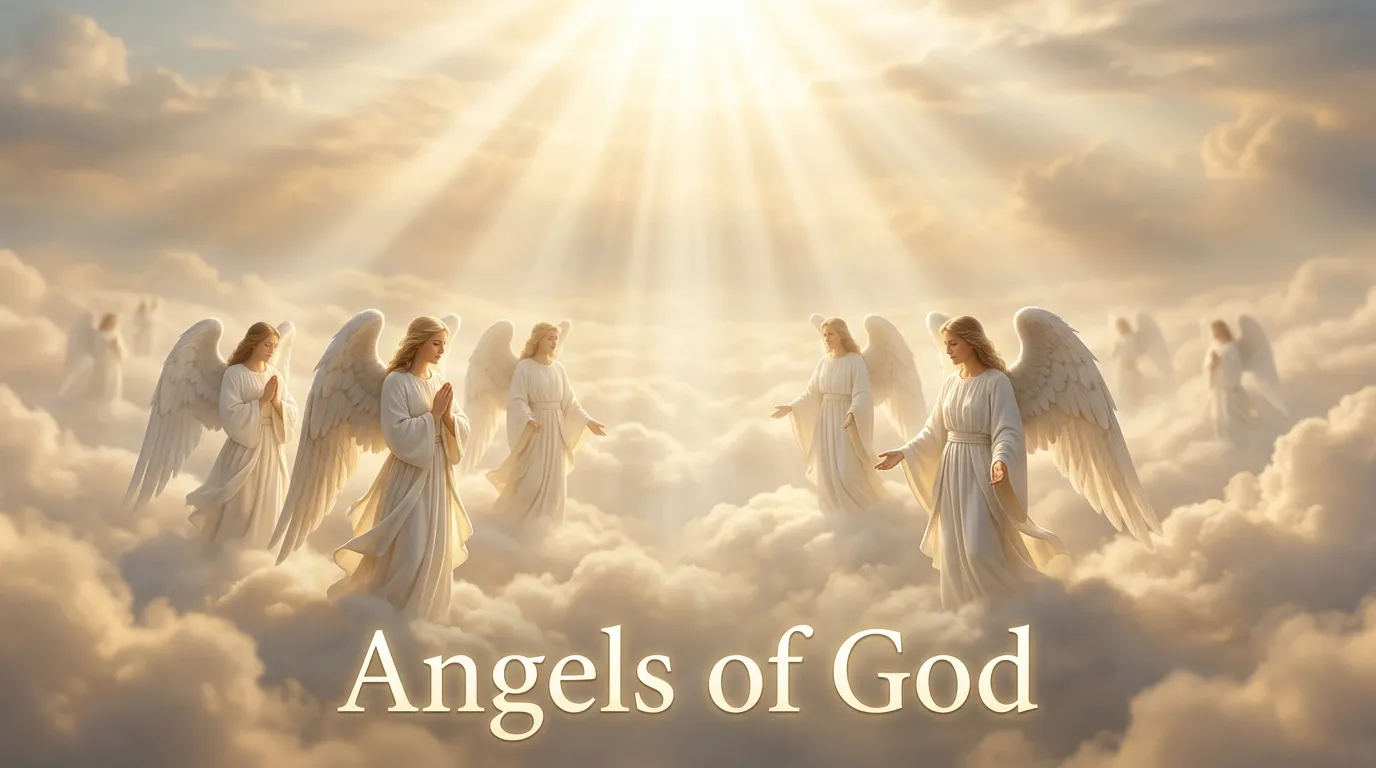
Angels of God are unseen beings created by God.
They serve Him, carry His news, protect His men and women, and worship Him without end.
Scripture mentions angels in more than 300 texts, from Genesis to Revelation, yet it tells us far less about them than well known culture suggests.
Worship God, not angels, as you read on through this article.
What Is an Angel
The Hebrew word malak and the Greek word angelos both mean herald. That is a job portrait, not a complete definition. Angels are heralds, but they are also warriors, guardians, those who worship, and servants. They are created beings, not endless like God, and not divine.
They have intelligence and will, and they can choose doing what God asks or revolt. The angels who turned became demons, led by Satan. Scripture warns against worshipping angels or seeking news from them apart from God. Angels are unseen beings without a lasting body, though they can appear in human form.
Angels Named in the Bible
Only two angels are named in the Protestant canon: Michael and Gabriel. That short list surprises many readers, because well known lists include many more names. Raphael appears in Tobit, a book included in Catholic and Orthodox Texts but not in Protestant Texts. Other names, such as Uriel, come from writings like 1 Enoch and later custom, not from set Scripture.
Michael is called one of the chief princes in Daniel. He is the only figure in Scripture directly called a chief angel, in Jude 9. In the last book, chapter 12, Michael and his angels fight the dragon. In Daniel 12, Michael is shown as the great prince who protects God’s people..
Hebrews 1:14 Are not all angels ministering spirits sent to serve those who will inherit salvation?
Cherubim and Seraphim
Cherubim and seraphim are not close names. They are kinds of high beings linked to God’s presence and worship. Cherubim guard the way to the tree of life in Genesis, and images of cherubim cover the ark of the covenant. Ezekiel shows cherubim with striking, symbolic features that stress God’s glory and mobility.
What Angels Do in the Bible
Scripture shows angels doing seven main kinds of work, though the kinds overlap, and first, they worship God. The last book views countless angels around the throne, declaring the Lamb worthy. Worship is not a side task for angels. It is their primary work, before any mission to earth.
Second, they deliver news. Angels announce births, explain visions, give instructions, and proclaim good news. The angel’s news to Mary, and the host’s news to shepherds at Jesus’ birth, are the best-known examples. In each case, the message is God’s, not the angel’s own invention.
| Angel or group | Main role in Scripture | Key passage |
| Michael | Chief prince, protector, warrior | Daniel 12:1, Jude 9, Revelation 12:7 |
| Gabriel | Messenger and interpreter | Daniel 8:16, Luke 1:19, Luke 1:26 |
| Cherubim | Guardians of God’s presence | Genesis 3:24, Ezekiel 10 |
| Seraphim | Worshippers crying holy | Isaiah 6:2-3 |
| Angelic host | Announcers and worshippers | Luke 2:13-14, Revelation 5:11-12 |
| Ministering angels | Helpers of God’s people | Hebrews 1:14, Matthew 4:11 |
| Question people ask | Short biblical answer |
| Are angels real | Yes, created spiritual beings who serve God |
| How many are named | Two in the Protestant canon: Michael and Gabriel |
| Do angels protect people | Yes, under God’s command, as in Psalm 91 and Acts 12 |
| Should we worship angels | No, angels refuse worship and point to God |
| Do we become angels after death | No, believers remain human, raised and with the Lord |
Guardian Angels: What Is Clear and What Is Not
Scripture clearly teaches that God sends angels to guard and serve His men and women. Psalm 91:11-12, Hebrews 1:14, and Psalm 34:7 all support that truth. The narrower claim, that each believer has one set angel assigned for life, is less clear. Two texts are often cited: Matthew 18:10 and Acts 12:15, where men and women say it must be Peter’s angel.
It speaks of the angels of small ones seeing God’s face. Those texts are suggestive, but they do not plainly state a one-to-one lifelong assignment for each person. Church ways differ here. The Catholic Catechism teaches that each believer has a guard angel from birth to death.
Many Protestant teachers agree that God protects through angels. They stop short of claiming a lasting close assignment for each one, because Scripture does not state it in those words. Both views agree on the main point: care comes from God, through angels He commands, not from angels acting independently. That distinction protects faith in two ways.
It prevents treating angels as close servants to summon or control. Those who trust God cannot command angels, bargain with them, or use them like unseen tools. It prevents disappointment when hardship comes. Angel care does not guarantee a life without danger, illness, or loss.
It guarantees God’s care within His larger purpose, even when that purpose has pain. Let angel stories point you back to God alone, not to visions or signs. Do not chase visions; trust God’s Word instead, and test every claim by it. Thank God for his care, and keep your eyes on Christ above all else.
Psalm 91:11 For he will command his angels concerning you to guard you in all your ways.
How to Respond to Angels Biblically
First, worship God, not angels. When John falls to worship an angel in the last book, the angel refuses. It says to worship God. That is the pattern from Scripture.
Angels in the Life of Jesus
Angels appear at each major stage of Jesus’ life. Gabriel announces His birth. Angels announce His birth to shepherds. Angels minister to Him after temptation.
An angel strengthens Him in Gethsemane. Angels announce His rising at the empty tomb. Angels promise His return in Acts 1. That pattern shows that Jesus’ mission was never isolated from heaven.
FAQs
What are angels of God?
Angels of God are created unseen beings who serve God as heralds, those who worship, protectors, and ministers. The words for angel in Hebrew and Greek mean herald. Angels are strong and awe-lifting, but they are not divine, not endless, and not to be bowed to. They act under God’s command and point men and women to Him.
How many angels are named in the Bible?
In the Protestant canon, two angels are named: Michael and Gabriel. Michael is the only one called a chief angel. Raphael is named in Tobit, which Catholic and Orthodox Texts include. Other well known angel names come from extra-writings from Scripture and custom, not from set God’s Word.
Do angels protect us today?
Scripture teaches that God commands angels to guard and serve His men and women, as in Psalm 91 and Hebrews 1:14. It does not promise that each danger will be prevented. It also does not teach that those who trust God can summon angels at will. Care is God’s work, carried out through angels and other means, by His wisdom.
What is the difference between angels and demons?
Demons are fallen angels who turned against God and now oppose His purposes, led by Satan. Angels who remained true serve God in worship, message, care, and judgment. Both groups are created beings, and neither is equal to God. Those who trust God resist evil not by their own power, but by standing firm in Christ.
Can we pray to angels?
Scripture directs prayer to God, through Jesus Christ, and angels refuse worship in the last book, and no prayer from God’s Word is addressed to an angel. Those who trust God may thank God for angel care. They should not pray to angels, seek their guidance apart from God’s Word, or treat them as mediators. Christ alone is the mediator between God and men and women.
Why do angels say do not be afraid?
Angels say this because their look is overwhelming and their message often comes at a moment of crisis. The reassurance does not mean the case is unimportant. It means God’s presence and purpose are greater than the fear. The angel’s first task is often to calm the hearer so the message can be received with faith rather than panic.
Conclusion
Angels in Scripture appear as heralds, those who worship, protectors, and agents of God’s purposes from Genesis to the last book. Hebrews chapter 1 shows them as serving spirits sent to serve. They announced births in Luke chapters 1 and 2, ministered to Jesus, and surround God’s throne in worship, yet God’s Word names only a few of them. It says far less about their look or ranks than well known culture suggests.
Discover More Post
- 💪 Bible Verses for Strength to Lift Your Heart and Renew Your Faith
- 🎄 Christmas Bible Verses to Fill Your Heart With Joy and Hope
- Who Was Jezebel in the Bible? Her Story and Dark Legacy 🕊️
- 🎄 When Is Jesus Birthday? Discover the Meaning Behind Christmas!