Picture a young boy watching his father carefully wash his hands before entering the family’s place of worship.
No one told the child what was happening in words. But he knew something sacred was about to take place. That quiet moment of preparation captures exactly what consecrated meaning in the Bible is all about.
The word consecrated may sound old-fashioned. But it shows up in some of the most powerful moments in all of Scripture.
From the burning bush to the Temple in Jerusalem, consecration marks the line between the ordinary and the holy.
You may have come across this word in your Bible reading and wondered what it really means for your life today.
Does it only apply to priests and altars? Or is there something in it for every believer who wants to walk closer with God?
Let’s explore what the Bible says about consecrated meaning in the Bible.
Biblical Meaning of Consecrated in the Bible
The Root of the Word
The English word consecrated comes from two powerful ancient languages Hebrew and Greek each adding rich color to its meaning.
In Hebrew, the primary word is qadash (קָדַש). It means to be set apart, to be holy, or to be dedicated to God. This root connects directly to the Hebrew word qodesh, which means holiness. When something is consecrated in the Old Testament, it is qadash pulled out of everyday use and given entirely to God.
In the Greek New Testament, the word hagiazō (ἁγιάζω) carries the same idea. It means to make holy, to sanctify, or to set apart for sacred use. Both words carry the same heartbeat: something set apart no longer belongs to the common world. It belongs to God alone.
First Appearance in the Bible
The concept of consecration appears very early in Scripture. One of the clearest early uses comes in Exodus 29:1, where God gives Moses detailed instructions for consecrating Aaron and his sons as priests:
Now this is what you shall do to them to consecrate them, that they may serve me as priests. Exodus 29:1 (ESV)
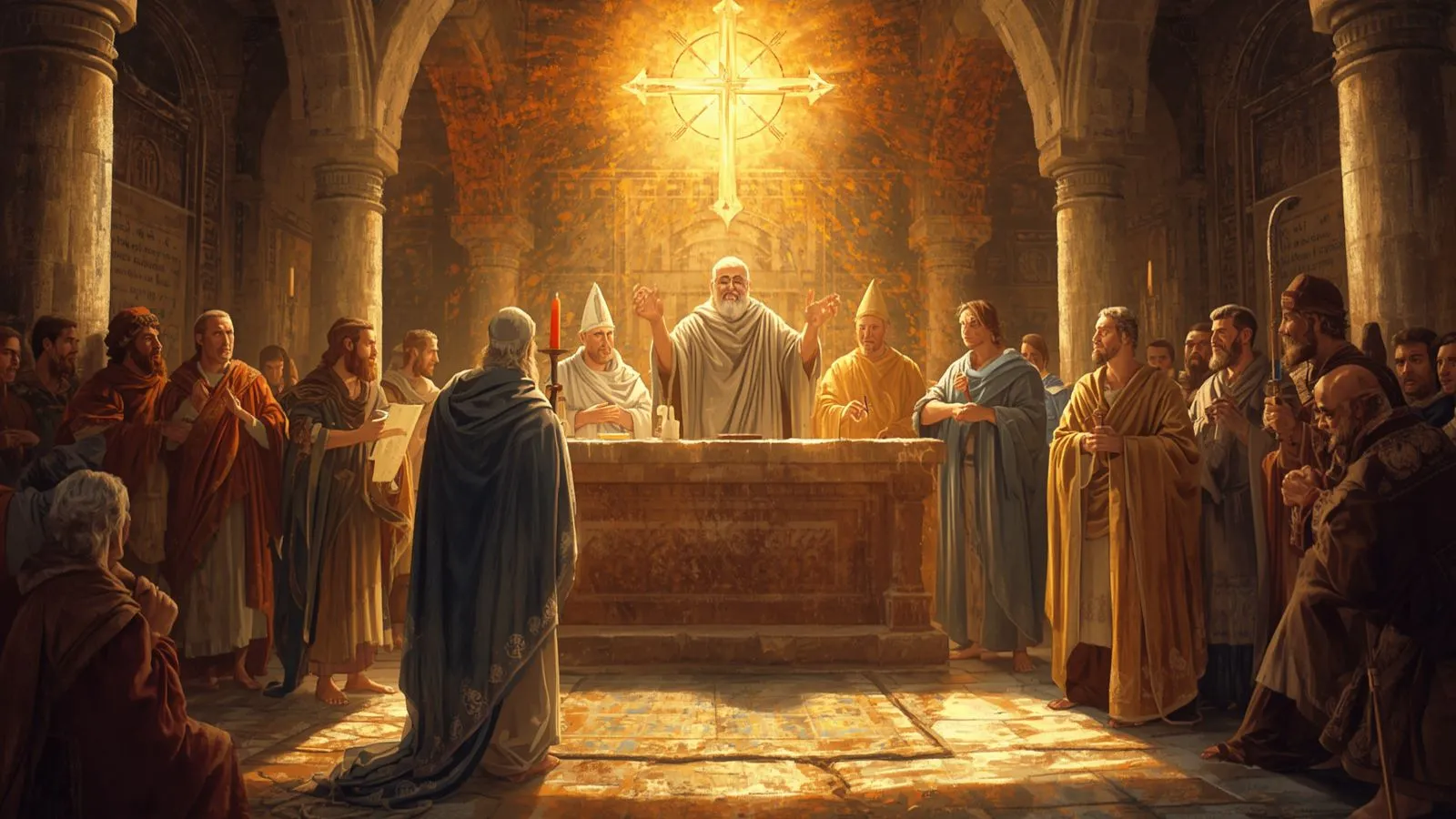
This moment is significant. God is not simply appointing workers. He is setting apart human beings to represent Him before the people. The process involved washing, special garments, anointing with oil, and sacrifices. Each step carried meaning every detail said, This person now belongs to God.
Deeper Layers of Meaning
Consecration in the Bible carries at least three layers of meaning.
First, it means separation. When God consecrated something, He removed it from common use. The temple vessels, for example, could not be used for ordinary meals. They were holy reserved only for worship.
Second, it means dedication. A consecrated person or object was not just removed from one thing it was committed to something greater. The priests were not simply not farmers. They were actively given to God’s service.
Third, it means transformation. Consecration changed the identity of what was set apart. An altar became more than stone. A priest became more than a man. Through the act of consecration, God’s Holy Spirit came to dwell in a new way.
The Apostle Paul echoes this in the New Testament:
Do you not know that you are God’s temple and that God’s Spirit dwells in you? 1 Corinthians 3:16 (ESV)
A Warning Hidden Inside the Blessing
There is also a sobering side to consecrated meaning in the Bible. Once something was set apart for God, treating it as common again was serious. In the story of Nadab and Abihu (Leviticus 10), Aaron’s sons offered strange fire before the Lord something God had not commanded. The result was devastating. Consecration carried weight. When God marks something as holy, it calls for reverence and care.
Connected Biblical Figure: Moses
Moses is one of the most powerful examples of a consecrated life. At the burning bush in Exodus 3, God told Moses to remove his sandals because the ground was holy. Moses was being consecrated for his mission. From that moment, his life was not his own. He was set apart to lead God’s people, speak God’s words, and carry God’s grace into the world.
Quick Reference Table
| Aspect | Details |
| Hebrew/Greek Root | Hebrew: qadash (קָדַש) to be set apart/holy; Greek: hagiazō (ἁγιάζω) to sanctify/make holy |
| First Biblical Appearance | Genesis 2:3, where God sanctifies the seventh day (the Hebrew root qadash) |
| Core Biblical Meaning | To be set apart from the ordinary and dedicated entirely to God’s purposes |
| Key Bible Verses | Exodus 29:1; 1 Corinthians 3:16; Romans 12:1; John 17:19 |
| Connected Biblical Figures | Moses, Aaron, Samuel, the Apostle Paul |
| Spiritual Symbolism | The Holy of Holies; anointing oil; the white garment of baptism; the altar of sacrifice |
| Dream/Vision Meaning | A call to deeper surrender; God marking you for a specific season or purpose |
| Faith Lesson | You are not your own you were bought with a price and belong fully to God |
Spiritual Significance of Consecration
Set Apart, Not Shut Out
Some people hear the word consecrated and picture monks in silent rooms, far from the rest of life. But that is not the Biblical picture at all. Consecration in Scripture is not about withdrawing from the world. It is about entering the world as someone who carries God’s presence.
Think of a candle in a dark room. The candle does not leave the room to make light. It stays but it is different. It carries something others do not. That is what the spiritual significance of consecrated living looks like for believers.
The Apostle Paul puts it beautifully in Romans 12:1:
I appeal to you therefore, brothers, by the mercies of God, to present your bodies as a living sacrifice, holy and acceptable to God, which is your spiritual worship. Romans 12:1 (ESV)
Notice the phrase living sacrifice. In the Old Testament, sacrifices were placed on the altar and stayed there. Paul is saying that believers are to place themselves on the altar but continue living. Every day, in every moment, a consecrated life says to God: I am Yours.
Oil, Water, and Fire
Throughout the Bible, three symbols appear again and again in connection with consecration in Scripture oil, water, and fire. Anointing oil represented the Holy Spirit being poured out on a person. Water pointed to cleansing and new identity. Fire represented God’s purifying presence burning away what is not of Him.
Together, they paint a picture of transformation not just a label change, but a real inner work. This is what makes consecrated meaning in the Bible so powerful for everyday believers.
A Word from A.W. Tozer
The great Christian teacher A.W. Tozer once wrote: God is looking for people through whom He can do the impossible. What a pity we plan only things we can do by ourselves.
Consecration is the moment we stop planning only for ourselves and hand the pen to God.
Personal reflection question: In what area of your life have you been holding back from fully placing yourself on God’s altar?
Related Biblical Concepts Table
| Concept | Meaning | Key Verse | Lesson |
| Consecrated | Set apart and dedicated entirely to God | Exodus 29:1 | God calls us out of the ordinary into His holy purposes |
| Sanctification | The ongoing process of becoming more holy | 1 Thessalonians 4:3 | Holiness is not a one-time event but a lifelong journey |
| Anointing | Being filled and empowered by the Holy Spirit | 1 John 2:27 | God’s power comes to those He has set apart |
| Redemption | Being bought back from sin and given new identity | 1 Corinthians 6:20 | You are not your own live for the One who purchased you |
| Calling | God’s specific purpose and direction for a life | Romans 8:28 | God works all things together for those who are called according to His purpose |
Dream and Real Life Meaning of Consecration
What It Might Mean in Dreams
Dreams about consecration or being set apart often carry a sense of invitation. Many people describe dreaming of standing before an altar, being washed clean, or hearing their name called out of a crowd. These kinds of dreams can feel peaceful and full of quiet purpose.
At other times, a dream may feel more urgent like God is pressing you toward a decision. You may sense a strong pull toward prayer, surrender, or stepping into something new. Both kinds of dreams can be meaningful.
The spiritual significance of consecrated imagery in dreams often points to a season of transition. God may be calling you to let go of something familiar so He can use you in a new way.
How to Test If an Experience Is from God
The Bible gives us a clear test in 1 John 4:1 test the spirits to see whether they are from God. When you have a dream or experience that feels spiritually significant, bring it to Scripture first. Does it point toward Jesus? Does it line up with God’s Word?
Peace is often God’s signature. The Holy Spirit does not usually rush or frighten. He leads with a still, small voice.
Encourage yourself to pray and journal. Write down what you experienced. Pray over it. Share it with a trusted believer. Give God time to confirm what He may be saying through grace and patience.
Faith Takeaways
- Pray every morning by placing yourself on God’s altar tell Him your day, your plans, and your heart belong to Him.
- Trust that being consecrated does not mean your life becomes smaller. It means God can do bigger things through a surrendered vessel.
- Reflect on the areas of your life still marked mine. Ask the Holy Spirit to help you release them into God’s hands with faith.
- Seek the deeper meaning of consecrated meaning in the Bible by studying the lives of men and women God set apart their stories are written for your encouragement.
- Remember that transformation through consecration is not something you achieve by effort alone. It is a divine work that begins the moment you say yes to God.
FAQs
1. What is the consecrated meaning in the Bible in simple terms?
The consecrated meaning in the Bible is being set apart from ordinary life and given fully to God. It is not about being perfect. It is about being dedicated like a cup reserved only for the King’s table. God calls people, places, and things to Himself, marking them as holy and useful for His purposes.
2. Is consecration only for priests and pastors?
Not at all. While priests in the Old Testament went through formal consecration rituals, the New Testament opens this to every believer. First Peter 2:9 calls all believers a royal priesthood.
3. How does consecrated meaning in the Bible apply to my everyday life?
Consecration in Scripture is not just for altars and church buildings. Paul’s call in Romans 12:1 is for every believer to present their whole life as a living offering to God.
4. What is the difference between consecration and sanctification?
These two ideas are closely linked but slightly different. Consecration is often the act of setting something or someone apart for God it can be a moment of decision or dedication. Sanctification is the ongoing process of becoming more like Christ over time.
5. Can a place be consecrated according to the Bible?
Yes! In the Old Testament, consecrated places included the Tabernacle, the Temple in Jerusalem, and even specific altars. The ground near the burning bush was declared holy by God Himself (Exodus 3:5).
More Searched Questions About Consecrated in the Bible
Why does the King James Version say both “consecrate” and “sanctify”?
Readers of the King James Version meet both words, sometimes in the very same verse, and ask whether they mean different things. In Exodus 28:41 God commands Moses about Aaron and his sons: “and shalt anoint them, and consecrate them, and sanctify them, that they may minister unto me in the priest’s office”. Two English words stand side by side because two Hebrew expressions stand behind them. “Consecrate” there renders the expression “fill the hand”, the installing of a priest into his office with the offerings placed in his hands. “Sanctify” renders qadash, to be set apart as holy. The same overlap explains Exodus 29:1, the verse this article quoted at the start: the ESV reads “to consecrate them”, while the KJV reads “to hallow them”, one Hebrew word, qadash, behind both. So the KJV is not describing two rival ceremonies. Its translators divided the work between several English words, consecrate, sanctify, hallow, holy, for one great idea: a person or thing taken out of common use and given to God. In the New Testament the KJV uses “consecrated” only in the book of Hebrews, at 7:28 and 10:20, and the last question below looks at one of those.
What is consecrated ground in the Bible?
The Bible’s picture of holy ground begins at the burning bush. God called to Moses out of the fire: “Draw not nigh hither: put off thy shoes from off thy feet, for the place whereon thou standest is holy ground” (Exodus 3:5). Many years later the same words met Joshua outside Jericho, when the captain of the LORD’s host told him: “Loose thy shoe from off thy foot; for the place whereon thou standest is holy” (Joshua 5:15). Notice what made the ground holy in both places. It was not the soil, and it was not a ceremony anyone performed. The ground was holy because God was present there, and the right response was reverence, shown by bare feet. Searchers sometimes ask how to consecrate ground, and the honest answer is that the Bible gives no ritual for doing it. In Scripture, consecrated ground is ground God Himself has marked by His presence, and people respond to it, as Moses and Joshua did, by treating it as anything but ordinary.
What was the consecrated oil in Exodus 30, and why could no one copy it?
The holy anointing oil of Exodus 30 was itself a consecrated thing. God told Moses to make it as “an oil of holy ointment” and said, “it shall be an holy anointing oil” (Exodus 30:25). With it Moses anointed the tabernacle and everything in it, and God gave the reason its holiness carried weight: “thou shalt sanctify them, that they may be most holy: whatsoever toucheth them shall be holy” (Exodus 30:29). Then came the restriction that defines this oil. It was announced to Israel as “an holy anointing oil unto me throughout your generations” (Exodus 30:31), and God added: “it is holy, and it shall be holy unto you. Whosoever compoundeth any like it, or whosoever putteth any of it upon a stranger, shall even be cut off from his people” (Exodus 30:32-33). The oil could not be copied for perfume or poured on anyone in common life, because to treat a consecrated thing as common was to deny the very thing consecration means. For that reason this article does not print a recipe: the chapter that describes the oil is the chapter that forbids imitating it.
Why were the firstborn consecrated to God in Exodus 13?
The consecration of the firstborn grew straight out of the Exodus. God told Moses: “Sanctify unto me all the firstborn, whatsoever openeth the womb among the children of Israel, both of man and of beast: it is mine” (Exodus 13:2). On the night of the Passover, the firstborn of Egypt had been struck down while Israel’s firstborn were spared, and from that night they belonged to God in a special sense. God repeated the claim years later: “all the firstborn are mine; for on the day that I smote all the firstborn in the land of Egypt I hallowed them unto me” (Numbers 3:13). Claimed did not mean sacrificed. God commanded that every firstborn son be redeemed, bought back (Exodus 13:13), and when a child later asked why, the father was to tell the whole story and end with these words: “therefore I sacrifice to the LORD all that openeth the matrix, being males; but all the firstborn of my children I redeem” (Exodus 13:15). For the service itself, God took the tribe of Levi in place of the firstborn of all Israel (Numbers 3:41-45). The law still stood in force centuries later, when Joseph and Mary brought the infant Jesus to Jerusalem “to present him to the Lord”, because it is written, “Every male that openeth the womb shall be called holy to the Lord” (Luke 2:22-23).
What does “consecrate yourselves” mean in Joshua 7:13?
This command came at one of Israel’s darkest moments, and its setting is everything. Israel had just been beaten at Ai, because Achan had secretly taken some of the devoted things from Jericho for himself (Joshua 7:1, 11). God then told Joshua: “Up, sanctify the people, and say, Sanctify yourselves against to morrow: for thus saith the LORD God of Israel, There is an accursed thing in the midst of thee, O Israel: thou canst not stand before thine enemies, until ye take away the accursed thing from among you” (Joshua 7:13). The KJV says “sanctify” where the ESV says “consecrate”, the same command in the same word family. Earlier, at the Jordan, consecration had prepared the people for a wonder. Here it prepares them for judgment. The holy God would not march with a camp that was hiding stolen, devoted property in a tent, and the sin at the centre of the story is itself a consecration sin: Achan treated what was consecrated to God as his own. Until that was purged, consecration was not a ceremony to perform but a condition to restore.
What does “I will consecrate their gain unto the LORD” mean in Micah 4:13?
Micah’s prophecy pictures the nations gathered against Jerusalem like sheaves brought to a threshing floor, and God giving His people the victory. The verse ends: “and I will consecrate their gain unto the LORD, and their substance unto the Lord of the whole earth” (Micah 4:13). “Their gain” is the wealth of the defeated nations, and “consecrate” here translates a strong Hebrew word, charam, to devote something utterly to God. It is the same root behind the “accursed thing”, the devoted thing, in Joshua 7 that Achan stole. What is devoted in this way belongs wholly to God: it may not be kept back for private use, which is why Achan’s theft was so grave. So Micah is not giving a teaching about personal income. He is prophesying a victory so complete that even the spoils are surrendered, because the wealth of the nations belongs to “the Lord of the whole earth” already. God Himself does the consecrating in this verse, and what He devotes to Himself stays His.
Was Jeremiah consecrated before he was born?
Yes, on God’s own testimony. Before Jeremiah had spoken a word, God said to him: “Before I formed thee in the belly I knew thee; and before thou camest forth out of the womb I sanctified thee, and I ordained thee a prophet unto the nations” (Jeremiah 1:5). The ESV renders the same sentence, “before you were born I consecrated you; I appointed you a prophet to the nations”, because one Hebrew word, qadash, stands behind both “sanctified” and “consecrated”. Notice whose act this is. Jeremiah did not apply for the office, qualify for it, or take a vow. God set him apart for the prophetic calling before he could do anything at all, and then called him to it as a young man who protested that he was only a child (Jeremiah 1:6-7). He is not called a Nazirite, and no vow is involved; his case is different from Samson’s, whose separation was announced in the language of the Nazirite vow. Jeremiah’s consecration is the setting apart of a man for an office, done by God alone, before birth.
What did Jesus consecrate in Hebrews 10:20?
The New Testament’s clearest use of the word is about access to God. Describing the way into the holiest place, the writer says believers enter “by a new and living way, which he hath consecrated for us, through the veil, that is to say, his flesh” (Hebrews 10:20). “Consecrated” here renders a Greek word, enkainizo, that means to dedicate or to inaugurate; it is the word used when the first covenant was “dedicated” with blood (Hebrews 9:18). Jesus did not merely point to a way into God’s presence. By His death He opened it and dedicated it, a way that is called new because no one had entered by it before, and living because He lives. The same book calls the Son Himself “consecrated for evermore” (Hebrews 7:28, KJV), appointed and perfected for His priestly work for ever. So in Hebrews the direction of consecration is worth noticing: it is first something Christ has done for His people, opening their access to God, and only then the ground on which they are urged to “draw near with a true heart in full assurance of faith” (Hebrews 10:22).
Conclusion
Consecrated meaning in the Bible points us to two great truths. First, God is holy and He invites His people into that holiness, not to make their lives smaller, but to make them shine. Second, consecration is not just an ancient ritual. It is a living invitation open to every person who will say, God, I am Yours.
In John 17:19, Jesus prays one of the most beautiful prayers in all of Scripture:
And for their sake I consecrate myself, that they also may be sanctified in truth. John 17:19 (ESV)
Jesus Himself was consecrated set apart for you. That is the heartbeat of the Gospel.