I still remember the first time a young seminary student asked me why thanksgiving felt so thin in modern church life.
We were studying the Psalms together, and he said, Pastor, we sing about gratitude, but it rarely costs us anything.
That conversation pushed me back into Scripture. What I found is that the thanksgiving meaning in the Bible is never casual. It is a full-hearted response to God’s character and saving acts, rooted in both the Hebrew todah and the Greek eucharistia.
For Bible book creators, curriculum writers, and pastors, this truth is gold. When we recover the biblical weight of thanksgiving, our studies, sermons, and devotionals gain depth that moves people from polite thanks to covenant worship.
Quick Reference Table
| Aspect | Key Insight | Ministry Use |
| Core Meaning | Grateful acknowledgment of God’s character and works, expressed in word, worship, and offering | Anchor every lesson in God’s faithfulness, not human feeling |
| Hebrew Root | Todah (from yadah) thanksgiving, praise, confession; often a sacrificial meal | Connect OT peace offerings to Christian praise |
| Greek Term | Eucharistia thanksgiving flowing from grace (charis) | Frame NT prayer and the Lord’s Supper |
| Central Command | Give thanks in all circumstances (1 Thess 5:18) | Teach gratitude as God’s will, not mood |
| Practical Fruit | Guards against anxiety, fuels generosity, shapes community worship | Build application sections around peace and shared praise |
Biblical Meaning
Thanksgiving in Scripture is far more than a polite response to favors received. It is the deliberate act of recognizing God as the source of every good gift and responding with praise, confession, and shared celebration. In the Old Testament it often took concrete form as a Torah offering a peace offering of gratitude after deliverance. In the New Testament it becomes the atmosphere of Christian prayer and community life. Paul repeatedly links thanksgiving to the gospel itself: grace received produces thanksgiving that overflows to God’s glory. This meaning stays consistent across the canon. Thanksgiving is never an optional sentiment. It is a covenant responseGod acts, His people answer with grateful recognition.
Hebrew / Greek Meaning
The primary Hebrew term is todah (תּוֹדָה), drawn from the verb yadah, which carries the sense of extending the hand in praise or confession. Todah can refer to verbal thanks, songs of praise, or the specific thank offering described in Leviticus 7:12-15. That offering was voluntary, shared as a meal, and often followed rescue from danger or recovery from illness. Related words such as barak (to bless) and zamar (to sing praise) frequently appear alongside it, showing that thanksgiving was meant to be heard and seen.
In the New Testament the dominant term is eucharistia (εὐχαριστία) and its verb eucharisteō. The word combines eu (good) and charis (grace), pointing to gratitude that springs from God’s gracious gift. Jesus used the verb when He gave thanks over the bread and cup at the Last Supper. Paul uses the noun repeatedly when he urges believers to let thanksgiving shape their prayers and daily conduct. The linguistic shift from today to eucharistia does not change the heart of the matter; it simply carries the same grateful response into the new covenant, now centered on Christ.
Biblical Context
Thanksgiving threads through the entire story of Scripture. In the Torah it appears in the sacrificial system as a response to God’s deliverance. The Psalms turn it into the language of corporate worship: Enter his gates with thanksgiving (Psalm 100:4). After the exile, the returned community rebuilt temple worship around songs of thanks (Ezra, Nehemiah, Chronicles). In the Gospels Jesus models it before multiplying loaves and at the table with His disciples. The early church, shaped by Paul’s letters, treated thanksgiving as essential to prayer, community life, and the Lord’s Supper itself. Across redemptive history, thanksgiving marks the people who know they have been rescued and now live in grateful dependence.
Key Bible Verses with Full Explanation
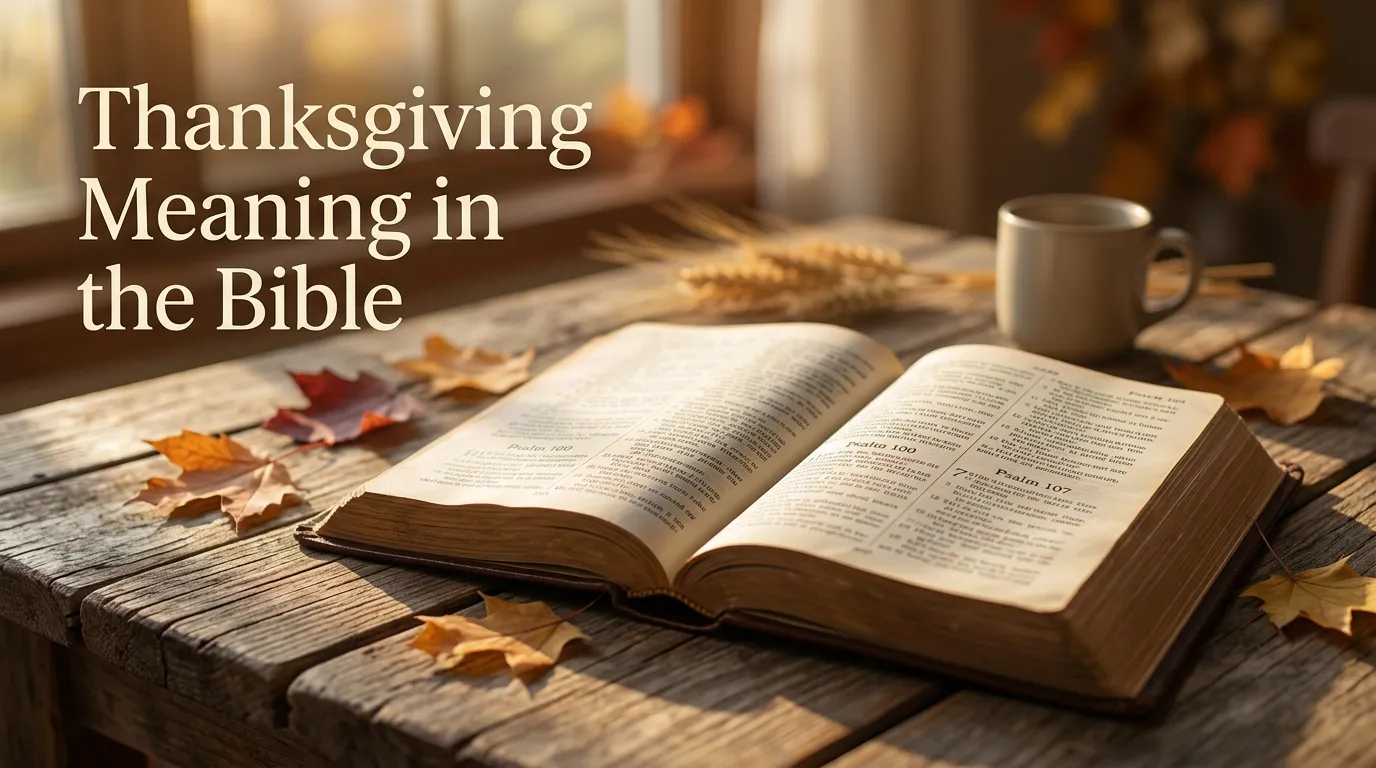
Psalm 100:4 sits at the center of Old Testament thanksgiving: Enter his gates with thanksgiving and his courts with praise; give thanks to him and praise his name. Written for temple worship, the verse presents thanksgiving as the proper way to approach God. Gratitude is not the reward for feeling close to God; it is the doorway. For curriculum writers this verse offers a clear entry point for any study on worship.
1 Thessalonians 5:18 states the New Testament command with striking clarity: Give thanks in all circumstances; for this is the will of God in Christ Jesus for you. Paul writes to a young church facing pressure. He does not say for all circumstances, but in them. Thanksgiving is God’s revealed will for every believer, independent of external conditions. This text anchors any teaching that seeks to move people beyond situational gratitude.
Philippians 4:6 joins thanksgiving to the battle against anxiety: Do not be anxious about anything, but in everything by prayer and supplication with thanksgiving let your requests be made known to God. The apostle places thanksgiving inside the very act of asking. Gratitude is not an afterthought; it is the atmosphere in which petitions are offered. The result is the peace of God that guards heart and mind.
Colossians 3:15-17 expands the vision to the whole of Christian life. Paul calls the church to let the peace of Christ rule, to be thankful, and to do everything in the name of the Lord Jesus, giving thanks to God the Father through him. Thanksgiving becomes the constant companion of teaching, singing, and ordinary work. These four passages alone give pastors and authors a rich set of texts that move from temple approach to daily practice.
Spiritual Meaning & Application
At its deepest level, biblical thanksgiving is the recognition that we live by grace. Every breath, every rescue, every spiritual blessing arrives as gift. When we give thanks we confess that truth and refuse the illusion of self-sufficiency. In my years of pastoral work I have watched thanksgiving become a spiritual diagnostic. A grateful heart is rarely a proud one. A thankful congregation is usually a generous one. Thanksgiving also guards against the twin dangers of anxiety and bitterness. When we deliberately name God’s goodness, our focus shifts from what is lacking to what has already been given in Christ. For the believer, thanksgiving is both privilege and protection.
Practical Application for Bible Book Creators & Authors
Bible study writers and curriculum developers can treat thanksgiving as a thematic thread rather than a seasonal topic. Open a unit on the Psalms with the Torah offering and show how the same grateful posture appears in Paul’s letters. In the sermon series on prayer, place Philippians 4:6 beside Psalm 100:4 and let the contrast between temple gates and anxious hearts create tension and resolution. Devotional writers can build seven-day guides that move from Old Testament deliverance stories to New Testament commands, always ending with a simple practice: name three concrete gifts and thank God for each one. When you write application questions, ask readers not only what they feel but what they will offerpraise, testimony, or shared meal. That moves the concept from idea to live response.
Common Misunderstandings
| Misunderstanding | Biblical Truth |
| Thanksgiving is mainly for good circumstances | Scripture commands thanks in all circumstances (1 Thess 5:18) |
| It is primarily an emotion | It is an act of will expressed in word, song, and offering |
| New Testament thanksgiving replaces Old Testament practice | It fulfills and deepens the todah pattern in Christ |
| Private gratitude is enough | Biblical thanksgiving is often public and shared |
FAQs
Thanksgiving meaning in the bible verse
Thanksgiving in the Bible means expressing gratitude to God for His goodness, mercy, provision, faithfulness, and salvation.
Spiritual meaning of thanksgiving in the Bible
The spiritual meaning of thanksgiving is a heart of gratitude that honors God and recognizes His presence, goodness, and faithfulness.
Importance of thanksgiving in the Bible
Thanksgiving is important because it helps believers honor God, strengthen their faith, and remember His blessings and faithfulness.
Thanksgiving meaning in the bible kjv
In the KJV Bible, thanksgiving refers to giving thanks and praise to God for His goodness, mercy, works, and enduring love.
10 benefits of thanksgiving in the Bible
Biblical thanksgiving encourages joy, strengthens faith, deepens worship, brings peace, builds humility, and helps believers trust God more fully.
Thanksgiving meaning in the bible pdf
Thanksgiving in the Bible describes grateful worship and praise offered to God for His blessings, mercy, provision, and unfailing faithfulness.
9 examples of thanksgiving in the Bible
Biblical examples of thanksgiving include David’s praise, Jesus giving thanks, Paul’s prayers, and believers thanking God for His mighty works.
Types of thanksgiving in the Bible
Biblical thanksgiving includes thanking God through prayer, praise, worship, testimony, offerings, obedience, and gratitude for His blessings.
Conclusion
The thanksgiving meaning in the Bible calls us to a life of steady, grateful recognition of the God who gives and saves. As you write, teach, and lead, let that truth shape every page and every lesson. A people who learn to enter His gates with thanksgiving will find their worship deeper, their prayers freer, and their witness more compelling. Keep pointing them to the Giver, and the gratitude will follow.
Discover More Post
- Sanctification Meaning in the Bible: What It Really Means
- Matthew Meaning in Bible: What Does This Name Really Mean?
- Debauchery Meaning Bible: A Clear Biblical Explanation